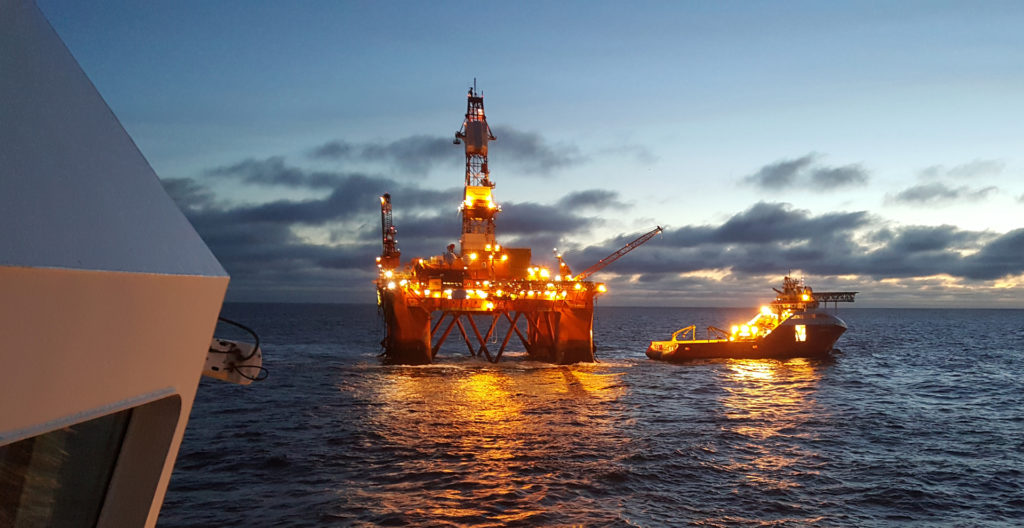
India has intensified oil and gas exploration over the past year as the country tries to reduce its dependence on imported crude. The government has confirmed five new hydrocarbon discoveries during FY 2025-26, while seven earlier discoveries were monetised and around 674 wells were drilled during the year. At the same time, exploration has moved deeper into offshore basins such as Mahanadi, Krishna-Godavari, Cauvery and the Andaman region.
India still imports close to nine out of every ten barrels of crude oil it requires, while domestic crude production remains broadly around 28–30 million tonnes a year. That means India currently produces only about 11–12% of its crude requirement domestically, leaving the economy highly exposed to global oil prices, shipping disruptions and geopolitical risks.
Recent Oil and Gas Discoveries in and Around India
The most important recent developments include confirmed discoveries, appraisal drilling and frontier wells that have established the presence of active petroleum systems. Not all of these have reached commercial production, so it is important to distinguish between a discovery and a commercially producing field.
| Discovery / Area | Location | Operator | Type | Recent Development | Current Status |
|---|---|---|---|---|---|
| Mahanadi Offshore | Odisha offshore | ONGC | Gas / hydrocarbons | Appraisal drilling began in 2026 after earlier discoveries | Under appraisal |
| ANDW-7 | East Andaman Back Arc | ONGC / national exploration programme | Light crude and condensate traces | Confirmed active thermogenic petroleum system | Frontier discovery, not yet commercial |
| Mechaki-6 | Assam | Oil India | Oil | Crude flowed during testing | Discovery under evaluation |
| Mechaki-7 | Assam | Oil India | Gas | Gas flowed during testing | Discovery under evaluation |
| Kobochapori-1 | Assam, north bank of Brahmaputra | Oil India | Hydrocarbon indication | Established hydrocarbon presence in a new exploration area | Frontier discovery |
| Other FY 2025-26 discoveries | Multiple Indian basins | ONGC / Oil India / others | Oil and gas | Government confirmed five new discoveries during the year | Various stages of appraisal |
Mahanadi Offshore Moves Into Appraisal
The Mahanadi offshore basin has emerged as one of India’s most important recent hydrocarbon prospects. ONGC has already made gas discoveries in the basin, including in areas that were previously subject to exploration restrictions.
In July 2026, drilling began on the appraisal well MN-DWN18-1-HD, the first of four planned deepwater wells intended to determine the size and commercial viability of the discovered resource. Appraisal drilling is a critical stage because it establishes whether a discovery contains enough recoverable hydrocarbons to justify full-scale development.
Mahanadi is therefore more advanced than a purely exploratory frontier. The basin has moved from discovery into evaluation, making it one of the strongest candidates for future offshore production growth.
Andaman Basin Confirms an Active Petroleum System
The Andaman offshore basin produced one of the most strategically significant exploration results in recent years. The wildcat well ANDW-7 encountered traces of light crude, condensate and heavier hydrocarbons, along with reservoir-quality geological formations.
The importance of the result lies in what it proves geologically. The well established the presence of an active thermogenic petroleum system in the Andaman region, meaning hydrocarbons are being generated naturally within the basin.
This dscovery strengthen the case for continued exploration because the geological system is now proven to be capable of generating hydrocarbons.
Assam Continues to Deliver New Onshore Finds
Assam remains one of India’s most important producing regions and continues to generate new discoveries. Oil India reported an oil discovery at Mechaki-6 and a gas discovery at Mechaki-7, while hydrocarbon presence was also established at Kobochapori-1.
Mechaki-6 produced crude during testing at around 32 cubic metres per day, while Mechaki-7 flowed gas at approximately 60,000 standard cubic metres per day from a tested zone. These are not giant discoveries, but they are valuable because they occur in a region with established pipelines, processing facilities and refinery infrastructure.
The significance of onshore discoveries such as these lies in their potential for faster monetisation. Deepwater fields can take years to develop, while smaller discoveries in established producing regions can often be connected to existing infrastructure more quickly.
Five New Hydrocarbon Discoveries Were Confirmed in FY 2025-26
The Ministry of Petroleum and Natural Gas has confirmed that five new hydrocarbon discoveries were made during FY 2025-26. During the same period, seven discoveries were monetised, indicating that the upstream programme is attempting to convert older finds into actual production while continuing to add new prospects.
The official nationwide summary does not publicly identify every one of the five discoveries individually. For that reason, the specific discoveries listed above should be treated separately from the national total rather than assumed to account for all five.
The government also reported approximately 674 wells drilled during FY 2025-26, reflecting a broader increase in exploration and development activity across Indian sedimentary basins.
How Much Crude Oil Does India Produce Domestically?
India currently produces roughly 28–30 million tonnes of crude oil annually from domestic fields. Production comes from a combination of mature onshore fields in Assam, Gujarat and Rajasthan and major offshore assets such as the Mumbai Offshore basin.
Domestic production, however, has not kept pace with India’s growing oil demand. As a result, crude import dependence remains close to 88%, meaning domestic sources supply only about 11–12% of total crude requirements.
The scale of the gap can be understood more clearly in simple terms: India consumes many times more crude than it produces. Even successful discoveries therefore need to be large, numerous and rapidly developed before they can significantly change the country’s overall import dependence.
India’s Crude Oil Position at a Glance
| Indicator | Approximate Current Position |
|---|---|
| Domestic crude production | Around 28–30 million tonnes per year |
| Crude import dependence | Around 88% |
| Domestic share of requirement | Around 11–12% |
| New hydrocarbon discoveries in FY 2025-26 | 5 |
| Discoveries monetised in FY 2025-26 | 7 |
| Wells drilled in FY 2025-26 | Around 674 |
| Major emerging offshore areas | Mahanadi, Andaman, Krishna-Godavari, Cauvery |
| Major producing regions | Mumbai Offshore, Assam, Gujarat, Rajasthan |
Why India’s Domestic Production Has Struggled to Rise
One of the biggest challenges is the maturity of India’s existing producing fields. Many of the country’s most important oilfields have been producing for decades, and output naturally declines unless enhanced recovery techniques, redevelopment or new satellite discoveries are brought into production.
At the same time, new exploration is increasingly moving into deepwater and ultra-deepwater environments. These wells are expensive, technically complex and risky, and a single deepwater exploratory well can cost well over US$100 million.
Even after a discovery is made, commercial production can take several years. Operators must appraise the reservoir, calculate recoverable reserves, install subsea infrastructure and develop evacuation systems before oil or gas can enter the national energy system.
Samudra Manthan Pushes Exploration Further Offshore
India’s new offshore strategy is being driven by the Samudra Manthan National Offshore Exploration Scheme, which significantly expands exploration in frontier waters. The programme is designed to support seismic surveys, exploratory drilling, appraisal activity and offshore infrastructure in areas where geological potential exists but commercial exploration has historically been limited.
The government has identified the eastern and western offshore basins as holding substantial hydrocarbon potential. Mahanadi, Andaman, Krishna-Godavari and Cauvery are therefore likely to remain among the most important areas to watch over the next several years.
The strategy reflects a change in India’s upstream approach. Rather than relying mainly on mature producing regions, the country is increasingly looking towards deeper waters where discoveries may be technically harder to develop but potentially much larger.
Offshore Production Still Matters More Than Many Assume
India’s domestic crude production does not come mainly from land-based wells. A significant proportion comes from offshore fields, particularly the Mumbai Offshore basin, including the long-producing Mumbai High complex.
ONGC remains the country’s dominant producer through its offshore and onshore fields, while Oil India continues to produce more than three million tonnes of crude annually from its operations.
This makes offshore exploration particularly important. New discoveries capable of offsetting decline in mature fields are essential if India is to prevent domestic production from falling further behind demand.
Why Small Discoveries Still Matter
A discovery does not need to transform national production on its own to be strategically useful. Smaller fields can help sustain regional production, use existing infrastructure more efficiently and reduce the rate at which older fields decline.
Several modest discoveries brought into production together can also have a cumulative effect. This is especially true in areas such as Assam, where pipelines, gathering systems and refineries already exist.
The larger challenge is scale. India needs both a steady flow of smaller discoveries and at least a few large offshore discoveries if it hopes to make a meaningful dent in crude import dependence.
The Real Test Is Turning Discoveries Into Production
India’s exploration story is becoming more encouraging, but discoveries alone do not improve energy security. What ultimately matters is how quickly commercially viable resources can be converted into producing fields.
The fact that seven discoveries were monetised during FY 2025-26 is therefore as important as the five new discoveries reported during the same period. Monetisation means that the resource has moved closer to contributing actual oil or gas to the domestic market.
The strongest recent signals are coming from Mahanadi, Andaman and Assam. Mahanadi is undergoing appraisal, Andaman has confirmed an active petroleum system, and Assam continues to add new onshore prospects.
India’s Energy Security Challenge Remains Large
India is unlikely to achieve crude-oil self-sufficiency in the near future. Domestic production of roughly 28–30 million tonnes remains far below national demand, while import dependence continues to hover around 88%.
That does not make domestic exploration insignificant. Every additional barrel produced within India reduces exposure to international price volatility, shipping disruptions, foreign-exchange movements and geopolitical risks.
The long-term objective is therefore not necessarily complete self-sufficiency, but a stronger domestic production base combined with diversified imports, strategic petroleum reserves and a gradual reduction in oil intensity across the economy.
India’s recent discoveries underline the growing potential of the country’s onshore and offshore basins, with new exploration activity steadily expanding the domestic hydrocarbon resource base. As appraisal and development move forward, more of these finds could progress into commercial production and strengthen India’s energy security over the rest of this decade.
References
Ministry of Petroleum and Natural Gas — Official data on hydrocarbon discoveries, wells drilled and discoveries monetised during FY 2025-26.
Press Information Bureau — Official updates on Mahanadi offshore appraisal drilling and India’s offshore exploration programme.
Press Information Bureau — Official exploration update on ANDW-7 and the active petroleum system in the Andaman region.
Oil India Limited — Annual Report and operational disclosures covering Mechaki-6, Mechaki-7 and Kobochapori-1.
Petroleum Planning and Analysis Cell — India crude oil production, consumption and import-dependence data.
Directorate General of Hydrocarbons — Indian sedimentary basin, offshore acreage and exploration information.
ONGC — Domestic offshore and onshore exploration and production disclosures.
You may also like
-
Indian Semiconductor Companies Propose New Manufacturing and Chip Design Investments in Madhya Pradesh
-
CSIR-CRRI Partners with Industry to Develop Advanced Indigenous Airport Runway and Pavement Materials
-
Paras Semiconductors Secures 43 Acres in Madhya Pradesh for Proposed ₹6,200 Crore Advanced Chip Packaging Facility
-
Petronet LNG Plans ₹1,200 Crore Joint Venture for Ten Compressed Biogas Plants Across India
-
India Seeks South Korean Shipbuilding Partnerships as Sarbananda Sonowal Begins Four-Day Visit to Busan
