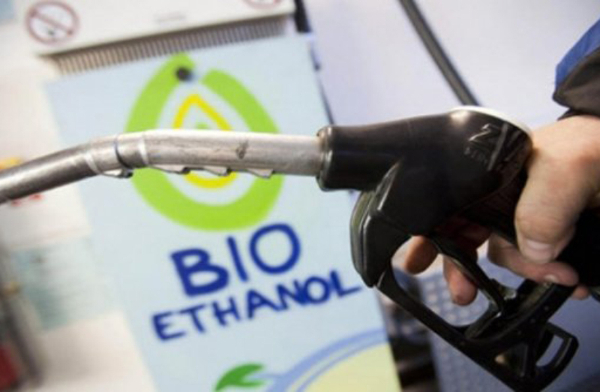
The Government of India has rejected claims that petrol containing 20% ethanol could cause widespread damage to older vehicles, saying that scientific testing, automobile industry data and several years of real-world use have not revealed systemic engine or fuel-system failures linked to the fuel.
In a detailed clarification issued on July 30, 2026, the Ministry of Petroleum and Natural Gas said misleading information about the Ethanol Blended Petrol Programme had recently circulated through sections of the media and social media.
The government maintained that the transition towards E20 petrol had been undertaken gradually after consultations with automobile manufacturers, testing agencies, component producers, the Society of Indian Automobile Manufacturers, the Automotive Research Association of India and oil marketing companies.
Ethanol Blending Increased Gradually
India began experimenting with ethanol-blended petrol through a pilot programme in 2001, followed by the introduction of E5 petrol in 2006.
Average ethanol blending remained at around 1.53% in 2013–14 before rising to approximately 8.1% in 2020–21, 10% in 2021–22, 12% in 2022–23, 14.6% in 2023–24 and 19.2% in 2024–25.
The average blending level reached 20% between November 2025 and June 2026.
According to the government, petrol containing more than 15% ethanol has been widely supplied for over three and a half years, while E19 and E20 fuels have been used for more than two and a half years.
During this period, India has not experienced large-scale engine failures, vehicle breakdowns, warranty claims or manufacturer-led service campaigns attributed to ethanol blending, the ministry said.
Government Says Older Vehicles Have Continued Operating
The clarification rejected the claim that vehicles manufactured before 2023 cannot operate on E20 petrol.
The government said approximately eight crore vehicles visit fuel retail outlets across India every day, with petrol-powered vehicles accounting for nearly 80% of them.
More than 20 crore two-wheelers and over three crore petrol cars have reportedly operated on higher ethanol blends without verified evidence of widespread engine failure caused by the fuel.
The ministry argued that any systemic incompatibility affecting such a large number of vehicles would have resulted in millions of breakdowns, consumer complaints, warranty claims and service campaigns.
Automobile Service Data Cited
The government referred to data provided by a leading automobile manufacturer that serviced 2.84 crore vehicles during FY 2025–26.
These included approximately 1.5 crore vehicles that had not originally been certified as E20-compatible. The manufacturer reportedly found no abnormal corrosion, excessive wear or reduction in component life attributable to E20 petrol.
Another automobile manufacturer tracked around 1.4 crore vehicles operating on E20 over an extended period and reported no evidence of ethanol-induced corrosion.
A major two-wheeler manufacturer also informed the government that its service data did not show a higher incidence of vehicle damage among two-wheelers using E20 compared with vehicles using earlier petrol blends.
The government said vehicle warranties continued to be honoured where specification-compliant E20 petrol was used, reflecting manufacturers’ confidence in the testing and validation conducted before the fuel’s introduction.
Automobile Companies Publicly Back Programme
The clarification also rejected claims that automobile manufacturers privately opposed E20 petrol or were being pressured to support the programme.
Senior representatives of Toyota Kirloskar, Maruti Suzuki, Hero MotoCorp, Hyundai Motor India, TVS Motor Company and Bajaj Auto publicly addressed concerns about E20 during a joint press conference convened by three Union ministries on July 4, 2026.
Toyota Kirloskar reportedly said that E20 had been introduced only after rigorous testing, including assessments involving older vehicles. The company also highlighted the long-standing global use of ethanol and the application of internationally recognised testing standards.
Maruti Suzuki cited its analysis of 2.84 crore serviced vehicles and reported no E20-related corrosion, abnormal wear or decline in component life.
Hero MotoCorp similarly said that its extensive service records did not indicate a higher rate of vehicle damage among two-wheelers operating on E20.
Hyundai, TVS Motor Company and Bajaj Auto also expressed confidence in the programme and committed to addressing consumer concerns transparently.
The government said automobile companies are independent listed entities with legal, regulatory and warranty obligations to customers. Widespread vehicle defects could expose them to product-liability claims, regulatory scrutiny and reputational damage, making the concealment of systemic problems unlikely.
Mileage Impact Estimated at 3–5%
Addressing concerns that E20 petrol could cause a major decline in mileage, the government said fuel efficiency depends on several factors, including driving behaviour, traffic conditions, tyre pressure, vehicle maintenance and air-conditioner use.
For some older vehicles originally designed for E10 petrol, the reduction in fuel economy may generally be around 3% to 5%, according to the clarification.
Maruti Suzuki reportedly estimated the mileage impact at approximately 3% to 3.5%, while noting that everyday operating conditions could have a greater effect on fuel efficiency.
The government said E20 petrol also provides a higher octane rating and improved anti-knock characteristics. It stated that the fuel could support cleaner combustion, smoother engine operation, improved acceleration and better ride quality in appropriately calibrated vehicles.
Fuel Tested for Compatibility and Performance
Before E20 was introduced, authorities and industry organisations examined material compatibility, engine calibration, durability, drivability, emissions, fuel systems and vehicle performance.
The Automotive Research Association of India has stated that E20-compatible vehicles undergo rigorous validation based on internationally recognised standards before being sold to consumers.
Oil marketing companies also conduct inspections and fuel-quality checks throughout the supply chain. More than 30,000 retail outlet inspections have reportedly been undertaken to identify adulteration and verify fuel quality.
Ethanol-blended petrol supplied in India is required to conform to Bureau of Indian Standards specifications.
Government Monitoring Social-Media Claims
The ministry said claims circulating online are examined in consultation with automobile manufacturers and technical organisations.
According to the government, many allegations concerning E20 have been exaggerated or have lacked supporting technical evidence. It maintained that no verified evidence of widespread engine damage caused by ethanol blending had emerged.
The government said its assessment was based on more than 25 years of phased implementation, scientific validation, field experience across crores of vehicles, manufacturer service records and continuous fuel-quality monitoring.
Reference
Press Information Bureau, Government of India
“Facts about Ethanol Blended Petrol: Separating Facts from Misconceptions”
Published on July 30, 2026, at 7:05 PM
You may also like
-
EON Space Labs and Dhruva Space Advance Indian Space Hardware on Transporter-18 Mission
-
SatLeo Labs’ TAPAS-1 Reaches Orbit, Advancing India’s Private Thermal-Imaging Capability
-
TakeMe2Space’s MOI-1A Reaches Space on Falcon 9 Transporter-18 Mission
-
Bank of Baroda Enters Pension Fund Management After PFRDA Appointment
-
SCI and India’s Push for a Larger Indigenous Maritime Fleet
