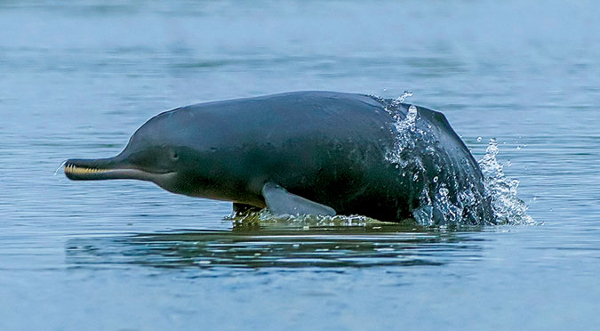
An endangered Ganges river dolphin (Platanista gangetica) has been sighted at the confluence of the Siang and Tarotamak rivers near Namsing village in Arunachal Pradesh’s East Siang district. Video footage of the aquatic mammal was shared by Mebo MLA Oken Tayeng on 24 November 2026, drawing attention to the freshwater biodiversity of the region. The sighting highlights the ecological importance of the Siang river system and the adjoining Daying Ering Memorial Wildlife Sanctuary.
Tayeng described the observation as an encouraging development for wildlife conservation efforts in Mebo and its surrounding areas. He emphasised the importance of community participation in protecting river ecosystems and preserving their aquatic biodiversity for future generations. The sighting also presents an opportunity for further scientific investigation into the distribution and habitat utilisation of river dolphins in Arunachal Pradesh.
Ecological Significance of the Siang River System
The Siang forms an integral part of the Brahmaputra river system, connecting the Himalayan river valleys of Arunachal Pradesh with the extensive floodplains of Assam. Its river channels, tributaries and associated wetlands support diverse aquatic and terrestrial ecosystems. River confluences can provide suitable habitats for freshwater dolphins owing to variations in water depth, flow conditions and the availability of prey.
The reported sighting near Namsing highlights the importance of maintaining ecological connectivity throughout the Brahmaputra basin. Freshwater dolphins depend upon interconnected river habitats for movement, feeding and reproduction, making the conservation of river systems particularly important. Further scientific surveys could help establish whether the observed dolphin represents occasional movement into the region or a more regular presence within this stretch of the Siang.
India’s National Aquatic Animal
The Ganges river dolphin is one of the world’s few exclusively freshwater dolphin species and has been designated India’s National Aquatic Animal. The species inhabits the Ganges–Brahmaputra–Meghna and associated river systems of the Indian subcontinent. Its survival is closely associated with the availability of suitable freshwater habitats, adequate prey populations and ecological connectivity.
Unlike most marine dolphins, the Ganges river dolphin possesses extremely limited eyesight and relies predominantly upon echolocation to navigate, identify obstacles and locate prey. This specialised adaptation enables it to survive in sediment-rich river environments where underwater visibility is naturally restricted. As an aquatic predator occupying a relatively high position within freshwater food webs, the species is widely regarded as an important indicator of river ecosystem health.
Daying Ering Memorial Wildlife Sanctuary
The Daying Ering Memorial Wildlife Sanctuary constitutes an important protected area within Arunachal Pradesh’s East Siang district. Originally notified as Lali Wildlife Sanctuary in 1978 and subsequently renamed in 1986, the sanctuary encompasses riverine habitats, grasslands and wetlands that support diverse wildlife. Its ecological character is closely influenced by the dynamics of the surrounding river systems.
The reported dolphin sighting in the vicinity of the sanctuary highlights the relationship between terrestrial wildlife conservation and the protection of freshwater ecosystems. Protected landscapes situated along major rivers can contribute towards maintaining ecological corridors and conserving habitats used by aquatic species. Integrating river conservation with existing wildlife management programmes could further strengthen biodiversity protection across the region.
Project Dolphin and India’s Conservation Efforts
The Government of India launched Project Dolphin in August 2020 to strengthen the conservation of dolphins and their aquatic habitats through scientific research, population monitoring and habitat management. The initiative supports institutional collaboration and the development of conservation strategies addressing the ecological requirements of freshwater and marine dolphins. The Wildlife Institute of India plays an important role in implementing research and monitoring activities under the programme.
India’s first nationwide riverine dolphin population assessment, conducted between 2021 and 2023 and released in March 2025, estimated a total population of 6,327 riverine dolphins. This included approximately 6,324 Ganges river dolphins and a small population of Indus river dolphins. The Ministry of Environment, Forest and Climate Change initiated a second range-wide assessment in January 2026 to further strengthen scientific understanding of dolphin populations and their habitats.
Satellite Tracking and Scientific Monitoring
India achieved an important milestone in freshwater dolphin research on 18 December 2024 with the first satellite tagging of a Ganges river dolphin in Assam. Undertaken under Project Dolphin, the initiative was designed to improve scientific understanding of the species’ movements, habitat preferences and geographical range. Information generated through such programmes can support more effective conservation planning across interconnected river systems.
The reported sighting in Arunachal Pradesh reinforces the value of extending systematic monitoring across suitable habitats within the Brahmaputra basin. Combining field surveys, community observations and advanced scientific monitoring could help researchers identify previously underdocumented dolphin habitats. Such information would provide a stronger foundation for assessing population distribution and developing region-specific conservation measures.
Community Participation in Freshwater Biodiversity Conservation
Local communities play an important role in documenting wildlife sightings and identifying environmental changes within river ecosystems. Residents, fishermen and others who regularly interact with rivers can provide valuable observations that complement formal scientific surveys. Encouraging responsible documentation and reporting of dolphin sightings could strengthen biodiversity monitoring in regions where regular scientific assessments remain limited.
The protection of freshwater dolphins also requires sustained attention to river pollution, accidental entanglement in fishing equipment, habitat fragmentation and disturbances associated with human activities. Conservation measures must consider both the ecological requirements of aquatic species and the livelihoods of communities dependent upon river resources. Cooperation between local communities, scientific institutions and government agencies can help establish a balanced and sustainable approach to freshwater conservation.
Strengthening Arunachal Pradesh’s Aquatic Biodiversity Conservation
The reported presence of a Ganges river dolphin near Namsing adds to the ecological significance of Arunachal Pradesh’s river systems and highlights the need for continued research into the state’s freshwater biodiversity. Although an individual sighting cannot independently establish the existence of a resident population or demonstrate population recovery, it provides a valuable observation for future scientific investigation. Systematic documentation could help clarify the conservation importance of the Siang’s riverine habitats.
Arunachal Pradesh’s rivers constitute an important component of India’s natural heritage, supporting diverse wildlife, local livelihoods and interconnected ecosystems across the eastern Himalayan region. Continued scientific monitoring, habitat protection and community-led conservation can contribute towards safeguarding these freshwater environments. The sighting serves as an encouraging reminder of the remarkable biodiversity sustained by India’s rivers and the importance of preserving their ecological integrity for future generations.
References
- Press Trust of India — Endangered Ganges river dolphin sighting at the Siang–Tarotamak confluence, 24 November 2026.
- United News of India — Ganges river dolphin sighting near Namsing village, East Siang district, 24 November 2026.
- District Administration, East Siang, Government of Arunachal Pradesh — Daying Ering Memorial Wildlife Sanctuary.
- Ministry of Environment, Forest and Climate Change — First nationwide riverine dolphin population assessment, 3 March 2025.
- Press Information Bureau — India’s first Ganges river dolphin satellite-tagging initiative, 18 December 2024.
- Ministry of Environment, Forest and Climate Change — Second range-wide estimation of riverine and estuarine dolphins under Project Dolphin, January 2026.
You may also like
-
Great Nicobar Records 889 Leatherback Turtle Nests During 2025–26 Nesting Season
-
Rare Daurian Starling Returns to Kerala’s Punchakkari Wetlands
-
Indian Scientists Identify Seven Potential Humpback Whale Hotspots
-
Pathanamthitta Biodiversity Survey Records Barn Swallow and 130 Bird Species
-
Captive-Bred Indian Vulture Travels 10,767 Km, Makes First Recorded Appearance in Latur
