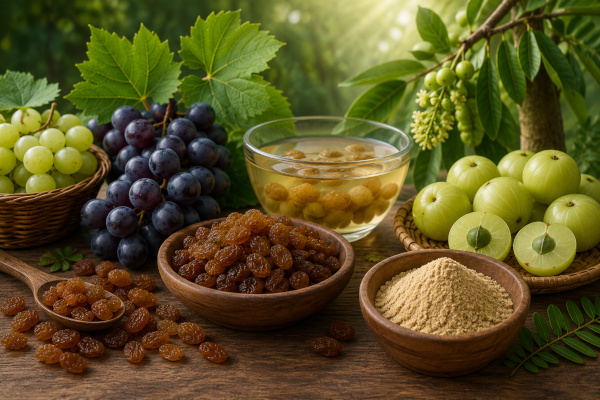
Draksha, commonly known as raisin when dried and grape when fresh, is one of Ayurveda’s most loved nourishing fruits. It is sweet, cooling, gentle on the stomach and deeply associated with strength, hydration, rejuvenation and relief from excess heat. In Ayurveda, Draksha is not seen merely as a dry fruit. It is considered a valuable food-medicine that supports digestion, energy, bowel movement, voice, thirst relief and Pitta balance.
Raisins are especially valued because they carry the sweetness and nourishment of grapes in a concentrated form. They are easy to store, easy to use and suitable in many traditional preparations. In Indian households, soaked raisins have long been used as a gentle morning tonic, especially for children, elderly people and those recovering from weakness.
Sanskrit Names and Identity
Raisin is known in Ayurveda as Draksha. Fresh grapes are also called Draksha, while dried grapes are commonly used as Mridvika or Draksha depending on context. The botanical source is Vitis vinifera.
In traditional practice, black raisins and golden raisins are both used, but black raisins are often preferred in many household remedies because of their richer taste and stronger nourishing quality. Good quality raisins should be clean, naturally sweet, soft after soaking and free from chemical coating or artificial shine.
Ayurvedic Nature of Draksha
Draksha is mainly madhura in rasa, meaning sweet in taste. It is generally considered cooling in potency and nourishing in effect. It supports Pitta balance and helps soothe dryness, heat and weakness. Its sweet and cooling nature makes it useful when the body needs gentle nourishment without harsh stimulation.
In Ayurvedic understanding, Draksha supports rasa dhatu, the primary nourishing fluid of the body. This is why it is traditionally used in thirst, fatigue, dryness, burning sensation and weakness. It is also valued for supporting bowel movement because soaked raisins become soft, moist and mildly laxative.
Draksha and Pitta Balance
Pitta is associated with heat, sharpness, acidity, intensity and burning sensation. When Pitta becomes aggravated, a person may experience excessive thirst, burning feeling, irritability, sour belching, nausea, heat intolerance or dryness after heat exposure.
Draksha is useful in such conditions because it is sweet, cooling and soothing. It does not create the heaviness of many rich foods when taken properly. Instead, it gently nourishes the body and helps calm heat.
This is why raisins are often included in cooling drinks, panaka preparations, herbal decoctions and rejuvenative recipes. They are also used in formulations where dryness, weakness and heat exist together.
Traditional Benefits of Raisins in Ayurveda
Draksha is traditionally valued as a balya, meaning strength-promoting substance. It is also considered brimhana, meaning nourishing. It supports vitality and is useful when the body feels depleted.
Raisins are also used for relieving thirst. When soaked and consumed with water, they help provide gentle hydration and cooling. In traditional summer regimens, raisin water or raisin-based drinks are considered soothing.
Draksha is also known for supporting bowel movement. Soaked raisins are commonly taken in the morning to help relieve mild constipation, especially when dryness is the main cause.
It is also used in cough, throat dryness and voice strain in classical practice, especially when combined with suitable herbs. Its sweet, moist and soothing nature supports the throat and respiratory passages.
Raisins as a Rejuvenator
One of the most beautiful aspects of raisins is their rasayana-like quality. A rasayana is a rejuvenative substance that supports strength, vitality, tissue nourishment and longevity when used appropriately.
Draksha nourishes without being harsh. It is suitable for those who need gentle support after illness, during fatigue, in heat-related weakness or in mild depletion. It helps restore softness and moisture in the body.
Soaked raisins are especially useful because soaking makes them easier to digest. The soaking water also absorbs part of their sweetness and cooling quality, making it a pleasant natural tonic.
Draksha for Digestion and Bowel Health
Raisins are sweet, moist and mildly laxative when soaked. Ayurveda understands constipation not only as a bowel problem but also as a sign of dryness and disturbed Vata. When the colon becomes dry, stool becomes hard and difficult to pass.
Soaked raisins help bring moisture and softness. This is why they are traditionally used as a gentle food-based support for bowel regularity. They are especially useful when constipation is mild and associated with dryness.
However, raisins should be taken in the right quantity. Excess use can increase sugar intake and may not suit people with diabetes, weak digestion or Kapha dominance.
Draksha and Summer Wellness
During summer, the body loses fluid and strength through heat and sweating. Ayurveda recommends cooling, hydrating and nourishing foods during hot seasons. Draksha fits naturally into this seasonal approach.
Raisin water, raisin-based panaka and amla-raisin preparations help calm heat and refresh the body. They provide a gentle sweetness that supports energy without excessive heaviness.
Draksha is especially useful for people who feel tired, thirsty, dry or overheated during summer. It can be used as part of a balanced diet along with cooling foods like amla, tender coconut water, pomegranate, coriander water and light meals.
Dhatri Panaka: Amla-Raisin Rejuvenator
Dhatri Panaka is a classical Ayurvedic drink associated with the treatment context of Chhardi, or vomiting, especially when Pitta is involved. Dhatri refers to Amalaki, or Indian gooseberry, one of Ayurveda’s greatest rejuvenative fruits. In this preparation, the cooling and sour-sweet strength of amla is combined with the nourishing sweetness of raisins.
This drink may be understood as an amla-raisin rejuvenator. It brings together two important Ayurvedic fruits: Amalaki for Pitta balance, rejuvenation and digestive support, and Draksha for nourishment, cooling and gentle restoration.
Traditional Dhatri Panaka Recipe
Ingredients:
Fresh Amalaki juice or amla extract — as required
Clean soaked raisins — a small handful
Honey or natural sweetener — as required
Clean water — as required
A small quantity of cooling aromatic support such as cardamom may be added in household use, if suitable
Method:
Wash the raisins well and soak them in clean water until they become soft. Crush or blend the soaked raisins and strain if needed. Mix this raisin extract with fresh amla juice or amla extract. Add clean water to dilute it into a pleasant drink. Add honey or a suitable natural sweetener only after the liquid is at room temperature. Mix well and use fresh.
This preparation should be consumed in small quantity and preferably under Ayurvedic guidance when used for nausea, vomiting, Pitta aggravation or digestive discomfort. It should not be treated as an ordinary sugary drink.
Why Dhatri Panaka Works in Ayurvedic Logic
The formulation is meaningful because both amla and raisin work beautifully for Pitta balance. Amla is sour in initial taste but cooling and rejuvenative in deeper action. Raisin is sweet, cooling and nourishing. Together, they help calm heat, dryness and depletion.
In vomiting associated with Pitta, there may be sourness, burning sensation, thirst and weakness. Amla helps balance Pitta and supports digestion. Raisins provide mild sweetness, softness and restoration. The panaka form makes the preparation drinkable, cooling and easy to absorb.
This is the wisdom of Ayurvedic dietetics: food, drink and medicine are not separate when used with correct understanding. A simple fruit-based drink can become therapeutic when its ingredients, dose, timing and indication are properly matched.
Manuscript and Classical Reference
Dhatri Panaka is referenced in the classical Ayurvedic tradition in connection with Chhardi, or vomiting. The preparation is associated with Bhaisajya Ratnavali in the Chhardirogadhikara section, specifically 19/17, and also with Yoga Ratnakara in the Chhardi Chikitsa section, Shloka 34.
Bhaisajya Ratnavali is an important Ayurvedic compendium known for its disease-wise arrangement of formulations. It is widely used in traditional Ayurvedic clinical practice because it presents practical treatment preparations for many conditions. Yoga Ratnakara is another respected classical text, valued for its accessible clinical formulations, dietetic recommendations and treatment approaches. The presence of Dhatri Panaka in these traditions shows that Ayurveda gave importance to drinkable preparations, especially in conditions where the digestive system was disturbed and the patient needed gentle, cooling support.
The reference also shows the importance of Dhatri, or amla, and Draksha, or raisin, in classical food-medicine preparations. Both are fruits, yet Ayurveda uses them with therapeutic intelligence.
Simple Soaked Raisin Tonic
For daily wellness, a simple soaked raisin tonic is commonly used in Indian homes.
Take 8 to 10 clean raisins and soak them overnight in a small cup of water. In the morning, eat the softened raisins and drink the soaking water. This is traditionally used for gentle bowel support, mild dryness and daily nourishment.
For children, elderly people or those with weak digestion, the quantity should be smaller and guided by tolerance.
Raisins With Milk
Raisins boiled in milk are traditionally used as a nourishing drink. This is more suitable for people with Vata dryness, weakness and low body strength. It is heavier than raisin water, so it should be avoided when digestion is weak, when there is heaviness, cold, cough with Kapha, or sluggish metabolism.
Raisins and Women’s Health
In household tradition, soaked raisins are often used for weakness, fatigue and mild constipation. They are also valued after periods of physical depletion. Because raisins are nourishing and sweet, they can support energy when used in moderation.
However, those with diabetes, gestational diabetes, obesity, severe Kapha imbalance or digestive heaviness should be cautious.
Raisins for Children and Elderly
Draksha is gentle when used properly. Soaked raisins can be useful for children with mild constipation and for elderly people with dryness-related bowel difficulty. The soaked form is preferred because it is softer and easier to digest.
For children, raisins should be given in an age-appropriate way to avoid choking. The soaked raisins may be mashed or the water may be given after proper guidance.
Modern Nutritional View
From a modern nutritional perspective, raisins contain natural sugars, fibre, minerals and antioxidant compounds. They provide quick energy and can support bowel movement due to their fibre content. Their natural sweetness makes them a useful alternative to refined sugary snacks when taken in moderation.
However, because raisins are concentrated dried fruit, their sugar content is high. Portion control is important. Ayurveda also supports this idea by emphasizing dose, digestion and individual constitution.
Who Can Benefit From Raisins
Raisins may be useful for people with dryness, mild constipation, heat-related fatigue, thirst, weakness and Pitta-related depletion. They are also suitable for those needing gentle nourishment after illness, provided digestion is stable.
They are best used soaked, especially for daily wellness. Dry raisins eaten in large quantity can feel heavy or increase sugar load.
Who Should Be Careful
People with diabetes should use raisins only with medical advice because of their natural sugar content. Those with obesity, high blood sugar, Kapha dominance, sluggish digestion, fungal issues or frequent bloating should avoid excess use.
People with severe vomiting, dehydration, fever, chronic illness or persistent digestive symptoms should seek medical care. Classical preparations like Dhatri Panaka should be used therapeutically only under qualified Ayurvedic supervision.
Honey should never be added to hot liquid. It should be mixed only when the drink is cool or at room temperature.
Best Ways to Use Raisins
The best daily method is soaking. Soaked raisins are softer, easier to digest and more cooling. They may be taken in the morning or used in drinks like panaka.
Raisins may also be added to traditional porridges, light desserts, herbal drinks and milk preparations depending on constitution and season.
For Pitta, raisins combine well with amla, coriander, fennel and rose. For Vata, they combine well with milk, ghee and warming digestive spices in small amounts. For Kapha, raisins should be limited and used with spices like dry ginger only when suitable.
Conclusion
Draksha, or raisin, is one of Ayurveda’s sweetest examples of food as medicine. It nourishes, cools, softens and restores. It supports Pitta balance, relieves dryness, helps mild constipation and provides gentle strength.
The classical Dhatri Panaka, combining amla and raisin, shows the depth of Ayurvedic dietetics. It is a drink, but also a therapeutic idea. It uses fruit, sweetness, cooling energy and rejuvenative wisdom to support the body during Pitta-related disturbance.
In daily life, a few soaked raisins can be a simple and graceful wellness practice. Used wisely, Draksha reminds us that Ayurveda often finds medicine in the most familiar foods.
You may also like
-
Bharat Biotech’s Nucelion and VeGen Bio Partner to Manufacture Advanced Dual-Target CAR-T Cancer Therapy in India
-
Ayurveda and Anger: How Emotional Excess Affects Physical and Mental Health
-
Ayurveda and Stress: Daily Practices for Mental Balance and Emotional Well-Being
-
Ayurveda and Bowel Routine: Why Regularity Matters for Digestive Health
-
Why Ayurveda Warns Against Suppressing Hunger, Thirst and Sleep
