India has taken another major step towards modernising its Armed Forces, with the Defence Acquisition Council (DAC) granting Acceptance of Necessity (AoN) for capital acquisition proposals worth approximately ₹2.12 lakh crore. The approvals cover a broad range of military capabilities, including artillery systems, helicopters, air defence weapons, unmanned aerial platforms, naval defence systems and specialised surveillance equipment.
The council met on 26 October 2026 under the chairmanship of Defence Minister Rajnath Singh. According to the Ministry of Defence, approximately 82% of the approved procurement value is intended to be sourced from Indian industry, highlighting the growing role of domestic defence manufacturers in meeting the operational requirements of the Army, Navy and Air Force.
The proposals reflect the Armed Forces’ increasing emphasis on battlefield mobility, integrated surveillance, precision engagement, counter-drone protection and indigenous military platforms. They also represent a substantial potential procurement pipeline for India’s public and private defence industries.
Understanding the ₹2.12 Lakh Crore Defence Acquisition Approvals
The Defence Acquisition Council is a key decision-making body responsible for considering major capital procurement proposals for India’s Armed Forces. Its approval through Acceptance of Necessity establishes the in-principle requirement for acquiring specified military equipment and permits the procurement process to progress through subsequent stages.
The ₹2.12 lakh crore figure represents the estimated value of proposals that received AoN clearance. It does not mean that contracts of the same value have already been signed or that the entire amount has been committed for immediate expenditure.
Individual programmes must proceed through the applicable acquisition procedures, including the preparation of detailed requirements, procurement evaluations, commercial negotiations and contractual approvals.
Nevertheless, the scale of the clearances provides an indication of the military capabilities that India intends to strengthen through future procurement.
Indian Army to Acquire High Mobility Vehicles and Advanced Artillery Systems
The Indian Army received approval for several major equipment categories intended to improve operational mobility and firepower.
Among them are High Mobility Vehicles (HMVs), which will strengthen the movement of personnel, equipment and logistical supplies across difficult terrain. Such vehicles are particularly important for military formations operating in areas where road infrastructure, geography and environmental conditions impose significant restrictions on conventional transport.
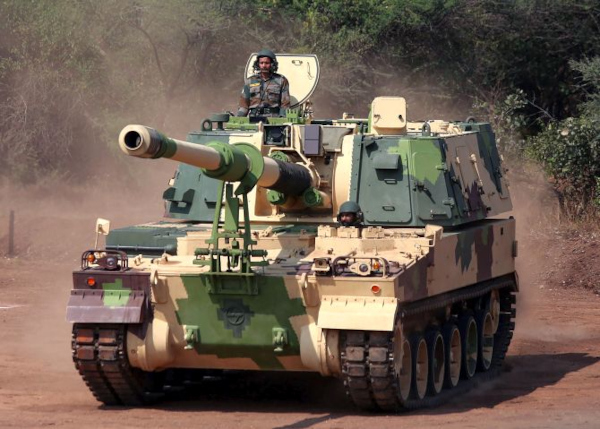
The Army also received AoN approval for a Self-Propelled Tracked Gun System. This equipment is intended to provide artillery formations with mobility and firepower comparable to those of mechanised combat units.
Tracked self-propelled artillery can operate alongside armoured formations, allowing artillery units to reposition as battlefield conditions change. The Ministry of Defence identified matching mobility and firepower as the principal operational requirement behind the proposed acquisition.
The approval establishes the Army’s intention to strengthen its mobile artillery capabilities. However, the official announcement does not identify the specific gun model, manufacturer, calibre, quantity or procurement category.
Gun Shot Response Systems to Improve Battlefield Awareness
The DAC also approved the procurement of a Gun Shot Response System (GSRS) for the Indian Army.
According to the Ministry of Defence, the system will serve as a force multiplier by improving real-time situational awareness.
Gunshot-detection technologies generally use sensors and signal-processing capabilities to help identify firing events and provide information relevant to threat assessment. Depending on the system’s design, such capabilities can assist military personnel in determining the approximate direction or location of hostile firing.
The proposed GSRS acquisition reflects the growing importance of sensor-based battlefield awareness, especially in operational environments where identifying threats rapidly can improve the survivability and response capabilities of deployed forces.
The ministry has not disclosed the proposed system’s technical specifications, detection range, sensor architecture or procurement quantity.
Light Multi Role Helicopters for Army and Air Force Operations
The council approved the acquisition of Light Multi Role Helicopters (LMRH) intended for use by both the Indian Army and the Indian Air Force.
These helicopters will support a range of operational requirements, including reconnaissance, surveillance, combat-related missions, search and rescue, and humanitarian assistance and disaster relief.
The requirement reflects the continued importance of helicopters in military operations across India’s varied terrain. Rotary-wing aircraft provide mobility in environments where fixed-wing operations may be constrained by limited airfield infrastructure or difficult geographical conditions.
Light helicopters can also perform observation and transport-related tasks while supporting military formations operating in remote areas.
The proposed procurement is intended to address requirements shared by the Army and Air Force. The ministry has not identified a specific helicopter type, acquisition quantity or manufacturer in its announcement.
VSHORADS and Counter-Drone Systems to Strengthen Army Air Defence
A significant portion of the Army’s approved requirements concerns protection against emerging aerial threats.
The DAC granted AoN for Very Short-Range Air Defence Systems (VSHORADS), which the Ministry of Defence described as equipment intended to engage new-generation small aerial threats.
Very short-range air defence capabilities play an important role in protecting military formations, installations and important assets against aircraft and other threats operating at relatively short distances.
The increasing use of small unmanned aerial systems has made this layer of air defence particularly important.
The council also approved Platform Based Counter Unmanned Aerial Systems (C-UAS). According to the ministry, these systems are intended to enhance the survivability of tanks on modern battlefields.
Armoured platforms face growing threats from reconnaissance drones, attack drones and loitering munitions. Integrating counter-UAS capabilities with military platforms can provide an additional protective layer alongside conventional armour and other defensive systems.
The official release does not specify whether the proposed platform-based systems will employ electronic warfare, kinetic interception or a combination of defensive technologies.
Long-Range Drones and Integrated Surveillance Systems Receive Approval
Unmanned military systems feature prominently in the Army’s latest acquisition proposals.
The DAC approved the procurement of several categories, including an Unmanned Aerial System Brick Long Range, Surveillance UAVs, an Integrated Surveillance and Strike System, and a Long Range Kamikaze Drone System.
These acquisitions are intended to strengthen the Army’s surveillance, target identification and engagement capabilities.
Surveillance UAVs can extend the observation capabilities of deployed formations by gathering information across areas that may be difficult to monitor using ground-based sensors alone. Long-range unmanned systems can also provide greater operational reach and support more persistent monitoring of selected areas.
Integrated surveillance and strike systems seek to connect information gathering with the ability to engage identified targets. Such capabilities are increasingly relevant to military operations that require rapid coordination between sensors, command systems and weapon platforms.
Long-range kamikaze drones, commonly described as loitering munitions, represent another category of unmanned weapon systems. These platforms can combine reconnaissance and attack functions, allowing a weapon to remain airborne while searching for or approaching a designated target.
The inclusion of these systems in the DAC approvals demonstrates the Army’s continued focus on unmanned warfare technologies.
However, the government announcement does not disclose the proposed systems’ operational ranges, payload capacities, manufacturers, quantities or detailed configurations.
Indian Navy to Strengthen Missile Defence and Acquire Indigenous Platforms
The Indian Navy received approval for the procurement of Active Offboard Decoy Systems (AODS) and other major naval platforms.
The Ministry of Defence stated that the AODS acquisition will strengthen the Navy’s defence against modern anti-ship missiles.
Offboard decoy systems are designed to provide a defensive response to incoming threats by presenting alternative targets or otherwise interfering with a missile’s targeting process. Such systems form part of the broader layered protection architecture used by modern naval combatants.
The effectiveness of naval missile defence increasingly depends on the coordination of sensors, electronic warfare capabilities, decoys and defensive weapons.
The proposed acquisition of Active Offboard Decoy Systems reflects the Navy’s requirement to strengthen ship survivability in an environment where anti-ship missile technologies continue to evolve.
The council also approved proposals involving major naval platforms that will be designed and constructed indigenously.
According to the ministry, these platforms will incorporate modern warfare capabilities and enhance the Navy’s combat strength.
The announcement does not identify the ship classes, number of vessels, construction shipyards or individual programme costs. These details should therefore not be inferred from the broader acquisition approval.
Indian Air Force to Acquire Helicopters, Air Defence Systems and Weapons
The Indian Air Force received AoN approval for helicopters, air defence systems, weapons and specialised meteorological equipment.
The proposed acquisitions are intended to improve the service’s air defence capabilities and overall operational effectiveness.
Among the approved requirements are Special Utility Helicopters, which will help the Air Force meet important air transport needs.
Utility helicopters support a range of military functions, including personnel movement, logistical support and operations requiring access to locations where conventional fixed-wing transport aircraft may not be suitable.
The Air Force’s acquisition proposals also include air defence systems and weapons. These are intended to enhance its capacity to respond to operational threats and sustain combat readiness.
The Ministry of Defence has not identified the specific systems, weapons, helicopter models or procurement quantities covered by these approvals.
X-Band Doppler Weather Radars for Forward Areas
One of the more specialised approvals for the Indian Air Force concerns Mobile X-Band Doppler Weather Radar Systems.
According to the Ministry of Defence, these systems will provide high-resolution, localised weather surveillance in forward areas.
Weather information is particularly important for military aviation because rapidly changing atmospheric conditions can affect flight planning, aircraft operations and mission execution.
Doppler weather radars provide information about precipitation and the movement of weather systems by analysing reflected radar signals. X-band systems operate at relatively high frequencies and can support detailed observations over localised areas.
Their deployment in forward regions can strengthen weather monitoring where access to conventional meteorological infrastructure may be limited.
Mobile configurations also offer flexibility by allowing radar equipment to be positioned according to operational requirements.
The proposed acquisition illustrates the importance of supporting technologies that contribute to military readiness without necessarily functioning as weapons themselves.
Approximately 82% of Procurement Value Intended for Indian Industry
A defining feature of the October 2026 DAC approvals is the Ministry of Defence’s statement that approximately 82% of the procurement value will be sourced from Indian industry.
Applied to the announced total of ₹2.12 lakh crore, this represents approximately ₹1.74 lakh crore in potential procurement value associated with domestic suppliers.
This is a calculated approximation based on the government’s percentage estimate, rather than a separately announced allocation or signed contract value.
The procurement pipeline spans several areas in which Indian companies are developing manufacturing and engineering capabilities, including military vehicles, artillery, helicopters, electronics, unmanned systems, surveillance equipment, naval technologies and air defence systems.
Domestic sourcing can support production capacity, specialised supply chains, research and development, and participation by smaller technology companies.
The opportunities may extend across public sector defence manufacturers, private companies, specialised engineering firms and component suppliers.
However, the distribution of contracts among individual companies will depend on subsequent procurement decisions. The DAC announcement does not assign the approved programmes to specific manufacturers.
Defence Modernisation Reflects Changing Operational Requirements
The equipment categories approved by the DAC reflect several important developments in contemporary military operations.
For ground forces, mobility and firepower remain essential, but surveillance networks, unmanned systems and counter-drone capabilities are becoming increasingly significant.
The Army’s procurement proposals combine conventional military equipment, such as tracked artillery and high mobility vehicles, with technologies intended to address newer battlefield threats.
For the Navy, the focus on offboard decoys highlights the continuing importance of defending ships against advanced missile systems. The approval of indigenous naval platforms also reflects the service’s long-term requirement for modern combat capabilities.
The Air Force’s proposals combine operational aviation requirements with air defence equipment and improved meteorological surveillance.
Taken together, the approvals demonstrate an approach to modernisation that seeks to strengthen existing military capabilities while incorporating technologies associated with emerging threats.
Major Procurement Pipeline Supports India’s Defence Industrial Ecosystem
The ₹2.12 lakh crore DAC approvals represent a substantial prospective programme for India’s defence procurement system.
The intended domestic sourcing share provides opportunities for Indian manufacturers and technology developers to participate in programmes involving both established military equipment and newer systems.
Several approved categories, particularly counter-drone technologies, surveillance UAVs, integrated strike systems and specialised sensors, involve areas where engineering development and system integration are becoming increasingly important.
At the same time, the approval of artillery systems, vehicles, helicopters and naval platforms reflects the continuing requirement for large-scale manufacturing capabilities and dependable industrial supply chains.
The next stages of acquisition will determine how these requirements translate into contracts, production schedules and equipment deliveries.
The October 2026 decisions therefore establish a significant procurement direction rather than an immediately completed acquisition programme.
Strengthening Indigenous Defence Capabilities
The Defence Acquisition Council’s latest approvals mark an important stage in India’s efforts to strengthen military capability and expand domestic defence production.
By granting in-principle clearance to proposals worth approximately ₹2.12 lakh crore, the council has identified a broad set of priorities for modernising the Army, Navy and Air Force.
The inclusion of artillery, helicopters, air defence systems, unmanned platforms, naval defence technologies and specialised surveillance equipment reflects the increasing complexity of military requirements.
Equally significant is the decision to direct approximately 82% of the prospective procurement value towards Indian industry.
As the approved proposals progress through acquisition procedures, domestic manufacturers and technology developers will have opportunities to contribute to the Armed Forces’ evolving requirements. The eventual contracts, production milestones and equipment inductions will determine how these approvals translate into operational capabilities and long-term industrial development.
References
- Press Information Bureau, Ministry of Defence, 26 October 2026. DAC clears capital acquisition proposals worth Rs 2.12 lakh crore for defence forces. Release ID: 2328486.
https://www.pib.gov.in/PressReleseDetailm.aspx?PRID=2328486&lang=2®=48
You may also like
-
Rajnath Singh Calls for Aatmanirbharta 2.0 in Defence at SWAVLAMBAN 2026
-
Manastu Space Secures ₹116 Crore Government Support to Develop Indigenous Green Propulsion Systems
-
GeM’s AABHAR Collection Showcases 294 Indigenous Products, Strengthens Market Access for Indian Artisans
-
Indian Semiconductor Companies Propose New Manufacturing and Chip Design Investments in Madhya Pradesh
-
CSIR-CRRI Partners with Industry to Develop Advanced Indigenous Airport Runway and Pavement Materials
