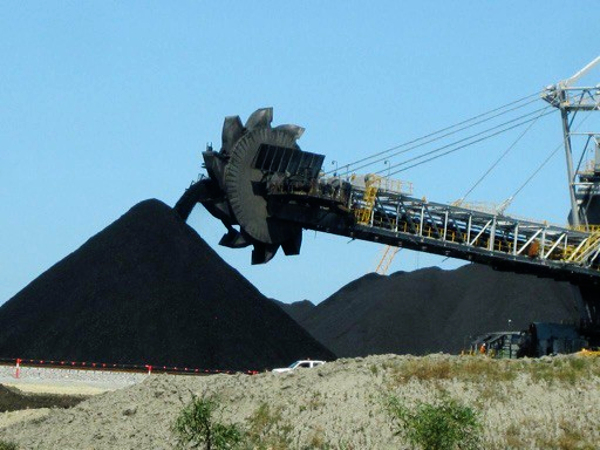
Coal India Limited is preparing for one of the largest transformations in its history, with the state-owned mining giant targeting around one billion tonnes of annual coal production by FY2029-30 while simultaneously building 9.5 GW of renewable-energy capacity.
Chairman and Managing Director B. Sairam, outlining the company’s roadmap at Coal India’s 52nd Annual General Meeting on 31 August 2026, said the Maharatna PSU would continue expanding its core mining operations while creating new businesses in renewable energy, battery storage, coal gasification, critical minerals and power generation.
The strategy reflects the unusual position occupied by Coal India in India’s energy transition. The company remains responsible for close to three-fourths of India’s domestic coal production and consequently remains central to electricity and industrial energy security. At the same time, it is attempting to use its scale, land resources, engineering capabilities and balance sheet to establish a substantial presence in businesses that extend well beyond conventional coal mining.
Coal Production Targeted at Around One Billion Tonnes
Coal India’s principal operational target is to raise its own annual coal production to approximately one billion tonnes by FY2029-30.
The scale of the proposed expansion becomes clearer when compared with current production. Coal India produced 768.19 million tonnes during FY2025-26, down from 781.06 million tonnes in FY2024-25. Coal offtake during FY26 stood at 744.83 million tonnes, including 588.63 million tonnes supplied to the power sector.
Production during FY26 was affected by heavy rainfall, railway evacuation constraints, rake availability and other operational difficulties. The company nevertheless continues to build mining and logistics capacity on the assumption that India’s expanding electricity system, manufacturing sector and infrastructure requirements will sustain substantial demand for domestic coal.
Coal India’s expansion is therefore not limited to opening additional mines. The company is increasing mechanisation, improving mine productivity and expanding systems capable of moving greater quantities of coal from mines to rail-loading points without relying extensively on road transport.
The wider Ministry of Coal programme envisages 139 First Mile Connectivity projects by FY2030 with investment of around ₹45,000 crore. Such systems use conveyors, coal-handling plants, silos and rapid-loading infrastructure to transport coal directly from mine pitheads to railway dispatch points. The approach can increase loading speed while reducing road congestion, diesel consumption, dust and handling losses.
Underground Coal Output Targeted at 70 Million Tonnes
One of the most important elements of Coal India’s mining strategy is the revival and modernisation of underground coal production.
Coal India has established a roadmap to produce 70 million tonnes annually from underground mines by FY2029-30. At present, opencast mines dominate the company’s output, accounting for 96.67% of raw-coal production during FY2025-26. Underground operations consequently represent only a small fraction of total output.
Instead of relying primarily on older labour-intensive underground techniques, Coal India is expanding the use of continuous miners and other mass-production technologies. These machines can cut, gather and transport coal in a continuous operation and can substantially improve productivity in geological conditions suited to mechanised underground mining.
The company has also been attempting to revive production from closed and discontinued underground mines through partnerships with private mine developers and operators. This could provide access to coal reserves that are difficult or uneconomic to extract through large opencast operations.
Expanding underground mining also has strategic significance because surface mining increasingly faces constraints related to land acquisition, rehabilitation, environmental clearances and the large quantities of overburden that must be removed before coal seams can be accessed.
Coal India Builds a 9.5 GW Renewable-Energy Portfolio
Alongside the expansion of coal production, Coal India is targeting 9.5 GW of renewable-energy capacity by FY2029-30, transforming what was historically a pure mining enterprise into a much broader energy company.
At the end of FY2025-26, Coal India and its subsidiaries had 357 MW of installed renewable capacity, while around 523 MW was under development. The company is now moving toward projects measured not in tens of megawatts but in hundreds and eventually thousands of megawatts.
Among the major projects is an 875 MW solar programme in Rajasthan being developed through CIL Rajasthan Akshay Urja Limited, a joint venture with Rajasthan Rajya Vidyut Utpadan Nigam Limited.
Coal India has also secured a 600 MW solar project at Jalaun Solar Park in Uttar Pradesh and is implementing the 300 MW Khavda solar project in Gujarat. It has separately partnered with Uttar Pradesh Rajya Vidyut Utpadan Nigam Limited for the development of large renewable-energy projects in the state.
An even larger component of the strategy involves supplying renewable electricity to commercial and industrial customers. Coal India has initiated arrangements for providing as much as 4.5 GW of renewable power through combined wind and solar projects, including plans for approximately 1.5 GW of wind capacity and 3 GW of solar capacity connected through India’s inter-state transmission network.
The programme means that by the end of the decade Coal India could operate a renewable portfolio comparable in scale with those of several dedicated Indian clean-energy companies.
Coal India Moves Into Battery Storage
Renewable power is being accompanied by investment in Battery Energy Storage Systems, allowing electricity generated from solar and wind projects to be stored and supplied when required.
Coal India has secured battery-storage projects totalling 267.5 MW with 1,070 MWh of storage capacity in Telangana and Odisha.
One of the largest is a 187.5 MW/750 MWh project in Telangana, while an additional 80 MW/320 MWh system has been secured in Odisha.
Battery storage will become increasingly important as India’s renewable-energy capacity expands because solar generation peaks during daylight hours while electricity demand often remains high after sunset. Storage allows part of that generation to be shifted to periods when it is more valuable to the grid.
Coal India’s entry into this sector therefore places the company not only in renewable-power generation but increasingly in the infrastructure required to integrate renewable electricity into the national grid.
₹50,000-Crore Coal Gasification Pipeline
A third major pillar of Coal India’s diversification is coal gasification, through which coal is converted into synthesis gas rather than being directly burned.
Syngas can subsequently be processed into products including synthetic natural gas, fertiliser feedstock, methanol, chemicals and ammonium nitrate. The strategy is intended to extract greater industrial value from India’s large domestic coal resources while substituting products currently dependent on imported natural gas or petrochemical feedstocks.
Coal India is progressing four major gasification projects. These include the 1.27-million-tonne-per-year Talcher Fertilizers project, a 0.66-million-tonne coal-to-ammonium-nitrate project and two projects designed to convert coal into synthetic natural gas.
The company is also exploring an additional pipeline of coal-gasification projects representing potential investment of approximately ₹50,000 crore.
The government has separately expanded its national coal-gasification programme. In 2026, it approved a new ₹37,500-crore financial-support scheme, in addition to an earlier ₹8,500-crore programme, as India pursues a national target of creating 100 million tonnes of coal-gasification capacity by 2030.
If these projects reach commercial scale, Coal India’s role could progressively expand from supplying a raw fuel to supplying chemical and industrial feedstocks derived from coal.
Critical Minerals Become a New Business
Perhaps the biggest departure from Coal India’s traditional business is its move into critical minerals.
The company is pursuing domestic and overseas opportunities involving minerals needed for batteries, clean-energy equipment, electronics and advanced manufacturing. During FY2025-26, Coal India secured critical-mineral opportunities and approved platforms designed to pursue international assets.
Coal India has already emerged as the preferred bidder for the Oranga-Revatipur Graphite and Vanadium Block in Chhattisgarh, giving India’s largest coal miner a direct entry into minerals important for batteries, specialised alloys and emerging energy technologies.
It has also been exploring opportunities involving rare-earth elements and lithium and has pursued cooperation with organisations including IREL, Hindustan Copper and international research institutions.
Overseas expansion forms another part of the strategy. Coal India plans platforms in Singapore and Chile to identify, acquire and trade critical-mineral resources. It has examined lithium opportunities in Chile and mineral assets in Australia, Africa and other resource-rich regions.
The Singapore operation is intended to provide Coal India with an international base for mineral trading and potential acquisitions. Such a move would represent a significant evolution for a company whose activities were historically concentrated almost entirely within India’s coalfields.
New Thermal Power Business Also Emerging
Coal India’s diversification does not mean that the company is abandoning conventional baseload electricity.
During FY2025-26, Coal India and Damodar Valley Corporation incorporated DVC CIL Power Private Limited, a 50:50 joint venture that plans to construct a 1,600 MW thermal power project at Chandrapura in Jharkhand.
The proposed two-unit plant involves estimated investment of approximately ₹21,000 crore. The detailed project report has been approved and preliminary site-development activities have begun.
This illustrates Coal India’s emerging integrated-energy model: coal mining will remain the core business, but the company increasingly intends to participate in electricity generation, renewable energy, storage, gasification and strategic minerals.
Improving Profitability Alongside Expansion
The ambitious investment programme comes after a challenging FY2025-26.
Coal India’s consolidated revenue from operations was ₹1.68 lakh crore, broadly unchanged from the previous year, while profit after tax declined from ₹35,450 crore to ₹31,071 crore. Lower average coal realisations, increased depreciation associated with capital investment and higher contractual and statutory expenditure affected margins.
Sairam told shareholders that Coal India would therefore place greater emphasis on improving price realisations, productivity, controllable costs and utilisation of existing assets.
Performance has shown some improvement in FY2026-27. Revenue during the June quarter increased 8% year-on-year to ₹46,255 crore, while profit after tax reached approximately ₹8,850 crore. Coal offtake also improved, including strong year-on-year growth during July.
The challenge for Coal India will be to finance and execute its large diversification portfolio without weakening the profitability and cash generation of its core mining business.
From Coal Miner to Integrated Energy and Resources Company
Coal India’s 2030 strategy demonstrates that India’s largest coal producer does not see the energy transition simply as a shift away from its traditional business.
Instead, the company is attempting to build a broader industrial platform around the assets it already possesses. Coal production, underground mining, renewable electricity, battery storage, coal-derived chemicals, thermal power and critical minerals are being developed simultaneously.
Coal will remain central to this strategy. India’s electricity demand is expanding rapidly, and domestic coal continues to provide much of the dependable generation required to support industrialisation, urbanisation and increasing household electricity consumption.
However, the scale of Coal India’s renewable and critical-mineral plans indicates that management is also positioning the company for an energy system that will look increasingly different from the one in which Coal India became the world’s largest coal producer.
The significance of the one-billion-tonne coal target and 9.5 GW renewable target being pursued simultaneously lies precisely in that combination. Coal India is preparing to produce more of its traditional fuel while using the resulting industrial scale and financial strength to establish new businesses that could become increasingly important during India’s energy transition.
You may also like
-
India’s Economic Warfare Challenge: Strategic Autonomy, Energy Security and the Rise of a Global Power
-
India-US Trade Deal Stalemate: Why Washington’s Tariff Pressure Has Failed to Secure an Agreement
-
US Double Standards in Foreign Policy: 16 Recent Cases Involving India, Russia, China and Global Trade
-
India’s Arctic Energy Ambitions: Russian Oil, LNG and a New Sea Route to Indian Ports
-
India and Russia Explore Joint Icebreaker Construction as Maritime Industrial Cooperation Expands
