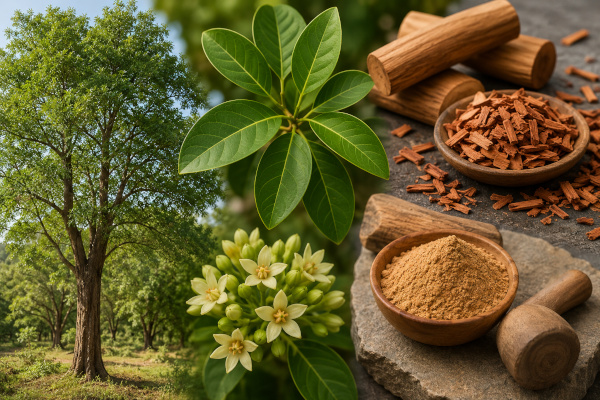
Chandana, known to the world as sandalwood, is one of the most revered fragrant woods in Ayurveda. Its aroma is gentle, sacred and cooling, but its importance goes far beyond fragrance. In classical Ayurvedic understanding, Chandana is a medicine of calmness, heat-control and purity. It is associated with relief from burning sensation, excess Pitta, thirst, heat-related discomfort, skin irritation and certain conditions of aggravated internal heat.
For thousands of years, sandalwood has held a special place in Indian life. It is used in temples, rituals, royal traditions, perfumes, skincare and medicine. Ayurveda sees Chandana as a dravya that cools the body, soothes the mind and supports balance when heat, inflammation, irritation and restlessness rise in the system.
Sanskrit Names and Identity
Chandana is generally identified with white sandalwood, botanically known as Santalum album. It is also called Shweta Chandana when specifically referring to white sandalwood. In Sanskrit literature, it is praised for its cooling fragrance, pleasant touch and calming effect on the body.
The heartwood is the most valued part of the tree. It is aromatic, pale, dense and rich in natural fragrance. The heartwood is traditionally rubbed on stone with water to prepare a cooling paste, or used in powdered form in selected formulations.
Ayurvedic Nature of Chandana
In Ayurveda, Chandana is mainly known for its cooling action.
Its rasa, or taste, is described as tikta and madhura, meaning bitter and sweet. Its guna, or qualities, are laghu and ruksha, meaning light and dry. Its virya, or potency, is sheeta, meaning cooling. Its vipaka, or post-digestive effect, is generally described as katu.
Because of this profile, Chandana is especially valued in Pitta-related conditions. When the body experiences heat, burning sensation, excessive thirst, skin redness, irritation or heat-associated restlessness, Chandana is traditionally considered useful.
It is also regarded as Kapha-Pitta shamaka, meaning it helps pacify Kapha and Pitta when used properly. Its cooling nature makes it especially suitable in hot seasons, heat-dominant constitutions and conditions where Pitta has become aggravated.
Chandana and Pitta Balance
Pitta is associated with heat, sharpness, intensity, digestion, metabolism and transformation. When Pitta becomes excessive, the body may show signs such as burning sensation, acidity-like discomfort, irritability, excessive thirst, redness of skin, heat eruptions or intolerance to heat.
Chandana is one of the classical cooling substances used to calm such heat. It does not act through heaviness or dullness. Instead, it brings a gentle cooling quality. This is why it has been used both externally and internally in traditional formulations.
Externally, sandalwood paste is applied for cooling the skin. Internally, it appears in selected classical preparations where heat, thirst, burning sensation or Pitta-related vomiting are described.
Traditional Uses in Ayurveda
Chandana is traditionally used in Ayurveda for Daha, or burning sensation. It is also used in Trishna, or excessive thirst, and in Pitta-related discomforts. It is valued in certain skin conditions where heat, redness and irritation are prominent.
In classical practice, sandalwood paste is often used on the forehead, chest or skin to reduce heat and provide a cooling sensation. It is also used in fragrant formulations, medicated waters, cooling drinks and combinations with other Pitta-pacifying herbs.
Chandana is also considered useful in maintaining freshness of the body and mind. Its fragrance is calming, and its cooling quality makes it especially loved in summer and during hot climates.
Chandana in Skin Care
One of the most familiar uses of Chandana is in skincare. Sandalwood paste has traditionally been applied to the face and body for cooling, soothing and improving complexion. Ayurveda connects skin health with the balance of Pitta and Rakta. When heat rises in these channels, the skin may show irritation, redness and sensitivity.
Chandana paste, prepared by rubbing genuine sandalwood on a clean stone with water, is considered a gentle external application. It is traditionally used for cooling the skin and calming heat-related discomfort.
However, genuine sandalwood must be used carefully and ethically. Many commercial products use synthetic fragrance or adulterated powders. For Ayurvedic use, genuine, clean and appropriate quality sandalwood is essential.
Chandana as a Sacred Fragrance
Chandana is not only a medicine. It is also a sacred fragrance. In temples, sandalwood paste is offered to deities and applied to the forehead. This is deeply symbolic. The coolness of sandalwood represents peace, devotion, purity and control of inner heat.
In Indian culture, fragrance is connected with sattva, clarity and refinement. Chandana is considered one of the most sattvic aromatic substances. It cools the body and also creates a sense of mental calmness.
This is why sandalwood is used in worship, meditation, royal ceremonies and auspicious rituals. Its medicinal and spiritual uses are beautifully connected.
Chandana Panaka: A Classical Sandalwood Drink
A traditional preparation known as Chandana Panaka is described in the Ayurvedic tradition. It is a drinkable preparation that brings together the cooling quality of Shweta Chandana, the sour-cooling freshness of Amalaki and the sweetness of honey.
Chandana Panaka is associated with Pitta-related vomiting in the classical context. In practical Ayurvedic understanding, this is a cooling drink meant for situations where heat, sourness, burning sensation and Pitta aggravation are dominant.
Traditional Chandana Panaka Recipe
Ingredients:
Shweta Chandana, or white sandalwood heartwood powder — 10 grams
Amalaki rasa, or fresh Indian gooseberry juice — as required
Madhu, or honey — as required
Jala, or clean water — traditionally used in greater proportion for dilution and preparation
Method:
Take genuine food-grade Shweta Chandana powder or sandalwood heartwood. Mix it with fresh Amalaki juice. Add honey as required and blend well. Add clean water as needed to make it into a pleasant cooling drink. The preparation should be used fresh and consumed within the same day.
This preparation should be understood as a classical Ayurvedic drink and not as an ordinary commercial beverage. When used for a health condition, especially vomiting, acidity-like burning, nausea or Pitta aggravation, it should be taken only under the guidance of a qualified Ayurvedic physician.
About the Manuscript Reference
Yoga Ratnakara is one of the respected medieval Ayurvedic compendiums used widely in traditional clinical practice. It presents many practical formulations, disease-wise treatment approaches and diet-based preparations. The text is valued because it compiles useful formulations from earlier traditions and arranges them in a way that physicians can apply in daily practice.
Chandana Panaka is mentioned in the Chhardi Chikitsa section of Yoga Ratnakara, where Chhardi refers to vomiting. The reference places this sandalwood-based drink within the treatment context of Pitta-related vomiting. This shows how Ayurveda did not view food and medicine as completely separate worlds. A cooling drink, when prepared with the right ingredients and given in the right condition, could become a therapeutic support.
The inclusion of Chandana Panaka in such a classical context also shows the sophistication of Ayurvedic dietetics. Ayurveda uses pana, or drinkable preparations, not merely for hydration but also for balancing dosha, calming symptoms and supporting recovery.
Why Chandana Panaka Is Cooling
The logic of Chandana Panaka is very clear from an Ayurvedic perspective. Chandana is cooling and Pitta-pacifying. Amalaki is also considered one of the best fruits for Pitta balance. Honey acts as a yogavahi in many formulations, helping carry the effect of the preparation while also improving taste and acceptability.
Together, these ingredients create a drink that is light, cooling and suitable for heat-dominant imbalance. The preparation is especially meaningful in hot weather or in Pitta-type digestive disturbance when guided by a physician.
Chandana in Summer Wellness
During hot seasons, Ayurveda recommends cooling foods, calming drinks, light meals and protection from excessive sun exposure. Chandana fits naturally into this seasonal lifestyle.
External application of sandalwood paste has traditionally been used to cool the skin and forehead. Chandana-based drinks, where classically indicated, bring the same cooling principle internally. The aim is to reduce excess heat without disturbing digestion.
For summer wellness, Chandana represents the Ayurvedic idea that the body should be cooled gently, not shocked. Cooling does not mean freezing. It means calming heat while preserving balance.
Modern Relevance
In modern life, heat is not only climatic. It also comes from stress, irregular food habits, excessive screen exposure, spicy food, lack of sleep and overwork. Ayurveda would view many of these as factors that disturb Pitta.
Chandana remains relevant because it represents a cooling, calming and aromatic approach to wellness. Its external use in skincare, its ritual use in temples and its internal use in selected classical preparations all show the same principle: reduce heat, calm intensity and restore balance.
Modern interest in natural skincare and aromatic wellness has also brought sandalwood back into attention. However, Ayurveda reminds us that true Chandana must be used with respect, correct identification and proper guidance.
Precautions
Only genuine, clean and food-grade Shweta Chandana should be used for internal preparations. Perfume-grade sandalwood oil, synthetic fragrance oil or cosmetic sandalwood products should not be consumed.
Internal use of Chandana should be done under the guidance of a qualified Ayurvedic physician, especially in children, pregnant women, lactating mothers, people with chronic illness, people on regular medication and those with kidney or liver conditions.
Honey should not be given to infants below one year of age. People with diabetes or blood sugar concerns should seek medical advice before taking honey-based preparations.
Those with allergy to sandalwood or fragrance sensitivity should avoid use. External application should first be tested on a small area of skin.
Sandalwood is also an ecologically valuable and regulated tree. Ethical sourcing is important. Use only legally sourced and authentic sandalwood.
Conclusion
Chandana is one of Ayurveda’s most graceful cooling substances. It carries fragrance, sacredness, medicinal value and cultural memory. It is a dravya of calmness, used to soothe heat, support Pitta balance, refresh the skin and bring peace to the senses.
The classical Chandana Panaka shows how Ayurveda transforms a simple drink into a thoughtful therapeutic preparation. With Shweta Chandana, Amalaki and honey, it reflects the Ayurvedic wisdom of using food-like formulations to support balance during Pitta-related discomfort.
In a world of heat, hurry and overstimulation, Chandana reminds us of an ancient principle: healing can also be fragrant, gentle and cooling.
You may also like
-
Bharat Biotech’s Nucelion and VeGen Bio Partner to Manufacture Advanced Dual-Target CAR-T Cancer Therapy in India
-
Ayurveda and Anger: How Emotional Excess Affects Physical and Mental Health
-
Ayurveda and Stress: Daily Practices for Mental Balance and Emotional Well-Being
-
Ayurveda and Bowel Routine: Why Regularity Matters for Digestive Health
-
Why Ayurveda Warns Against Suppressing Hunger, Thirst and Sleep
