Research

News on Science, Technology and Research in India

Collision Avoidance Maneuver Performed for Chandrayaan-2: ISRO

The lunar orbiter of the Chandrayaan-2 mission, which was successfully deployed in 2019, was moved from its 100-km circular, polar orbit last month to avoid a close approach with NASA’s Lunar Reconnaissance Orbiter (LRO) near the north pole, Indian Space Research Organisation (Isro) said on Monday.

India Launches the 41st Scientific Expedition to Antarctica

India has successfully launched the 41st Scientific Expedition to Antarctica with the arrival of the first batch of its contingent at the southern white continent. The first batch comprising of 23 scientists and support staff reached the Indian Antarctic station Maitri on last week. Four more batches shall be landing in Antarctica by air using DROMLAN facility and onboard chartered ice-class vessel MV Vasiliy Golovnin by mid-January 2022.

Indian Patent Filings Grow Despite Pandemic

Globally, IP filings — including patents, trademarks and designs — rebounded in 2020, indicating the resilience of human innovation despite dire global and economic turmoil during the Covid pandemic, latest data from World Intellectual Property Organization (WIPO) showed. In contrast, during the global financial crisis of 2008-2009, both patent and trademark filing activity had contracted sharply.

ISRO Enters X-band Telemetry & Command Regime with New 18m Antenna

The Indian Space Research Organisation (Isro) has commissioned a new 18m antenna, which for the first time, allows the space agency to conduct telemetry and command operations on the much faster X band (frequency). So far, Isro only used X band for payload data downloading and used the S band for telemetry and command.

Effective Early Warning Systems for Earthquakes Could be in Offing

This research was undertaken by Ms Kanchan Aggarwal, who is a PhD Scholar under the guidance of Prof. Arun K Tangirala of the Department of Chemical Engineering, IIT Madras. A report on their study has been published in the science journal PLOS ONE. The research was partially funded by the Board of Research in Nuclear Sciences, an advisory body of the Department of Atomic Energy.

IISER Researchers Conduct Largest Gut Metagenome Study in India

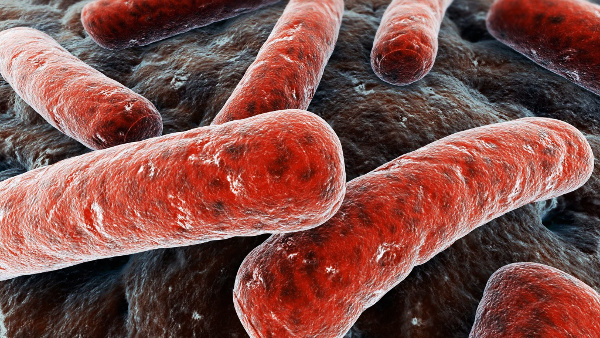
The human gut contains 300-500 types of bacteria that help in digestion, protect us from infections, produce essential vitamins and neurochemicals. In 2011, German scientists classified human beings into three “enterotypes”, depending on the kind of bacteria that dominates the gut – Prevotella, Bacteroides or Ruminococcus.