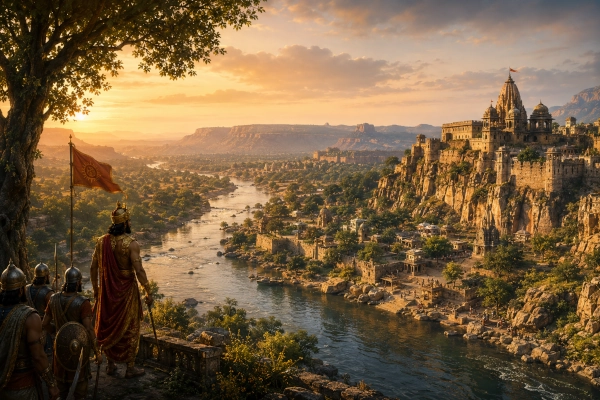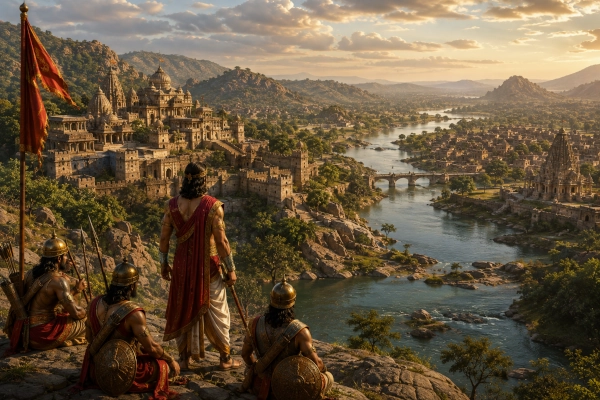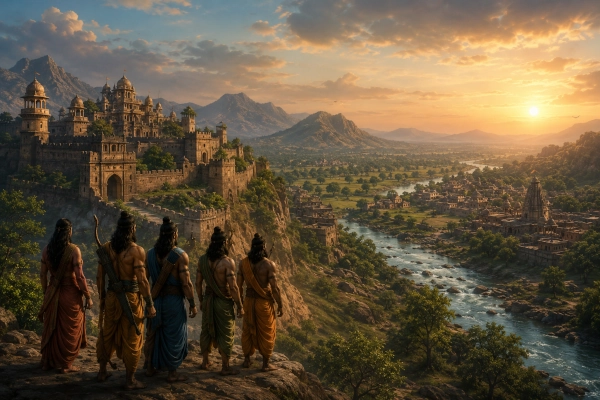
Dasharna in the Mahabharata: The Ancient Kingdom of Vidisha and Eastern Malwa
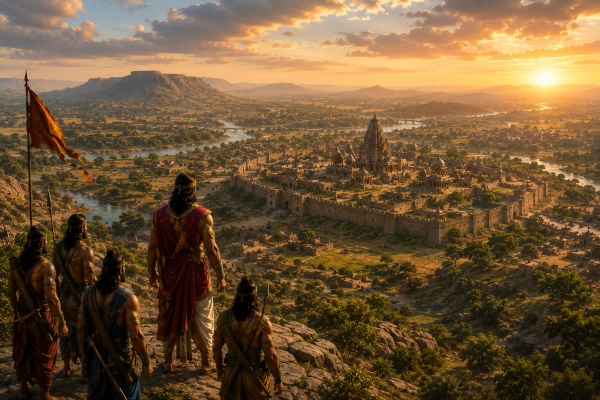
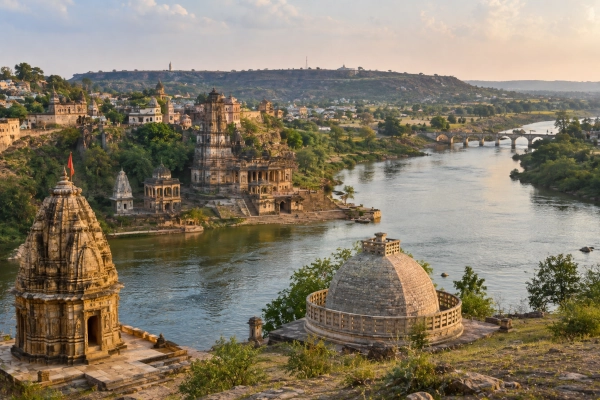
Modern geographical identification: Vidisha and the eastern Malwa region of Madhya Pradesh, India
News, articles and Essays on Sanatana Dharma, Hinduism and Indian way of life.
Modern geographical identification: Vidisha and the eastern Malwa region of Madhya Pradesh, India
The inscription was noticed after villagers cleared vegetation around the temple and alerted local researchers. Scholars associated with the Krishnagiri District Government Museum and historical research organisations subsequently examined the stone and identified it as a medieval merchant-guild inscription.
India’s tribal communities preserve several hundred languages and dialects, many of which remain unwritten or have limited presence in formal education. As transmission between generations weakens, the disappearance of these languages could also result in the loss of traditional knowledge relating to ecology, agriculture, medicinal practices, oral history and community customs. The conclave therefore aims to create a broader national framework for documenting and revitalising vulnerable languages with direct participation from tribal communities.
The Mahabharata nevertheless clearly knows the Malavas as a distinct political and military people. They appear during the Pandavas’ campaigns, at Yudhishthira’s Rajasuya sacrifice and on the battlefield of Kurukshetra. The epic also names individual Malava chiefs, confirming that they possessed recognised leadership and substantial military strength.
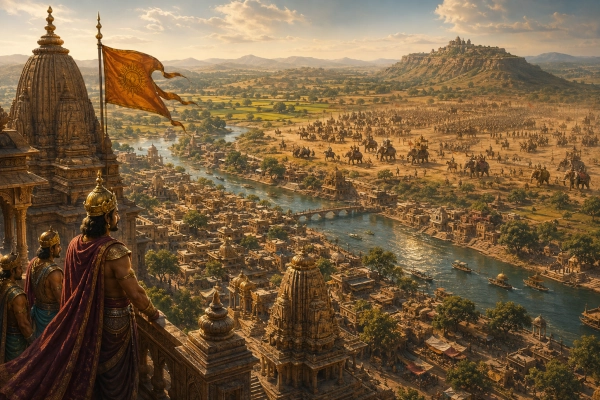
The Mahabharata remembers Avanti mainly through its two warrior rulers, Vinda and Anuvinda. They first appear as kings who resisted Sahadeva during the Pandava campaign conducted before Yudhishthira’s Rajasuya sacrifice. They were defeated but retained their kingdom. Years later, when the great conflict between the Pandavas and Kauravas began, both rulers chose Duryodhana and became prominent warriors in the Kaurava army.
Karusha appears several times in the epic as an established kingdom with its own rulers and warriors. Its kings attended major royal gatherings and participated in regional alliances. Karusha troops later fought in large numbers during the Kurukshetra War.
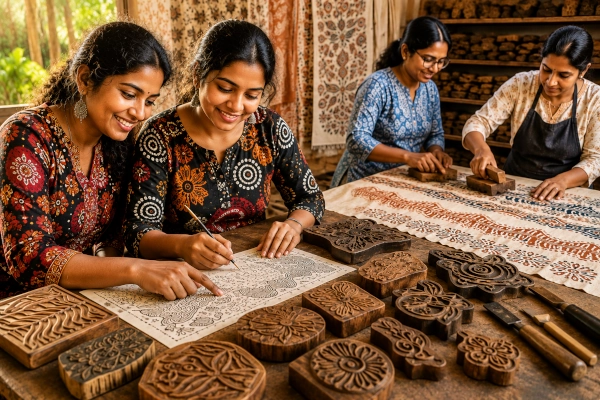
The project connects the Bábbarra Women’s Centre in Maningrida, Northern Territory, with Bengaluru’s Tharangini Studio, bringing together two women-led organisations with distinct but deeply rooted textile traditions.
The geographical identities of both kingdoms survived beyond the epic age. Mathura became the recognised capital of the historical Surasena Mahajanapada, while Chedi remained associated with the eastern Bundelkhand region around the Ken river system.
The Matsya country is traditionally identified with eastern and north-eastern Rajasthan, particularly the present-day regions of Jaipur, Alwar and Bharatpur. Rajasthan’s official educational material similarly states that the Matsya kingdom mentioned in the Mahabharata extended over parts of Jaipur, Alwar and Bharatpur, with Viratanagar as its capital.
Surasena was not important simply because Mathura later became one of the great sacred cities of India. In the Mahabharata, the region stands at the heart of the Yadava world. It is connected with Krishna, Balarama, Vasudeva, Kunti, the Vrishnis, Andhakas and Bhojas. It also becomes one of the principal theatres of the long political struggle between the Yadavas and Jarasandha of Magadha.