Heritage

News, articles and Essays on Sanatana Dharma, Hinduism and Indian way of life.

Sanskrit: The Ancient Language That Still Carries India’s Civilisational Genius

The greatness of Sanskrit begins with the Vedic tradition. The Vedas were preserved not merely through writing, but through an astonishing oral discipline where pronunciation, accent, metre and sequence were protected with almost scientific care. This made Sanskrit a language of sound as much as meaning. Every syllable mattered. Every pause mattered. Every tonal movement carried weight. That is why Sanskrit survived political change, regional diversity and long historical disruptions with unusual continuity.

Chakra Vyuham: The Trap Formation That Turned Battlefield Geometry into Psychological Warfare

The original Mahabharata passages describe the formation as a firm, fierce, foremost and impenetrable circular array formed by Drona. Abhimanyu openly says he has been taught by Arjuna how to penetrate and strike such an array, but he also admits that if danger overtakes him, he does not know how to come out. This single admission gives the episode its entire military depth: Abhimanyu has entry knowledge, but lacks complete exit doctrine.

Marthanda Varma: The Warrior-King Who Forged Modern Travancore

Marthanda Varma ascended the Venad throne in 1729. Britannica notes that he crushed Dutch expansionist designs at the Battle of Kolachel twelve years later and then adopted a European style of martial discipline while expanding Venad into the southern state of Travancore. That single summary captures the scale of his reign: internal consolidation, military modernisation, territorial expansion and state-building.

Kurukshetra as a War Studies Manual: What Modern Armies Can Still Learn from the Mahabharata

The epic describes the war as a clash of enormous scale, with eighteen Akshauhinis gathered at Samanta-panchaka and destroyed in the conflict. One Akshauhini itself was counted as 21,870 chariots, 21,870 elephants, 65,610 horses and 109,350 foot soldiers, giving the war a military scale that naturally invites comparison with modern corps-level and theatre-level planning.

Vaikom Mahadeva Temple: The Ancient Abode of Vaikkathappan in Kottayam

Vaikom is often called the Kasi of the South, not merely because it is an important Shiva kshetra, but because the temple carries the spiritual atmosphere of an old pilgrimage centre. Unlike many shrines known only to one sectarian tradition, Vaikom Mahadeva Temple is held in reverence by both Shaivites and Vaishnavites, giving it a wider devotional identity in Kerala’s sacred geography.

Before Nash: How Kautilya’s Arthashastra Anticipated the Logic of Game Theory

That is why the modern comparison between Kautilya and Nash is so fascinating. John Nash’s contribution to game theory was mathematical and formal. A Nash equilibrium describes a situation where no player can improve their outcome by changing strategy alone, assuming the other players keep their strategies unchanged. Stanford’s philosophy entry explains Nash equilibrium as a set of strategies where each player has no incentive to change given what the others are doing.

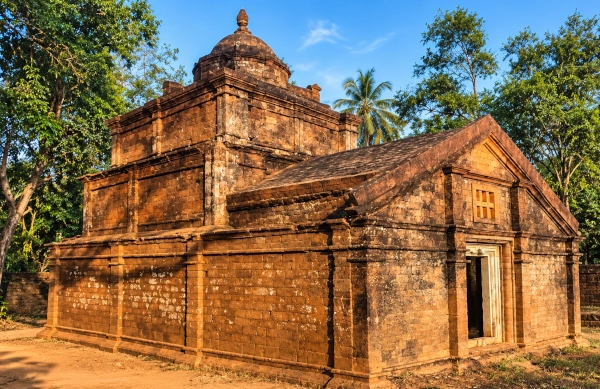
Thakazhi Sree Dharmasastha Temple: The Sacred Sastha Shrine Near Ambalappuzha

The temple stands in Thakazhi, a name that immediately evokes two different worlds of Kerala memory. One is the sacred world of Sastha worship, temple lamps, oil offerings, festival drums and ritual floor drawings. The other is the literary world of Thakazhi Sivasankara Pillai, the great Malayalam novelist who gave Kuttanad’s farmers, labourers, fishermen and ordinary families a permanent place in modern Indian literature.

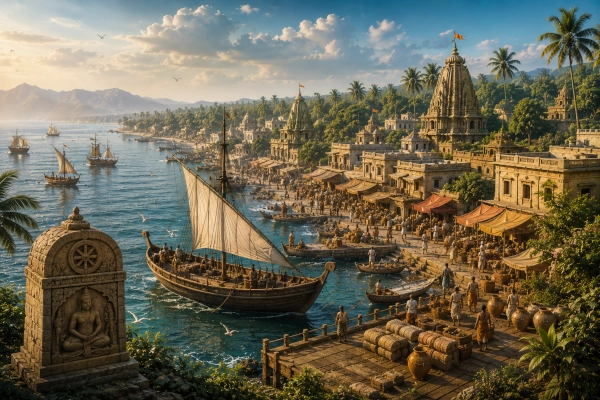
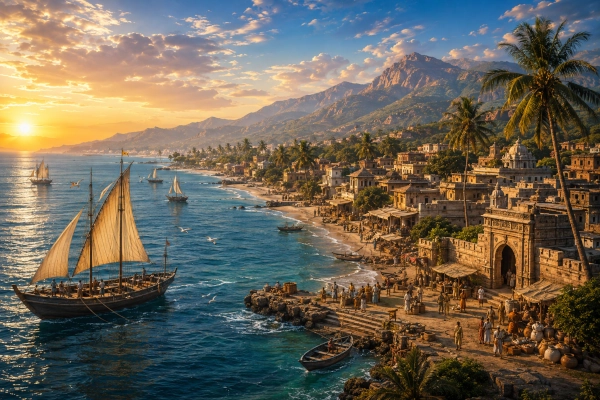
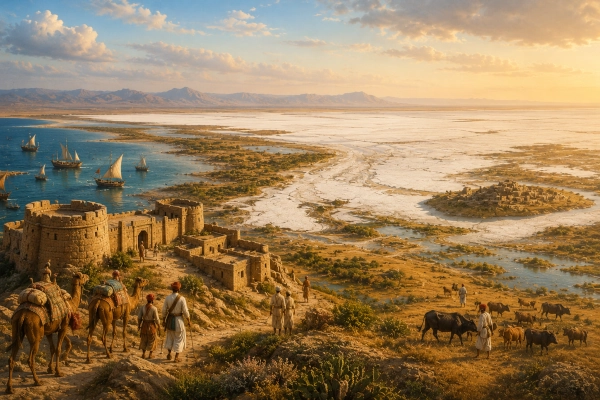
Sthanu Ravi Varma: The Chera Perumal King Who Made Kerala a Port, Temple and Knowledge Power

The most famous document of his reign is the Tharisapalli copper plate grant, also known as the Quilon Syrian Christian copper plates. This record is dated to the fifth regnal year of Sthanu Ravi, around 849–850 CE, and is one of the most important early medieval documents in Kerala history. It was issued at Kollam by Ayyan Adikal Thiruvadikal, the Venad chieftain under Chera authority, in favour of Mar Sapir Iso, a Christian merchant-leader connected with the establishment of a church and trading settlement at Kollam.