Akhanda Bharath

The vastness of the Bharath, the land rich in heritage and cultural diversity

From Mahabharata to Santoor: PM Modi’s Gifts Showcase India’s Civilisational Ties with Central Asia

Debroy’s edition is a complete and unabridged English translation based on the Critical Edition of the Mahabharata. Extending across ten volumes, it brings together the central account of the Pandavas and Kauravas with the epic’s numerous philosophical discussions, genealogies, legends, political reflections and subsidiary narratives.
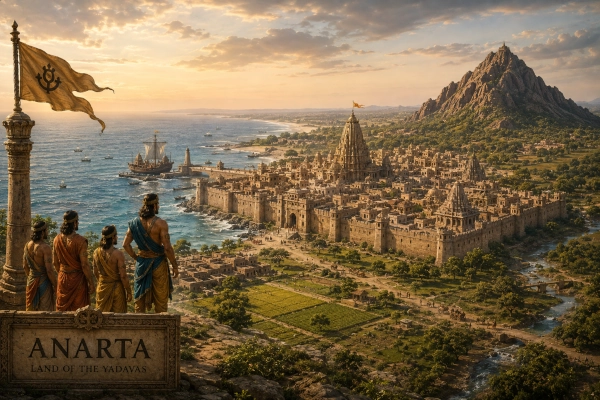
Anarta in the Mahabharata: The Yadava Country of Northern and Central Gujarat

Anarta was one of the important western regions recognised by the Mahabharata, closely associated with the Vrishnis, Andhakas, Bhojas and other Yadava clans connected with Krishna. Its geographical core is generally placed in present-day Gujarat, particularly northern and central Gujarat, although the epic political world of the Anartas extended westward toward Dvaraka and the coastal Yadava centres.

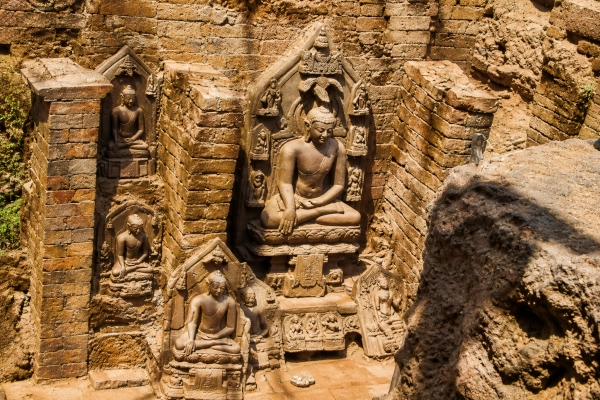
New Excavations Begin at Kashmir’s 2,000-Year-Old Zehanpora Buddhist Site

Jammu and Kashmir Chief Secretary Atal Dulloo formally marked the commencement of the new excavation season during a visit to the site, where he inspected the trenches, archaeological remains and antiquities recovered during the first phase. The work is being undertaken by the Centre of Central Asian Studies at the University of Kashmir in collaboration with the Jammu and Kashmir Department of Archives, Archaeology and Museums.

Nishadha in the Mahabharata: The Kingdom of Nala in the Central Indian Landscape

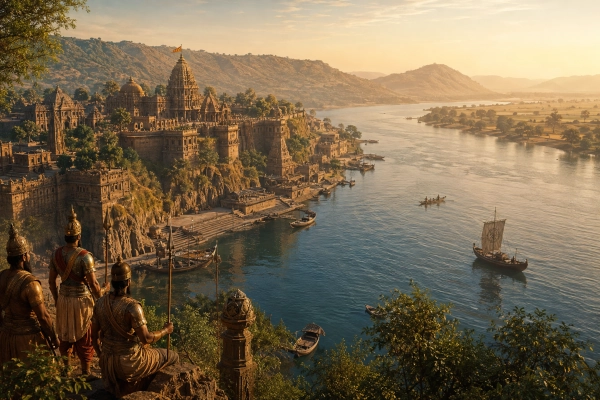
Nishadha was the celebrated kingdom of King Nala, one of the most memorable rulers outside the main Kuru lineage in the Mahabharata. Its exact position cannot be fixed with the same confidence as kingdoms such as Kuru, Panchala, Matsya, Chedi or Vidarbha, but the geographical clues preserved in the Nala-Damayanti narrative strongly place it within the wider central Indian world associated with the Vindhyas, Avanti, Vidarbha and the routes leading north toward Kosala.

Mekala in the Mahabharata: The Ancient Highland Kingdom of Amarkantak and the Maikal Hills

The epic also gives the Mekalas a distinctive military character. They fought on the Kaurava side, guarded Bhishma during the early stages of the war, and later appeared among regional troops renowned for fighting from elephants. During the Karna Parva, Mekala warriors joined other eastern and central Indian contingents in a fierce assault against Nakula and the Pandava forces.

Anupa in the Mahabharata: The Ancient Narmada Kingdom of Mahishmati and the Maheshwar Region

Anupa is particularly important because the Mahabharata does not present this landscape merely as a name in a geographical catalogue. Mahishmati becomes the setting for one of the most remarkable episodes of Sahadeva’s Digvijaya, involving King Nila, the protection of Agni and the political submission of the city to Yudhishthira’s Rajasuya authority.

Ancient Bazira-Barikot of Gandhara Gains UNESCO Recognition as 3,000 Years of Urban History Emerge From Swat

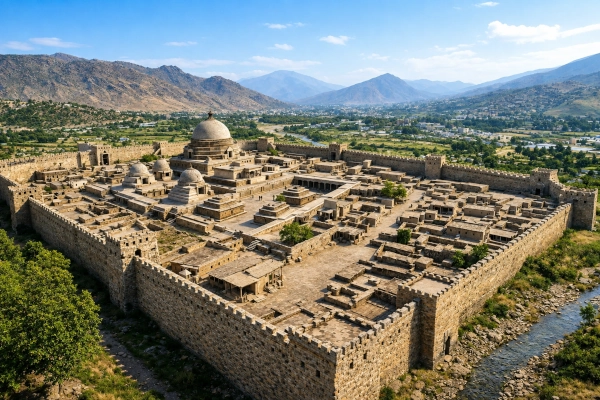
Located on the left bank of the Swat River in present-day Khyber Pakhtunkhwa, Barikot is identified with ancient Bazira, also known in regional traditions as Vajirasthana. Archaeological evidence indicates human occupation in the area from at least the second millennium BCE, followed by successive Early Historic, Indo-Greek, Kushan, Kushano-Sasanian, later Hindu Shahi and early Islamic phases.

Vaidisha in the Mahabharata-Era Geography: The Ancient Vidisha Region of Central Madhya Pradesh

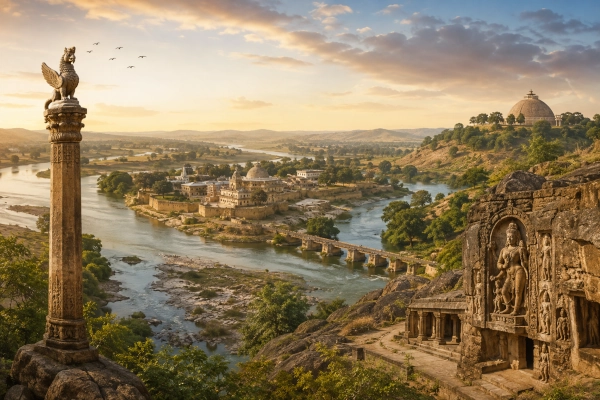
Vaidisha, identified with the ancient Vidisha-Besnagar region of present-day Madhya Pradesh, occupied one of the most strategically important landscapes of central Bharat. Situated around the Betwa or ancient Vetravati River and close to the Vindhyan and eastern Malwa regions, it stood at a natural meeting point between northern India, the Malwa plateau, Bundelkhand and the routes leading farther south.