Make in India

From Textile Machinery to Space Rockets: How Coimbatore’s LMW Built a High-Technology Aerospace Business

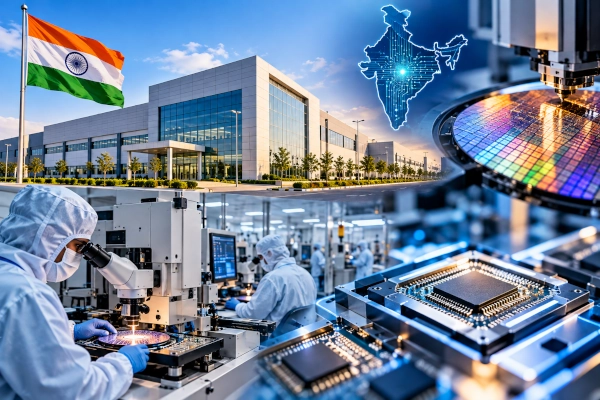
LMW, however, does not manufacture textiles itself. It manufactures the sophisticated machinery used by textile mills. That distinction helps explain a transformation that has largely taken place outside public attention: the engineering company that perfected machines for turning cotton into yarn is now manufacturing rocket structures, aircraft assemblies, aero-engine components and advanced carbon-fibre composites.

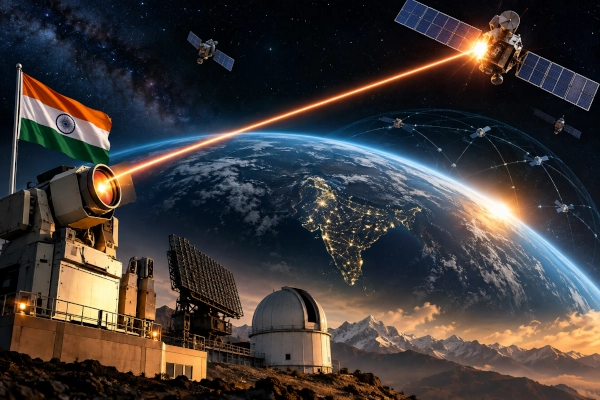
Light Guide Optics Emerges L1 in ₹3.7 Crore DRDO-CHESS Collimated Fibre Laser Array Programme

The programme is significant because CHESS is one of the DRDO establishments associated with high-energy technologies and directed-energy research. A collimated fibre laser array represents an important class of optical technology for generating, conditioning and directing multiple laser outputs with controlled beam characteristics, capabilities that have relevance to the broader development of scalable high-power laser systems.

Javelin vs India’s MPATGM: How India’s Upgraded Indigenous Tank-Killer Is Closing the Capability Gap

The comparison became more relevant after DRDO successfully demonstrated MPATGM against a moving tank-type target in January 2026 using a top-attack engagement profile. That trial showed that the latest Indian configuration had moved beyond basic technology demonstration and was approaching the stage required for induction into the Indian Army. The result placed India much closer to possessing a domestically controlled weapon in the same broad battlefield category as Javelin.

ICAR-CIFRI Patents Indigenous Nano-Technology to Combat Fish Ectoparasites

The patent, granted on 27 August 2026, covers an invention titled “A Process for Nanoemulsifiable Concentrate Formulations of Hydrophobic Bioactive Molecules.” More importantly, the technology has already moved beyond laboratory research and has been translated into CIFRI ARGCURE®, a field-oriented formulation developed to control Argulus and other ectoparasites affecting cultured fish. The patent award was formally announced by the Government of India on 28 August.

India Opens Astra Mk1 & Mk2 Production to Private Industry as Domestic Orders and Export Opportunities Surge

The Ministry of Defence described the August 25 decision as an important step towards greater self-reliance in defence manufacturing. Instead of relying primarily on a small number of traditional production agencies, DRDO-developed conventional missile technologies can now be transferred to a wider pool of capable Indian manufacturers.

India Backs Home-Grown Agentic AI Platform as One2X Moves From Research to Commercial Deployment

The Technology Development Board (TDB) under the Department of Science and Technology has entered into an agreement with One2X Tech to support the commercialisation of its Fixit platform. The initiative was announced on 20 August 2026 and is intended to strengthen the platform’s orchestration capabilities, enterprise integrations, security and scalability as it moves towards wider commercial deployment.

India Builds Indigenous Nuclear Technology Ecosystem as Three-Stage Programme Moves Towards Thorium Era

India’s electricity system is simultaneously expanding renewable generation and searching for dependable sources capable of operating continuously. Solar and wind power will remain central to the energy transition, but their output varies with weather and time of day. Nuclear plants, once operating, can supply electricity continuously for long periods and therefore provide an important source of stable baseload generation.