ideaForge: The Indian Drone Pioneer Building Surveillance and Heavy-Lift Logistics UAVs
India’s unmanned-aircraft industry has moved rapidly from imported hobby platforms and experimental prototypes to indigenous
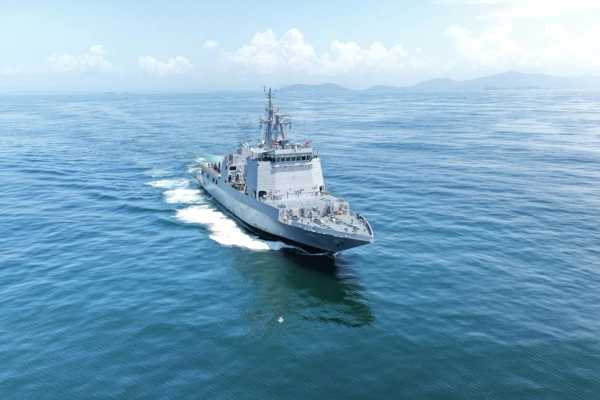
The Diving Support Craft programme was initiated through a contract signed between the Ministry of Defence and Titagarh Rail Systems Limited—then known as Titagarh Wagons Limited—on February 12, 2021. The project covers five vessels numbered DSC A20 to DSC A24 and was sanctioned at an overall cost of ₹174.77 crore.
The 16-coach prototype, designed and manufactured by the Integral Coach Factory in Chennai, began its formal trials on July 29, 2026, in the Kota Division of West Central Railway. The Research Designs and Standards Organisation is conducting the extensive evaluation programme along the Kota–Nagda–Sawai Madhopur corridor.
Its most distinctive project is JAL, a microwave-plasma thruster that uses water as its propellant. Instead of carrying highly toxic chemicals or relying entirely on expensive noble gases, the system is designed to convert water into an electrically energised plasma and expel it at high velocity to manoeuvre a spacecraft.
The new radome has been developed by DRDO’s Research and Development Establishment (Engineers), or R&DE(E), in Pune. Once cleared after flight trials, it is expected to replace the imported radome presently used on the Tejas Mk1A and support the expanding production requirements of the fighter aircraft.
Its modular approach allows customers to select a standard satellite bus, integrate a mission-specific payload, obtain launch and separation hardware, and operate the spacecraft through Dhruva Space’s ground network. This reduces the engineering effort required to build every mission around a new spacecraft architecture.
Hindustan Shipyard Limited delivered the specialised vessel to the Navy at Visakhapatnam on July 30, 2026. Nipun was designed and constructed in accordance with the classification rules of the Indian Register of Shipping.
Xtreme Weather Grade Diesel has been formulated to overcome these limitations. It remains usable at temperatures down to minus 42 degrees Celsius, allowing military vehicles and equipment to function more reliably during severe winters.
AIRA forms the core processing and data-fusion layer of Digantara’s network. It receives measurements from space-based sensors, ground observatories and compatible external feeds, then processes them through the company’s Or-Eng orbit engine.
The Department of Atomic Energy has confirmed that the Bhabha Atomic Research Centre is developing a small demonstration molten salt reactor to validate the materials, fuel chemistry, components and operating systems required for the efficient use of thorium.