Infrastructure

Indian Infrastructures and Capabilities

India’s Industrial Superpower Test: The Shift From Assembly to Deep Manufacturing

The policy direction is now clearly visible. India’s Production Linked Incentive framework has become one of the central instruments for converting manufacturing ambition into factory-level investment. Across 14 sectors, PLI schemes had generated investments exceeding ₹2.16 lakh crore by the end of December 2025, while incremental production and sales crossed ₹20.41 lakh crore. The schemes have also resulted in more than 14.39 lakh direct and indirect jobs, with 836 applications approved across the PLI framework.

NTPC Group Crosses 90 GW Capacity Mark, Signalling India’s Expanding Power Backbone

The latest addition came after the successful trial operation of Unit 2 of Patratu Vidyut Utpadan Nigam Ltd, an NTPC group arm. With this, the group now operates more than 90 GW of installed capacity across India, while also maintaining a large pipeline of projects under construction. NTPC has stated that it has around 32 GW of capacity under construction, showing that the company’s expansion is not a one-time jump but part of a long-term buildout of national power infrastructure.

US Nuclear Industry Delegation Visits India as Private Sector Opening Reshapes Nuclear Energy Market

For decades, India’s nuclear power sector was almost entirely state-driven, shaped by strategic restrictions, public-sector control and liability concerns that limited the participation of foreign and private companies. That structure is now changing. India has set an ambitious goal of developing 100 GW of nuclear power capacity by 2047, making nuclear energy a major pillar of its long-term energy transition and energy security strategy.

Amit Shah Inaugurates ₹128-Crore Madhur Dairy Plant in Gandhinagar, Boosting Cooperative Dairy Expansion

Built over 15 acres at an estimated cost of ₹128 crore, the modern plant currently has the capacity to process 2.5 lakh litres of milk per day. According to the official release, this capacity is expected to double to 5 lakh litres per day in the future, giving Madhur Dairy a stronger base for milk procurement, processing, packaging and distribution.

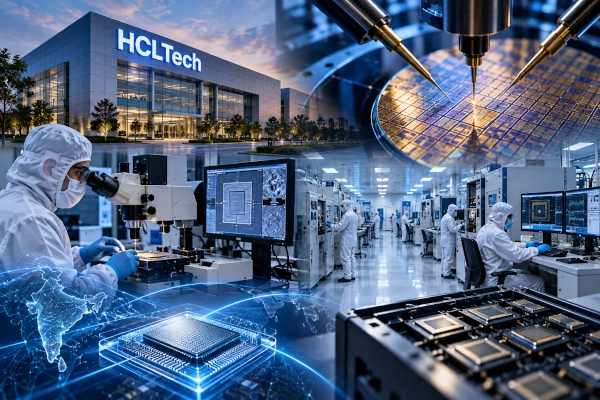
Tata Electronics–ASML Partnership Gives India’s First Chip Fab a Crucial Technology Backbone

The partnership is significant because lithography is one of the most critical stages in semiconductor manufacturing. In simple terms, lithography is the process through which microscopic circuit patterns are projected and printed layer by layer onto a silicon wafer. ASML’s own technology description says its lithography systems are central to this process, enabling chipmakers to mass-produce patterns on silicon with extreme precision.

India Plans ‘Made in India’ Brand Scheme to Strengthen Domestic Manufacturing and Cut Import Dependence

The government is working with industry to identify around 100 products that are either not manufactured in India or are produced in inadequate quantities. The focus is not merely on replacing imports, but on building production capacity in areas where India already has industrial capability but faces technology, scale or supply-chain gaps. According to Bhatia, several “unique and interesting” products have already been identified, including auto-sector items such as axles and motorcycle components.

India Rises to Third Globally in Installed Renewable Energy Capacity, but Supply Chain Gaps Remain

News On Air reported that India’s non-fossil fuel capacity has crossed 50 percent of total installed capacity, reaching 262.7 gigawatts. It also noted that solar and wind energy account for the bulk of recent additions. Official MNRE figures released earlier said India had installed 283.46 GW of non-fossil fuel capacity as of March 31, 2026, including 274.68 GW from renewable energy and 8.78 GW from nuclear power.

AERB Clears Restart of Tarapur Unit-2 After Major Refurbishment and Safety Upgrade

Tarapur Unit-2 is part of the historic TAPS Units 1 and 2, India’s first nuclear power reactors based on the Boiling Water Reactor design. Both units began commercial operation in 1969, making them among the oldest operating commercial nuclear power units in Asia. The restart clearance is therefore significant not only as a technical achievement, but also as a demonstration of India’s ability to extend the life of legacy nuclear assets through modern safety upgrades and strict regulatory review.

Categories