Defense

News , articles and essays on Indian Defense

US Ambassador Visits Tata-Lockheed C-130J Facility as India’s Aerospace Manufacturing Role Expands

The industrial relationship is also moving beyond the production of aircraft structures. Tata Advanced Systems and Lockheed Martin broke ground in Bengaluru in December 2025 on a new defence Maintenance, Repair and Overhaul facility for the C-130 family. The facility is intended initially to strengthen in-country support for the Indian Air Force’s Super Hercules fleet, with the potential to support other C-130 operators in the region and internationally.


BEL and Esri India Join Forces to Expand GeoAI and Location Intelligence for Defence

BEL and Esri India Technologies signed a Memorandum of Understanding on August 3, 2026, to jointly pursue opportunities involving Geographic Information Systems (GIS), location intelligence and GeoAI. A major focus of the agreement is supporting rapid or “surge” deployment of geospatial solutions for BEL and India’s defence services when operational requirements demand faster availability.

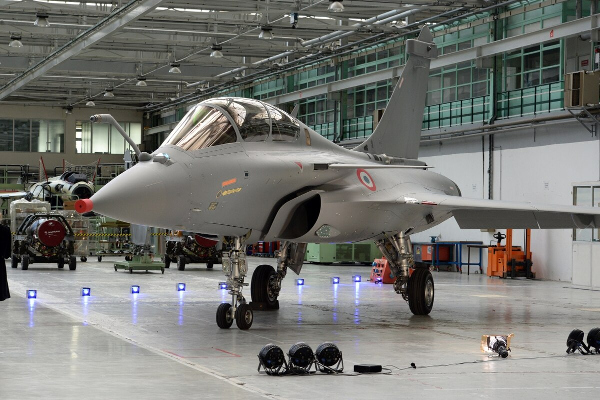
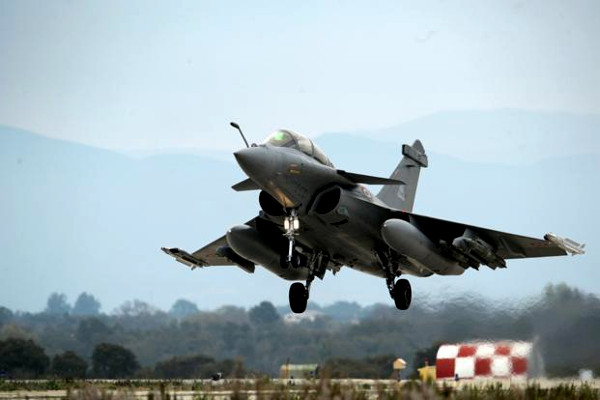
Indian Rafales Complete High-Tempo Indo-Pacific Deployment Across Australia and Malaysia

Exercise Pitch Black 2026 was held in northern Australia from July 20 to August 7 and brought together more than 2,500 personnel and over 100 aircraft from 21 countries. The 2026 edition also marked the first appearance of Indian Rafales at the Royal Australian Air Force’s premier multinational air-combat exercise. The IAF deployment was supported by C-17 Globemaster III strategic transport aircraft and IL-78 aerial-refuelling aircraft.

DRDO Develops Advanced Low-Frequency Vibration Isolation Technology to Make Indian Warships and Submarines Quieter

The latest research focuses on a particularly difficult part of the vibration spectrum: low-frequency vibration. Conventional rubber isolation systems can perform effectively once vibration frequencies rise sufficiently above the natural resonance of the mounting system, but isolating machinery operating at lower frequencies presents a much greater engineering challenge.

General Atomics Pitches 150-Km-Class LRMP Precision Artillery Projectile to Indian Army

Dr Vivek Lall, Chief Executive of General Atomics Global Corporation, confirmed during an interaction at the Farnborough International Airshow that discussions are underway with the Indian Army regarding LRMP. He described the projectile as having “great possibilities in India,” although no procurement decision, quantity, contract value or formal acquisition programme has yet been announced.

PierSight — Building India’s Space-Based Maritime Surveillance Network

Ahmedabad-based PierSight is developing a different approach to this problem by combining Synthetic Aperture Radar, or SAR, with space-based ship-identification data in the same maritime intelligence architecture. The company is building a constellation intended to provide persistent, all-weather monitoring of maritime activity, allowing vessels, oil spills and other activity at sea to be detected through darkness and cloud cover and then correlated with AIS or its newer VDES evolution.

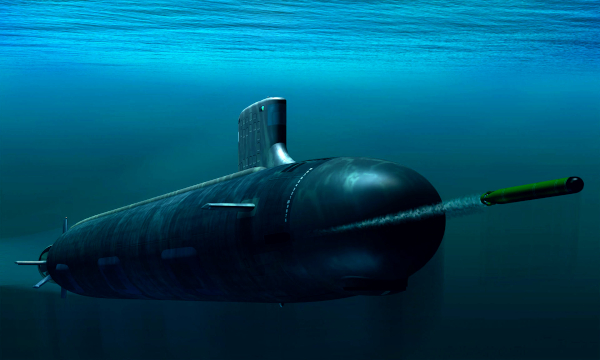
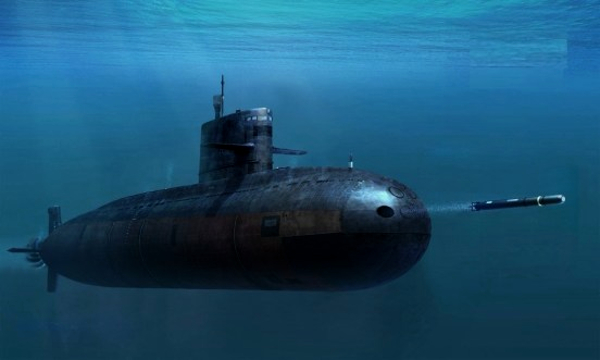
DRDO Developing Ultra-Sensitive Quantum Magnetometers to Detect Submarines Through Their Magnetic Signatures

DRDO Chairman Dr Samir V. Kamat has directly linked the organisation’s quantum-sensing research to submarine detection. He explained that DRDO is working on magnetometers capable of detecting changes in magnetic fields at the picotesla level and said such sensors could eventually be carried aboard UAVs or aircraft. According to Kamat, the technology could potentially enable submarine detection at depths of around 100 to 200 metres. The figure should presently be treated as a projected capability rather than a publicly demonstrated operational detection range.