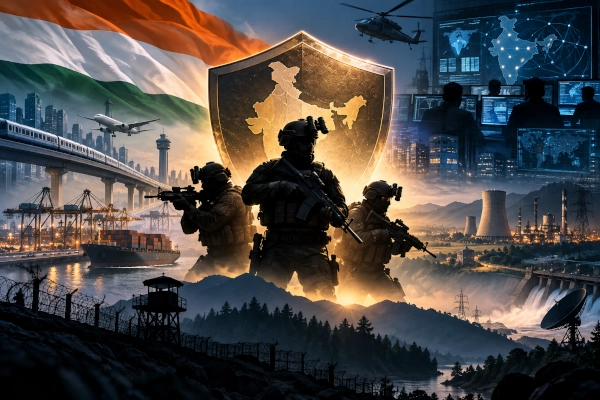
PRAHAAR: India’s First National Counter-Terrorism Policy and Strategy
India has formalised its first comprehensive National Counter-Terrorism Policy and Strategy under the name PRAHAAR,
India has formalised its first comprehensive National Counter-Terrorism Policy and Strategy under the name PRAHAAR,
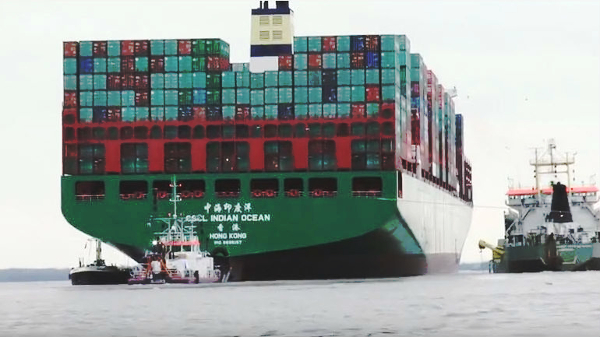
SCI’s current fleet includes crude oil and product tankers, gas carriers, bulk carriers, container vessels and offshore support ships. Its operations extend across LNG and LPG transportation, coastal and passenger shipping, project cargo, offshore services, ship management and shipbuilding consultancy.
The India-EU Free Trade Agreement formed an important part of the discussion. India and the European Union concluded negotiations on the agreement on January 27, 2026, following talks that originally began in 2007 and were relaunched in 2022. The focus has subsequently shifted towards the processes required for signature, conclusion and eventual entry into force.
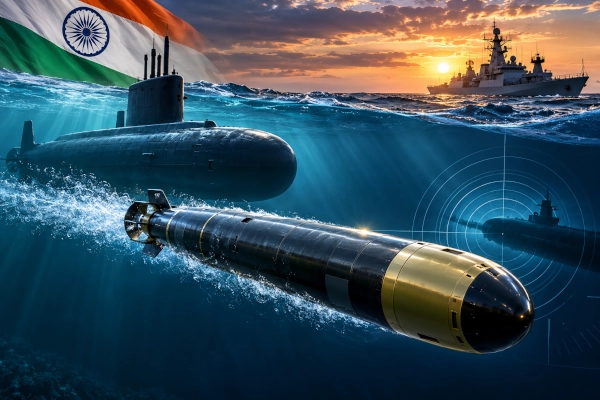
DRDO described the weapon as a state-of-the-art submarine-launched torpedo intended to counter contemporary surface ships and submarines in oceanic waters. The organisation specifically highlighted the need for high speed and endurance in an indigenous heavyweight weapon capable of anti-ship and anti-submarine missions.
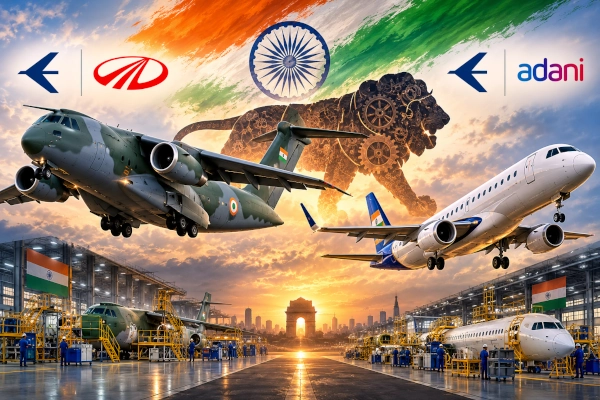
The two initiatives reveal a wider industrial strategy. Under the C-390 plan, India could eventually host military aircraft assembly, MRO facilities and a domestic supplier network. Under the E175 programme, India could gain a regional jet assembly capability supported by training, component manufacturing and aftermarket services.
During static testing, an engine is operated on a secured test installation so engineers can evaluate its behaviour without installing it in a flying platform. Such trials can generate data on thrust, fuel delivery, operating temperatures, vibration, stability and other propulsion parameters required before progressing towards integrated aircraft testing.
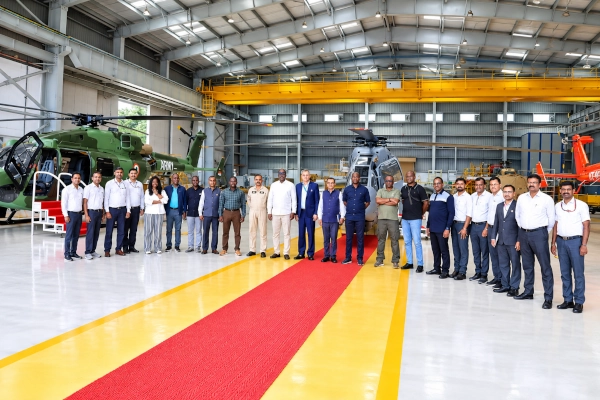
The visitors also reviewed India’s broader progress in aerospace manufacturing and expressed interest in HAL’s indigenous systems. HAL did not publicly identify any specific aircraft or helicopter that was the subject of procurement discussions during the visit.
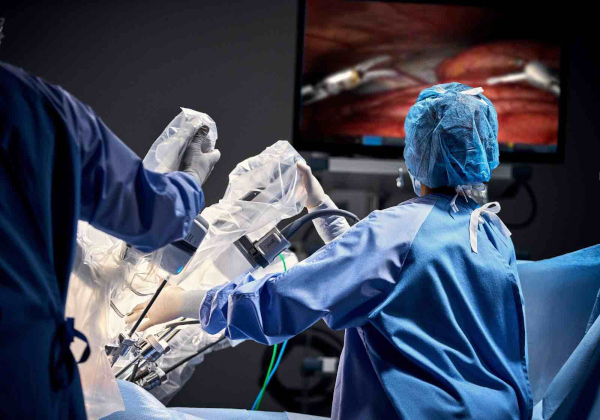
Union Minister of State for Science and Technology Dr. Jitendra Singh said the convergence of robotics, artificial intelligence and nanoscience could create a broader ecosystem for precision health delivery and precision medicine in India.
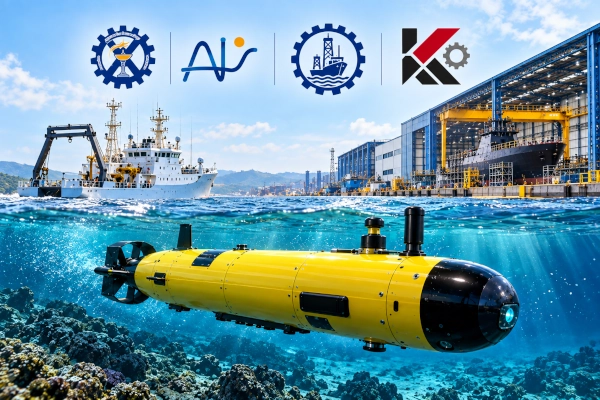
The National Institute of Oceanography is one of India’s principal institutions for ocean research and marine science. Its work covers physical, chemical, biological and geological oceanography as well as marine instrumentation and ocean engineering.
The auction marks the first time mineral blocks in the Union Territory have been awarded under the Central Government’s mineral auction process. It opens the way for systematic exploration, investment and commercial development of identified mineral resources.