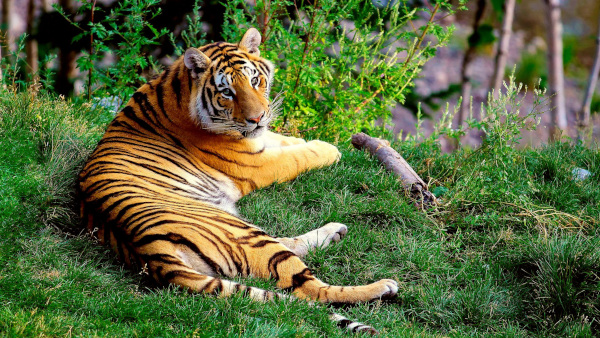
Assam’s Nameri Tiger Reserve has delivered a major wildlife conservation success, with its tiger population rising from three in 2022 to 12 by the end of 2025. The latest assessment has been validated by the Wildlife Institute of India, and Assam Forest and Environment Minister Jayanta Malla Baruah described the increase as a significant milestone for the state’s conservation efforts.
The achievement is important because Nameri has long been viewed as a low-density tiger landscape. The reserve sits in the northern part of Assam’s Sonitpur district, along the foothills of the Eastern Himalaya, and shares landscape connectivity with Pakke Tiger Reserve in Arunachal Pradesh. This makes it part of a wider ecological corridor where tiger movement, prey availability and habitat protection are deeply connected.
The return of two tigers to Sonai-Rupai Wildlife Sanctuary, the satellite core of Nameri Tiger Reserve, after decades of absence adds further weight to the development. Sonai-Rupai was declared a satellite core of Nameri in 2015, and its revival as tiger habitat indicates improving protection and habitat conditions across the larger reserve landscape.
Nameri Tiger Reserve covers about 344 sq km, with Nameri National Park forming the 200 sq km core. The reserve also includes buffer areas from Naduar and Balipara Reserve Forests, while Sonai-Rupai Wildlife Sanctuary covers around 120 sq km as the satellite core.
This rise in tiger numbers reflects the value of sustained protection, habitat management and landscape-level conservation. The Wildlife Institute of India’s Management Effectiveness Evaluation portal notes that Nameri is one of the important protected areas on Assam’s north-bank landscape and plays a role in the conservation of Asian elephants as well. It is also known as one of the remaining breeding areas of the rare white-winged wood duck.
The reserve’s ecological importance goes beyond tigers. Nameri is home to globally threatened and near-threatened species, and its riverine forests, wetlands and grasslands form a sensitive habitat system. The Jia-Bhoreli river landscape, forest corridors and links with Arunachal Pradesh’s protected areas make it a strategically important wildlife zone in Northeast India.
The fourfold rise also strengthens Assam’s position as one of India’s key tiger conservation states. While Kaziranga, Manas and Orang are often better known in the tiger conservation map, Nameri’s revival shows that smaller and low-density reserves can recover when protection, monitoring and habitat management are sustained over time.
The development carries a clear conservation message: tiger recovery is possible even in landscapes where numbers have remained low for years. With continued anti-poaching measures, corridor protection, prey-base improvement and community cooperation, Nameri can become a stronger tiger-bearing landscape in the Eastern Himalayan foothills.
Overall, the rise from three to 12 tigers is more than a statistical improvement. It is a sign that Assam’s forest landscapes are responding to focused conservation work, and the return of tigers to Sonai-Rupai gives the story an even deeper ecological meaning. Nameri’s recovery now stands as one of Assam’s most encouraging wildlife success stories of recent years.
You may also like
-
Molecular Geometry Tweak Opens New Way for Smart Biomaterials
-
ISRO’s Indo-French TRISHNA Satellite Enters Advanced Development Stage, Launch Expected in 2027–28
-
IISc Scientists Show How Strong Magnetic Fields Could Allow White Dwarfs to Exceed Chandrasekhar Limit
-
IIT Madras to Launch Global Mission to Map 100 Human Brains in 3D
-
3,898 Indian Scientists Feature in 2026 Global Top 2% Research Database; IISc Leads Indian Institutions
