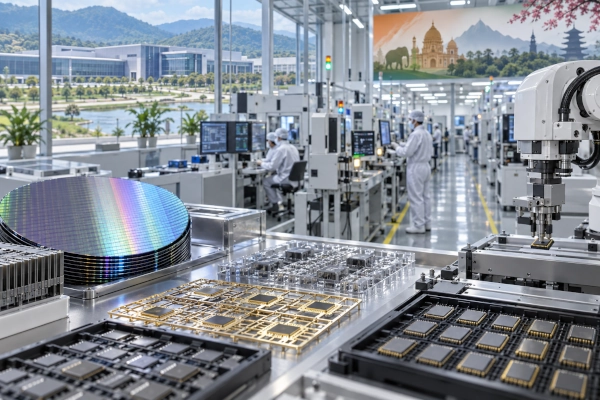
India’s rapidly expanding semiconductor industry will have to prepare not only for technological and commercial competition but also for cyberattacks, geopolitical risks and attempts at disruption as the country moves higher in the global semiconductor value chain, Union Electronics and Information Technology Minister Ashwini Vaishnaw has cautioned.
The warning comes as India moves from the first phase of its semiconductor programme towards Semicon 2.0, with manufacturing facilities entering commercial production, chip-design capabilities expanding and investments spreading into materials, equipment, packaging, research and precision manufacturing.
Semiconductor Growth Brings New Strategic Risks
Vaishnaw said India must remain continuously alert to geopolitical risks as it establishes the ability to design and manufacture semiconductors domestically. As India becomes a more significant participant in the global chip industry, its emergence could affect established industrial and supply-chain relationships.
He cautioned that the semiconductor ecosystem should therefore be prepared for cyberattacks and other forms of disruption. The challenge, in his assessment, will require coordinated preparedness involving the semiconductor industry, the Union Government and state governments.
The warning reflects the strategic nature of semiconductor manufacturing. Chips are critical to telecommunications, defence systems, automobiles, artificial intelligence, consumer electronics, industrial equipment and almost every major segment of the modern digital economy.
Cybersecurity Becomes Part of Semiconductor Security
Semiconductor security extends well beyond protecting individual manufacturing plants. Modern chip production depends on highly interconnected digital systems covering design software, intellectual property, manufacturing equipment, industrial control networks, logistics and global supply chains.
A cyberattack against any part of this network can potentially disrupt production, compromise proprietary technology or interfere with manufacturing processes. As India builds more domestic facilities, cybersecurity will consequently become an increasingly important component of semiconductor infrastructure.
Protecting design data is equally significant. Semiconductor companies invest heavily in intellectual property, process technologies and chip architectures, making secure digital infrastructure essential to attracting international companies as well as protecting indigenous technology.
India Moves From Foundation Building to Scale
The Minister’s warning comes at a time when the India Semiconductor Mission is moving into a considerably larger phase of development.
At SEMICON India 2026, Vaishnaw said the first phase of the semiconductor mission had concentrated on establishing the basic foundations required for a domestic industry. Semicon 2.0 will now seek to deepen the entire ecosystem rather than focusing only on individual manufacturing facilities.
The next phase covers six broad areas: semiconductor design, machines and materials, additional fabrication plants, advanced packaging and ATMP facilities, research and development, and talent creation.
Five Semiconductor Plants Have Entered Commercial Production
India’s semiconductor programme has progressed from project approvals and construction into actual manufacturing. According to the Ministry of Electronics and Information Technology, five semiconductor manufacturing plants had commenced commercial production by September 2026.
The government has also stated that chips produced by Indian facilities are serving domestic requirements as well as export markets. This transition is significant because commercial production places India directly into semiconductor supply chains where quality, reliability, cost competitiveness and security become critical considerations.
The industry is also becoming more internationally integrated. Semiconductor packaging units in India are exporting products, while chips incorporated into finished products are reaching markets including Japan, the United States and European countries.
Semicon 2.0 Targets a Complete Domestic Ecosystem
The government’s strategy under Semicon 2.0 extends beyond wafer fabrication and chip assembly. India is seeking to develop domestic capabilities in semiconductor equipment, high-purity materials, specialty gases, chemicals, precision manufacturing and other inputs required to operate a complete semiconductor industry.
This broader approach is important because semiconductor production depends on hundreds of specialised suppliers. Establishing a fabrication plant without developing the surrounding ecosystem would leave manufacturers dependent on complex overseas supply chains for many critical inputs.
The government is therefore seeking to strengthen both indigenous capability and supply-chain resilience as manufacturing capacity expands.
Around ₹1 Lakh Crore in Investment Commitments
At SEMICON India 2026, the government said investment commitments of around ₹1 lakh crore had already emerged across the Semicon 2.0 ecosystem.
These investments are expected to materialise over the coming two to three years as companies complete corporate approvals and announce individual projects. The government estimates that close to one lakh employment opportunities could emerge across the semiconductor ecosystem from this investment cycle.
The expansion includes manufacturing as well as equipment, materials, design, packaging, research, engineering and associated supply-chain activities.
India Targets 200 Semiconductor Design Companies
Chip design is another major element of the next phase. India plans to support the emergence of at least 200 semiconductor design companies under Semicon 2.0.
More than 105 chip-design startups received access to industry-grade Electronic Design Automation tools during the first phase, while 20 had secured venture-capital funding by September 2026.
Access to advanced EDA platforms is especially important because semiconductor design software is highly specialised and expensive. Government-supported access allows startups and academic institutions to develop and test designs without independently bearing the full cost of the design infrastructure.
Around 70,000 Semiconductor Design Engineers Trained
India is simultaneously expanding its semiconductor workforce. Around 70,000 design engineers had been trained within four years against an earlier target of 85,000 over a ten-year period.
Approximately 400 engineering colleges and institutions now have access to industry-grade chip-design tools. Students are also receiving opportunities to move their designs through tape-out, allowing academic projects to progress closer to actual semiconductor fabrication.
Under Semicon 2.0, the training effort will extend beyond chip design into system design, cleanroom operations, manufacturing maintenance and precision engineering.
One Lakh Technicians Targeted Under Semicon 2.0
The government has set a target of training one lakh semiconductor technicians over five years to support the manufacturing facilities being established across the country.
Semiconductor fabs and packaging plants require specialised personnel for cleanrooms, equipment maintenance, production control, testing and process engineering. Developing this technical workforce domestically will be important as more facilities move from construction into regular production.
The government is working with industry and international institutions to align training programmes with the requirements of operational semiconductor plants.
Resilient Supply Chains Become a Strategic Priority
The semiconductor industry is among the most globally interconnected manufacturing sectors. Materials, machines, wafers, designs, packaging technologies and finished chips routinely move across national boundaries before reaching their final applications.
Recent global disruptions have demonstrated how shortages or restrictions affecting a small number of suppliers can influence industries ranging from automobiles to electronics. India’s semiconductor strategy is consequently placing increasing emphasis on resilient supply chains alongside domestic manufacturing capacity.
Developing local sources for critical materials, precision components and manufacturing services can reduce vulnerabilities while allowing India to participate more deeply in international semiconductor networks.
Semiconductor Security Will Extend Beyond the Factory Gate
India’s semiconductor expansion is now entering a stage where industrial security, cybersecurity, intellectual-property protection and supply-chain resilience will have to develop alongside manufacturing capacity.
The scale of the programme is already changing rapidly. Five plants have entered commercial production, design programmes are expanding, hundreds of engineering institutions are participating and Semicon 2.0 is extending support into machines, materials, fabs, packaging, research and talent.
Vaishnaw’s warning consequently places security preparedness within the wider semiconductor strategy. Building chips domestically is only one part of the challenge; protecting the technological, digital and industrial ecosystem surrounding those chips will become increasingly important as India establishes a larger position in the global semiconductor industry.
References
Akashvani News / News On AIR — “I&B Minister Ashwini Vaishnaw cautions semiconductor industry should be prepared for cyberattacks,” 20 September 2026.
Press Information Bureau, Ministry of Electronics & Information Technology — “Semicon 2.0 to deepen India’s semiconductor ecosystem with focus on design, equipment, fabs, advanced packaging, R&D and talent,” 17 September 2026.
Press Information Bureau, Ministry of Electronics & Information Technology — “Precision Manufacturing Ecosystem Emerging as Key Enabler for India’s Semiconductor Industry,” 18 September 2026.
You may also like
-
India’s ₹1,000 Crore Space Venture Capital Fund to Accelerate Indigenous Space Startups and Advanced Technologies
-
BHAVYA: India’s push to build 100 plug-and-play industrial parks
-
India’s Gem and Jewellery Exports Rise 9.43% to $2.95 Billion in September 2026, Driven by Gold Jewellery and Lab-Grown Diamonds
-
India Launches National Strategic Trade Command Centre to Strengthen Export Intelligence
-
Biocon Secures Global Patent Settlement with Genentech for Pebrilzo Biosimilar, Targets European Launch in 2027
