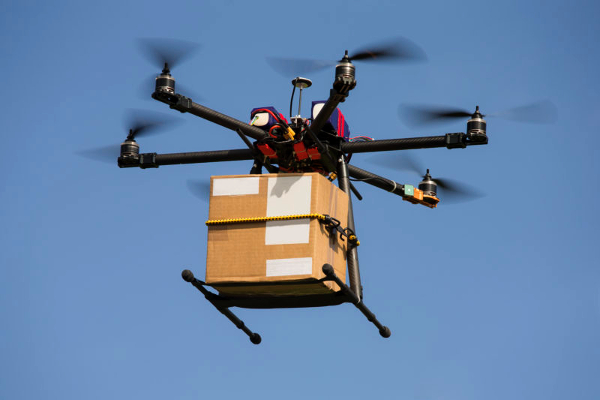
India’s drone manufacturing ecosystem has gained another important regulatory and testing capability with the Automotive Research Association of India, or ARAI, making its certification services for Unmanned Aircraft Systems fully operational.
ARAI announced the development on September 24, 2026, opening conformity assessment and certification services to drone manufacturers across the country. The Pune-based research organisation will operate under the Certification Scheme for Unmanned Aircraft Systems, or CSUAS, administered by the Quality Council of India on behalf of the Directorate General of Civil Aviation.
The move gives Indian drone manufacturers another institutional route for demonstrating compliance with the technical, safety and performance requirements needed to support DGCA type certification.
ARAI Can Now Evaluate Drone Platforms for Type Certification
Under the certification framework, ARAI is authorised to evaluate UAS platforms against the requirements prescribed under CSUAS.
Manufacturers seeking certification can submit their drone systems for a structured assessment covering design documentation, technical specifications, safety provisions, security-related documentation and actual flight performance.
Once the system successfully completes the required evaluations, ARAI can issue a Statement of Conformity to the Directorate General of Civil Aviation.
This statement forms part of the process supporting DGCA type certification and the eventual allotment of a Unique Identification Number, or UIN, to compliant drone platforms.
The development is particularly relevant for Indian drone startups and manufacturers seeking to move products from prototype or limited testing into the regulated commercial aviation ecosystem.
Two-Stage Certification Process
ARAI’s certification process follows a two-stage methodology.
The first stage focuses on document verification. Manufacturers must provide design information, technical specifications and relevant safety and security documentation associated with the unmanned aircraft system.
The second stage involves physical inspection and flight evaluation.
During this phase, the drone is examined against the submitted documentation and subjected to flight testing to verify performance, stability and compliance with the requirements applicable to its category.
This combination of documentation review and real-world flight testing is intended to ensure that certification is based not only on manufacturer specifications but also on demonstrated performance.
Micro, Small, Medium and Large Drones Covered
The ARAI certification framework covers Micro, Small, Medium and Large Unmanned Aircraft Systems.
Classification is based on the maximum all-up weight of the aircraft, with different regulatory and technical requirements applying according to the size and operational characteristics of the platform.
This means the certification infrastructure can support a wide range of Indian drone manufacturers, from companies developing compact agricultural or surveying platforms to firms working on larger logistics, industrial and specialised unmanned aircraft.
As India’s drone ecosystem diversifies, having certification capability across multiple weight classes becomes increasingly important.
ARAI Had Already Been Approved as a Drone Certification Body
The fully operational service builds on work undertaken earlier by ARAI to enter the drone certification sector.
ARAI established a dedicated Unmanned Aerial Vehicle Certification Cell and aligned its processes with the competency requirements of the Certification Scheme for Unmanned Aircraft Systems.
Its personnel underwent training associated with product certification standards, including ISO/IEC 17065 requirements, before the organisation underwent assessment by the Quality Council of India.
Following that process, ARAI received approval as a Certification Body under CSUAS.
The September 2026 announcement therefore marks the transition from institutional approval and capability development to a fully operational certification service available to manufacturers.
Certification Could Help Drone Startups Move Faster Towards Market
Certification is one of the most important stages between developing a drone prototype and deploying it commercially at scale.
A company may have a technically capable aircraft, but the platform still has to demonstrate that it meets applicable regulatory, safety and performance requirements before it can enter the formal aviation ecosystem.
For startups, navigating this process can be challenging because certification involves technical documentation, engineering validation, flight trials and interaction with multiple regulatory requirements.
By providing certification procedures, application formats, evaluation criteria, fee structures and technical guidance through a dedicated UAS portal, ARAI is attempting to create a more structured pathway for manufacturers.
This could be particularly useful for younger companies that possess strong engineering capabilities but have less experience dealing with aviation certification processes.
India’s Drone Industry Is Expanding Into Multiple Sectors
The certification development comes at a time when drones are being adopted across an increasingly wide range of Indian industries.
Agriculture has emerged as one of the largest areas of application, with drones being used for spraying, crop assessment and precision farming.
Infrastructure companies use unmanned aircraft for mapping, inspection and project monitoring, while mining companies employ them for surveying and volumetric assessment.
Drones are also being developed for logistics, disaster management, policing, surveillance and defence applications.
As the number and complexity of platforms increase, the need for consistent safety and certification standards becomes more important.
ARAI Director Reji Mathai said India’s drone ecosystem is entering a period of accelerated growth and technological innovation, creating opportunities across multiple sectors.
Safety and Cybersecurity Becoming More Important
Drone certification increasingly involves more than proving that an aircraft can fly safely.
Modern unmanned systems combine flight-control computers, navigation equipment, communications links, sensors and software, making cybersecurity and system integrity increasingly important.
A failure in communications, navigation or software can potentially create risks similar to failures in mechanical components.
ARAI’s certification framework therefore includes assessment of safety and security documentation in addition to physical performance.
This reflects the broader transformation of drones from relatively simple remotely piloted aircraft into increasingly autonomous and software-defined systems.
As artificial intelligence, autonomous navigation and beyond-visual-line-of-sight operations become more common, certification requirements are likely to become progressively more demanding.
Defence Drone Companies Could Also Benefit Indirectly
The certification framework is particularly important for civil and regulated UAS operations, but the strengthening of domestic testing infrastructure can also benefit India’s wider drone technology ecosystem.
Many Indian companies operate across both civil and defence markets.
Technologies developed for agriculture, mapping or industrial inspection can later contribute to military reconnaissance, logistics or autonomous systems, while defence-derived technologies can eventually find civilian applications.
A larger domestic certification and testing network therefore strengthens the underlying engineering ecosystem even when individual defence platforms may follow separate military qualification procedures.
This is especially relevant as Indian drone companies increasingly work on advanced navigation, secure communications, electronic warfare resilience and autonomous flight.
PLI and Regulatory Reform Have Accelerated the Drone Sector
India’s drone industry has expanded significantly following a series of policy changes intended to encourage domestic manufacturing and simplify operations.
The liberalisation of drone regulations, establishment of the Production Linked Incentive scheme for drones and drone components, and increasing demand from government and private users have together created a larger domestic market.
This expansion has encouraged new companies to enter sectors ranging from agricultural spraying and aerial mapping to logistics and defence.
However, rapid industrial growth also creates a requirement for robust testing and certification infrastructure.
Certification bodies such as ARAI therefore form an important part of the ecosystem because manufacturing growth cannot be sustained without mechanisms for demonstrating compliance and safety.
Existing Automotive Testing Expertise Moves Into Aviation
ARAI is best known for its role in India’s automotive testing, research and vehicle certification ecosystem.
Established in 1966, the organisation has decades of experience in testing, validation, homologation and regulatory compliance.
Its entry into drone certification represents an extension of this expertise into a rapidly developing mobility sector.
Although automobiles and unmanned aircraft operate in very different environments, both require structured engineering validation, documentation, safety assessment and regulatory approval.
ARAI’s established testing infrastructure and certification experience could therefore provide useful institutional capacity as India’s unmanned aviation sector expands.
Better Certification Infrastructure Could Reduce Development Bottlenecks
One of the challenges facing emerging technology sectors is that product development can advance faster than the supporting testing and certification infrastructure.
A manufacturer may be capable of designing a new system but still face delays if there are too few qualified facilities available to evaluate it.
Expanding the number of competent certification bodies can reduce such bottlenecks.
For Indian drone manufacturers, easier access to testing and certification could shorten the time between completing a product design and obtaining the approvals needed for commercial deployment.
This becomes increasingly important as competition within the domestic drone industry intensifies and companies seek to bring new products to market quickly.
Certification Will Become More Important as Drones Grow More Complex
The technological sophistication of unmanned aircraft is increasing rapidly.
Future platforms are expected to incorporate autonomous flight planning, artificial intelligence, computer vision, advanced obstacle avoidance and increasingly reliable operations beyond the visual range of an operator.
Larger unmanned aircraft may eventually play roles in cargo transport and other logistics applications.
As these capabilities expand, regulators will need stronger methods for assessing system reliability and safety.
ARAI’s entry into UAS certification therefore comes at a time when India is preparing for a more technologically complex generation of unmanned aircraft.
Strengthening India’s Domestic Drone Ecosystem
The launch of ARAI’s fully operational UAS certification services represents another building block in India’s effort to develop a complete domestic drone ecosystem.
Manufacturing capability alone is not enough to create a mature unmanned aviation industry. Companies also require testing facilities, certification bodies, trained pilots, component suppliers, software developers and clear regulatory pathways.
By adding its testing and certification capabilities to this ecosystem, ARAI can provide manufacturers with another route for demonstrating compliance with Indian aviation standards.
For startups in particular, the availability of structured domestic certification support could make the transition from prototype development to regulated deployment more predictable.
As Indian drones move into agriculture, infrastructure, logistics, mining, disaster management and increasingly advanced autonomous applications, certification will become an increasingly important part of the industry’s growth.
References
Automotive Research Association of India — ARAI’s UAS Certification Is Now Fully Operational to Support India’s Drone Industry, September 24, 2026.
https://www.araiindia.com/archives/press-releases/arais-uas-certification-is-now-fully-operational-to-support-indias-drone-industry
Automotive Research Association of India — ARAI Update: Onboarding as Certification Body under the Certification Scheme for Unmanned Aircraft Systems.
https://www.araiindia.com/wp-content/uploads/2026/06/ARAI-Update_H242526.pdf
Directorate General of Civil Aviation, Government of India — Drone Regulations and Guidelines.
https://www.dgca.gov.in/
Quality Council of India — Certification Scheme for Unmanned Aircraft Systems.
You may also like
-
Centre Prepares Nationwide Khet Bachao Abhiyan to Promote Scientific Farming and Protect Soil Health
-
BEML Secures ₹5,400 Crore High-Speed Train Order, Strengthening India’s Indigenous Rail Manufacturing
-
Ambemohar Rice: Maharashtra’s Fragrant Heritage Grain from the Sahyadri Foothills
-
Juniper Green Energy Commissions 65.40 MW Wind Power Capacity, Expands Operational Portfolio to 2,811 MWp
-
India’s Space Economy Set to Reach $45 Billion as Private Investment Accelerates
