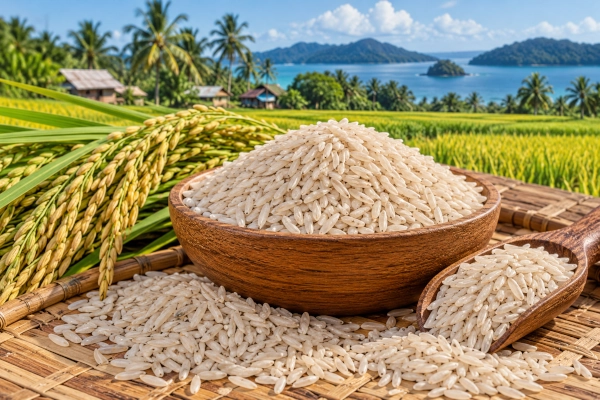
In the tropical agricultural landscapes of the Andaman Islands grows Musley Rice, an indigenous aromatic variety preserved by the Karen community for approximately a century. Known for its small grains, pleasant fragrance, distinctive flavour and ability to grow under challenging island conditions, this traditional rice represents an important part of the agricultural heritage of the Andaman and Nicobar Islands.
Cultivated primarily in the Mayabunder and Diglipur regions of North and Middle Andaman, Musley Rice reflects the farming traditions of the Karen people, whose ancestors migrated from Myanmar during the early twentieth century. The community brought traditional rice varieties and cultivation knowledge that subsequently became part of the islands’ agricultural biodiversity.
Unlike many commercially popular rice varieties, Musley is valued for combining desirable eating qualities with adaptation to the island environment. Its tolerance of some saline growing conditions is particularly relevant to coastal agriculture, where salt accumulation can restrict crop productivity.
Andaman Karen Musley Rice received Geographical Indication (GI) registration on December 3, 2024, formally recognising its geographical identity and the contribution of the Karen community to its preservation. The recognition also brought national attention to an agricultural tradition maintained by farmers in one of India’s most geographically isolated regions.
GI Details at a Glance
- Geographical Indication: Andaman Karen Musley Rice
- Union Territory: Andaman and Nicobar Islands
- Product: Agricultural – Rice
- Class: 31
- Application Number: 1055
- Date of Filing: 3 February 2023
- GI Journal: 193
- Journal Availability Date: 31 July 2024
- Certificate Number: 654
- GI Certificate Date: 3 December 2024
- Registered Proprietor: Centre for Participatory Training and Learning
- Registered Proprietor’s Address: Opposite Rajeshwari Mahal, Babulane, Port Blair – 744101, Andaman and Nicobar Islands
- Geographical Area: Andaman and Nicobar Islands
- Traditional Cultivation Region: Mayabunder and Diglipur, North and Middle Andaman
- Registration Valid Until: 2 February 2033
The Geographical Indications Registry confirms these details under Application Number 1055. The registration recognises Andaman Karen Musley Rice as an agricultural product associated with the Andaman and Nicobar Islands.
Origins and History of Andaman Karen Musley Rice
The history of Musley Rice is closely connected with the migration and settlement of the Karen community in the Andaman Islands during the early twentieth century.
The Karen people have historical roots in Myanmar, where rice cultivation forms an important part of their agricultural and cultural traditions. During the colonial period, Karen families migrated to the Andaman Islands and established agricultural settlements, particularly in the Mayabunder region.
According to documentation published by the Indian Council of Agricultural Research (ICAR), the Karen community has conserved its traditional rice varieties in North and Middle Andaman since approximately 1925.
The community brought agricultural knowledge and seed material suited to its traditional food preferences. Over time, farmers continued cultivating these varieties under the environmental conditions of the islands.
Musley became an important component of this agricultural tradition because of its grain quality, taste and suitability for everyday meals.
Its continued cultivation illustrates how migration can contribute to agricultural biodiversity. The Karen community preserved inherited crop varieties while adapting its farming practices to a new geographical environment.
Today, Musley Rice remains associated with the community’s history and its contribution to the agricultural development of North and Middle Andaman.
The Karen Community and Its Traditional Rice Heritage
The Karen community has played an important role in conserving indigenous rice diversity in the Andaman Islands.
ICAR documentation identifies six traditional rice varieties maintained by the community:
- Khushbaya
- Black Burma
- White Burma
- Musley
- Nyawin
- Red Burma
These varieties differ in grain characteristics and culinary uses, reflecting the diversity preserved through traditional seed selection and cultivation.
Karen farmers historically maintained their seed stocks by selecting suitable grains from harvested crops and preserving them for subsequent planting seasons.
The community also developed agricultural practices suited to local rainfall, soil conditions and available resources.
Rice farming remains closely connected with traditional Karen livelihoods. Alongside agriculture, the community has maintained skills in bamboo work, mat weaving, basket-making and the production of agricultural storage containers.
The preservation of these practices demonstrates the close relationship between farming, household economies and cultural identity.
Musley Rice is therefore part of a broader agricultural heritage rather than an isolated commercial crop.
The Geography and Climate Behind Musley Rice
Musley Rice is traditionally cultivated in the North and Middle Andaman district, particularly in agricultural settlements around Mayabunder.
The main cultivation areas include Webi, Deopur, Lataw, Lucknow (Burmabera), Karmatang-9 and Karmatang-10. The variety is also associated with Borang and Chipo villages in the Diglipur region.
These settlements lie within an island landscape characterised by tropical vegetation, seasonal rainfall, coastal environments and agricultural valleys.
The Andaman Islands experience a humid tropical climate influenced by the southwest and northeast monsoons. Seasonal rainfall provides much of the water required for traditional paddy cultivation.
The agricultural landscape includes clay-rich soils and low-lying areas suitable for rice production. However, coastal farming also presents challenges associated with drainage, excessive rainfall and salt accumulation.
Musley Rice has attracted attention because of its reported adaptability to saline conditions. This characteristic is particularly relevant in island environments where agricultural land can experience salt-related stress.
The combination of traditional seed material, regional environmental conditions and generations of cultivation has helped establish Musley’s geographical identity.
What Makes Andaman Karen Musley Rice Unique?
Musley Rice is distinguished by its short grains, natural fragrance, agreeable taste and reported tolerance of saline growing conditions.
Documentation associated with its geographical recognition describes the variety as a traditional aromatic rice cultivated by Karen farmers.
The grains are comparatively small, making Musley distinct from long-grained aromatic varieties such as Basmati.
Its fragrance contributes to its appeal as an everyday food grain, while its flavour has helped maintain demand within traditional Karen households.
Another important characteristic is its adaptation to the island environment. Scientific literature on India’s geographical indication rice varieties identifies Karen Musley among rice varieties associated with salinity tolerance.
Salinity tolerance is agriculturally valuable because dissolved salts in soil or irrigation water can interfere with plant growth and reduce grain production.
However, tolerance does not mean that the crop can grow successfully under every level of salt exposure. Actual performance depends on soil salinity, water management, crop stage and other environmental conditions.
Musley’s combination of grain quality and environmental adaptation makes it an important component of India’s traditional rice genetic resources.
Traditional Cultivation and Farming Practices
Andaman Karen Musley Rice is cultivated using agricultural practices maintained by Karen farming communities.
The traditional production cycle begins with selecting and preparing suitable seed material. Farmers sort harvested grains and dry them carefully before storing them for future planting.
Seedlings may be raised in different types of nurseries depending on local agricultural conditions. Traditional production documentation describes wet nurseries, dry nurseries and mat-based nursery systems.
Farmers subsequently transplant the seedlings into prepared paddy fields during the monsoon cultivation period.
Clay-rich soils and adequate moisture support crop establishment, while field preparation and drainage management help create suitable growing conditions.
Traditional cultivation practices include the use of locally available organic materials and manual removal of weeds.
However, historical cultivation methods should not automatically be equated with formal organic certification. Certified organic production requires compliance with established standards and independent verification.
The continued use of farmer-maintained seed material remains essential for preserving the characteristics associated with Musley Rice.
Musley Rice in Traditional Karen Cuisine
Rice occupies a central position in Karen food culture, and Musley is valued as an everyday grain.
Documentation associated with its GI recognition identifies Musley as suitable for both lunch and dinner. Its pleasant flavour and small grains make it appropriate for ordinary cooked-rice preparations.
Traditionally, rice is prepared through boiling or steaming and served alongside locally available vegetables, fish and other foods.
In the Andaman Islands, agricultural households often depend on combinations of locally cultivated produce and marine resources. Rice provides an important carbohydrate component of these meals.
Musley’s appeal lies primarily in its grain quality and taste rather than in elaborate processing.
This everyday culinary role distinguishes it from certain heritage rice varieties associated mainly with ceremonial dishes or speciality desserts.
The continued preference for Musley within Karen households has helped sustain its cultivation across generations.
Its preservation demonstrates how daily food habits can contribute directly to conserving agricultural biodiversity.
Scientific Research into Karen Rice Landraces
The traditional rice varieties maintained by the Karen community have attracted attention from agricultural researchers studying the genetic diversity of island crops.
The ICAR-Central Island Agricultural Research Institute (CIARI), Port Blair, has undertaken work on documenting and conserving rice germplasm from the Andaman and Nicobar Islands.
A study titled Special Features and Characterization of Rice Land Races of Karen Community in Andaman and Nicobar Islands, India examined distinctive rice varieties preserved by Karen farmers.
Such characterisation is important because traditional landraces may possess useful characteristics associated with local environmental adaptation, grain quality and agricultural performance.
Researchers examine features such as plant growth, flowering, grain appearance and responses to environmental conditions to understand differences between varieties.
Scientific documentation also supports the identification and preservation of authentic seed material.
For isolated agricultural communities, such work is particularly valuable because traditional varieties can disappear when farmers adopt commercially available alternatives.
The conservation of Musley and related Karen rice varieties therefore contributes to India’s wider efforts to protect indigenous agricultural genetic resources.
Karen Community Receives Plant Genome Saviour Recognition
The Karen community’s contribution to conserving traditional rice varieties received national recognition in December 2016.
The Karen Welfare Association of Webi, Mayabunder, received the Plant Genome Saviour Community Award under the Protection of Plant Varieties and Farmers’ Rights framework.
The award recognised the community’s efforts to conserve six traditional rice varieties, including Musley, through farmer-managed cultivation and seed preservation.
According to ICAR, the Karen community had maintained these varieties in North and Middle Andaman since 1925.
The recognition highlighted the importance of traditional farming communities in protecting agricultural biodiversity.
The Plant Genome Saviour awards acknowledge farmers and communities that contribute to conserving plant genetic resources valuable to Indian agriculture.
For the Karen community, the award provided formal recognition of agricultural knowledge preserved across generations.
It also drew attention to the role of small farming communities in safeguarding crops that may receive limited attention within conventional commercial agricultural systems.
Registration of Karen Rice Varieties Under Farmers’ Rights
The protection of Karen rice diversity extends beyond the GI recognition granted to Musley.
ICAR-CIARI reports that six rice landraces maintained by the Karen community were registered as farmers’ varieties with the Protection of Plant Varieties and Farmers’ Rights Authority (PPV&FRA) in 2017.
These include Khushbaya, White Burma, Red Burma, Black Burma, Musley and Nyawin.
Registration under the Protection of Plant Varieties and Farmers’ Rights Act, 2001, recognises eligible plant varieties and provides legal protections under the applicable framework.
This differs from Geographical Indication registration, which protects the identity and reputation of products associated with a defined geographical origin.
Together, the two systems provide complementary forms of recognition.
Farmers’ variety registration acknowledges the contribution of communities to preserving plant genetic resources, while GI protection identifies the geographical product and its associated characteristics.
The Karen community’s achievements demonstrate how traditional agricultural knowledge can receive recognition through both biodiversity conservation and intellectual property frameworks.
Geographical Indication Recognition in December 2024
Andaman Karen Musley Rice received GI registration under India’s Geographical Indications of Goods (Registration and Protection) Act, 1999.
The Centre for Participatory Training and Learning, based in Port Blair, filed the application on February 3, 2023.
The Geographical Indications Registry examined the application and published it in Journal Number 193 on July 31, 2024.
Following the registration process, Musley Rice received Certificate Number 654 on December 3, 2024.
The registration formally recognises its association with the Andaman and Nicobar Islands and the agricultural traditions of the Karen community.
GI recognition provides a framework for protecting the geographical identity of the rice against unauthorised commercial use.
It can also help distinguish authentic Musley Rice from unrelated products marketed under a similar name.
For small farming communities, such recognition creates opportunities to improve product visibility and strengthen the reputation of traditional agricultural produce.
However, GI status alone does not guarantee higher prices or increased farmer incomes. Consistent grain quality, authorised production, appropriate processing and reliable market access remain important.
GI Recognition Strengthens the Islands’ Agricultural Identity
The registration of Musley Rice formed part of a broader initiative to obtain geographical recognition for traditional products from the Andaman and Nicobar Islands.
Several island products received GI registration in December 2024, including agricultural commodities and traditional handicrafts.
These recognitions brought attention to the diverse cultural and agricultural traditions maintained by island communities.
Musley Rice was particularly notable because it became the first rice variety from the Andaman and Nicobar Islands to receive GI recognition.
Its registration demonstrates that India’s agricultural heritage extends beyond the major rice-growing regions of the mainland.
Remote island communities have also developed and preserved distinctive agricultural resources through traditional cultivation.
Recognising these products provides an opportunity to connect local producers with wider markets while protecting their geographical identity.
Agricultural Research into Salinity Tolerance
Musley Rice’s reported adaptation to saline conditions makes it relevant to research on climate-resilient agriculture.
Coastal farming systems face particular challenges because seawater intrusion, saline soils and changes in water availability can affect crop production.
Rice varieties differ considerably in their responses to salt stress. Some experience substantial reductions in growth and grain yield when exposed to elevated salinity, while others possess mechanisms that allow them to tolerate moderate stress.
Traditional landraces can provide valuable genetic material for investigating these differences.
A research paper published in the Journal of Cereal Research identified Karen Musley among India’s GI-recognised rice varieties associated with salinity tolerance and distinctive grain quality.
Studying such varieties could contribute to future crop-improvement programmes aimed at strengthening rice production in coastal environments.
However, scientific evaluation remains necessary to establish specific tolerance thresholds and determine how consistently the variety performs under different field conditions.
Musley’s importance therefore extends beyond traditional cultivation to the conservation of agricultural traits potentially useful for future research.
Government Seed Conservation Supports Continued Cultivation
The preservation of traditional Karen rice varieties has also received support through agricultural programmes in the Andaman and Nicobar Islands.
In June 2026, the Directorate of Agriculture announced the availability of seeds of several indigenous paddy varieties through the Seed Multiplication Farm at Nimbudera.
The varieties included Musley, Khushbaya, Nyawin and Andaman Karen Sticky Rice (Black).
According to the announcement published in the official island newspaper The Daily Telegrams, seeds of these traditional varieties were available to farmers at ₹20 per kilogram.
The advisory encouraged farmers interested in indigenous rice cultivation to obtain suitable seed material before the monsoon planting season.
The availability of traditional seed stocks through a government agricultural facility represents a practical contribution to conservation.
It also helps farmers maintain access to planting material while reducing dependence on informal seed exchanges alone.
Continued seed multiplication can support the preservation of varietal identity and encourage cultivation across suitable agricultural areas.
The Economic Potential of Andaman Karen Musley Rice
Musley Rice possesses characteristics that could support its development within India’s speciality rice market.
Its natural fragrance, small grains, traditional identity and GI recognition distinguish it from ordinary commercial rice varieties.
However, the crop is primarily associated with local cultivation and consumption, and its availability in organised national retail markets remains limited.
The development of appropriate cleaning, milling, grading and packaging systems could help producers reach consumers outside their immediate agricultural communities.
Collective marketing through farmer organisations may also support better coordination between cultivation and commercial distribution.
For island agricultural products, transportation and logistics present additional challenges because of the geographical distance from mainland markets.
Quality maintenance during storage and shipping is particularly important in humid tropical environments.
The development of premium markets must therefore balance commercial opportunities with realistic production capacity and the conservation of traditional seed systems.
Maintaining the authenticity of Musley Rice will remain essential as awareness of its GI recognition increases.
Preserving Karen Agricultural Knowledge for Future Generations
The continued survival of Musley Rice depends on more than conserving seed material.
Traditional knowledge concerning seed selection, nursery preparation, field management, harvesting and storage forms an important part of the crop’s agricultural heritage.
Much of this knowledge has been transmitted within Karen farming families through practical experience.
As agricultural production systems change, younger generations may increasingly pursue livelihoods outside traditional farming.
Without continued cultivation, indigenous crop varieties and the knowledge associated with them can gradually disappear.
Community seed conservation, agricultural education and scientific documentation can help address this challenge.
The involvement of ICAR-CIARI, government agricultural institutions and Karen farming organisations provides an important foundation for such efforts.
The community’s Plant Genome Saviour recognition, farmers’ variety registrations and GI certification demonstrate the value of combining traditional knowledge with institutional conservation.
Andaman Karen Musley Rice: A Living Heritage of India’s Island Agriculture
Andaman Karen Musley Rice represents the enduring relationship between the Karen community, its agricultural traditions and the tropical landscapes of the Andaman Islands.
Preserved since the early twentieth century, this small-grained aromatic rice reflects generations of seed selection, local adaptation and farming knowledge.
The Plant Genome Saviour Community Award recognised the Karen community’s contribution to conserving traditional rice diversity in 2016, while farmers’ variety registrations provided additional recognition in 2017.
The GI registration granted in December 2024 formally acknowledged Musley’s geographical identity and strengthened the protection of its agricultural reputation.
Scientific interest in its distinctive grain quality and salinity tolerance adds further significance to its conservation.
With continued seed preservation, agricultural research, farmer participation and improved market access, Andaman Karen Musley Rice can strengthen local livelihoods while safeguarding an important part of India’s island agricultural heritage.
Its preservation demonstrates how traditional farming communities continue to contribute to the country’s remarkable diversity of indigenous rice.
References
- Geographical Indications Registry, Intellectual Property India — Andaman Karen Musley Rice, Application Number 1055. Official registration, applicant, geographical area, GI Journal, certificate date and validity.
https://search.ipindia.gov.in/GIRPublicSearch/Application/Details/1055 - Indian Council of Agricultural Research — Plant Genome Saviour Awards to the Conservers of Plant Diversity, December 21, 2016. Official recognition of the Karen community’s conservation of six traditional rice varieties since 1925.
https://www.icar.gov.in/en/node/6197 - ICAR-Central Island Agricultural Research Institute — Field Crops Research. Official documentation of Karen rice landraces registered as farmers’ varieties in 2017 and the Plant Genome Saviour Community Award.
https://ciari.res.in/Field%20Crop.html - ICAR-Indian Institute of Rice Research — Newsletter, January–March 2017, Volume 15, Number 1. Karen Community of Andaman & Nicobar Islands Conserve Traditional Rice Varieties, by R. K. Gautam and colleagues.
https://www.icar-iirr.org/ICAR%20IIRR%20Newsletter%20Jan-Mar%202017%20Vol%2015%20No.1.pdf - Journal of Cereal Research — Geographical Indications: Agricultural Perspectives with Special Reference to Rice Genetic Resources in India. Scientific discussion of GI-recognised rice varieties, including Karen Musley and its salinity tolerance.
https://epubs.icar.org.in/index.php/JWR/article/view/169734 - Directorate of Agriculture, Andaman and Nicobar Administration — Paddy Seed Availability Advisory, June 2026. Official agricultural announcement concerning Musley and other traditional Karen rice seeds.
https://dt.andamannicobar.gov.in/epaper/05062026094939781.pdf - Geographical Indications Registry — State-Wise Registered GIs of India, March 31, 2025. Official inclusion of Andaman Karen Musley Rice among registered agricultural products of the Andaman and Nicobar Islands.
https://ipindia.gov.in/writereaddata/Portal/Images/pdf/State_wise_Registered_GI_of_India_26_07_2024.pdf
You may also like
-
India Approves 12 Electronics Manufacturing Projects Worth ₹7,503 Crore, Launches Semicon 2.0 Portal
-
India’s Non-Fossil Power Capacity Reaches 308 GW as Vice President Highlights Clean Energy Progress
-
Indian Space Startup PierSight Advances Antenna Testing for Varuna 2.0 Maritime Surveillance Satellite
-
India and Italy Explore Expanded Textile Manufacturing, Technology and Investment Partnerships
-
Chennai Deep-Tech Startup Torus Motion Develops Indigenous Axial-Flux Motors for Electric Vehicles and Industrial Automation
