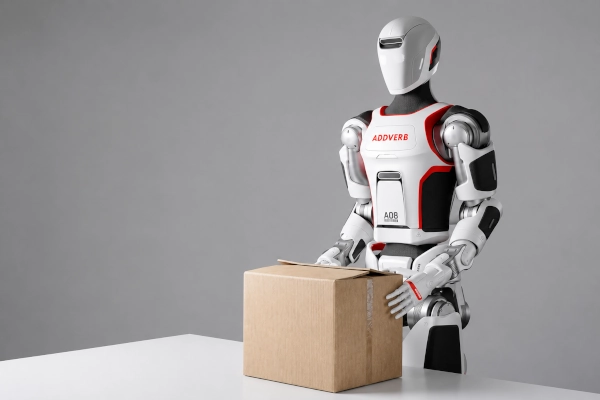
Addverb Technologies has emerged as one of India’s most prominent industrial robotics and warehouse-automation companies. Founded in 2016 and headquartered in Noida, the company designs robots, automated storage systems, material-handling equipment and the software required to coordinate them inside warehouses, factories and distribution centres. Addverb says it now employs more than 1,000 people, serves over 350 clients, operates ten global offices and has automated more than 500 warehouses.
The importance of Addverb extends beyond the individual machines it manufactures. Its wider ambition is to develop complete automation systems in India by combining mechanical engineering, electronics, artificial intelligence, industrial software and systems integration. The company is therefore part robot manufacturer, part software developer and part warehouse-engineering contractor.
Origins at Asian Paints
The idea behind Addverb emerged from the professional experience of its founders at Asian Paints. Sangeet Kumar, Prateek Jain, Bir Singh and Satish Kumar Shukla had worked on warehouse automation projects and observed that many sophisticated robots and material-handling systems used by Indian manufacturers had to be imported. The founders saw an opportunity to create an Indian company capable of building both the physical machines and the software controlling them.
This experience shaped Addverb’s initial strategy. Instead of beginning with a consumer robot or a general-purpose experimental machine, the company entered industrial automation, where customers invest in technology to solve measurable operational problems. Warehouses need to move pallets, cartons and individual products; factories need to supply components to production lines; e-commerce centres need to sort thousands of parcels; and retailers need to fulfil orders rapidly while maintaining inventory accuracy.
Addverb built products for these clearly defined activities and gradually expanded from individual machines into complete warehouse-automation projects. This approach allowed the company to generate commercial experience from operational deployments while developing capabilities in navigation, motion control, industrial safety, fleet management and artificial intelligence.
What Addverb Actually Builds
Addverb’s core business is intralogistics—the movement, storage, sorting and retrieval of materials within a warehouse, factory or distribution centre. Its product portfolio covers autonomous mobile robots, sorting robots, automated storage and retrieval systems, carton and pallet shuttles, picking systems, autonomous forklifts, conveyors and warehouse software.
A modern automated warehouse rarely depends on a single type of robot. It functions as an interconnected system in which goods are received, identified, moved to storage, retrieved for an order, sorted, packed and dispatched. Addverb designs the physical equipment for these individual stages and supplies software that coordinates the machines with the customer’s inventory and enterprise-management systems.
This end-to-end model is one of the company’s most important characteristics. A customer can purchase a particular machine, deploy a fleet of mobile robots or commission Addverb to develop a largely automated distribution centre containing racks, shuttles, robots, conveyors, picking stations and software.
Dynamo Autonomous Mobile Robots
Dynamo is Addverb’s family of autonomous mobile robots. These machines transport materials inside warehouses and factories without travelling on permanently installed tracks. They use LiDAR, computer vision, mapping technology and safety sensors to understand their surroundings, identify obstacles and navigate around workers, equipment and stored goods.
Different Dynamo variants are designed for different payloads. The product family ranges from smaller units carrying approximately 100 kilograms to industrial models designed for loads reaching several tonnes. Their uses include transporting pallets, moving bins to workers, supplying manufacturing lines and connecting different stages of a warehouse.
An autonomous mobile robot differs from an older automated guided vehicle because it can plan and adjust its route instead of depending entirely on fixed magnetic strips, wires or tracks. This gives warehouse operators greater flexibility when layouts, storage positions or production requirements change.
The commercial value of such machines comes from the combined robot fleet rather than a single unit. Fleet-management software assigns tasks, prevents traffic congestion, determines the most efficient route and directs robots towards charging stations. Capacity can be increased by adding more robots without rebuilding the entire warehouse.
Zippy Robotic Sorting System
Zippy is Addverb’s autonomous sorting robot for e-commerce warehouses, parcel hubs and distribution centres. Parcels or products are scanned, placed on robots and transported to the appropriate destination chute or collection point. Addverb says configurations of the system can deliver as many as 30,000 sorts per hour.
Robotic sortation offers a modular alternative to large fixed conveyor sorters. The number of robots can be increased during periods of high demand, while the sorting destinations can be changed through software. The failure of one robot also has a more limited effect because other machines in the fleet can continue operating.
The system is particularly relevant to e-commerce and courier operations, where thousands of parcels of different sizes must be classified by destination, delivery route, store or customer order. Addverb lists DHL, Maersk and Mondial Relay among the organisations using its sorting technology.
Automated Storage and Retrieval
Addverb also manufactures automated storage and retrieval systems, commonly known as ASRS. These systems use cranes, shuttles, lifts, specialised racks and software to store goods densely and retrieve them when required.
Quadron, the company’s carton-shuttle system, handles cartons, crates and totes weighing up to 50 kilograms. It moves horizontally through storage aisles while lifts transfer loads between different levels. The system supports double-deep storage and is designed to increase storage density while accelerating retrieval. Addverb lists a speed of four metres per second and throughput of up to 115 totes per hour on a specified 30-metre track configuration.
For palletised goods, Addverb offers mother-child shuttles, multi-deep storage systems, crane-based ASRS units and two-way or four-way pallet shuttles. These systems are used where a company needs to store large quantities of finished products, raw materials or components within a limited floor area.
Automated storage is especially useful in high-volume operations because it reduces the space required for human-operated aisles. Racks can be taller and more densely arranged, while software records the precise location of each pallet, carton or tote.
Veloce, Picking Systems and Autonomous Forklifts
Veloce is a multi-carton picking robot that travels through a structured storage grid and retrieves cartons, cases or crates from different storage levels. It supports goods-to-person fulfilment, in which products are brought automatically to an employee at a picking station rather than requiring the worker to walk through the warehouse.
Addverb also manufactures pick-to-light systems, horizontal carousels and other technologies that guide workers towards the correct product and quantity. These systems combine human dexterity with machine-directed inventory movement, making them useful for warehouses containing products that still require manual handling.
FlowT is the company’s autonomous pallet-truck platform. Its listed variants can transport payloads of approximately 1,000 or 2,000 kilograms, operate for as long as eight hours and travel at speeds reaching 1.5 metres per second. It is intended for ground-level pallet transport inside warehouses and distribution centres.
Addverb’s Dash family is designed for manufacturing and assembly-line logistics. The robots handle tugging and material movement and include variants for loads reaching 1,800 kilograms. These machines can transport components between storage areas, production lines and assembly stations.
Software as the Intelligence Layer
The machines inside an automated warehouse require several layers of software. Addverb’s software portfolio covers warehouse management, warehouse execution, equipment control and robot-fleet coordination.
Optimus, the company’s Warehouse Management System, manages inventory, receiving, storage, order allocation, picking and dispatch. A WMS decides what needs to happen within the facility and maintains the digital record of inventory.
Concinity, Addverb’s Warehouse Execution System, coordinates the order-processing workload across workers, robots, picking stations and automated equipment. It determines how the warehouse should execute the instructions received from the WMS.
Mobinity is the Warehouse Control System. It communicates more directly with conveyors, lifts, scanners, shuttles, sensors and other material-handling equipment. It controls the physical flow of products while exchanging information with warehouse-management and enterprise-resource-planning systems.
Movect is Addverb’s fleet-management platform for mobile robots. It assigns missions, coordinates routes, monitors robot status, manages congestion and helps ensure that a large number of autonomous machines operate as a unified fleet.
This software stack is strategically important because warehouse automation involves more than manufacturing metal frames, motors and wheels. The value increasingly lies in determining how hundreds of pieces of equipment respond to changing inventory levels, order priorities, machine availability and human activity in real time.
A company that controls both hardware and software can optimise the complete system and diagnose failures across different layers. It can also provide customers with a single integration partner instead of requiring separate suppliers for robots, racks, conveyors, warehouse software and equipment control.
Manufacturing in Uttar Pradesh
Addverb’s development is closely associated with the growth of an industrial robotics-manufacturing base in Uttar Pradesh.
Its first major manufacturing facility, Bot-Valley, became operational in March 2021. The company subsequently commissioned Bot-Verse, a second greenfield facility spread across 15 acres in Greater Noida, in 2023. Addverb also established a software-development centre in Noida to support its robotics and material-handling platforms.
The company says its present infrastructure gives it the capacity to manufacture as many as one lakh robots annually. This is a stated manufacturing capability rather than a disclosure of current annual production, and actual output will depend on orders, product mix and commercial demand.
The facilities are important for Addverb’s “Make in India” positioning. Industrial robots require precision fabrication, electronics assembly, battery systems, motors, sensors, testing facilities and quality-control processes. Creating this production capability within India can shorten delivery times, support product customisation and reduce dependence on importing complete automation systems.
Several critical components used in advanced robotics continue to come from globally concentrated supply chains. Semiconductors, high-performance processors, specialised sensors, precision reducers, motors and battery cells can expose manufacturers to currency movements and international supply disruptions. Addverb’s long-term competitiveness will therefore depend on increasing local engineering value while building dependable component partnerships.
Reliance Investment and Strategic Importance
Reliance Retail acquired a majority stake in Addverb during the 2021–22 financial year. Reliance described the transaction as an investment in supply-chain automation and robotic systems for automated material handling.
Addverb’s audited financial statements for 2024–25 identify Reliance Retail Ventures Limited as its holding company and Reliance Industries Limited as the ultimate holding company. The filings also identify overseas Addverb subsidiaries in the United States, the Netherlands, Singapore and Australia.
The relationship offers Addverb more than financial backing. Reliance operates extensive retail, telecommunications, consumer, logistics and industrial networks that can serve as large-scale environments for developing and deploying automation. Addverb, in turn, gives the Reliance group access to robotics capabilities that can support warehouses, fulfilment centres and manufacturing operations.
The relationship also creates a demanding internal reference customer. Technologies proven in large Reliance facilities can be offered to other enterprises, while operational experience can feed back into product development. At the same time, Addverb must maintain a diversified external customer base to build its position as an independent global automation supplier.
Major Customers and Deployments
Addverb lists major organisations including Reliance, Hindustan Unilever, PepsiCo, Maersk, DHL, Mondial Relay, Flipkart, ITC, Marico, Johnson & Johnson, PAR Pharma and Patanjali among its customers. The company states that it serves more than 350 clients and has a presence in India, the United States, Europe, the United Kingdom, Australia and other Asian markets.
At a Reliance grocery distribution operation, Addverb implemented an automated system with pallet and carton storage, conveyors, goods-to-person stations and its Concinity execution software. The company’s case study describes capacity for 11,114 pallets and 99,992 cases, daily dispatch of 42,000 cases and reported order-fulfilment accuracy of 99.99 per cent. These figures come from Addverb’s own project documentation.
For a Reliance fashion and lifestyle distribution centre in Sultanpur, the company describes an approximately 200,000-square-foot facility capable of storing 1.5 crore units and processing around 2.7 lakh units per day. The system combines automated storage, shuttles, conveyors and warehouse-execution software for business-to-business and direct-to-consumer orders.
Addverb’s Maersk project combines autonomous mobile robots, pallet shuttles, carton shuttles, picking systems and conveyors. According to Addverb, the facility contains 86,400 tote positions and processes around 100,000 pieces per day for dispatch to more than 2,500 distribution locations.
For PepsiCo, Addverb developed automation for mixed-case palletising at a manufacturing and fulfilment operation in Uttar Pradesh. The solution combines crane-based storage, mother-child pallet shuttles and light-directed picking to assemble pallets containing different snack products.
These projects demonstrate why Addverb is best understood as a systems company. Its work involves studying the customer’s product range, order patterns, building dimensions, throughput targets and future growth before designing a combination of machines and software.
Global Expansion
Addverb began expanding internationally after establishing its domestic warehouse-automation business. Its audited 2024–25 standalone accounts recorded ₹140.94 crore in revenue from outside India, compared with ₹50.39 crore in the previous year. Domestic revenue was ₹189.91 crore, giving total revenue from customer contracts of ₹330.85 crore.
The increase in overseas revenue is strategically significant because global expansion tests whether Addverb’s technology, service network and safety standards can compete outside its home market. Automation customers frequently require local installation teams, spare parts, maintenance capability and rapid technical support. International success therefore depends on service infrastructure as much as robot manufacturing.
The company has created overseas subsidiaries and partnerships to establish a presence closer to customers. Its international customer references in logistics, parcel delivery and third-party warehousing indicate that it is moving beyond the role of an Indian supplier serving mainly domestic manufacturers.
The Financial Picture
Addverb’s audited standalone financial statements provide the clearest public baseline for its financial performance. Revenue from contracts with customers increased from ₹287.84 crore in 2023–24 to ₹330.85 crore in 2024–25. Overseas revenue nearly tripled during the period, while revenue within India declined from ₹237.45 crore to ₹189.91 crore.
The company remained loss-making at the standalone level. It reported a loss before tax of ₹124.33 crore and a net loss attributable to shareholders of ₹88.95 crore for 2024–25, compared with a net loss of ₹62.20 crore during the preceding year.
These figures reflect the capital-intensive nature of scaling an industrial robotics business. Addverb has invested in factories, product development, international subsidiaries, software, employees, installation capability and after-sales support. Revenue from large automation projects can also be uneven because contracts are delivered over extended periods and recognised according to project milestones.
A later Addverb corporate announcement separately stated that the company had achieved ₹800 crore in revenue during FY2024–25 and was targeting more than ₹1,400 crore by FY2026–27. Another February 2026 company page described ₹800 crore as the revenue target for “this fiscal.” The releases do not clearly explain whether the ₹800-crore figure represents consolidated group revenue, bookings, gross business value or another measurement. It should therefore be treated as a company-stated business figure rather than directly compared with the audited ₹330.85-crore standalone revenue.
This distinction matters because robotics companies are often evaluated through orders, contracted project value, recognised revenue and consolidated sales, which can differ substantially. Addverb’s ability to turn its growing order pipeline and manufacturing capacity into sustained audited revenue and eventual profitability will be a major measure of its long-term performance.
Moving Beyond Warehouses
Addverb is now attempting to extend its experience in mobile robotics, machine vision and autonomous navigation into what it calls Physical AI. Physical AI refers to artificial-intelligence systems embodied in machines that can perceive their environment, make decisions and perform actions in the physical world.
The company’s Trakr platform is a four-legged robot intended for inspection, surveillance and data collection in industrial environments. It is designed to travel through refineries, oil and gas facilities, warehouses and areas that may be unsafe or difficult for workers to access. Depending on the configuration, it can carry cameras, thermal-imaging equipment, LiDAR, acoustic sensors, night-vision systems and inspection instruments.
Addverb offers Trakr 5 and Trakr 20 variants with payload capacities of five and 20 kilograms respectively. The company says the robot uses model-predictive control and reinforcement learning for stability and adaptive movement over uneven surfaces. It can also support autonomous patrol routes, inspection points and self-charging functions.
In early 2026, Addverb unveiled Elixis-W, a wheeled humanoid-style robot designed for industrial work. A wheeled base allows the machine to move efficiently across relatively flat factory and warehouse floors, while an upper body and arms can be developed for handling tasks designed around human workspaces.
The company is also preparing a walking humanoid called Elixis and has announced an ambition to install 3,000 humanoid units in industrial facilities by 2030. This remains a forward-looking company target. Building a prototype or exhibition robot is different from manufacturing thousands of reliable machines that can work safely for long shifts in commercial facilities.
Humanoid development is a logical extension of Addverb’s existing technologies. Mobile robots provide navigation and fleet-management knowledge; warehouse projects generate experience in industrial safety and systems integration; quadrupeds add dynamic locomotion; and picking systems contribute perception and manipulation capabilities. Combining these technologies could eventually allow robots to perform a wider variety of warehouse and factory tasks.
Challenges Facing Addverb
Addverb operates in a technically demanding market. Warehouse-automation systems must function continuously, often across multiple shifts, because a failure can disrupt an entire supply chain. Robots must work safely around people, racks and machinery while software must remain connected to inventory and enterprise systems.
The company must also support installations for many years. Customers expect spare parts, preventive maintenance, remote diagnostics, software updates and rapid service when equipment fails. Expanding internationally increases this challenge because Addverb must maintain service capability across different countries and time zones.
Price competition represents another pressure. Indian customers frequently compare the cost of automation with the availability of human labour, while global buyers compare Addverb with established European, Japanese, American and Chinese automation companies. Addverb must therefore combine competitive pricing with reliability, safety certification and strong long-term support.
Humanoid and quadruped robots present an additional layer of risk. These markets attract attention and investment, yet large-scale industrial adoption remains at an early stage. Addverb will need to demonstrate that its Physical AI machines perform useful tasks at a cost and reliability level that justifies deployment.
The employment implications also require careful management. Industrial robots can reduce repetitive lifting, walking, sorting and hazardous inspection, while increasing demand for technicians, programmers, maintenance engineers, warehouse planners and system operators. The final effect on employment will depend on how companies redesign work and whether affected employees receive opportunities to acquire new skills.
Why Addverb is the Next Big Thing for India
Addverb represents an important development in India’s industrial technology ecosystem because it combines hardware manufacturing with software and real-world deployment. India has produced many successful software companies, while globally competitive companies building complex electromechanical systems have developed more gradually.
Robotics requires capabilities in mechanical design, embedded electronics, batteries, motors, sensors, communications, artificial intelligence, industrial software, precision manufacturing and field service. A company that develops these capabilities can create knowledge and supplier networks that extend beyond warehouse automation.
Addverb also demonstrates how India’s domestic market can support industrial innovation. Large retailers, manufacturers, pharmaceutical companies, logistics providers and e-commerce platforms provide demanding commercial environments in which locally designed systems can be tested. Successful products can subsequently be adapted for international customers.
Reliance’s backing gives Addverb access to capital and large-scale operating environments, while its external projects expose the company to diverse industries and global performance requirements. The combination provides an opportunity to build an Indian robotics platform with international reach.
Addverb’s next phase will depend on execution. The company must convert manufacturing capacity into sustained sales, improve financial performance, deepen localisation, maintain service quality and prove that its new Physical AI products can move from demonstrations into productive industrial work.
Its journey from four engineers working on warehouse projects to a company building autonomous robots, storage systems, industrial software, quadrupeds and humanoids illustrates the changing character of Indian manufacturing. Addverb is attempting to show that India can participate in the robotics economy as a designer, manufacturer and exporter of complete intelligent systems.
REFERENCES
Addverb Technologies. “About Us.”
https://addverb.com/about-us/
Addverb Technologies. “Automation Company Making Robots in India, for the World.”
https://addverb.com/press-release/automation-company-robots-in-india/
Reliance Industries Limited. “Integrated Annual Report 2021–22: Reliance Retail.”
https://www.ril.com/ar2021-22/retail.html
Reliance Industries Limited. “Addverb Technologies Limited — Audited Financial Statements 2024–25.”
https://www.ril.com/sites/default/files/2025-07/Addverb-Technologies-Limited.pdf
Addverb Technologies. “Uttar Pradesh Chief Minister Inaugurates Addverb’s Bot-Verse.”
https://addverb.com/press-release/uttar-pradesh-cm-inaugurates-bot-verse/
Addverb Technologies. “Autonomous Mobile Robot: Dynamo.”
https://addverb.com/automated-warehouse-robots/mobile-robots/autonomous-mobile-robot/
Addverb Technologies. “Robotic Sorter: Zippy.”
https://addverb.com/automated-warehouse-robots/sorting-robots/robotic-sorter/
Addverb Technologies. “Carton Shuttle: Quadron.”
https://addverb.com/automated-warehouse-robots/asrs-system/carton-shuttle/
Addverb Technologies. “Autonomous Forklift: FlowT.”
https://addverb.com/automated-warehouse-robots/mobile-robots/autonomous-forklift/
Addverb Technologies. “Warehouse Automation Software Suite.”
https://addverb.com/automated-warehouse-robots/software/
Addverb Technologies. “Automated Grocery Warehouse — Reliance Case Study.”
https://addverb.com/case-studies/reliance-automated-grocery-warehouse/
Addverb Technologies. “Maersk Implements Flexible Warehousing.”
https://addverb.com/warehouse-automation-case-studies/maersk-fixed-flexible-warehousing-solution/
Addverb Technologies. “PepsiCo — Automated Mixed Case Palletizing Plant.”
https://addverb.com/warehouse-automation-case-studies/pepsico-automated-mixed-case-palletizing/
Addverb Technologies. “Trakr Quadruped Robot.”
https://addverb.ai/trakr
Addverb Technologies. “Addverb Celebrates Its 10-Year Anniversary in Robotics and Automation.”
https://addverb.com/press-release/addverb-10-year-anniversary-robotics-automation/
Addverb Technologies. “Addverb Eyes ₹800-Crore Business This Fiscal.”
https://addverb.com/press-release/addverb-eyes-rs-800-cr-biz-this-fiscal/
You may also like
-
India Earmarks ₹1.39 Lakh Crore for Domestic Defence Procurement in 2026–27
-
India’s First Port-Based e-Methanol Plant at Kandla to Supply Green Fuel to Global Shipping
-
India’s Recent Oil and Gas Discoveries: New Finds, Offshore Frontiers and How Much Crude India Produces at Home
-
India’s Hidden Gold Mountain: How Households Came to Own an Estimated 31,000 Tonnes of Gold
-
India–Afghanistan Air Cargo Corridor Returns to Focus as Both Sides Push for Stronger Trade Connectivity
