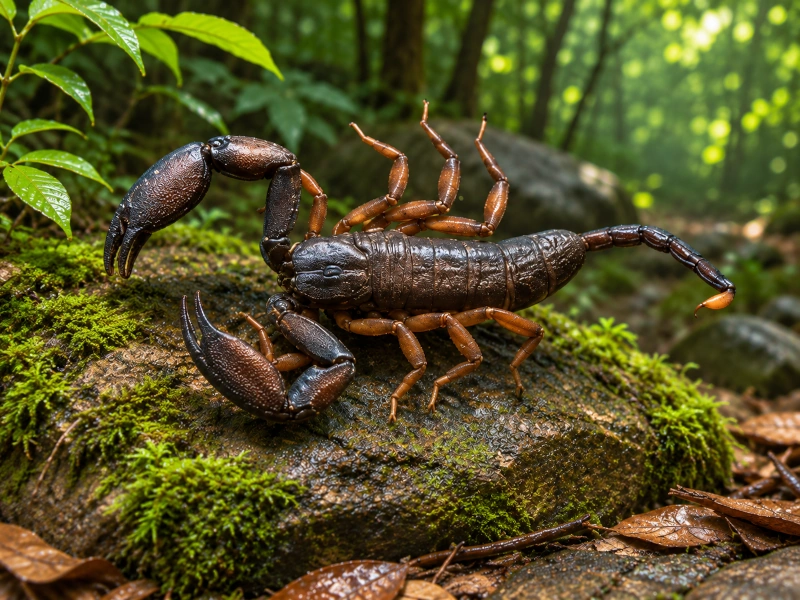
Researchers have discovered a new species of scorpion in Odisha’s Similipal Tiger Reserve, adding to India’s documented biodiversity and establishing the first confirmed record of the genus Liocheles in the state. The newly identified species, named Liocheles similipalensis, was described by scientists associated with the Thackeray Wildlife Foundation in collaboration with officials of Similipal Tiger Reserve.
The discovery was documented in the scientific journal Euscorpius, Issue 443 (2026), in a research paper authored by Saurabh Kininge, Tejas Thackeray, Prakash C. Gogineni and Akshay Khandekar. The identification increases the number of recognised species belonging to the genus Liocheles from six to seven and represents the fourth species of this genus described from India.
New Species Identified in Similipal’s Forest Ecosystem
The scorpion was discovered in the Similipal Tiger Reserve in Odisha’s Mayurbhanj district, within a tropical moist deciduous forest ecosystem. The specimens were collected from rocky habitats at an elevation of approximately 1,000 metres above sea level, where the animals were observed sheltering beneath rocks and inside crevices.
Measuring approximately 44–53 millimetres in length, Liocheles similipalensis possesses a predominantly black body with a distinctive glossy, bluish sheen. Its preference for rocky environments makes it a lithophilic species, a term used to describe organisms associated with rock-based habitats.
The specimens were initially collected by forest personnel working within the tiger reserve and subsequently examined by researchers associated with the Thackeray Wildlife Foundation. Detailed taxonomic investigations established that the specimens represented a previously undescribed species.
Distinct Anatomical Features Establish Species Identity
Researchers identified the new scorpion through a comparative examination of its external anatomical characteristics, including the structure of its pedipalps, tail segments and median eyes.
One of the important characteristics supporting its placement within the genus Liocheles was the presence of specialised hair-like structures known as setae beneath the second segment of the tarsus, a component of the scorpion’s legs.
The research team also examined the arrangement of ridges, known as carinae, and the granulation patterns present on the pedipalps and metasomal segments. These anatomical characteristics, together with differences in the relative proportions of the median eyes, distinguished the newly discovered specimens from the six previously recognised species of the genus.
The scientific description was based on examinations of both male and female specimens, providing the morphological evidence necessary to formally establish Liocheles similipalensis as a distinct species belonging to the family Hormuridae.
First Confirmed Record of the Genus in Odisha
The identification of Liocheles similipalensis represents an important addition to Odisha’s documented arachnid diversity because it establishes the first confirmed occurrence of the genus Liocheles in the state.
The species has been named after Similipal, the protected forest landscape where the specimens were discovered. The scientific name recognises the geographical origin of the discovery and its association with the biodiversity of the tiger reserve.
The genus Liocheles, established by the Swedish zoologist Carl Jakob Sundevall in 1833, includes scorpions distributed across different parts of Asia and the wider Indo-Pacific region. The discovery in Similipal increases the number of formally recognised members of the genus to seven.
At present, Liocheles similipalensis is known only from its type locality in Similipal Tiger Reserve. However, its presently documented distribution does not establish that the species is necessarily restricted to this forest landscape. Further field investigations are required to determine whether populations occur in other suitable habitats.
Researchers Call for Further Taxonomic and Molecular Studies
The researchers have emphasised the importance of systematic field surveys and detailed taxonomic investigations to establish the true diversity and geographical distribution of Liocheles species across India.
The scientific paper also highlights uncertainties surrounding earlier distribution records of Liocheles nigripes and Liocheles australasiae. Researchers have suggested that these taxa may represent species complexes, in which populations currently classified under a single species name could include multiple distinct species.
Additional morphological examinations and molecular investigations would help clarify these taxonomic questions and establish the evolutionary relationships among different populations.
The discovery demonstrates the continuing importance of field-based biological research in identifying lesser-known components of India’s wildlife diversity.
Similipal’s Importance Beyond Tiger Conservation
Located in Odisha’s Mayurbhanj district, Similipal is one of eastern India’s significant protected forest landscapes. Its ecosystems support a diversity of mammals, birds, reptiles, amphibians and invertebrates, including organisms whose distribution and taxonomy remain incompletely documented.
Although Similipal is widely recognised for its tiger conservation programmes, the discovery of Liocheles similipalensis demonstrates the scientific importance of documenting smaller and less conspicuous wildlife species within protected areas.
The identification also illustrates the value of collaboration between forest department personnel and scientific research institutions. Specimens collected during field activities can contribute to formal taxonomic research when subjected to detailed scientific examination.
The discovery of Liocheles similipalensis adds another documented species to India’s arachnid diversity while reinforcing Similipal’s importance as a landscape for biodiversity research. Further systematic surveys and molecular studies will be essential to understanding the species’ distribution and its relationship with other members of the genus.
You may also like
-
Rare Bird Sightings in Maharashtra Highlight Rich Biodiversity of Melghat Forests and Navi Mumbai Wetlands
-
Gujarat to Receive Four Great Indian Bustards from Rajasthan in Major Conservation Initiative
-
Indian Scientists Discover New Begonia Species in Arunachal Pradesh’s Siang Valley
-
Wildlife Institute of India Study Reveals How Lightning Helps Andaman Mangrove Forests Regenerate
-
Satellite-Tagged Vulture Travels 600 Kilometres from Nepal to Nest in Himachal Pradesh
