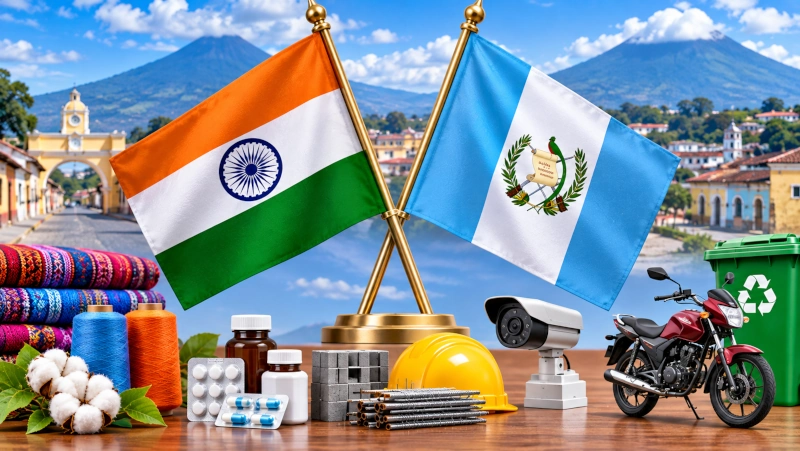
India and Guatemala have discussed strengthening bilateral trade, investment and industrial cooperation, with particular emphasis on expanding commercial engagement across textiles, construction materials, waste management, automobiles and electronic security systems. The discussions took place on November 5, 2026, between India’s Ambassador to Guatemala, Raj Kumar Singh, and Guatemalan Congresswoman Ivana Bonilla, reflecting continued efforts to develop stronger economic ties between India and the Central American nation.
The engagement focused on identifying new opportunities for businesses from both countries and facilitating direct commercial interactions through sector-specific buyer-seller meetings. The proposed initiatives could create additional opportunities for Indian manufacturers and exporters seeking to strengthen their presence in Guatemala while supporting the diversification of bilateral economic relations.
India and Guatemala Identify New Areas for Commercial Cooperation
During the meeting, Ambassador Raj Kumar Singh and Congresswoman Ivana Bonilla discussed opportunities to expand trade and investment relationships by encouraging greater interaction between businesses operating in complementary sectors. Particular attention was given to organising buyer-seller meetings involving textiles, construction materials, waste management equipment, two-wheelers and closed-circuit television systems.
These proposed engagements are intended to connect Indian manufacturers and exporters with potential Guatemalan buyers, distributors and business partners. Direct commercial interactions can help companies identify market requirements, assess distribution opportunities and explore arrangements for supplying manufactured products and industrial technologies.
The inclusion of construction materials and waste management equipment reflects opportunities associated with infrastructure development and urban services. Indian manufacturers possess capabilities in engineering products, construction-related equipment, industrial machinery and environmental management technologies that could support commercial cooperation in these sectors.
Two-wheelers and electronic security systems represent additional areas of interest. Indian automobile manufacturers have already established a presence in several Latin American markets, while India’s electronics and surveillance equipment industries offer products suited to commercial, industrial and public infrastructure applications.
Indian Textiles, Automobiles and Engineering Products Strengthen Trade Relations
India and Guatemala maintain commercial relations across a diversified range of products, with Indian exports including pharmaceuticals, textiles, engineering goods, automobiles, industrial machinery and electrical equipment. Guatemala’s exports to India include coffee, wood, wood charcoal and aluminium scrap, reflecting the complementary nature of their existing trading relationship.
According to the Ministry of External Affairs, bilateral merchandise trade reached US$589.27 million during the financial year 2023–24. Indian exports accounted for approximately US$559 million, while imports from Guatemala stood at US$30.27 million. During April–November 2024, bilateral trade amounted to US$440.18 million, including Indian exports valued at US$421.59 million.
These figures demonstrate the established market for Indian manufactured products in Guatemala and the opportunities available for further diversification. The latest discussions seek to build upon this commercial foundation by encouraging business engagement in additional sectors.
India’s textile industry is particularly relevant to the proposed buyer-seller meetings. Indian manufacturers supply cotton yarn, fibres, fabrics and finished textile products to international markets, supported by a manufacturing ecosystem encompassing large enterprises, small businesses and traditional production centres.
Greater engagement with Guatemalan importers and distributors could help Indian textile enterprises strengthen their market connections in Central America while creating opportunities for long-term sourcing relationships.
Indian Automobile and Pharmaceutical Companies Maintain Presence in Guatemala
Indian companies have established a commercial presence in Guatemala through automobiles, pharmaceuticals, textiles and information technology. According to the Ministry of External Affairs, approximately 15 Indian companies operate or maintain representation in the country across these sectors.
Indian automobile brands, including Hero, Mahindra, TVS and Bajaj, are represented in the Guatemalan market, with two-wheelers and other vehicles forming an important component of India’s manufactured exports. The proposed buyer-seller meetings involving two-wheelers could provide another avenue for strengthening commercial engagement between Indian manufacturers and local businesses.
The pharmaceutical sector also represents an established area of bilateral trade. Indian pharmaceutical companies, including Cipla, Aurobindo Pharma, Caplin Point and other manufacturers, supply medicines to Guatemala through local representatives and distribution arrangements.
India’s capabilities in affordable pharmaceutical manufacturing have also contributed to bilateral development cooperation. In March 2024, India donated more than one million doses of medicines to Guatemala to support the treatment of tuberculosis, epilepsy and type 2 diabetes, demonstrating the connection between commercial capabilities and healthcare cooperation.
The presence of Indian companies across multiple sectors provides an existing foundation for expanding economic engagement. Additional business interactions could strengthen distribution networks and encourage cooperation involving manufactured products, technical services and industrial expertise.
Buyer-Seller Meetings to Support Direct Business Partnerships
The proposed buyer-seller meetings form part of a wider approach to promoting bilateral trade through direct engagement between exporters, importers and industry representatives. Such meetings provide companies with opportunities to understand market demand, discuss product requirements and establish contacts with potential commercial partners.
The Indian Embassy in Guatemala has previously worked with export promotion councils and industry representatives to organise business interactions aimed at strengthening commercial relationships. These initiatives have supported engagement across textiles, engineering products, pharmaceuticals and other sectors in which Indian enterprises maintain export capabilities.
According to the Ministry of External Affairs’ bilateral brief, the Embassy had organised more than 20 hybrid buyer-seller meetings during the period covered by its 2025 reporting. These programmes formed part of efforts to create new market opportunities for Indian companies and strengthen connections with Guatemalan businesses.
The renewed focus on construction materials, waste management technologies and CCTV systems indicates an interest in broadening commercial engagement beyond established export categories. These sectors offer opportunities for specialised manufacturers, engineering firms and technology providers seeking to establish international business relationships.
Guatemala Offers Opportunities for India’s Central American Trade Expansion
Guatemala occupies an important position within Central America and maintains commercial connections with neighbouring economies and international markets. Its geographical location provides opportunities for businesses seeking to develop regional distribution relationships and expand commercial activities across the Central American region.
For Indian exporters, stronger engagement with Guatemala can complement efforts to diversify international markets and strengthen trade with Latin American economies. The country’s demand for manufactured products, industrial equipment, pharmaceuticals and consumer goods creates opportunities across several sectors in which Indian companies possess established capabilities.
Bilateral economic cooperation has developed through longstanding diplomatic relations, government-level discussions and business promotion initiatives. India and Guatemala established diplomatic relations on May 16, 1972, and have subsequently expanded their engagement through political consultations, commercial exchanges and development cooperation.
The two countries signed an Agreement on Trade and Economic Cooperation in 1981, creating an early institutional framework for bilateral commercial relations. Subsequent diplomatic engagements have supported cooperation in business, education, healthcare, technology and capacity building.
More recently, the two governments have continued to encourage interaction between public institutions and private enterprises. In August 2026, Guatemalan government officials and representatives of Indian and Guatemalan business organisations participated in discussions aimed at strengthening bilateral commercial relationships and identifying additional opportunities for trade and investment.
Expanding India’s Economic Engagement With Latin America
India’s growing commercial engagement with Latin American countries reflects the increasing importance of diversified export markets and international industrial partnerships. Indian companies operating in automobiles, pharmaceuticals, engineering, information technology and manufacturing have established commercial relationships across the region.
Guatemala represents an established market within this wider economic engagement, with opportunities for expanding exports and developing additional industrial relationships. The latest discussions involving the Indian Ambassador and Congresswoman Ivana Bonilla demonstrate continued interest in creating practical mechanisms for connecting businesses from both countries.
The proposed buyer-seller meetings provide a focused approach to strengthening trade in textiles, construction materials, waste management equipment, two-wheelers and electronic security systems. By encouraging direct contact between manufacturers, distributors and prospective buyers, the initiative can help establish new commercial relationships while building upon India’s existing industrial presence in Guatemala.
The engagement reinforces the broader India-Guatemala partnership and contributes to India’s efforts to expand international markets for its manufacturing, engineering and technology industries.
You may also like
-
India-Led International Solar Alliance Expands to 116 Members as Bahamas Joins
-
India and Italy Explore Expanded Textile Manufacturing, Technology and Investment Partnerships
-
India Extends $500 Million Credit Line to Guyana for Infrastructure, Healthcare and Defence Projects
-
India and Canada Hold First Defence Dialogue to Expand Military, Industrial and Technology Cooperation
-
INS Sahyadri Arrives in Japan for MALABAR 2026 Naval Exercise with Quad Nations
