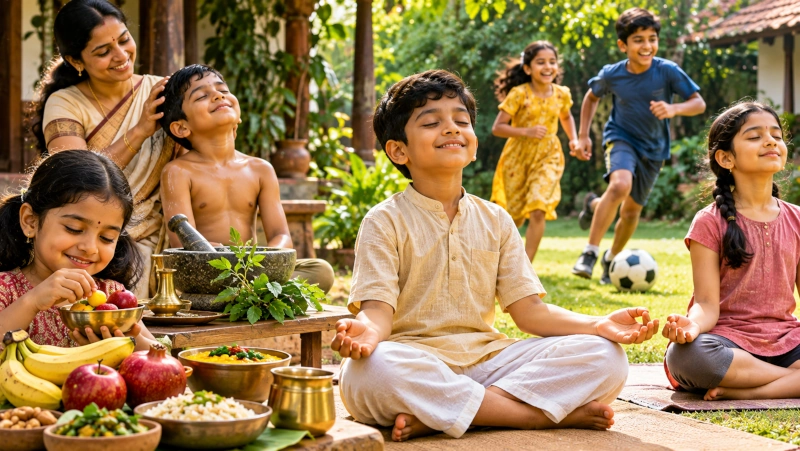
Childhood is the foundation upon which lifelong health and wellbeing are built. The habits children develop during their early years influence their relationship with food, physical activity, sleep, personal hygiene and emotional wellbeing as they grow. Ayurveda, India’s traditional system of medicine, places considerable importance on establishing healthy routines from an early age, recognising that consistent daily practices contribute to balanced living and the development of physical and mental resilience.
Within Ayurveda, the care of children is addressed through Kaumarabhritya, a specialised branch concerned with childhood development, nutrition, health and wellbeing. Rather than approaching childhood simply as a period of physical growth, this tradition considers the interconnected roles of digestion, rest, movement, emotional security and the surrounding environment. Many of its lifestyle principles, particularly regular routines, wholesome meals, adequate sleep and age-appropriate physical activity, are compatible with established modern child-health recommendations.
In today’s environment, children are increasingly exposed to irregular schedules, digital devices, processed foods and reduced opportunities for outdoor play. Incorporating suitable Ayurvedic lifestyle principles into family life offers one approach to developing healthier everyday habits without imposing complicated routines or unnecessary restrictions.
Understanding Childhood Through the Ayurvedic Perspective
Ayurveda traditionally describes human development through the interaction of three functional principles known as Vata, Pitta and Kapha. These concepts form part of Ayurveda’s classical explanation of physiological and psychological characteristics, although they should not be understood as scientifically established biological categories.
Childhood is traditionally associated with the Kapha stage of life, reflecting the emphasis placed on physical growth, tissue development, stability and nourishment. From this perspective, children benefit from regular meals, sufficient rest, appropriate physical activity and a supportive environment that allows development to occur naturally.
The Ayurvedic approach also recognises that children differ in their appetites, activity levels, sleep patterns and responses to environmental conditions. A routine suitable for an older schoolchild may not be appropriate for a toddler, while adolescents have nutritional, emotional and sleep requirements that differ from those of younger children.
An important principle of child wellbeing is therefore adaptability. Healthy habits should support a child’s developmental needs rather than require every child to follow an identical schedule. Parents can draw upon traditional lifestyle concepts while relying on age-appropriate medical and nutritional guidance to determine what is suitable for their children.
Dinacharya: Introducing Healthy Daily Routines
Dinacharya, the Ayurvedic concept of a daily routine, emphasises regularity in waking, eating, personal hygiene, physical activity and sleeping. For children, the value of this approach lies in establishing a predictable rhythm that provides structure without making everyday life unnecessarily rigid.
A consistent morning routine can begin with waking at a suitable time, using the toilet, brushing the teeth, washing the face and preparing for the day’s activities. Children can gradually learn these habits through observation and parental guidance, becoming more independent as their coordination and understanding develop.
Traditional Ayurvedic texts often emphasise waking early, but children should never be required to sacrifice necessary sleep to follow an adult’s routine. Their waking time should be determined by their age, school requirements and the amount of rest they need. A well-rested child who follows a consistent schedule is better supported than one awakened prematurely to satisfy a strict traditional timetable.
Regular meal times, opportunities for play and a calm evening routine can help establish a dependable daily structure. The objective is not to regulate every moment of childhood but to create a healthy balance between organised activities, unstructured exploration and adequate rest.
When children repeatedly experience a familiar sequence of activities, they gradually learn the importance of personal care, mealtimes and sleep. These small habits can become increasingly natural as they grow older, reducing the need for constant reminders or supervision.
Nourishing Children Through Wholesome and Balanced Food
Ayurveda places considerable emphasis on Ahara, or food, as an essential foundation of health. The traditional approach encourages freshly prepared meals, dietary variety and attention to individual digestive comfort. For children, these principles can be incorporated into a balanced diet that meets their requirements for energy, protein, essential fats, vitamins and minerals.
Traditional Indian home cooking offers numerous opportunities to provide varied and nourishing meals. Rice, wheat, millets, pulses, vegetables, fruits, curd, milk where tolerated, nuts in age-safe forms and other suitable foods can contribute to a child’s nutritional needs. Eggs, fish and meat may also form part of a balanced diet according to family preferences and dietary practices.
Meals such as vegetable khichdi, dal with rice, idli with sambar, vegetable upma and chapati with dal provide familiar options that can be adapted to different ages and appetites. Including a variety of vegetables, protein sources and seasonal fruits helps children become accustomed to different flavours and textures while receiving a broader range of nutrients.
Ayurveda traditionally places importance on freshly prepared and comfortably warm food. While warm meals can be appealing and easy to incorporate into family routines, food temperature alone does not determine nutritional value. What matters most is providing safe, appropriately prepared food with adequate nutrients and sufficient variety.
Parents should also recognise that children’s appetites naturally fluctuate. Growth patterns, activity levels and individual development influence how much a child wishes to eat at a particular meal. Pressuring children to finish large portions or restricting food unnecessarily can interfere with the development of healthy eating behaviours.
For infants, established paediatric feeding recommendations should take priority. Exclusive breastfeeding is recommended for approximately the first six months where possible, followed by the introduction of safe and nutritionally adequate complementary foods while breastfeeding continues as appropriate. Honey must not be given to children younger than 12 months because of the risk of infant botulism.
Agni and the Development of Healthy Eating Habits
In Ayurvedic thought, Agni represents the body’s capacity to digest and transform food. Although this traditional concept is not equivalent to a specific anatomical organ or measurable physiological process, it provides a framework for discussing the importance of digestion and regular eating habits.
Children can be encouraged to eat in a calm environment, chew food properly and recognise when they are hungry or comfortably satisfied. Regular family meals also provide opportunities to develop social connections and establish positive associations with food.
Eating while watching television or using mobile devices can distract children from their meals and make it harder for them to pay attention to hunger and fullness. Establishing screen-free mealtimes allows children to concentrate on eating while creating opportunities for conversation with family members.
Ayurveda traditionally discourages excessive eating and emphasises moderation. In childhood, however, moderation should never become restrictive feeding or the withholding of food from a hungry child. Growing children require sufficient nourishment, and their nutritional needs may increase substantially during periods of rapid development.
Parents can support digestive comfort by offering balanced meals, appropriate portions and adequate fluids while observing how individual foods affect their children. Persistent abdominal pain, constipation, diarrhoea, vomiting or poor growth should be assessed by a qualified healthcare professional rather than attributed solely to an imbalance of Agni.
Abhyanga: Gentle Touch and the Importance of Physical Comfort
Abhyanga, the Ayurvedic practice of applying oil to the body through massage, is traditionally associated with relaxation, physical comfort and daily self-care. Gentle touch can be part of nurturing interaction between parents and children, particularly when it is welcomed and performed safely.
For young children, a brief, gentle massage may provide an opportunity for calm interaction and bonding. Any oil used should be suitable for the child’s skin, free from irritating additives and discontinued if redness or discomfort develops. Massage should never involve forceful manipulation, excessive pressure or attempts to stretch a child’s joints.
Infant massage requires particular care because babies have delicate skin and developing musculoskeletal systems. Parents should consult their paediatrician before using oils or massage techniques on newborns, premature infants or children with skin conditions or medical concerns.
Older children may enjoy simple forms of physical relaxation, such as a gentle shoulder or foot massage after an active day. These practices should remain optional and comfortable, respecting the child’s preferences and personal boundaries.
The broader value of this Ayurvedic tradition lies in recognising the importance of nurturing physical care. Warmth, gentle touch, affectionate interaction and a calm environment can help children feel supported within family life.
Outdoor Play and Movement as Essential Parts of Childhood
Ayurveda traditionally encourages movement, exposure to natural environments and activities appropriate to an individual’s physical capacity. For children, regular play is especially important because it supports physical development, coordination, social interaction and emotional wellbeing.
Running, cycling, swimming, climbing, dancing and traditional outdoor games provide opportunities for children to develop strength, balance and endurance. Activities involving friends and family also encourage cooperation, communication and problem-solving.
The World Health Organization recommends that children and adolescents aged five to seventeen engage in an average of at least 60 minutes of moderate-to-vigorous physical activity per day across the week. Younger children require frequent opportunities for movement and active play throughout the day, with recommendations adapted to their developmental stage.
These activities do not need to take the form of structured exercise programmes. A game of football, an evening bicycle ride, skipping, playing in a park or participating in traditional Indian games can contribute to a healthy and active lifestyle.
Outdoor activity also provides children with opportunities to experience natural environments, observe plants and animals and develop curiosity about the world around them. Time spent in safe outdoor spaces can complement classroom learning and reduce prolonged sedentary behaviour.
The emphasis should remain on enjoyment rather than performance. Children are more likely to continue physical activities when they associate movement with pleasure, exploration and social connection rather than pressure to achieve particular fitness targets.
Introducing Yoga and Breathing Awareness
Yoga, closely associated with India’s traditional systems of wellbeing, can provide children with opportunities to explore gentle movement, body awareness and relaxation. Age-appropriate practices can be introduced through playful activities rather than formal or demanding exercise sessions.
Simple postures such as Tadasana, Vrikshasana and gentle variations of other familiar asanas can be adapted for children who are developmentally ready to practise them. Activities that imitate trees, animals or natural movements can make yoga engaging while encouraging coordination and concentration.
Breathing awareness can also be introduced through simple exercises that encourage children to notice their natural breathing patterns. Sitting quietly, observing the breath and practising comfortable, unforced breathing can form part of a calming routine before sleep or after school.
Children should not be encouraged to undertake forceful breathing exercises, prolonged breath retention, strenuous postures or advanced yogic cleansing practices without appropriate professional guidance. Their bodies are still developing, and activities must be adapted to their age, ability and medical needs.
For young children, yoga is most useful when it remains enjoyable and flexible. A short session involving gentle stretches, playful movements and a moment of quiet relaxation may be more appropriate than expecting them to maintain prolonged concentration.
Nidra: Establishing Healthy Sleep Habits
Nidra, or sleep, is regarded in Ayurveda as one of the essential foundations of wellbeing. Adequate sleep is particularly important during childhood because it supports growth, learning, memory, emotional regulation and numerous physiological processes.
Children require substantially more sleep than adults, and their needs change as they grow. Young children generally require longer periods of rest, including daytime naps, while school-aged children benefit from consistent bedtimes that allow sufficient overnight sleep.
Evidence-based sleep recommendations suggest that children aged three to five generally require 10–13 hours of sleep in a 24-hour period, while those aged six to twelve require approximately 9–12 hours. Teenagers aged thirteen to eighteen generally need 8–10 hours of sleep. Individual requirements vary, and these recommendations should be considered alongside the child’s daytime alertness and overall wellbeing.
A predictable evening routine can help children prepare for sleep. Activities such as bathing, changing into comfortable clothes, reading a story and spending quiet time with family members can create a gradual transition from daytime activity to rest.
Bright screens and stimulating digital entertainment should be limited before bedtime because they can interfere with healthy sleep routines. Keeping electronic devices outside children’s bedrooms, particularly at night, can help reduce sleep disruption.
Ayurveda’s emphasis on regular sleep aligns with the importance of maintaining consistent circadian rhythms. Rather than prescribing a single bedtime for every child, parents should establish schedules that provide sufficient rest while accommodating individual developmental and family requirements.
Managing Screen Time and Encouraging Real-World Experiences
Digital technology has become an integral part of modern childhood, influencing education, entertainment and social interaction. Although digital devices can provide access to valuable learning resources, excessive recreational screen use may displace activities that are essential for healthy development, including outdoor play, family interaction and sleep.
Ayurveda’s emphasis on balance and moderation offers a useful perspective on managing children’s relationship with technology. Instead of treating digital devices as inherently harmful, parents can establish reasonable boundaries that ensure sufficient time for physical activity, creative exploration and meaningful interpersonal relationships.
The World Health Organization recommends avoiding sedentary screen time for children younger than two years and limiting it to no more than one hour daily for children aged two to four, with less being preferable. For older children, families should consider the quality of digital content, its educational value and whether screen use interferes with essential daily activities.
Encouraging traditional games, drawing, gardening, music, reading and outdoor exploration provides alternatives to passive digital entertainment. Such activities allow children to develop imagination, practical skills and social confidence through direct engagement with their surroundings.
Parents also play an important role through their own behaviour. Children frequently imitate adult habits, making family participation in screen-free activities more effective than restrictions imposed without corresponding changes in household routines.
Emotional Wellbeing and the Ayurvedic Concept of Sattva
Ayurveda recognises the importance of mental and emotional balance through concepts such as Sattva, traditionally associated with clarity, stability and harmonious mental functioning. In childhood, these ideas can be understood as encouragement to create an emotionally supportive environment that allows children to develop confidence, self-awareness and resilience.
Children experience emotions differently from adults and may not yet possess the language or coping skills needed to express frustration, anxiety, disappointment or fear. Supportive communication helps them understand these experiences and develop healthier ways of responding to challenges.
Parents can encourage emotional wellbeing by listening attentively, acknowledging children’s feelings and offering reassurance without dismissing their concerns. Consistent family interaction, affectionate relationships and predictable routines can contribute to a sense of security.
Activities such as storytelling, music, drawing and imaginative play provide opportunities for emotional expression. They also encourage creativity and allow children to explore ideas and experiences in an age-appropriate manner.
A calm home environment does not require the absence of disagreement or difficult emotions. Instead, children benefit from observing adults resolve conflicts respectfully, communicate openly and manage everyday challenges constructively.
The traditional emphasis on mental balance can therefore be incorporated into modern parenting through patience, positive communication, emotional responsiveness and opportunities for children to develop independence within a supportive family environment.
Personal Hygiene and Everyday Self-Care
Personal hygiene is an important component of Dinacharya and can be introduced gradually as children develop the ability to care for themselves. Regular bathing, handwashing, dental care and wearing clean clothes help establish habits that support health and prevent common infections.
Children should be taught to wash their hands with soap and water before eating, after using the toilet and following activities that involve contact with dirt or potentially contaminated surfaces. Demonstrating proper handwashing techniques through everyday practice helps children understand the importance of cleanliness.
Dental hygiene deserves particular attention because oral health habits established in childhood can influence long-term dental wellbeing. Teeth should be brushed twice daily using an age-appropriate amount of fluoride toothpaste, with parental supervision according to the child’s developmental stage.
Traditional Ayurvedic oral care practices should not replace evidence-based dental hygiene. Oil pulling, herbal powders and other traditional preparations are not necessary for children, and some may be unsuitable because of choking, aspiration or irritation risks.
As children grow older, parents can encourage greater responsibility for personal hygiene while continuing to provide guidance and supervision. The objective is to make cleanliness a familiar and comfortable part of everyday life rather than a source of anxiety or excessive concern.
Seasonal Routines and Adapting to Environmental Changes
Ritucharya, the Ayurvedic concept of adapting daily habits to seasonal changes, provides another framework for teaching children to recognise the relationship between their environment and wellbeing. Changes in temperature, rainfall, humidity and daylight influence clothing requirements, outdoor activities and opportunities for maintaining physical comfort.
During hot weather, children require adequate hydration, suitable clothing and protection from excessive sun exposure. Outdoor activities can be scheduled during cooler parts of the day, particularly when temperatures are high.
During the monsoon season, attention to safe drinking water, food hygiene, dry clothing and prevention of mosquito breeding becomes especially important. Children should also have opportunities for physical activity indoors when heavy rainfall limits outdoor play.
Cooler weather may require additional clothing and adjustments to outdoor routines, particularly for younger children. However, ordinary seasonal changes do not require restrictive diets or complicated herbal preparations.
The practical value of Ritucharya lies in encouraging awareness of environmental conditions and making sensible adjustments that support comfort and wellbeing. Families can incorporate these principles through seasonal foods, suitable clothing, appropriate hydration and safe recreational activities.
The Role of Parents in Establishing Lifelong Habits
Children develop many of their earliest habits by observing the behaviour of parents, caregivers and other family members. Healthy routines are therefore most effective when they become part of shared family life rather than instructions directed exclusively at children.
A family that eats balanced meals together, maintains reasonable sleep schedules and participates in physical activities creates an environment where healthy behaviour becomes familiar. Similarly, adults who demonstrate emotional patience, personal hygiene and balanced technology use provide practical examples that children can gradually follow.
Consistency is particularly important, but it should be accompanied by flexibility. School schedules, festivals, travel, family commitments and individual developmental changes may occasionally disrupt established routines. Such variations are a normal part of childhood and do not undermine the broader value of healthy habits.
Positive reinforcement can encourage children to participate willingly in everyday activities. Allowing them to help prepare meals, choose suitable outdoor games, organise their belongings or participate in simple household responsibilities can strengthen their confidence and independence.
The Ayurvedic emphasis on daily living is most useful when translated into small, sustainable practices that fit naturally within family circumstances. Establishing a few meaningful habits and maintaining them consistently is generally more practical than introducing an elaborate routine that children find difficult to follow.
Using Ayurvedic Practices Safely During Childhood
Ayurveda offers a range of traditional approaches to health and wellbeing, but childhood requires particular caution because children’s bodies are developing and their responses to medicines and concentrated herbal preparations may differ from those of adults.
Dietary practices, gentle movement, regular sleep and nurturing routines can generally be incorporated into family life when adapted to a child’s age and individual needs. However, herbal medicines, medicated oils, concentrated supplements and specialised Ayurvedic procedures should not be administered without guidance from appropriately qualified healthcare professionals.
Traditional preparations are not automatically safe simply because their ingredients are natural. Some herbal products may cause adverse effects, interact with prescribed medicines or contain contaminants. Children are particularly vulnerable to incorrect dosing and inappropriate formulations.
Routine childhood immunisations, scheduled growth and developmental assessments, dental care and evidence-based medical treatment remain essential components of child healthcare. Ayurvedic lifestyle practices should complement these measures rather than replace them.
Parents should seek medical assessment when children experience persistent digestive problems, poor growth, recurrent illness, significant sleep disturbances or behavioural changes affecting everyday functioning. Early identification of health concerns provides the best opportunity for appropriate care.
Building a Foundation for Lifelong Wellbeing
The principles of Ayurveda offer a traditional perspective on the importance of establishing healthy habits during childhood. Through concepts such as Dinacharya, Ahara, Nidra, Ritucharya and Sattva, the system emphasises the relationship between daily living, physical nourishment, rest, environmental awareness and emotional wellbeing.
For modern families, these principles can be translated into practical habits that support children’s development. Regular meals, sufficient sleep, enjoyable physical activity, personal hygiene, balanced technology use and supportive family relationships provide a foundation for healthy growth.
The most meaningful aspect of this approach is its emphasis on consistency rather than complexity. Children do not require elaborate wellness programmes or rigid schedules to develop healthy lifestyles. They benefit from dependable routines, nutritious food, opportunities to play, adequate rest and an environment that encourages curiosity, confidence and emotional security.
By introducing these habits gradually and adapting them to each child’s developmental stage, families can draw upon India’s traditional understanding of balanced living while incorporating the benefits of modern nutritional and paediatric knowledge. The result is a practical, child-centred approach to wellbeing that encourages healthy habits to become a natural part of everyday life.
Mate, here is our next Dharmakshethra Ayurveda Series article, following our established editorial format: traditional Ayurvedic principles, practical guidance for modern families, complete paragraphs throughout, and a balanced approach to children’s physical, mental and emotional development.
Ayurveda for Children: Building Healthy Habits Early
How Ayurvedic Principles of Daily Routine, Nutrition, Sleep, Physical Activity and Emotional Balance Can Support Healthy Childhood Development
Childhood is the foundation upon which lifelong health and wellbeing are built. The habits children develop during their early years influence their relationship with food, physical activity, sleep, personal hygiene and emotional wellbeing as they grow. Ayurveda, India’s traditional system of medicine, places considerable importance on establishing healthy routines from an early age, recognising that consistent daily practices contribute to balanced living and the development of physical and mental resilience.
Within Ayurveda, the care of children is addressed through Kaumarabhritya, a specialised branch concerned with childhood development, nutrition, health and wellbeing. Rather than approaching childhood simply as a period of physical growth, this tradition considers the interconnected roles of digestion, rest, movement, emotional security and the surrounding environment. Many of its lifestyle principles, particularly regular routines, wholesome meals, adequate sleep and age-appropriate physical activity, are compatible with established modern child-health recommendations.
In today’s environment, children are increasingly exposed to irregular schedules, digital devices, processed foods and reduced opportunities for outdoor play. Incorporating suitable Ayurvedic lifestyle principles into family life offers one approach to developing healthier everyday habits without imposing complicated routines or unnecessary restrictions.
Understanding Childhood Through the Ayurvedic Perspective
Ayurveda traditionally describes human development through the interaction of three functional principles known as Vata, Pitta and Kapha. These concepts form part of Ayurveda’s classical explanation of physiological and psychological characteristics, although they should not be understood as scientifically established biological categories.
Childhood is traditionally associated with the Kapha stage of life, reflecting the emphasis placed on physical growth, tissue development, stability and nourishment. From this perspective, children benefit from regular meals, sufficient rest, appropriate physical activity and a supportive environment that allows development to occur naturally.
The Ayurvedic approach also recognises that children differ in their appetites, activity levels, sleep patterns and responses to environmental conditions. A routine suitable for an older schoolchild may not be appropriate for a toddler, while adolescents have nutritional, emotional and sleep requirements that differ from those of younger children.
An important principle of child wellbeing is therefore adaptability. Healthy habits should support a child’s developmental needs rather than require every child to follow an identical schedule. Parents can draw upon traditional lifestyle concepts while relying on age-appropriate medical and nutritional guidance to determine what is suitable for their children.
Dinacharya: Introducing Healthy Daily Routines
Dinacharya, the Ayurvedic concept of a daily routine, emphasises regularity in waking, eating, personal hygiene, physical activity and sleeping. For children, the value of this approach lies in establishing a predictable rhythm that provides structure without making everyday life unnecessarily rigid.
A consistent morning routine can begin with waking at a suitable time, using the toilet, brushing the teeth, washing the face and preparing for the day’s activities. Children can gradually learn these habits through observation and parental guidance, becoming more independent as their coordination and understanding develop.
Traditional Ayurvedic texts often emphasise waking early, but children should never be required to sacrifice necessary sleep to follow an adult’s routine. Their waking time should be determined by their age, school requirements and the amount of rest they need. A well-rested child who follows a consistent schedule is better supported than one awakened prematurely to satisfy a strict traditional timetable.
Regular meal times, opportunities for play and a calm evening routine can help establish a dependable daily structure. The objective is not to regulate every moment of childhood but to create a healthy balance between organised activities, unstructured exploration and adequate rest.
When children repeatedly experience a familiar sequence of activities, they gradually learn the importance of personal care, mealtimes and sleep. These small habits can become increasingly natural as they grow older, reducing the need for constant reminders or supervision.
Nourishing Children Through Wholesome and Balanced Food
Ayurveda places considerable emphasis on Ahara, or food, as an essential foundation of health. The traditional approach encourages freshly prepared meals, dietary variety and attention to individual digestive comfort. For children, these principles can be incorporated into a balanced diet that meets their requirements for energy, protein, essential fats, vitamins and minerals.
Traditional Indian home cooking offers numerous opportunities to provide varied and nourishing meals. Rice, wheat, millets, pulses, vegetables, fruits, curd, milk where tolerated, nuts in age-safe forms and other suitable foods can contribute to a child’s nutritional needs. Eggs, fish and meat may also form part of a balanced diet according to family preferences and dietary practices.
Meals such as vegetable khichdi, dal with rice, idli with sambar, vegetable upma and chapati with dal provide familiar options that can be adapted to different ages and appetites. Including a variety of vegetables, protein sources and seasonal fruits helps children become accustomed to different flavours and textures while receiving a broader range of nutrients.
Ayurveda traditionally places importance on freshly prepared and comfortably warm food. While warm meals can be appealing and easy to incorporate into family routines, food temperature alone does not determine nutritional value. What matters most is providing safe, appropriately prepared food with adequate nutrients and sufficient variety.
Parents should also recognise that children’s appetites naturally fluctuate. Growth patterns, activity levels and individual development influence how much a child wishes to eat at a particular meal. Pressuring children to finish large portions or restricting food unnecessarily can interfere with the development of healthy eating behaviours.
For infants, established paediatric feeding recommendations should take priority. Exclusive breastfeeding is recommended for approximately the first six months where possible, followed by the introduction of safe and nutritionally adequate complementary foods while breastfeeding continues as appropriate. Honey must not be given to children younger than 12 months because of the risk of infant botulism.
Agni and the Development of Healthy Eating Habits
In Ayurvedic thought, Agni represents the body’s capacity to digest and transform food. Although this traditional concept is not equivalent to a specific anatomical organ or measurable physiological process, it provides a framework for discussing the importance of digestion and regular eating habits.
Children can be encouraged to eat in a calm environment, chew food properly and recognise when they are hungry or comfortably satisfied. Regular family meals also provide opportunities to develop social connections and establish positive associations with food.
Eating while watching television or using mobile devices can distract children from their meals and make it harder for them to pay attention to hunger and fullness. Establishing screen-free mealtimes allows children to concentrate on eating while creating opportunities for conversation with family members.
Ayurveda traditionally discourages excessive eating and emphasises moderation. In childhood, however, moderation should never become restrictive feeding or the withholding of food from a hungry child. Growing children require sufficient nourishment, and their nutritional needs may increase substantially during periods of rapid development.
Parents can support digestive comfort by offering balanced meals, appropriate portions and adequate fluids while observing how individual foods affect their children. Persistent abdominal pain, constipation, diarrhoea, vomiting or poor growth should be assessed by a qualified healthcare professional rather than attributed solely to an imbalance of Agni.
Abhyanga: Gentle Touch and the Importance of Physical Comfort
Abhyanga, the Ayurvedic practice of applying oil to the body through massage, is traditionally associated with relaxation, physical comfort and daily self-care. Gentle touch can be part of nurturing interaction between parents and children, particularly when it is welcomed and performed safely.
For young children, a brief, gentle massage may provide an opportunity for calm interaction and bonding. Any oil used should be suitable for the child’s skin, free from irritating additives and discontinued if redness or discomfort develops. Massage should never involve forceful manipulation, excessive pressure or attempts to stretch a child’s joints.
Infant massage requires particular care because babies have delicate skin and developing musculoskeletal systems. Parents should consult their paediatrician before using oils or massage techniques on newborns, premature infants or children with skin conditions or medical concerns.
Older children may enjoy simple forms of physical relaxation, such as a gentle shoulder or foot massage after an active day. These practices should remain optional and comfortable, respecting the child’s preferences and personal boundaries.
The broader value of this Ayurvedic tradition lies in recognising the importance of nurturing physical care. Warmth, gentle touch, affectionate interaction and a calm environment can help children feel supported within family life.
Outdoor Play and Movement as Essential Parts of Childhood
Ayurveda traditionally encourages movement, exposure to natural environments and activities appropriate to an individual’s physical capacity. For children, regular play is especially important because it supports physical development, coordination, social interaction and emotional wellbeing.
Running, cycling, swimming, climbing, dancing and traditional outdoor games provide opportunities for children to develop strength, balance and endurance. Activities involving friends and family also encourage cooperation, communication and problem-solving.
The World Health Organization recommends that children and adolescents aged five to seventeen engage in an average of at least 60 minutes of moderate-to-vigorous physical activity per day across the week. Younger children require frequent opportunities for movement and active play throughout the day, with recommendations adapted to their developmental stage.
These activities do not need to take the form of structured exercise programmes. A game of football, an evening bicycle ride, skipping, playing in a park or participating in traditional Indian games can contribute to a healthy and active lifestyle.
Outdoor activity also provides children with opportunities to experience natural environments, observe plants and animals and develop curiosity about the world around them. Time spent in safe outdoor spaces can complement classroom learning and reduce prolonged sedentary behaviour.
The emphasis should remain on enjoyment rather than performance. Children are more likely to continue physical activities when they associate movement with pleasure, exploration and social connection rather than pressure to achieve particular fitness targets.
Introducing Yoga and Breathing Awareness
Yoga, closely associated with India’s traditional systems of wellbeing, can provide children with opportunities to explore gentle movement, body awareness and relaxation. Age-appropriate practices can be introduced through playful activities rather than formal or demanding exercise sessions.
Simple postures such as Tadasana, Vrikshasana and gentle variations of other familiar asanas can be adapted for children who are developmentally ready to practise them. Activities that imitate trees, animals or natural movements can make yoga engaging while encouraging coordination and concentration.
Breathing awareness can also be introduced through simple exercises that encourage children to notice their natural breathing patterns. Sitting quietly, observing the breath and practising comfortable, unforced breathing can form part of a calming routine before sleep or after school.
Children should not be encouraged to undertake forceful breathing exercises, prolonged breath retention, strenuous postures or advanced yogic cleansing practices without appropriate professional guidance. Their bodies are still developing, and activities must be adapted to their age, ability and medical needs.
For young children, yoga is most useful when it remains enjoyable and flexible. A short session involving gentle stretches, playful movements and a moment of quiet relaxation may be more appropriate than expecting them to maintain prolonged concentration.
Nidra: Establishing Healthy Sleep Habits
Nidra, or sleep, is regarded in Ayurveda as one of the essential foundations of wellbeing. Adequate sleep is particularly important during childhood because it supports growth, learning, memory, emotional regulation and numerous physiological processes.
Children require substantially more sleep than adults, and their needs change as they grow. Young children generally require longer periods of rest, including daytime naps, while school-aged children benefit from consistent bedtimes that allow sufficient overnight sleep.
Evidence-based sleep recommendations suggest that children aged three to five generally require 10–13 hours of sleep in a 24-hour period, while those aged six to twelve require approximately 9–12 hours. Teenagers aged thirteen to eighteen generally need 8–10 hours of sleep. Individual requirements vary, and these recommendations should be considered alongside the child’s daytime alertness and overall wellbeing.
A predictable evening routine can help children prepare for sleep. Activities such as bathing, changing into comfortable clothes, reading a story and spending quiet time with family members can create a gradual transition from daytime activity to rest.
Bright screens and stimulating digital entertainment should be limited before bedtime because they can interfere with healthy sleep routines. Keeping electronic devices outside children’s bedrooms, particularly at night, can help reduce sleep disruption.
Ayurveda’s emphasis on regular sleep aligns with the importance of maintaining consistent circadian rhythms. Rather than prescribing a single bedtime for every child, parents should establish schedules that provide sufficient rest while accommodating individual developmental and family requirements.
Managing Screen Time and Encouraging Real-World Experiences
Digital technology has become an integral part of modern childhood, influencing education, entertainment and social interaction. Although digital devices can provide access to valuable learning resources, excessive recreational screen use may displace activities that are essential for healthy development, including outdoor play, family interaction and sleep.
Ayurveda’s emphasis on balance and moderation offers a useful perspective on managing children’s relationship with technology. Instead of treating digital devices as inherently harmful, parents can establish reasonable boundaries that ensure sufficient time for physical activity, creative exploration and meaningful interpersonal relationships.
The World Health Organization recommends avoiding sedentary screen time for children younger than two years and limiting it to no more than one hour daily for children aged two to four, with less being preferable. For older children, families should consider the quality of digital content, its educational value and whether screen use interferes with essential daily activities.
Encouraging traditional games, drawing, gardening, music, reading and outdoor exploration provides alternatives to passive digital entertainment. Such activities allow children to develop imagination, practical skills and social confidence through direct engagement with their surroundings.
Parents also play an important role through their own behaviour. Children frequently imitate adult habits, making family participation in screen-free activities more effective than restrictions imposed without corresponding changes in household routines.
Emotional Wellbeing and the Ayurvedic Concept of Sattva
Ayurveda recognises the importance of mental and emotional balance through concepts such as Sattva, traditionally associated with clarity, stability and harmonious mental functioning. In childhood, these ideas can be understood as encouragement to create an emotionally supportive environment that allows children to develop confidence, self-awareness and resilience.
Children experience emotions differently from adults and may not yet possess the language or coping skills needed to express frustration, anxiety, disappointment or fear. Supportive communication helps them understand these experiences and develop healthier ways of responding to challenges.
Parents can encourage emotional wellbeing by listening attentively, acknowledging children’s feelings and offering reassurance without dismissing their concerns. Consistent family interaction, affectionate relationships and predictable routines can contribute to a sense of security.
Activities such as storytelling, music, drawing and imaginative play provide opportunities for emotional expression. They also encourage creativity and allow children to explore ideas and experiences in an age-appropriate manner.
A calm home environment does not require the absence of disagreement or difficult emotions. Instead, children benefit from observing adults resolve conflicts respectfully, communicate openly and manage everyday challenges constructively.
The traditional emphasis on mental balance can therefore be incorporated into modern parenting through patience, positive communication, emotional responsiveness and opportunities for children to develop independence within a supportive family environment.
Personal Hygiene and Everyday Self-Care
Personal hygiene is an important component of Dinacharya and can be introduced gradually as children develop the ability to care for themselves. Regular bathing, handwashing, dental care and wearing clean clothes help establish habits that support health and prevent common infections.
Children should be taught to wash their hands with soap and water before eating, after using the toilet and following activities that involve contact with dirt or potentially contaminated surfaces. Demonstrating proper handwashing techniques through everyday practice helps children understand the importance of cleanliness.
Dental hygiene deserves particular attention because oral health habits established in childhood can influence long-term dental wellbeing. Teeth should be brushed twice daily using an age-appropriate amount of fluoride toothpaste, with parental supervision according to the child’s developmental stage.
Traditional Ayurvedic oral care practices should not replace evidence-based dental hygiene. Oil pulling, herbal powders and other traditional preparations are not necessary for children, and some may be unsuitable because of choking, aspiration or irritation risks.
As children grow older, parents can encourage greater responsibility for personal hygiene while continuing to provide guidance and supervision. The objective is to make cleanliness a familiar and comfortable part of everyday life rather than a source of anxiety or excessive concern.
Seasonal Routines and Adapting to Environmental Changes
Ritucharya, the Ayurvedic concept of adapting daily habits to seasonal changes, provides another framework for teaching children to recognise the relationship between their environment and wellbeing. Changes in temperature, rainfall, humidity and daylight influence clothing requirements, outdoor activities and opportunities for maintaining physical comfort.
During hot weather, children require adequate hydration, suitable clothing and protection from excessive sun exposure. Outdoor activities can be scheduled during cooler parts of the day, particularly when temperatures are high.
During the monsoon season, attention to safe drinking water, food hygiene, dry clothing and prevention of mosquito breeding becomes especially important. Children should also have opportunities for physical activity indoors when heavy rainfall limits outdoor play.
Cooler weather may require additional clothing and adjustments to outdoor routines, particularly for younger children. However, ordinary seasonal changes do not require restrictive diets or complicated herbal preparations.
The practical value of Ritucharya lies in encouraging awareness of environmental conditions and making sensible adjustments that support comfort and wellbeing. Families can incorporate these principles through seasonal foods, suitable clothing, appropriate hydration and safe recreational activities.
The Role of Parents in Establishing Lifelong Habits
Children develop many of their earliest habits by observing the behaviour of parents, caregivers and other family members. Healthy routines are therefore most effective when they become part of shared family life rather than instructions directed exclusively at children.
A family that eats balanced meals together, maintains reasonable sleep schedules and participates in physical activities creates an environment where healthy behaviour becomes familiar. Similarly, adults who demonstrate emotional patience, personal hygiene and balanced technology use provide practical examples that children can gradually follow.
Consistency is particularly important, but it should be accompanied by flexibility. School schedules, festivals, travel, family commitments and individual developmental changes may occasionally disrupt established routines. Such variations are a normal part of childhood and do not undermine the broader value of healthy habits.
Positive reinforcement can encourage children to participate willingly in everyday activities. Allowing them to help prepare meals, choose suitable outdoor games, organise their belongings or participate in simple household responsibilities can strengthen their confidence and independence.
The Ayurvedic emphasis on daily living is most useful when translated into small, sustainable practices that fit naturally within family circumstances. Establishing a few meaningful habits and maintaining them consistently is generally more practical than introducing an elaborate routine that children find difficult to follow.
Using Ayurvedic Practices Safely During Childhood
Ayurveda offers a range of traditional approaches to health and wellbeing, but childhood requires particular caution because children’s bodies are developing and their responses to medicines and concentrated herbal preparations may differ from those of adults.
Dietary practices, gentle movement, regular sleep and nurturing routines can generally be incorporated into family life when adapted to a child’s age and individual needs. However, herbal medicines, medicated oils, concentrated supplements and specialised Ayurvedic procedures should not be administered without guidance from appropriately qualified healthcare professionals.
Traditional preparations are not automatically safe simply because their ingredients are natural. Some herbal products may cause adverse effects, interact with prescribed medicines or contain contaminants. Children are particularly vulnerable to incorrect dosing and inappropriate formulations.
Routine childhood immunisations, scheduled growth and developmental assessments, dental care and evidence-based medical treatment remain essential components of child healthcare. Ayurvedic lifestyle practices should complement these measures rather than replace them.
Parents should seek medical assessment when children experience persistent digestive problems, poor growth, recurrent illness, significant sleep disturbances or behavioural changes affecting everyday functioning. Early identification of health concerns provides the best opportunity for appropriate care.
Building a Foundation for Lifelong Wellbeing
The principles of Ayurveda offer a traditional perspective on the importance of establishing healthy habits during childhood. Through concepts such as Dinacharya, Ahara, Nidra, Ritucharya and Sattva, the system emphasises the relationship between daily living, physical nourishment, rest, environmental awareness and emotional wellbeing.
For modern families, these principles can be translated into practical habits that support children’s development. Regular meals, sufficient sleep, enjoyable physical activity, personal hygiene, balanced technology use and supportive family relationships provide a foundation for healthy growth.
The most meaningful aspect of this approach is its emphasis on consistency rather than complexity. Children do not require elaborate wellness programmes or rigid schedules to develop healthy lifestyles. They benefit from dependable routines, nutritious food, opportunities to play, adequate rest and an environment that encourages curiosity, confidence and emotional security.
By introducing these habits gradually and adapting them to each child’s developmental stage, families can draw upon India’s traditional understanding of balanced living while incorporating the benefits of modern nutritional and paediatric knowledge. The result is a practical, child-centred approach to wellbeing that encourages healthy habits to become a natural part of everyday life.
References
1. Ministry of AYUSH, Government of India
Guidelines for Children — General Recommendations on Daily Routine (Dinacharya) and Child Health.
Official guidance covering hygiene, nutrition, daily routines and traditional Ayurvedic practices for children.
Ministry of AYUSH — Guidelines for Children
2. World Health Organization
Guidelines on Physical Activity, Sedentary Behaviour and Sleep for Children Under 5 Years of Age.
Published 2 April 2019. Provides evidence-based recommendations for early childhood physical activity, sleep and sedentary behaviour. World Health Organization
3. World Health Organization
Physical Activity Recommendations for Children and Adolescents.
Recommendations on regular physical activity for children aged 5–17 years. World Health Organization
4. American Academy of Pediatrics
Healthy Sleep Habits: How Many Hours Does Your Child Need?
Guidance on age-appropriate sleep requirements, bedtime routines and screen use. HealthyChildren.org
Editorial note: The article presents classical Ayurvedic concepts as traditional frameworks for healthy living, while using established paediatric recommendations for nutrition, physical activity, hygiene and sleep. It does not recommend unsupervised herbal treatment or replace conventional childhood healthcare.
You may also like
-
Alembic Pharmaceuticals Secures USFDA Approval for Generic Allergy Eye Drops, Expands US Portfolio
-
Ayurveda and Ageing: Lifestyle Practices for Healthy Longevity
-
Ayurveda for Working Professionals: Building a Sustainable Daily Rhythm
-
India’s Lupin Launches Generic HIV Medicine in US Market with 180-Day Exclusivity Eligibility
-
Ayurveda for Students: Sleep, Food, Memory and Daily Routine
