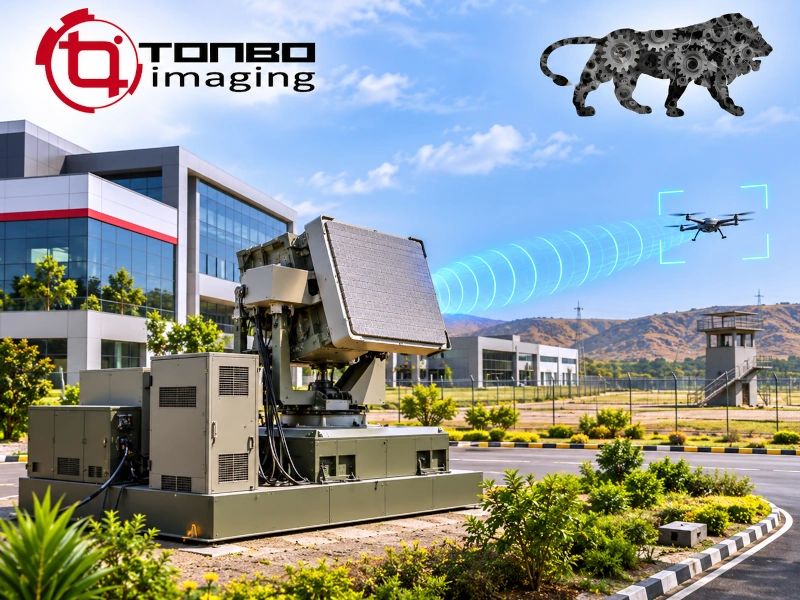
Indian defence technology company Tonbo Imaging India Limited has proposed establishing an advanced High-Power Microwave (HPM) manufacturing facility in Bengaluru and a dedicated 130-acre defence technology testing centre in Vijayapura district, Karnataka. The proposed investment represents an important expansion of India’s indigenous directed-energy technology ecosystem, with particular relevance to counter-drone systems, electronic warfare and next-generation defence capabilities.
Karnataka Minister for Large and Medium Industries M. B. Patil announced the proposals on November 4 following discussions with senior representatives of Tonbo Imaging. The Bengaluru-based company has requested five acres of land in the Information Technology Investment Region (ITIR) for developing and manufacturing High-Power Microwave systems, alongside 130 acres at Mulwada in Vijayapura district for specialised testing, evaluation and technology demonstrations.
The proposed facilities would establish complementary infrastructure for developing sophisticated defence technologies within Karnataka. While the Bengaluru establishment would concentrate on technology development and manufacturing, the Vijayapura centre would provide the space and infrastructure required for evaluating advanced systems under appropriate testing conditions.
Bengaluru Facility to Focus on High-Power Microwave Technology
The proposed five-acre manufacturing facility in Bengaluru’s ITIR area would focus on the development and production of High-Power Microwave systems and associated technologies. This represents a significant technological direction for Tonbo Imaging, which has established expertise in electro-optical and infrared systems, thermal imaging, advanced sensors and autonomous defence platforms.
High-Power Microwave technology belongs to the broader category of directed-energy systems, which employ concentrated electromagnetic energy to affect electronic equipment rather than relying exclusively on conventional explosive projectiles. These systems can be designed to disrupt or disable vulnerable electronic circuits, sensors and communication equipment, depending on their technical characteristics and operating conditions.
The technology has gained strategic importance because modern military operations increasingly depend on electronic systems incorporated into unmanned aerial vehicles, communication networks, surveillance equipment and other battlefield platforms. Developing indigenous capabilities in this field can support India’s efforts to strengthen its responses to emerging electronically controlled threats.
Tonbo Imaging’s proposed Bengaluru facility would provide a dedicated manufacturing base for such technologies, complementing the company’s existing defence electronics expertise. The development of domestic production capabilities could also strengthen India’s ability to undertake specialised system integration, technological improvements and long-term support for advanced electronic defence equipment.
130-Acre Defence Testing Centre Proposed in Vijayapura
Alongside the Bengaluru manufacturing facility, Tonbo Imaging has sought 130 acres of land at Mulwada in Vijayapura district for establishing a dedicated testing, evaluation and demonstration centre. The proposed facility would support the assessment of advanced defence technologies, providing infrastructure for evaluating system performance and demonstrating capabilities under controlled conditions.
Testing is an important component of directed-energy technology development because these systems must undergo evaluation to establish their performance characteristics, reliability, electromagnetic compatibility and operational safety. Dedicated testing infrastructure can help developers assess equipment under different conditions and improve the engineering processes required for advanced defence systems.
The proposed Vijayapura centre would complement the Bengaluru manufacturing establishment by providing a separate location for testing and evaluating technologies developed by the company. This arrangement would allow manufacturing and technical development activities to be supported by dedicated evaluation facilities, strengthening the overall research-to-production ecosystem.
According to the Karnataka Industries Minister, the Mulwada facility is intended to accommodate testing, evaluation and demonstrations of Tonbo Imaging’s technologies. The development would also extend specialised defence technology infrastructure beyond Bengaluru, potentially creating new opportunities for engineering services, technical employment and supporting industries in northern Karnataka.
High-Power Microwave Systems and Counter-Drone Defence
High-Power Microwave technology is emerging as an important area of defence research because of its potential applications against electronic threats, particularly unmanned aerial systems. Unlike conventional weapons that physically destroy targets through the impact of projectiles or explosive effects, HPM systems use electromagnetic energy to interfere with susceptible electronic components.
Modern drones depend on electronic circuits for navigation, communication, flight control and sensor operations. High-Power Microwave systems may be employed to disrupt or degrade these components, making the technology relevant to the development of counter-unmanned aerial system capabilities.
The ability to affect electronic equipment also creates potential applications against certain types of drone swarms, where numerous unmanned platforms operate simultaneously. Depending on their design, power, targeting arrangements and operational conditions, directed-energy systems may provide an additional defensive capability alongside conventional air defence weapons and electronic warfare equipment.
For India, developing such systems domestically is particularly relevant as the Armed Forces expand their use of unmanned platforms while simultaneously strengthening protection against hostile drones and other electronically controlled threats. Indigenous HPM technology can contribute to a broader defensive architecture combining surveillance, electronic warfare, kinetic interception and directed-energy capabilities.
Tonbo Imaging’s proposed manufacturing and testing facilities would support the domestic development of technologies associated with this emerging field, strengthening the country’s industrial base for advanced electronic defence systems.
Tonbo Imaging’s Existing Indian Navy High-Power Microwave Programme
The proposed expansion follows an important development in Tonbo Imaging’s defence technology portfolio. In May 2026, the company announced that it had secured a contract from the Indian Navy for the integration and commissioning of a High-Power Microwave weapon system intended for naval platforms.
The contract was awarded under the ADITI 3.0 innovation framework, supported by the Ministry of Defence’s Innovations for Defence Excellence (iDEX) initiative and the Defence Innovation Organisation. The programme focuses on developing advanced indigenous defence technologies through collaboration between the Armed Forces and Indian technology companies.
Under the reported contractual arrangement, Tonbo Imaging is responsible for system integration and commissioning activities, with subsequent production supplies envisaged following successful development, validation and acceptance. The programme reflects the Indian Navy’s interest in evaluating emerging directed-energy technologies for maritime defence applications.
High-Power Microwave capabilities are particularly relevant to naval operations because warships may encounter threats involving unmanned aerial vehicles, electronic surveillance systems and other technologically sophisticated platforms. Directed-energy systems offer a potential additional layer of protection against certain electronic threats, complementing established naval weapons and electronic warfare capabilities.
The company’s existing naval programme provides important context for its proposed manufacturing expansion in Karnataka. Although the November announcement does not specifically link the new facilities to production under the Indian Navy contract, both developments reflect Tonbo Imaging’s growing involvement in indigenous High-Power Microwave technology.
Building on India’s Advanced Defence Electronics Capabilities
Tonbo Imaging has developed a specialised presence in India’s defence technology sector through its work in electro-optical systems, infrared imaging, thermal surveillance, advanced sensors and autonomous technologies. These capabilities support a range of military applications involving target detection, surveillance, situational awareness and the integration of sensors with defence platforms.
The company’s proposed entry into dedicated HPM manufacturing infrastructure would broaden its technological activities beyond traditional imaging and sensing systems. High-Power Microwave technology requires expertise in specialised electronics, electromagnetic systems, power management, engineering integration and advanced testing, creating opportunities for collaboration across multiple technical disciplines.
The expansion also reflects the growing contribution of Indian private-sector companies to defence research and development. Domestic technology firms are increasingly participating in programmes involving sophisticated sensors, unmanned systems, electronic warfare and emerging defence technologies, complementing the capabilities of established public sector organisations and national research institutions.
Developing such technologies within India can strengthen domestic intellectual property, engineering expertise and specialised supply chains. It also supports the creation of an industrial ecosystem capable of designing, manufacturing, testing and maintaining complex defence systems without exclusive dependence on overseas suppliers.
Karnataka Strengthens Its Defence Technology Manufacturing Ecosystem
Karnataka has developed into an important centre for India’s aerospace, defence electronics and advanced technology industries, supported by established manufacturing organisations, research institutions and a growing network of specialised engineering companies.
Bengaluru’s existing aerospace and electronics ecosystem provides access to technical expertise, engineering services and industrial suppliers, making it a suitable location for the proposed High-Power Microwave manufacturing facility. The city’s concentration of defence technology organisations and research institutions also creates opportunities for cooperation in advanced systems development.
The proposed testing centre in Vijayapura would contribute to extending specialised industrial activity into other parts of Karnataka. A dedicated defence technology testing facility could create demand for technical services, infrastructure development and specialised personnel while supporting the state’s efforts to expand advanced manufacturing beyond its principal urban centres.
The November 4 discussions also involved representatives of the Karnataka Industrial Areas Development Board and Karnataka Udyog Mitra, reflecting the institutional coordination required for the proposed land allotments and industrial development.
The projects remain at the proposal stage, with land allocation and associated administrative processes yet to be completed. The government announcement did not specify the proposed investment amount, manufacturing capacity, construction schedule or expected commissioning dates for either facility.
Advancing Indigenous Directed-Energy Defence Technology
Tonbo Imaging’s proposed manufacturing facility in Bengaluru and 130-acre testing centre in Vijayapura represent an important initiative in India’s expanding defence technology ecosystem. By seeking to establish dedicated infrastructure for High-Power Microwave systems, the company is positioning itself to contribute to an emerging field with applications in counter-drone operations, electronic defence and the protection of military platforms.
The proposals build upon Tonbo Imaging’s established capabilities in advanced sensors and defence electronics, as well as its reported engagement with the Indian Navy in developing High-Power Microwave systems. Together, these developments illustrate the increasing role of Indian private-sector companies in pursuing sophisticated technologies that have traditionally required substantial specialised research and industrial capabilities.
The proposed facilities also align with India’s broader objective of strengthening indigenous defence design, development and manufacturing under the Atmanirbhar Bharat initiative. As directed-energy technologies become increasingly relevant to modern military operations, domestic manufacturing and testing infrastructure can contribute to greater technological independence and stronger national defence capabilities.
With its proposed manufacturing and evaluation facilities, Tonbo Imaging is seeking to develop an integrated foundation for advanced electromagnetic defence technologies in Karnataka. The initiative highlights the continued expansion of India’s private defence industry into specialised technological domains and its growing contribution to the country’s long-term strategic self-reliance.
You may also like
-
NMDC Iron Ore Production Rises 22% to 32.32 Million Tonnes in April–October 2026
-
Martin-Baker Plans ₹380 Crore Ejection Seat Manufacturing Facility in Karnataka
-
Cabinet Approves ₹14,500 Crore Scheme to Develop 92 GWh Energy Storage Capacity, Targets ₹97,600 Crore Investment
-
India’s Services PMI Climbs to Four-Month High of 55.8 in October as Inflationary Pressures Ease
-
India Approves 12 Electronics Manufacturing Projects Worth ₹7,503 Crore, Launches Semicon 2.0 Portal
