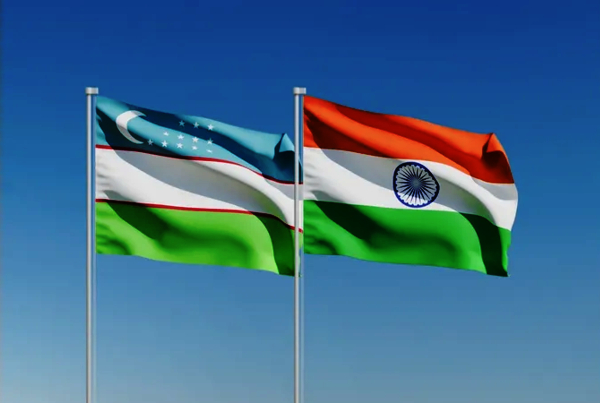
The Ministry of External Affairs (MEA) has reaffirmed India’s commitment to safeguarding students pursuing medical education in Uzbekistan, emphasising the need to protect them from exploitation by unscrupulous intermediaries and ensure that their academic qualifications meet Indian regulatory standards. The government has also stressed that students seeking admission to foreign medical institutions must carefully examine official advisories before committing to overseas education programmes.
Addressing a media briefing in New Delhi on November 3, MEA spokesperson Randhir Jaiswal said India remained engaged with Uzbek authorities on issues concerning Indian students studying in the Central Asian country. He emphasised that the government’s priorities include protecting students from exploitation in both countries, ensuring access to quality medical education and maintaining compliance with the requirements established by India’s National Medical Commission (NMC).
India Engages Uzbekistan on Student Welfare
The Ministry’s statement came in response to questions concerning reports of a significant decline in the number of Indian students seeking medical education in Uzbekistan. Media reports had suggested that Indian medical admissions in the country had fallen from approximately 2,000 to 200, raising questions about the factors influencing enrolment and whether discussions had taken place between the two governments.
Jaiswal did not confirm an agreement to restrict admissions or indicate that India had formally requested Uzbekistan to reduce the intake of Indian medical students. Instead, he reiterated that India continued to engage with Uzbek authorities and directed prospective students towards advisories issued by the Indian Embassy in Tashkent and the National Medical Commission. His remarks indicated that the government’s immediate concern was the quality and regulatory acceptability of foreign medical education rather than the number of students enrolling in overseas institutions.
Indian Embassy Warns Against Unverified Education Consultants
The Indian Embassy in Tashkent has previously cautioned prospective medical students about the risks associated with choosing overseas institutions through unverified education consultants. In an advisory issued on June 25, the Embassy recommended that students intending to engage education consultants should use only those whose businesses are registered in India, providing an additional level of accountability when arranging admissions abroad.
The Embassy also warned that some newly established institutions, particularly private universities, might lack adequate infrastructure, laboratory facilities and English-speaking teaching faculty. Such deficiencies could prevent their programmes from meeting India’s regulatory requirements for foreign medical graduates. Students were additionally advised to travel on appropriate student visas rather than relying on electronic visas that might not be suitable for their intended academic activities.
These warnings are particularly relevant because students pursuing medical education abroad often make substantial financial commitments covering tuition fees, accommodation, travel and living expenses. Inadequate verification of an institution’s credentials or the representations made by admission intermediaries can expose families to financial losses and leave students with qualifications that may not satisfy the conditions for medical registration in India.
National Medical Commission Emphasises Regulatory Compliance
The National Medical Commission has separately issued warnings concerning foreign medical institutions that do not comply with India’s prescribed educational standards. In an alert dated April 1, 2026, specifically addressing medical education in Uzbekistan, the Commission cautioned students against enrolling in programmes that fail to satisfy the Foreign Medical Graduate Licentiate Regulations, 2021.
Under these regulations, foreign medical education must satisfy requirements relating to course duration, the medium of instruction, curriculum, clinical training and internship arrangements. The Commission’s advisory specifies a minimum of 54 months of medical education at a single institution, followed by a 12-month internship at the same foreign university, along with requirements concerning English-medium instruction and appropriate clinical training.
The regulations also establish conditions that foreign medical graduates must fulfil before becoming eligible to practise medicine in India. These include the applicable licensing examination, registration requirements and supervised internship obligations in India. Consequently, admission to a foreign medical university does not automatically guarantee eligibility for medical registration or professional practice after graduation.
Safeguarding Students’ Academic and Professional Futures
The government’s renewed emphasis on student protection highlights the importance of assessing foreign medical programmes before admission rather than discovering regulatory deficiencies after completing several years of study. Differences in course structure, teaching language, clinical exposure and internship arrangements can have serious implications for students who intend to return to India and pursue medical careers.
Prospective students must therefore examine whether their chosen institution offers a programme consistent with NMC regulations and whether the qualifications awarded provide an appropriate pathway towards professional registration in India. Official guidance from the Indian Embassy and the Commission is particularly important when institutions or recruitment agents make claims about recognition, licensing eligibility or opportunities for professional practice.
The MEA’s position also underlines the role of diplomatic engagement in addressing educational concerns affecting Indian citizens overseas. While universities and education consultants remain responsible for the services they provide, consular communication and regulatory advisories can help students identify potential risks and seek assistance when difficulties arise.
India’s latest statement places student welfare, educational quality and professional eligibility at the centre of its engagement with Uzbekistan. By encouraging students to rely on official advisories and observe established medical education standards, the government is seeking to reduce the risks associated with overseas admissions while protecting the academic investments and professional prospects of Indian students pursuing medical qualifications abroad.
You may also like
-
India Sets Guinness World Record with Nearly 2.88 Lakh Student Innovation Project Submissions
-
NLC India Opens 1,067 Apprenticeship Opportunities in Technical and Professional Fields
-
Indian Physicist Ashoke Sen Becomes First Indian to Receive Prestigious Oskar Klein Medal
-
Indian Army’s Northern Command Opens 75-Day Defence Technology Internship Programme for Young Innovators
-
Ayush Patent Filings Rise Eightfold as India Records 4,077 Applications and 711 Grants in 12 Years
