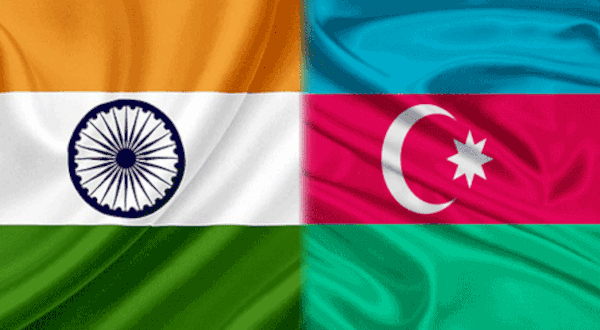
External Affairs Minister Dr S. Jaishankar met Azerbaijan President Ilham Aliyev in Baku on 23 October 2026, marking an important diplomatic engagement aimed at strengthening bilateral relations and expanding cooperation across economic, technological and strategic sectors. The discussions covered regional and international developments, trade and investment opportunities, emerging technologies and the prospects for closer political engagement between India and Azerbaijan.
During the meeting, Jaishankar conveyed greetings from President Droupadi Murmu and Prime Minister Narendra Modi to the Azerbaijani President. He also recalled the earlier meeting between Prime Minister Modi and President Aliyev in Bishkek and conveyed that his visit to Azerbaijan was undertaken on the instructions of the Indian Prime Minister.
President Aliyev welcomed the visit and expressed appreciation for India’s initiative to strengthen bilateral engagement. Both sides acknowledged the opportunities available for expanding cooperation and agreed on the importance of maintaining regular political contacts, institutional exchanges and business interactions.
India and Azerbaijan Discuss Regional and Global Strategic Developments
Jaishankar and President Aliyev exchanged views on important regional and international developments, examining them from their respective strategic perspectives. The discussions reflected the interest of both countries in maintaining independent approaches to international relations while identifying areas where their interests converge.
Following the meeting, Jaishankar described India and Azerbaijan as independent-minded nations that make their own decisions on major international issues. He characterised the discussions as focused and forward-looking, noting that the two sides had reviewed several aspects of their bilateral relationship.
The engagement took place amid continuing changes in international economic relationships, regional security arrangements and global diplomatic priorities. For India, Azerbaijan represents an important country in the South Caucasus, a region situated between the Caspian Sea and the wider European and West Asian geopolitical environments.
Regular diplomatic exchanges with countries in this region provide India with opportunities to strengthen political understanding, examine economic cooperation and engage with developments affecting Eurasia. The discussions in Baku reflected this wider diplomatic approach while concentrating on practical opportunities for bilateral cooperation.
Prime Minister Modi’s Earlier Meeting with President Aliyev Provides Diplomatic Continuity
The meeting between Jaishankar and President Aliyev built upon the earlier interaction between Prime Minister Narendra Modi and the Azerbaijani President in Bishkek. Both sides recalled that engagement and its contribution to maintaining communication at the highest political level.
According to the Azerbaijani President’s Office, Jaishankar informed President Aliyev that he was visiting Baku on Prime Minister Modi’s instructions. The Azerbaijani leader welcomed the initiative and emphasised the importance of examining the present state of relations and identifying opportunities for future development.
President Aliyev also conveyed his greetings to President Murmu and Prime Minister Modi. The exchange reflected the diplomatic importance attached to maintaining direct communication between the leadership of both countries.
High-level political engagement can provide direction for cooperation undertaken by government departments, diplomatic missions and business organisations. The discussions in Baku demonstrated a willingness to build upon existing contacts and identify areas that could support a more substantial bilateral relationship.
Trade, Investment and Energy Cooperation Feature in Bilateral Discussions
Economic cooperation emerged as an important subject during Jaishankar’s visit. Alongside his meeting with President Aliyev, the External Affairs Minister held discussions with Azerbaijan’s Foreign Minister Jeyhun Bayramov on expanding bilateral relations.
The two ministers examined opportunities for strengthening trade, investment and energy cooperation. Jaishankar identified these sectors as central to the economic relationship and expressed confidence that considerable scope exists for expanding commercial engagement.
Azerbaijan’s energy sector provides an established area of potential cooperation, while India’s large domestic market, industrial development and expanding international commercial relationships offer opportunities for broader economic interaction.
Trade and investment engagement also provides a foundation for developing partnerships beyond conventional commercial exchanges. Business delegations, investment discussions and direct industry contacts can help identify opportunities in manufacturing, services and technology-related sectors.
The discussions did not announce specific new investment agreements or commercial contracts. Instead, they focused on identifying areas where stronger economic engagement could produce mutually beneficial opportunities.
High Technology and Emerging Industries Identified as Areas for Cooperation
The discussions between Jaishankar and President Aliyev included prospects for cooperation in high-technology sectors. The official Azerbaijani statement identified technological cooperation as one of several areas where the two countries could strengthen their relationship.
India’s expanding capabilities in digital technologies, information technology services, engineering and industrial innovation provide a foundation for examining potential partnerships with international markets. Cooperation in such sectors can involve commercial exchanges, institutional collaboration and technology-related business engagement.
The inclusion of high technology in the bilateral agenda indicates an interest in broadening economic cooperation beyond established sectors. It also reflects the growing importance of technological capabilities in international economic relationships.
The meeting did not identify specific technology projects or announce new agreements. Nevertheless, the discussion established high-technology cooperation as a subject for further engagement between the two countries.
India and Azerbaijan Recognise Common Interests as Global South Countries
Both countries acknowledged their shared interests as members of the Global South during the meeting in Baku. According to the Azerbaijani President’s Office, the two sides recognised similarities in their positions on several international issues, including matters affecting developing countries.
This understanding provided a basis for discussing political cooperation and engagement within international organisations. The two sides examined the importance of maintaining dialogue on issues where their interests overlap and strengthening communication through multilateral platforms.
India has consistently emphasised the importance of giving developing countries a stronger voice in international economic and political discussions. Its engagement with Azerbaijan provides another channel for exchanging views on issues relevant to the wider Global South.
The discussions also reflected the importance of independent diplomatic decision-making. Jaishankar’s remarks concerning the independent outlook of India and Azerbaijan highlighted the value both countries attach to pursuing their national interests while maintaining constructive international partnerships.
Such exchanges can strengthen mutual understanding even when countries approach individual regional or international issues from different perspectives.
Cultural and People-to-People Connections Provide Foundation for Bilateral Relations
Jaishankar also highlighted the historical cultural and people-to-people connections between India and Azerbaijan. He observed that these longstanding interactions provide a useful foundation for building a more contemporary relationship between the two countries.
The External Affairs Minister emphasised the importance of mutual respect for national values and cultural traditions. He presented this understanding as a basis for expanding cooperation and strengthening bilateral engagement in the years ahead.
The official discussions also covered cultural and humanitarian cooperation. These areas can complement political and economic relations by encouraging exchanges among educational institutions, cultural organisations, researchers and citizens.
India and Azerbaijan’s geographical positions have historically connected them with wider networks of interaction across Asia. Maintaining cultural and interpersonal exchanges can help preserve this historical dimension while supporting new forms of engagement.
The renewed emphasis on cultural cooperation demonstrated the interest of both countries in developing a relationship that extends beyond formal diplomacy and commercial activity.
Both Countries Call for More Political Contacts and Business Delegations
President Aliyev and Jaishankar discussed the importance of increasing political contacts and organising reciprocal visits at different levels. The Azerbaijani President’s Office confirmed that the discussions included exchanges involving economic and business delegations.
Such visits provide opportunities for policymakers and business representatives to identify areas of cooperation and develop a clearer understanding of market conditions, investment opportunities and institutional requirements.
The emphasis on business delegations also reflected the economic priorities discussed during Jaishankar’s meeting with Foreign Minister Bayramov. Increased contact between industry representatives can help translate diplomatic engagement into practical commercial relationships.
Regular exchanges among officials, business organisations and institutions can also improve communication and create more opportunities for sustained cooperation. The two sides identified these mechanisms as useful instruments for advancing bilateral relations.
India Strengthens Diplomatic Engagement with the South Caucasus
Jaishankar’s visit highlighted India’s continuing interest in engaging with countries across the South Caucasus. Azerbaijan occupies an important geographical position along the western Caspian region and maintains economic and political connections across neighbouring regions.
The South Caucasus has considerable significance for regional connectivity, energy transportation and relations between European and Asian markets. Developments in this region therefore form part of the wider diplomatic and economic environment in which India conducts its international engagements.
India’s discussions with Azerbaijan focused on maintaining political dialogue, expanding economic cooperation and examining shared interests in international affairs. These engagements provide an opportunity to strengthen bilateral understanding while pursuing India’s wider diplomatic relationships across Eurasia.
The visit also demonstrated India’s approach of maintaining direct diplomatic communication with countries that occupy important positions within evolving regional and international arrangements.
India–Azerbaijan Relations Gain Momentum Through High-Level Dialogue
The meeting between External Affairs Minister S. Jaishankar and President Ilham Aliyev marked a renewed effort to strengthen political understanding and expand the scope of India–Azerbaijan relations.
The discussions brought together several important dimensions of bilateral cooperation, including trade, investment, energy, high technology, cultural exchanges and engagement within international organisations. Both sides also recognised the importance of maintaining regular political communication and encouraging business interactions.
Jaishankar’s separate discussions with Foreign Minister Jeyhun Bayramov reinforced the economic dimension of the visit, particularly the opportunities available for closer commercial and investment cooperation.
The exchanges in Baku established a constructive basis for continued engagement between India and Azerbaijan. Greater political dialogue, institutional cooperation and direct business contacts can help both countries develop a more diversified relationship while strengthening India’s diplomatic engagement with the wider South Caucasus region.
References
- President of the Republic of Azerbaijan – Official Website. Ilham Aliyev Received Minister of External Affairs of India. Published 23 October 2026.
https://president.az/en/articles/view/74282 - Akashvani News, Prasar Bharati. India and Azerbaijan Discuss Important Regional and Global Developments from Strategic Perspective. Published 23 October 2026.
https://newsonair.gov.in/india-and-azerbaijan-discuss-important-regional-and-global-developments-from-strategic-perspective/
You may also like
-
India and Azerbaijan Agree to Strengthen Security, Trade, Energy and Economic Cooperation
-
Piyush Goyal Holds High-Level Talks in Berlin to Strengthen India–Germany Trade, Investment and Industrial Cooperation
-
Indian Navy to Host Indo-Pacific Regional Dialogue 2026 with Experts from 18 Countries on Maritime Science and Technology
-
Russia Ratifies Temporary Employment Agreement with India, Expanding Opportunities for Skilled Workers
-
Indian Navy’s First Training Squadron Arrives in Maldives, Strengthening Maritime Defence Cooperation
