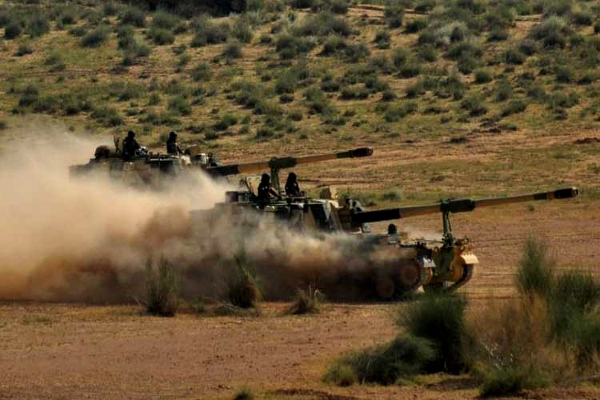
India has taken another significant step towards modernising its military capabilities with the release of the Indian Army’s new Land Warfare Doctrine on 23 October 2026. Defence Minister Rajnath Singh unveiled the doctrine during the Army Commanders’ Conference in New Delhi, establishing an overarching framework to prepare the Army for the changing character of warfare and the challenges of future conflicts.
The doctrine forms part of the Indian Army’s continuing transformation into a technologically advanced, adaptable and future-ready fighting force. Its release comes as modern military operations increasingly involve the coordinated application of conventional combat capabilities, unmanned platforms, artificial intelligence, cyber technologies and advanced communication networks.
Addressing senior Army commanders, Rajnath Singh emphasised that India’s military preparedness must combine a long-term strategic vision with the ability to respond quickly to immediate and emerging security challenges. He called for greater operational integration, technological modernisation and self-reliance in defence manufacturing to strengthen India’s national security capabilities.
New Land Warfare Doctrine Establishes Framework for Future Military Operations
The Land Warfare Doctrine provides an overarching framework for preparing the Indian Army to meet the challenges arising from the evolving nature of armed conflict. The Ministry of Defence described the document as an important element of the Army’s efforts to strengthen its readiness for future warfare.
Military doctrines provide a common conceptual foundation for developing operational approaches, preparing personnel and identifying capability requirements. They help armed forces align organisational structures, training and technological development with anticipated operational challenges. The release of a new doctrine therefore represents an important step in the Army’s continuing adaptation to changing military conditions.
The doctrine’s introduction comes amid rapid technological advances that are reshaping how military forces conduct operations. Unmanned systems, digital communications, electronic warfare, precision weapons and artificial intelligence increasingly influence battlefield awareness, command decisions and operational effectiveness.
While the Ministry of Defence has confirmed the doctrine’s release and its broad purpose, the official announcement does not provide a detailed chapter-by-chapter account of the document. The wider transformation priorities discussed during the Army Commanders’ Conference nevertheless provide important context for understanding the direction of India’s military modernisation.
Rajnath Singh Calls for a 20–30 Year Strategic Vision
During his address to the Army Commanders’ Conference, Rajnath Singh urged the Indian Army’s senior leadership to develop a strategic vision extending over the next two to three decades. He emphasised that military planning must account for changing geopolitical circumstances, regional security developments and emerging technological challenges.
The Defence Minister stressed that long-term planning should not diminish the Army’s ability to respond to immediate operational requirements. Instead, he called for dynamic and flexible strategies that allow military commanders to adjust their approaches as circumstances change.
Such an approach requires the Army to balance current operational preparedness with sustained capability development. Long-term investments in equipment, infrastructure, training and emerging technologies must support the force’s ability to respond effectively to evolving threats.
Rajnath Singh also encouraged commanders to closely monitor developments across the international security environment. He highlighted the importance of anticipating future challenges rather than relying exclusively on existing military capabilities and established operational practices.
Multi-Domain Operations Become Central to Modern Warfare
A major theme of the Defence Minister’s address was the growing importance of multi-domain military capabilities. Rajnath Singh observed that contemporary warfare increasingly extends across land, air, maritime, space and cyber domains, requiring armed forces to operate through closely coordinated arrangements.
He emphasised that land warfare and ground forces would remain indispensable despite the expanding significance of emerging operational domains. Control of territory, the protection of critical positions and sustained ground operations continue to require capable and well-prepared land forces.
At the same time, the effectiveness of ground operations increasingly depends on support from other military domains. Information gathered through aerial surveillance, space-based systems and digital networks can contribute to situational awareness, while coordination with other services can improve the effectiveness of military responses.
The Defence Minister therefore called for an integrated approach to modern warfare, stressing that operational success depends on multi-domain capabilities and seamless coordination during joint operations. His remarks reinforced the importance of closer cooperation among India’s armed forces as they prepare for increasingly complex security challenges.
Artificial Intelligence, Drones and Autonomous Systems Receive Greater Attention
Technological modernisation featured prominently in the Army Commanders’ Conference, with Rajnath Singh highlighting the importance of drones and advanced technologies in contemporary military operations. He appreciated the restructuring initiatives undertaken by the defence forces and called for continued improvements in operational capabilities.
The Defence Minister specifically identified artificial intelligence, autonomous systems, data analytics, cybersecurity and secure communication networks as areas requiring accelerated development. These technologies can support military planning, information processing, surveillance and the protection of critical operational networks.
Unmanned aerial systems have become increasingly important in modern military operations because they support reconnaissance, battlefield observation and other specialised tasks. Their growing use also creates new challenges for military forces, particularly in detecting, tracking and responding to hostile unmanned platforms.
Artificial intelligence and data analytics offer additional possibilities for processing large volumes of operational information and supporting timely decisions. However, their effectiveness depends on reliable information, secure infrastructure and appropriate integration with military command systems.
Rajnath Singh emphasised the need to continuously assess existing capabilities and implement improvements as operational circumstances evolve. His remarks reflected the Army’s wider effort to incorporate emerging technologies while preserving the effectiveness of conventional combat forces.
Operation Sindoor Highlights Importance of Coordination and Advanced Weaponry
The Defence Minister referred to Operation Sindoor while discussing the operational lessons relevant to the Indian Armed Forces. He stated that innovative thinking, enhanced synergy, superior coordination and advanced weaponry had contributed to the operation’s success.
Rajnath Singh commended the defence forces for adapting to changing operational circumstances and emphasised the importance of incorporating operational experience into future military preparations. He described Operation Sindoor as demonstrating India’s willingness to take necessary measures to safeguard its national interests.
The emphasis on innovation and coordination reflects the growing importance of integrating different military capabilities during contemporary operations. Modern conflicts require commanders to combine technological resources, intelligence, communication systems and combat forces within a coherent operational framework.
The Army’s continuing transformation seeks to strengthen these capabilities through organisational improvements, technological development and more effective coordination. The experience gained from recent operations provides an important basis for evaluating existing systems and identifying future requirements.
Indigenous Defence Manufacturing Supports India’s Military Transformation
Rajnath Singh also highlighted the importance of self-reliance in defence manufacturing as India works to strengthen its military capabilities. He credited the coordinated efforts of government institutions, defence organisations and industry for expanding the country’s domestic defence production capacity.
According to figures cited by the Defence Minister, India’s defence production reached a record ₹1.78 lakh crore in the financial year 2025–26, while defence exports rose to approximately ₹38,000 crore. He presented these achievements as evidence of the progress made under the government’s emphasis on Aatmanirbharta in defence.
Expanding domestic manufacturing capabilities is particularly relevant to long-term military preparedness. Indigenous production can strengthen access to equipment, support maintenance requirements and improve the ability to develop systems suited to India’s operational conditions.
The growth of domestic defence manufacturing also provides opportunities for Indian public-sector enterprises, private manufacturers, research institutions and technology companies to participate in military capability development.
The Defence Minister urged the armed forces to maintain their focus on self-reliance while implementing reforms and strengthening operational capabilities. His remarks connected military modernisation with India’s broader objective of developing a more capable and sustainable domestic defence industrial ecosystem.
Army Commanders Review Operational Preparedness and Military Reforms
The Land Warfare Doctrine was released during the Army Commanders’ Conference held in New Delhi from 21 to 23 October 2026. The conference serves as the Indian Army’s apex-level biannual forum for reviewing major operational, organisational and strategic matters.
Chaired by Chief of the Army Staff General Dhiraj Seth, the conference brought together senior Army leaders to examine the changing security environment, operational preparedness, capability development and transformation initiatives.
The agenda included discussions on military modernisation, emerging technologies and the development of future capabilities. Senior officials from the defence establishment and other government institutions were also scheduled to address the commanders on contemporary security-related issues.
Rajnath Singh referred to the government’s Year of Reforms 2025 initiative and emphasised that institutional reform must remain a continuous process. He urged commanders to ensure that reforms produce practical improvements in military effectiveness rather than remaining limited to policy announcements.
The Defence Minister also highlighted the importance of manpower management, greater participation of women and an integrated approach to national security. These priorities reflect the broader organisational changes accompanying technological and operational modernisation.
Defence Minister Recognises Indian Army’s Contribution to UN Peacekeeping
Alongside the release of the Land Warfare Doctrine, Rajnath Singh unveiled the annual United Nations Journal and felicitated Indian Army personnel for their contributions to United Nations peacekeeping operations.
The recognition highlighted the professionalism and service of Indian military personnel deployed in international peacekeeping missions. Indian Army contingents have contributed to United Nations operations through security duties, humanitarian assistance and other responsibilities assigned under their respective mission mandates.
The event also reinforced the relationship between India’s domestic military preparedness and its international security commitments. Participation in peacekeeping missions provides opportunities for Indian military personnel to work in multinational environments and contribute to international peace and stability.
By recognising these contributions during the Army’s senior leadership conference, the Defence Ministry acknowledged the importance of professionalism, discipline and service in strengthening India’s international military engagement.
Indian Army Advances Towards a Technology-Enabled Future
The release of the Land Warfare Doctrine marks an important milestone in the Indian Army’s ongoing transformation. Its overarching purpose is to provide a framework for preparing ground forces to operate effectively amid changing military technologies, evolving security threats and increasingly complex operational environments.
The priorities outlined during the Army Commanders’ Conference demonstrate the breadth of this transformation. Long-term strategic planning, advanced technologies, multi-domain coordination, indigenous defence production and institutional reform are becoming increasingly important elements of India’s military preparedness.
The Defence Minister’s emphasis on ground forces remaining indispensable also underlines the continued importance of conventional military capabilities. India’s future combat readiness will depend on integrating these established strengths with emerging technologies and more effective coordination across the armed forces.
With the introduction of the new doctrine, the Indian Army has established a framework for guiding its adaptation to future warfare. Continued investment in indigenous technologies, operational integration and institutional modernisation will strengthen India’s ability to protect its national interests and maintain a capable, resilient and future-ready Army.
References
- Ministry of Defence, Press Information Bureau, Government of India. Need to operate with long-term strategic vision and remain equally prepared to respond to immediate & emerging challenges: Raksha Mantri to Army Commanders. Published 23 October 2026. Release ID: 2327474.
https://www.pib.gov.in/PressReleseDetailm.aspx?PRID=2327474&lang=1®=3 - Ministry of Defence, Press Information Bureau, Government of India. Army Commanders’ Conference Commences Today. Published 21 October 2026. Release ID: 2325911.
https://www.pib.gov.in/PressReleasePage.aspx?PRID=2325911&lang=1®=1
You may also like
-
Zen Technologies Introduces Indigenous Hyper-Strike Falcon AI-Guided Counter-Drone Interceptor
-
L&T and Germany’s SCHOTTEL Expand Partnership for Controllable Pitch Propeller Systems in Indian Shipbuilding
-
India to Train 60,000 Civil Defence Volunteers Across 12 States and UTs with Indian Army Support
-
Indian Army’s Northern Command Opens 75-Day Defence Technology Internship Programme for Young Innovators
-
India Emerges as Major Arms Supplier to Europe, Defence Secretary Highlights Surge in Ammunition Exports
