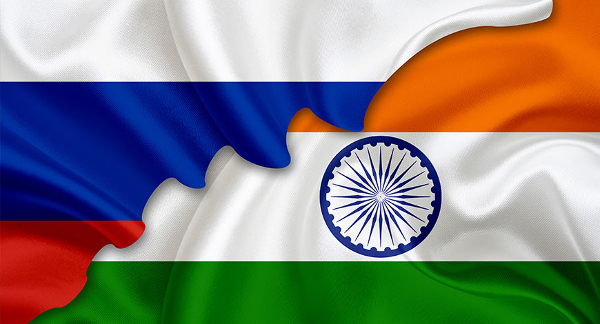
India and Russia are working towards expanding bilateral trade to $100 billion by 2030, with both countries focusing on improved market access, stronger commercial partnerships and the removal of trade barriers. India’s ongoing negotiations for a Free Trade Agreement (FTA) with the Eurasian Economic Union (EAEU) are expected to support these efforts by creating new opportunities for Indian exporters.
Indian Ambassador to Russia Vinay Kumar expressed confidence that the two countries would achieve the bilateral trade target by 2030. Speaking to a media agency in Kazan on October 16, 2026, he highlighted the progress in bilateral economic relations and the initiatives being undertaken to facilitate greater trade.
India–Russia Bilateral Trade Reaches $38 Billion in First Half of 2026
Ambassador Vinay Kumar stated that bilateral trade between India and Russia reached $38 billion during the first six months of 2026. The figures underline the substantial scale of economic engagement between the two countries.
India and Russia established the $100 billion trade target during the 22nd India–Russia Annual Summit in Moscow in July 2024. The objective forms part of their broader economic cooperation strategy, covering trade, investment, industrial development, connectivity and financial arrangements.
The bilateral economic relationship encompasses several major sectors, including energy, fertilisers, pharmaceuticals, engineering, agriculture, machinery and industrial products. Both governments are working to expand cooperation in these areas while encouraging greater participation from businesses.
India Negotiates Free Trade Agreement with Eurasian Economic Union
A major component of India’s trade expansion strategy is the proposed Free Trade Agreement with the Eurasian Economic Union.
The EAEU comprises five countries: Russia, Belarus, Kazakhstan, Armenia and Kyrgyzstan. A trade agreement with the grouping would expand India’s economic engagement beyond Russia and provide Indian businesses with access to additional markets across Eurasia.
India and the EAEU signed the Terms of Reference for the proposed agreement in Moscow on August 20, 2025. The first round of formal negotiations subsequently took place in New Delhi from November 26 to 28, 2025.
The negotiations seek to strengthen trade relations, improve market access and create opportunities for businesses operating across different sectors.
The proposed agreement is particularly relevant to Indian manufacturers, agricultural exporters, pharmaceutical companies and small and medium enterprises seeking to establish a larger presence in Eurasian markets.
India and Russia Work to Remove Trade Barriers
Ambassador Vinay Kumar highlighted India’s continuing engagement with Russian authorities to address standards-related issues and non-tariff barriers affecting bilateral trade.
Agricultural and marine products are among the sectors receiving particular attention.
Non-tariff barriers can include differences in product standards, certification procedures, inspection requirements and other regulatory conditions that affect the movement of goods between countries.
Addressing these issues would help Indian exporters gain more predictable access to the Russian market and facilitate smoother commercial transactions.
India and Russia have established institutional mechanisms to address such concerns. The India–Russia Sub-Working Group on the Elimination of Barriers and Restrictions in Trade, Economic and Investment Spheres provides a platform for identifying and resolving difficulties faced by businesses.
The two countries are also pursuing closer cooperation in customs procedures, logistics and trade facilitation.
Expanding Indian Exports to Russia
India is seeking to diversify its exports to Russia by expanding the range of products supplied to the Russian market.
Commerce and Industry Minister Piyush Goyal stated in September 2026 that Indian exports of aquatic products, vegetables, coffee, tea, spices and milling products to Russia had increased significantly.
India is also encouraging greater participation in pharmaceuticals, information technology, artificial intelligence, engineering, railway equipment and other industrial sectors.
These initiatives are intended to strengthen Indian commercial participation in Russia and create opportunities for companies across manufacturing, agriculture and services.
Improving access for Indian exports is also an important element of efforts to develop a more balanced bilateral trading relationship.
Industrial Investment and Manufacturing Cooperation
India and Russia are pursuing stronger industrial partnerships alongside efforts to expand merchandise trade.
During the INNOPROM India 2026 event in New Delhi in September, Commerce and Industry Minister Piyush Goyal called for accelerated cooperation in manufacturing and industrial development.
He highlighted the two countries’ objective of achieving $50 billion in two-way investment by 2030, alongside the $100 billion bilateral trade target.
The India–Russia priority investment projects mechanism was tracking 40 active projects in sectors including advanced manufacturing, energy, mining, railways and emerging technologies.
Both countries are also working towards strengthening their investment framework to facilitate greater participation by businesses.
Such cooperation can help Indian manufacturers access new industrial partnerships, develop technological capabilities and expand their presence in international markets.
Strengthening Trade Connectivity and Payment Mechanisms
Transport connectivity and reliable financial arrangements remain important components of India–Russia economic cooperation.
The two countries are promoting the International North–South Transport Corridor, a multimodal transport network intended to improve connectivity between India, Russia and other Eurasian markets. The Chennai–Vladivostok maritime corridor is another important initiative aimed at strengthening shipping connectivity between India’s eastern coast and Russia’s Far East.
Both governments are also working to improve payment arrangements involving national and local currencies. During the December 2025 India–Russia Summit, the two countries reaffirmed their intention to develop bilateral settlement systems using national currencies. They also agreed to continue consultations concerning payment-system interoperability and financial messaging arrangements.
Improved connectivity and payment mechanisms are expected to support smoother commercial operations and facilitate long-term trade growth.
India–Russia Business Forum in Kazan
Ambassador Vinay Kumar made his latest remarks during the second edition of the India–Russia Business Forum, titled Tatarstan Initiative: Mutual Efficiency, held in Kazan.
The forum provided a platform for discussions on economic cooperation and opportunities for businesses from both countries. Tatarstan is an important industrial region of Russia, with established capabilities in manufacturing, engineering and other industrial activities.
Business forums and regional economic engagements form part of the broader effort to translate government-level agreements into commercial partnerships. Such interactions also help companies identify investment opportunities, establish business relationships and explore potential collaborations.
India–Russia Economic Partnership Moves Towards 2030 Goals
India and Russia are continuing to strengthen their economic partnership through trade negotiations, investment initiatives, industrial cooperation and improved market connectivity. The $100 billion bilateral trade target and $50 billion investment objective reflect the economic ambitions outlined by the two governments.
Progress in the India–EAEU Free Trade Agreement negotiations, together with measures to improve market access and resolve trade barriers, is expected to create additional opportunities for Indian exporters and businesses. With bilateral trade reaching $38 billion in the first half of 2026, the two countries are pursuing a broader and more diversified economic relationship.
Their continuing cooperation in trade, technology, manufacturing and infrastructure forms an important part of the India–Russia Special and Privileged Strategic Partnership and its long-term development objectives.
References
- Akashvani News – October 16, 2026: India and Russia Would Achieve Their Bilateral Trade Target of $100 Billion by 2030
- Akashvani News – September 10, 2026: India, Russia Working Towards Achieving $100 Billion in Bilateral Trade by 2030: Piyush Goyal
- Ministry of Commerce and Industry, Government of India: Annual Report 2025–26 – Trade with Commonwealth of Independent States
- Ministry of External Affairs, Government of India: India–Russia Economic Cooperation and Bilateral Trade Target
- DD News: India and Russia Vow to Scale Up Bilateral Trade to $100 Billion by 2030
You may also like
-
India and Russia Hold Seventh Strategic Security Dialogue on Pakistan and Afghanistan
-
Indian Coast Guard and Korea Coast Guard Strengthen Maritime Cooperation at 14th High-Level Meeting in Incheon
-
Indian Navy Completes Historic First Command of Combined Task Force 154, Training Personnel from 39 Nations
-
India and Brunei Strengthen Trade and Economic Cooperation
-
India Leads BIMSTEC Security Cooperation as Seven Nations Adopt Delhi Declaration
