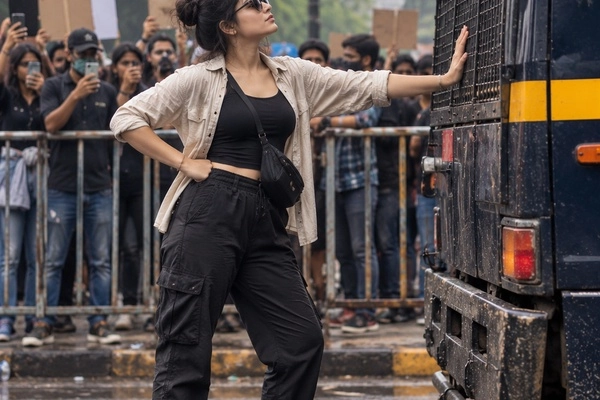
Public demonstrations have traditionally provided citizens with a means to express grievances, challenge government policies, demand institutional accountability and seek solutions to social, economic and political problems. However, the rapid expansion of Instagram Reels, YouTube Shorts, TikTok, Facebook and other digital platforms has introduced an entirely new dimension to public protests: the opportunity to convert demonstrations into personal fame, online entertainment and commercial income.
A protest that once depended on newspaper coverage or television broadcasts to attract national attention can now reach millions of viewers through a single smartphone recording. Emotional speeches, confrontations with authorities, unusual slogans, dramatic incidents and heated exchanges can become viral content within hours. The individuals appearing in these recordings may acquire substantial online followings, sometimes becoming more recognisable than the organisations responsible for conducting the demonstrations.
This transformation has created a new category of social media personalities whose recognition and potential earnings are closely associated with political controversies and public demonstrations. Their growing influence raises questions about the relationship between genuine public grievances, the pursuit of digital popularity and the commercial incentives shaping contemporary protest culture.
Three emerging categories help explain this phenomenon: Protebrities, Protestainers and Protestpreneurs. These terms describe different aspects of the relationship between public demonstrations and the social media creator economy. Although they may overlap, each represents a distinct form of personal or commercial engagement with protest-related activity.
The most important concern arises when individuals whose online popularity depends on continuing controversy develop interests that differ from those of the people participating in the demonstration. Protesters may seek a negotiated settlement, administrative action or legislative change, while content creators may benefit from maintaining audience engagement around an unresolved dispute.
The possibility of such conflicting incentives deserves examination. Documented cases establish that protest-related content can generate income and substantial audience growth. However, earning money from protest coverage does not establish that an individual has deliberately manufactured disturbances or prolonged a demonstration. Such allegations require evidence of specific conduct.
Protebrities: When Public Protests Create Social Media Celebrities
Traditional celebrities generally acquire public recognition through activities such as entertainment, sports, literature or professional achievements. Protebrities, by contrast, may become widely known because of their appearances at contentious public events and the circulation of recordings associated with those events.
A relatively unknown individual attending a demonstration might deliver an emotional speech, engage in a heated exchange or appear in a widely shared video. If the recording attracts substantial attention, the individual can acquire thousands of followers without having previously maintained a significant public profile.
Repeated appearances can strengthen this recognition. Audiences may begin associating the individual with a particular style of political commentary, confrontation or public activism. Over time, the person’s identity can become closely connected with the demonstration itself.
Social media platforms allow this transformation to occur without the participation of established news organisations. An individual with a smartphone and an engaging presentation style can reach audiences comparable to those of established public personalities.
The resulting popularity may create opportunities for interviews, podcasts, collaborations, public appearances and commercial partnerships. A demonstration can therefore become the starting point of a broader career in digital content creation.
However, Protebrity status does not necessarily indicate insincere activism. Many individuals become prominent through genuine commitment to public causes. The concern arises when maintaining celebrity status becomes an independent objective that potentially competes with the original demands of a protest movement.
Protestainers: When Demonstrations Become Digital Entertainment
Unlike a Protebrity, whose defining characteristic is celebrity status, a Protestainer is primarily associated with the manner in which protest-related events are presented to audiences. The creator may use dramatic editing, emotional commentary, humorous interpretations, reaction videos, unusual camera angles and carefully selected incidents to make demonstrations more engaging.
A public protest involving employment, education, legislation or administrative decisions may continue for several hours. During that period, participants might discuss complex grievances, present demands and negotiate with officials. However, a creator can compress selected moments into a short Instagram Reel featuring a confrontation, emotional statement or dramatic reaction.
The resulting video may attract considerably more attention than a detailed explanation of the underlying issue. Viewers may remember the confrontation while remaining unfamiliar with the demands that brought participants together.
This creates an opportunity for demonstrations to become recurring entertainment programmes. Each new speech, disagreement, confrontation or unexpected incident supplies material for another video. The creator’s personality, editing style and commentary can gradually become as important to audiences as the subject being discussed.
The distinction between legitimate reporting and protest entertainment depends on how accurately events are represented. Humour, creative presentation and engaging editing do not automatically undermine credibility. Problems arise when creators deliberately misrepresent incidents, omit essential context or manufacture situations to generate attention.
The defining concern surrounding Protestainers is the possibility that the entertainment value of a demonstration may begin to overshadow the seriousness of the public grievance.
Protestpreneurs: When Protest-Related Attention Becomes a Business Model
Unlike Protebrities, whose principal characteristic is public recognition, or Protestainers, whose content focuses on entertainment, Protestpreneurs are distinguished by the commercial activities associated with protest-related attention.
These activities can include social media advertising, livestreaming, digital subscriptions, merchandise, sponsorship agreements, content licensing, promotional partnerships and other legitimate business arrangements.
An individual documenting a major demonstration may attract thousands of new followers through viral videos. Those followers can subsequently become an audience for unrelated content, sponsored products or subscription-based services. Consequently, the creator may benefit commercially even when the original protest video generates little direct advertising revenue.
The business model becomes particularly significant when a creator develops a recognisable online identity around recurring political controversies. Each new demonstration can provide opportunities to produce content, retain subscribers and attract additional viewers.
The term Protestpreneur does not imply that commercial activity associated with demonstrations is inherently improper. Independent journalists, photographers, videographers and media organisations also earn money from covering public events.
The concern arises when financial interests influence how demonstrations are represented, promoted or conducted. If a person deliberately creates misleading content, conceals paid promotional arrangements or encourages unnecessary confrontation to increase earnings, the resulting conduct raises questions of transparency and accountability.
These distinctions are essential because they allow the commercial dimensions of protest-related content to be examined without assuming that every individual who earns money from public events is exploiting them.
How Instagram Reels Are Transforming Protest Visibility into Personal Fame
The extraordinary speed at which protest-related content can transform an individual’s online presence was demonstrated during student demonstrations in New Delhi in 2026.
According to a report published by India Today on July 31, 2026, content creator Abhinav Bisht, known online as Isaac IRL, experienced substantial audience growth after sharing Instagram videos associated with the demonstrations.
His follower count reportedly increased from approximately 2,400 to nearly 600,000 following the circulation of viral protest-related content. The rapid expansion transformed his visibility and opened new possibilities for his content-creation activities.
Bisht’s experience illustrates how participation in or coverage of a demonstration can produce an extraordinary increase in online popularity. An individual who was relatively unknown before the event can suddenly become recognisable to hundreds of thousands of viewers.
Such popularity can create opportunities beyond the immediate demonstration. A larger audience may improve the prospects of future collaborations, commercial partnerships and content distribution. The example also demonstrates that online recognition can develop independently of a formal role within the protest movement. A creator does not necessarily need to organise the demonstration or represent its participants to benefit from its visibility.
However, the available reporting does not establish that Bisht manufactured disturbances, deliberately encouraged confrontation or attempted to prolong the demonstrations for commercial reasons. His case illustrates the audience-building potential of protest-related content rather than evidence of improper conduct. The distinction is important when examining the financial incentives associated with viral demonstrations.
Kenya Demonstrates How Protest Livestreams Can Generate Direct Income
While the Indian example demonstrates the relationship between protest coverage and audience growth, documented developments in Kenya provide evidence of direct payments generated through protest-related livestreaming.
In August 2023, international technology publication Rest of World investigated how TikTok creators were earning money while broadcasting anti-government demonstrations in Kenya. One creator, identified through the pseudonym Chris Shani, livestreamed a demonstration in Kitengela, near Nairobi, in July 2023. The broadcast continued for approximately two hours and 45 minutes and attracted as many as 3,700 simultaneous viewers.
During the livestream, viewers sent virtual gifts worth approximately 14,800 Kenyan shillings, equivalent to about $103 at the time. Shani described the amount as his highest earnings from a single TikTok livestream.
Another creator, Brian Musyoka, reported earning approximately 3,132 Kenyan shillings, or $22, during a protest livestream. He also reported receiving as much as 16,000 Kenyan shillings, approximately $112, during another broadcast.
These examples establish a direct relationship between protest-related broadcasting and financial earnings. Viewers watching the demonstrations were able to support creators through payments made within the platform.
The amounts involved may appear modest, but they demonstrate how public demonstrations can become income-generating opportunities for individuals producing digital content. Repeated broadcasts, audience growth and subsequent commercial arrangements can expand the potential financial benefits.
The investigation also documented the legitimate functions performed by protest livestreams. Creators and participants explained that recordings could provide evidence of events, improve public awareness and contribute to accountability.
There was no established evidence in the reporting that the named creators organised disturbances or prolonged demonstrations for financial gain. Their experiences nevertheless show that protests can become commercially valuable sources of digital content.
The Protest as a Content Studio and the Street as an Entertainment Stage
Traditional entertainment production involves substantial preparation, equipment, locations and production expenses. Public demonstrations, however, can provide content creators with crowds, speeches, emotional interactions and unexpected developments without requiring them to organise an elaborate production.
A creator attending a demonstration may record several hours of footage and transform it into multiple videos. One recording might highlight a speech, another a confrontation, while others present interviews, reactions or commentary.
The same demonstration can consequently generate content for Instagram, YouTube, Facebook and other platforms. Short videos may attract initial attention, while longer discussions and livestreams provide opportunities to maintain audience engagement. The commercial potential increases when the demonstration concerns a subject already attracting widespread public interest. Audiences may actively search for footage, explanations and reactions, creating opportunities for creators who can publish material quickly.
Individuals who repeatedly produce popular protest-related videos may develop reputations for covering contentious public events. Their followers may begin anticipating new uploads whenever another demonstration occurs. This process can gradually transform public protests into a recurring content category. The creator’s presence becomes familiar, the videos develop a recognisable format and audiences return to follow subsequent episodes.
Such activity can contribute to public awareness when the material is accurate and informative. However, it also creates opportunities for demonstrations to be treated primarily as sources of entertainment.
The danger emerges when producing compelling footage becomes more important than explaining the circumstances that brought people together.
The Financial Value of Views, Followers and Viral Controversies
The commercial opportunities associated with protest-related content extend beyond direct payments from individual videos.
Social media platforms operate different monetisation programmes depending on the creator’s location, account eligibility and compliance with platform policies. Available arrangements may include advertising revenue, subscriptions, viewer gifts and commercial partnerships.
Meta has described several earning opportunities for creators across Instagram and Facebook, including Instagram Gifts and branded-content arrangements. YouTube similarly offers eligible creators opportunities to earn revenue through advertising and other platform-supported features.
However, direct platform payments represent only part of the commercial picture. Viral content can increase the size of a creator’s audience, which may subsequently improve the attractiveness of sponsorships, collaborations and other commercial activities.
A creator who acquires hundreds of thousands of followers through protest coverage may retain those followers after the demonstration concludes. The expanded audience can continue watching unrelated videos, purchasing promoted products or supporting paid services.
This creates a distinction between immediate revenue and the longer-term commercial value of audience acquisition. A protest-related video might generate limited advertising income but still contribute significantly to the creator’s future commercial prospects.
In the emerging Protestpreneur economy, the protest itself can become an opportunity to acquire an audience that may later be monetised through other activities.
The value of this opportunity depends on several factors, including audience engagement, platform policies, commercial relationships and the creator’s ability to sustain interest.
When a Protest’s Resolution Threatens the Content Supply
One of the most important questions surrounding Protebrities, Protestainers and Protestpreneurs concerns the relationship between the duration of a demonstration and the commercial opportunities it generates.
A public protest generally begins with identifiable demands. Participants may seek changes to government decisions, institutional reforms, employment protections or other specific outcomes. The movement may achieve its objectives through negotiations, administrative action or a mutually acceptable settlement.
For the affected participants, such a resolution can represent success. The grievance has been addressed, allowing them to return to their ordinary activities.
However, an individual whose online popularity depends heavily on the continuing controversy may face a different set of incentives. The conclusion of the demonstration can also reduce opportunities to produce fresh protest-related videos. The creator may need to identify another subject capable of maintaining audience interest.
An unresolved dispute, by contrast, can provide a continuing supply of speeches, confrontations, reactions and developments suitable for social media publication.
This creates a potential conflict between the interests of protesters seeking resolution and creators benefiting from sustained public attention.
A creator may have legitimate reasons to question an agreement or highlight unresolved concerns. However, deliberately exaggerating disagreements or obstructing a settlement for personal commercial benefit would represent a different kind of conduct.
Establishing such behaviour requires direct evidence. Nevertheless, the underlying economic incentive deserves attention because it differs from the traditional objectives of public protest.
The Protestpreneur’s Dilemma: Does an Unfinished Protest Generate More Content?
A successful social media creator generally needs to maintain visibility and produce engaging material regularly.
When an individual’s online identity becomes closely associated with a particular controversy, the continuing dispute can provide recurring opportunities for content production.
Every new statement becomes a potential video. Every disagreement supplies material for commentary. Every confrontation can attract additional viewers. A demonstration extending over several weeks may therefore generate more opportunities for coverage than one resolved quickly through negotiations.
This possibility introduces a commercial dimension to the duration of public controversies. For a participant seeking a policy change, an early resolution may be desirable. For a creator whose audience follows the unfolding conflict, continued developments may provide additional opportunities to remain visible.
The resulting tension does not establish that creators routinely attempt to prolong demonstrations. It does suggest that financial incentives can exist independently of the goals of a movement. The concern becomes particularly significant when popular creators acquire influence over public perceptions without accepting responsibility for the negotiations or outcomes.
An influencer may attract a large audience through criticism of a proposed settlement, while the people directly affected by the grievance may consider the agreement satisfactory.
The commercial success of the content and the practical interests of the protesters can consequently become disconnected.
The central question is whether continued controversy becomes more valuable to some participants in the digital attention economy than the resolution of the original grievance.
When the Celebrity Begins to Overshadow the Cause
The growing prominence of Protebrities can alter how demonstrations are understood by audiences.
A movement may initially attract attention because of a particular policy dispute, social concern or administrative decision. However, repeated circulation of videos featuring a recognisable individual can shift public discussion towards that person’s statements, behaviour and personal controversies.
Audiences may become more familiar with the creator than with the movement’s official representatives. The individual’s speeches and confrontations may receive greater attention than the demands presented by the organisers.
This can create a personality-centred form of protest coverage in which the creator becomes the principal attraction. Over time, discussions may increasingly focus on the individual’s latest appearance, disagreements or responses to criticism.
The original cause remains present but risks becoming secondary to the continuing narrative surrounding the public personality.
Such developments are not unique to demonstrations. Personality-driven coverage is common throughout entertainment, sports and political commentary.However, the consequences become more significant when serious public grievances are presented primarily through celebrity-style narratives.
A movement’s success should depend on whether its objectives are achieved, not whether one of its most visible personalities acquires additional followers or commercial opportunities.
The Competition to Produce the Most Dramatic Protest Reel
Social media creators compete for audience attention within environments containing enormous amounts of content.
When several individuals cover the same demonstration, each may seek distinctive footage or presentation techniques to attract viewers.
One creator may focus on interviews, while another emphasises confrontations, emotional speeches or reactions from participants. This competition can improve coverage by bringing different perspectives to public events. However, it can also encourage selective presentation and sensationalism.
A brief confrontation may become the central subject of a video even when the larger demonstration remained peaceful. Dramatic captions, background music and rapid editing can intensify the emotional impact. Repeated circulation of the same incident may create the impression that confrontation dominated the event.
The commercial incentives become more pronounced when creators observe that dramatic videos consistently attract greater engagement than detailed explanations.This can encourage an emphasis on incidents likely to provoke strong reactions.
The resulting content may be entertaining but provide an incomplete account of the demonstration.The concern is not creative presentation itself. It is the possibility that the pursuit of viral success begins influencing which incidents are recorded, emphasised or omitted.
The Emergence of Performative Protest Culture
The growth of protest-related social media personalities also raises questions about performative activism.
Performative activism generally describes public expressions of support that place greater emphasis on appearances or reputation than on meaningful engagement with the stated cause.
Within the social media environment, individuals may develop recognisable styles involving dramatic speeches, confrontational commentary, recurring slogans or carefully produced visual content. These characteristics can contribute to an online identity that attracts followers independently of the movement’s objectives.
The creator may eventually become associated with protest participation as a recurring activity rather than with a particular issue. Such an identity can provide opportunities for continued public recognition whenever new controversies arise.
However, visible activism should not automatically be dismissed as performative. Public demonstrations necessarily involve communication, symbolism and attempts to attract attention.The relevant distinction concerns whether an individual’s actions contribute meaningfully to the cause or primarily serve personal promotional objectives.
Determining motivation can be difficult. A more reliable assessment examines conduct, consistency, transparency and the relationship between public statements and practical activities.
How Protest Entertainment Can Distort Public Understanding
The transformation of demonstrations into short-form entertainment can affect how audiences interpret serious public issues.
Many protests involve complex matters requiring detailed explanations. Employment disputes may concern regulations and contracts, while educational demonstrations may involve administrative procedures, institutional decisions or funding arrangements.
Such subjects cannot always be explained accurately through brief, emotionally charged recordings. Short videos may therefore concentrate on the most visually compelling incidents rather than the substance of the disagreement.
Viewers who encounter only selected clips may develop an incomplete understanding of the issues involved. This can create opportunities for misleading narratives to circulate, particularly when videos omit the circumstances preceding a confrontation or the outcome that followed.
The problem becomes more significant when audiences rely primarily on individual creators rather than examining multiple sources. A Protebrity’s interpretation of events may attract greater attention than official statements, documented demands or verified developments.
The resulting public discussion can become dominated by personalities and emotional reactions rather than evidence. Responsible coverage should therefore provide context, distinguish verified information from opinion and explain meaningful developments beyond the most dramatic moments.
Viral Followers Are Not the Same as Genuine Public Support
The popularity of protest-related content can also create misleading impressions about the scale of public support for a movement.
A video attracting millions of views does not establish that millions of people support the cause being represented. Audiences may watch because they agree with the protesters, oppose the demonstration, find the incident entertaining or are simply curious about the controversy.
Similarly, the number of followers acquired by a Protebrity cannot be treated as a direct measure of public endorsement.
Social media audiences are not representative samples of public opinion, and engagement figures do not reveal the motivations of individual viewers.A creator may become famous because of criticism, controversy or unusual behaviour rather than widespread agreement with a political position.
Confusing viral visibility with public support can distort assessments of a movement’s influence.Reliable evaluations should distinguish between physical participation, organised membership, public opinion research and online engagement.Each provides different information about the movement and its wider social reach.
When Protebrities Begin Competing with Protest Organisers
The emergence of highly visible protest personalities can create new challenges for organisations responsible for conducting demonstrations. Traditional protest movements generally establish leadership structures, communicate specific demands and appoint representatives to engage with authorities.
However, a social media personality may acquire a large following without holding a formal position within the organisation. The individual’s statements can reach substantially larger audiences than official communications issued by the movement.
This creates opportunities for competing interpretations of negotiations, policy responses and proposed settlements. An organisation may announce progress towards resolving a dispute, while an influential content creator may present the same development as inadequate or disappointing.
Such criticism may be legitimate when genuine concerns remain unresolved. However, problems can arise when the public assumes that popular creators speak on behalf of organisations they do not formally represent.
The distinction between visibility and representative authority becomes particularly important during negotiations. Large follower counts do not automatically establish the right to determine a movement’s objectives or reject agreements on behalf of participants.
Transparent leadership arrangements and clear communication can help ensure that social media popularity does not replace accountable representation.
Citizen Journalism and the Difference Between Reporting and Entertainment
Not everyone who records a demonstration should be classified as a Protebrity, Protestainer or Protestpreneur.
Professional journalists, independent videographers and citizen reporters frequently document public demonstrations to inform audiences and improve accountability.
Their recordings may provide evidence of speeches, crowd behaviour, official responses and incidents requiring further investigation. Some journalists and content creators earn money from their work through salaries, advertising revenue or content licensing.
Such earnings do not make the reporting illegitimate. The important distinction concerns accuracy, context and the nature of any commercial relationships influencing the material.
A creator providing reliable information about a demonstration may contribute substantially to public understanding even while earning income. By contrast, deliberately staging incidents, publishing misleading recordings or concealing relevant financial arrangements can undermine credibility.
These concerns should be assessed according to documented conduct rather than assumptions about the creator’s popularity or political position. A balanced approach recognises the valuable role of citizen journalism while examining the possibility of commercial exploitation.
When Protest-Related Nuisance Value Becomes Commercially Attractive
The concept of nuisance value becomes relevant when individuals gain attention or leverage through repeated disruption and controversy.
In the context of social media, disruptive behaviour can also produce visually engaging material.A heated argument, provocative statement or confrontation may attract substantial engagement because audiences are drawn to unusual or emotionally intense incidents.
This creates the possibility that individuals seeking online attention may deliberately place themselves in controversial situations.
Where such behaviour occurs during public demonstrations, the resulting attention can benefit the individual even when it contributes little to the movement’s objectives.The concern becomes more serious if someone deliberately interferes with lawful activities, misrepresents events or provokes unnecessary disturbances.
However, peaceful demonstrations are not inherently illegitimate merely because they inconvenience authorities or attract controversy. The right to express grievances often involves visible public activity intended to draw attention to unresolved concerns.
The distinction must therefore remain between lawful public protest and deliberately manufactured disruption undertaken for private commercial advantage.
Establishing the latter requires evidence rather than assumptions based on the dramatic nature of a recording.
Social Media Platforms Recognise the Risks of Exploitative Content
Major digital platforms have established monetisation policies addressing controversial material, sensitive events and harmful behaviour.
YouTube’s advertiser-friendly guidelines distinguish legitimate reporting and documentary material from content that exploits sensitive situations for commercial gain. Depending on the circumstances, videos involving shocking content, harmful conduct or exploitation of sensitive events may become ineligible for advertising revenue.
The platform also recognises that public-interest reporting and discussions about controversial issues can serve legitimate informational purposes. These policies demonstrate that digital platforms recognise the need to balance creator earnings with responsible content standards.
However, advertising restrictions alone cannot address every commercial incentive associated with viral demonstrations. A creator may still acquire followers, recognition and future sponsorship opportunities even when a particular recording generates no direct revenue.
The financial value of protest-related visibility therefore extends beyond the monetisation arrangements attached to individual videos. This broader relationship between controversy and commercial opportunity represents one of the central issues in the emerging Protestpreneur economy.
Foreign Funding, Organised Influence and the FCRA Framework
The financial arrangements associated with public demonstrations can also raise questions about foreign contributions and organised political influence. India’s Foreign Contribution (Regulation) Act regulates the acceptance and utilisation of specified contributions from foreign sources.
The legislation imposes restrictions on certain categories of individuals and organisations, including political parties and organisations classified as being of a political nature.Entities authorised to receive foreign contributions must comply with applicable registration, accounting, reporting and utilisation requirements.
These provisions can become relevant when examining the financial activities of organisations associated with political advocacy or organised demonstrations. However, international social media visibility or the receipt of legitimate income through an overseas digital platform does not automatically establish a violation of the FCRA.
The legal position depends on the nature of the payment, the identity of the recipient, the source of funds and the applicable statutory provisions. Any allegation of prohibited foreign financing must therefore be supported by financial evidence and a proper assessment of the law.
The broader principle is that public accountability benefits from transparency regarding the sources and purposes of funds supporting organised political activity.
When the Protest Ends but the Celebrity Remains
One of the distinguishing features of the creator economy is that online recognition can continue long after the event responsible for attracting public attention has concluded. A protest may end following negotiations, administrative decisions or changes in circumstances.
Participants may return to their ordinary activities, and the original grievance may gradually disappear from public discussion.However, a creator who acquired a substantial following through protest-related content can retain that audience. The individual may subsequently develop a career involving political commentary, entertainment, interviews or commercial partnerships.
This creates a situation in which the creator’s personal success becomes independent of the movement’s ultimate outcome.A demonstration may achieve only limited progress, while one of its most visible personalities acquires lasting public recognition.
The possibility illustrates how digital platforms can transfer attention generated by collective public activity into individual commercial opportunities.
There is nothing inherently improper about building a career through legitimate reporting or commentary.
Nevertheless, the distinction raises questions about whether the individuals benefiting most visibly from protest-related attention necessarily share the interests of those directly affected by the underlying grievance.
The Future of Protebrities, Protestainers and Protestpreneurs
India’s expanding creator economy is transforming how public events are recorded, distributed and consumed.
Smartphones and short-form video platforms have enabled individuals to reach large audiences without relying on conventional media organisations. As digital content creation becomes an increasingly established economic activity, demonstrations and political controversies will continue to attract creators seeking compelling material.
Protebrities may acquire recognition through repeated protest-related appearances. Protestainers may develop entertainment-oriented content around public demonstrations, while Protestpreneurs may build commercial activities associated with protest coverage and audience engagement.
These categories can overlap, but they highlight different aspects of the same development: the growing relationship between public controversy, digital attention and financial opportunity.
A successful demonstration should ultimately be evaluated according to its demands, methods and achievements rather than the popularity of its most visible participants.
When the resolution of a grievance receives less attention than the personalities and confrontations surrounding it, the distinction between public advocacy and entertainment becomes increasingly important.
The central challenge is to ensure that the commercial rewards of social media do not encourage the transformation of genuine public grievances into recurring spectacles designed primarily to generate views, followers and income.
The rise of Protebrities, Protestainers and Protestpreneurs provides a framework for examining this changing relationship between activism and the digital economy. Greater transparency, responsible reporting and accountability can help preserve the integrity of peaceful public demonstrations while allowing legitimate creators to continue informing audiences.
Public protest must remain a means of addressing grievances and pursuing meaningful outcomes, not merely a recurring stage for digital celebrity, manufactured drama and commercial self-promotion.
References
- India Today — July 31, 2026. How One Student Protest Took a Gen Z Influencer from 2,400 to 6 Lakh Followers. Report examining Abhinav Bisht’s rapid Instagram audience growth following student demonstrations in New Delhi.
https://www.indiatoday.in/india/story/isaac-irl-cjp-protest-reels-instagram-following-six-lakh-2960945-2026-07-31 - Rest of World — August 7, 2023. TikTokers Are Documenting — and Monetizing — Anti-Government Protests in Kenya. Investigation into protest livestreaming, audience contributions and creator earnings.
https://restofworld.org/2023/kenya-protests-live-on-tiktok/ - Meta — November 2023. Giving Creators More Ways to Earn Money on Facebook and Instagram. Official information about creator monetisation, Instagram Gifts and commercial opportunities.
https://about.fb.com/news/2023/11/giving-creators-more-ways-to-earn-money-on-facebook-and-instagram/ - Meta — May 2023. Expanding Ads on Reels. Official explanation of advertising-based creator monetisation programmes.
https://about.fb.com/news/2023/05/expanding-ads-on-reels/ - YouTube Help — Google. Advertiser-Friendly Content Guidelines. Official policies covering sensitive events, controversial content and monetisation restrictions.
https://support.google.com/youtube/answer/6162278 - Advertising Standards Council of India. Guidelines for Influencer Advertising in Digital Media. Requirements concerning sponsored content and the disclosure of material commercial relationships.
https://www.ascionline.in/the-asci-code-guidelines/ - Advertising Standards Council of India — February 2025. Top Influencer Compliance Scorecard. Research examining disclosure compliance among leading Indian digital creators.
https://www.ascionline.in/wp-content/uploads/2025/02/Press-Release-Influencer-Disclosure-Guidelines-ASCI-Report.pdf - Ministry of Home Affairs, Government of India. Foreign Contribution (Regulation) Act, 2010. Legislative framework governing specified foreign contributions and compliance obligations.
https://fcraonline.nic.in/
You may also like
-
The Global Business of Paid Protests: Government Investigations Reveal Millions Spent on Manufactured Crowds
-
The Business of Political Opposition: Protest Funding, Manufactured Narratives and the Economics of Political Influence
-
BHAVYA: India’s push to build 100 plug-and-play industrial parks
-
India Launches National Strategic Trade Command Centre to Strengthen Export Intelligence
-
The Business of Paid Protests: Manufactured Crowds, Media Manipulation and the Economics of Political Influence
