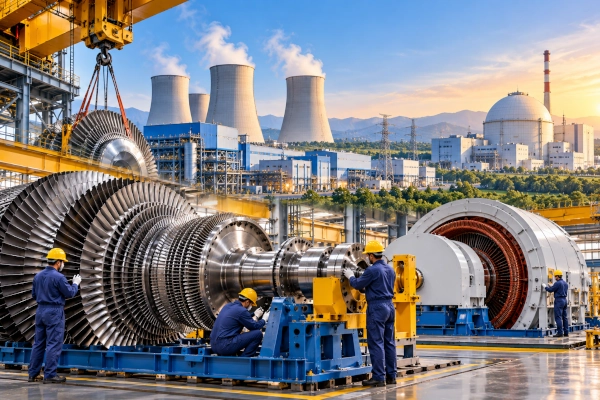
Bharat Heavy Electricals Limited (BHEL), one of India’s leading public sector engineering and manufacturing enterprises, has approved a capital investment of approximately ₹500 crore to expand its manufacturing capabilities at the Heavy Electrical Equipment Plant (HEEP) in Haridwar, Uttarakhand. The investment will establish additional facilities for manufacturing thermal and nuclear power-generation equipment, strengthening the company’s industrial capabilities in two important segments of India’s electricity sector.
The decision was approved by BHEL’s Board of Directors during its meeting on October 14, 2026. The company subsequently communicated the development to the Bombay Stock Exchange (BSE) and National Stock Exchange (NSE) under Regulation 30 of the Securities and Exchange Board of India’s listing regulations. The investment reflects BHEL’s efforts to expand domestic manufacturing capacity for critical power-generation equipment while addressing India’s growing electricity infrastructure requirements.
₹500 Crore Investment to Expand Haridwar Manufacturing Facilities
The ₹500 crore capital investment will support the establishment of additional manufacturing facilities at BHEL’s Heavy Electrical Equipment Plant in Haridwar. The expansion will strengthen the company’s ability to manufacture equipment for thermal and nuclear power-generation projects, two sectors that require sophisticated engineering, precision manufacturing and stringent quality standards.
The Haridwar facility is an important component of BHEL’s manufacturing network and has extensive experience in producing large power-generation equipment. Its manufacturing capabilities include steam turbines, generators and other heavy electrical equipment used in major power projects across India.
Manufacturing equipment for large thermal and nuclear power stations involves specialised machinery, advanced metallurgical processes, precision machining and rigorous quality assurance. Components used in these applications must operate reliably under demanding temperature, pressure and mechanical conditions, making domestic manufacturing expertise particularly important.
By investing in additional production facilities, BHEL is strengthening its capacity to manufacture sophisticated equipment within India. The expansion also supports the development of specialised industrial capabilities required for large-scale power infrastructure projects.
Haridwar Plant Plays an Important Role in India’s Power Equipment Industry
BHEL’s Haridwar manufacturing complex has contributed to India’s electricity generation infrastructure for several decades. The Heavy Electrical Equipment Plant operates alongside the company’s Central Foundry Forge Plant, forming an important industrial centre for the production of heavy engineering equipment and specialised components.
The facility manufactures critical equipment used in thermal power plants, including large steam turbines and electrical generators. Such equipment converts the mechanical energy produced by steam turbines into electricity, making it central to the operation of conventional steam-based power-generation systems.
BHEL’s manufacturing expertise also extends to equipment for nuclear power stations, where turbine-generator systems convert thermal energy into electricity. Although nuclear reactors use a different process to produce heat, the electricity generation cycle involves many of the same fundamental engineering principles associated with steam turbines and generators.
The Haridwar expansion will build upon these established manufacturing capabilities while strengthening BHEL’s role as a domestic supplier of equipment for major electricity generation projects.
Expansion Supports India’s Thermal Power Infrastructure
Thermal power generation continues to play an important role in India’s electricity system, particularly in meeting large-scale industrial demand and maintaining grid stability. Coal-based power stations provide a substantial share of the country’s electricity, while ongoing infrastructure investments include new generating units, equipment modernisation and improvements in operational efficiency.
Large thermal power projects require equipment capable of operating continuously under demanding conditions. Steam turbines, generators and associated systems must be manufactured to precise engineering specifications to ensure reliable electricity generation over extended operating periods.
BHEL has extensive experience in supplying equipment for thermal power projects and undertaking engineering, procurement and construction activities for large generating stations. Its manufacturing facilities support both new installations and the wider industrial requirements associated with India’s power-generation infrastructure.
The additional investment at Haridwar will strengthen BHEL’s manufacturing base as the company addresses requirements arising from the development and modernisation of thermal power assets. Greater domestic production capabilities can also support Indian suppliers involved in precision engineering, specialised materials, industrial equipment and related manufacturing activities.
Nuclear Power Equipment Manufacturing Receives Greater Focus
The inclusion of nuclear power-generation equipment in the proposed expansion is particularly significant as India works to increase the contribution of nuclear energy to its electricity mix.
Nuclear power provides electricity through controlled nuclear fission, which generates heat to produce steam for electricity generation. The process requires highly specialised equipment, advanced engineering practices and stringent manufacturing standards.
BHEL has developed indigenous capabilities in manufacturing turbine-generator systems and other equipment for nuclear power projects. These capabilities contribute to India’s domestic nuclear power supply chain and support the country’s long-term efforts to expand electricity generation through nuclear technology.
India has established an ambitious objective of achieving 100 GW of nuclear power capacity by 2047 under the Nuclear Energy Mission announced in the Union Budget 2025–26. The programme seeks to expand nuclear electricity generation while strengthening domestic technological capabilities and industrial participation.
Expanding manufacturing facilities for nuclear power equipment will position BHEL to support this long-term infrastructure development. The investment will also reinforce the importance of domestic heavy engineering capabilities in implementing large nuclear power projects.
Indigenous Heavy Engineering Strengthens India’s Energy Security
The manufacturing of large power-generation equipment requires substantial technological expertise, specialised industrial infrastructure and skilled engineering personnel. Developing these capabilities domestically reduces dependence on imported finished equipment and strengthens India’s ability to undertake major electricity infrastructure projects.
BHEL has played an important role in establishing indigenous manufacturing capabilities across thermal, hydroelectric and nuclear power technologies. Its engineering and manufacturing operations contribute to the supply of turbines, generators, electrical systems and other equipment required by India’s energy sector.
The Haridwar expansion aligns with the broader objectives of the Make in India and Aatmanirbhar Bharat initiatives, which emphasise domestic manufacturing, technological development and stronger industrial supply chains.
Investment in advanced manufacturing facilities can also create opportunities for Indian component suppliers, engineering enterprises and specialised industrial service providers. Large equipment manufacturing depends on a network of supporting industries involved in metallurgy, forgings, castings, machining, electrical insulation, control systems and precision components.
By strengthening its manufacturing capabilities, BHEL is contributing to the development of an industrial ecosystem capable of supporting complex energy infrastructure projects within India.
BHEL Approves Merger of Mumbai and Bengaluru Units
Alongside the ₹500 crore investment proposal, BHEL’s Board of Directors approved an organisational restructuring involving two of its existing units.
The company will merge the Electrical Machines Repair Plant (EMRP) in Mumbai with the Electronics Division (EDN) in Bengaluru. The merger will become effective on November 1, 2026, with the Electronics Division operating as the single merged unit.
The Electrical Machines Repair Plant has been part of BHEL’s industrial service and repair network, while the Electronics Division contributes to the company’s capabilities in electrical and electronic systems.
The approved merger will bring the two units under a unified organisational structure. Such consolidation can facilitate coordination across engineering, manufacturing, repair and technical activities while supporting more integrated management of industrial operations.
The decision accompanies BHEL’s wider efforts to strengthen its manufacturing and organisational capabilities as it expands participation in major power-sector projects.
BHEL Strengthens Manufacturing Capacity Amid Growing Power Sector Demand
The investment decision comes as India’s electricity sector continues to expand to meet growing demand from industries, commercial establishments, transportation infrastructure and households.
Increasing electricity consumption requires investments not only in power-generation capacity but also in the industrial equipment needed to construct, maintain and modernise generating stations.
BHEL remains a major participant in this market through its manufacturing facilities, engineering expertise and project execution capabilities. Its operations span conventional power equipment, nuclear power systems, industrial machinery, transportation equipment and other heavy engineering applications.
The company’s manufacturing network includes specialised facilities across several Indian states, allowing different units to contribute equipment and components to large industrial projects.
The Haridwar investment forms part of this established manufacturing structure and will strengthen an important production centre responsible for sophisticated turbine-generator equipment.
During the quarter ended September 30, 2026, BHEL also reported improved financial performance, reflecting increased business activity and project execution. The company’s strengthening order position and continuing manufacturing investments demonstrate its focus on supporting India’s expanding power and industrial infrastructure.
₹500 Crore Haridwar Expansion Reinforces India’s Power Equipment Manufacturing Capabilities
BHEL’s decision to invest approximately ₹500 crore in additional manufacturing facilities at Haridwar represents an important step in strengthening India’s domestic power equipment industry.
The expansion will enhance the company’s capabilities in manufacturing equipment for thermal and nuclear power projects, supporting two important segments of the country’s electricity generation infrastructure.
The investment also reinforces the strategic importance of maintaining indigenous capabilities in advanced heavy engineering, particularly for equipment that requires complex manufacturing processes, specialised technical expertise and high reliability.
Together with the planned organisational consolidation of its Mumbai and Bengaluru units, the Haridwar investment reflects BHEL’s continuing efforts to strengthen manufacturing operations and improve its industrial capabilities.
As India expands its electricity infrastructure and advances its long-term nuclear energy programme, domestic manufacturers such as BHEL will play an important role in supplying critical equipment. The ₹500 crore investment will further strengthen Haridwar’s position as a major centre for advanced power-generation equipment manufacturing and contribute to India’s broader objectives of industrial self-reliance and energy security.
References
- Bharat Heavy Electricals Limited (BHEL). Decisions at Board Meeting Held on 14.10.2026. Official stock-exchange disclosure under Regulation 30 of SEBI Listing Regulations, October 14, 2026.https://www.bhel.com/sites/default/files/CAPEXMERGER_SE26.pdf
- Bharat Heavy Electricals Limited. Notice Board — Corporate Announcements and Stock Exchange Disclosures.https://www.bhel.com/notice-board
- Bharat Heavy Electricals Limited. Units and Divisions — Heavy Electrical Equipment Plant, Haridwar, and Central Foundry Forge Plant.https://www.bhel.com/unitsanddivisions
- Ministry of Heavy Industries, Government of India. Official information on India’s heavy engineering industry and public sector manufacturing enterprises.https://heavyindustries.gov.in/
- Ministry of Finance, Government of India. Union Budget 2025–26 — Nuclear Energy Mission for Viksit Bharat. February 1, 2025.https://www.indiabudget.gov.in/
You may also like
-
OSTO Launches AI-Native Cybersecurity Platform for Indian Startups and SMEs
-
Cosmochute Develops Reusable Lunar Robotics Platform, Raises $1.5 Million to Advance Moon Exploration
-
Reliance Building One of World’s Largest Battery Gigafactories in Jamnagar with 120 GWh Annual Capacity
-
HAL’s Indigenous Light Utility Helicopter Nears Final Certification, First 12 Deliveries Targeted for FY 2027–28
-
India’s Exports to US Rise to $50.81 Billion in April–September 2026 Despite Tariff Disruptions
