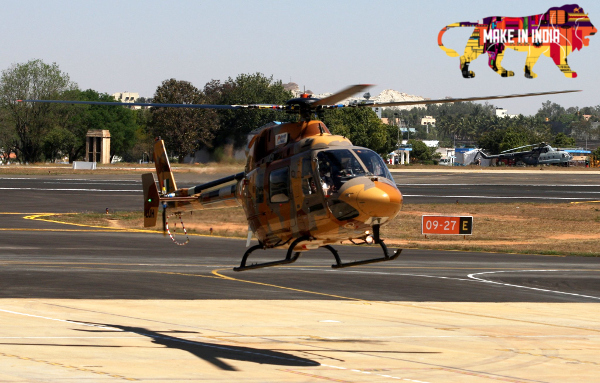
Hindustan Aeronautics Limited (HAL) is advancing towards the final certification of its indigenously developed Light Utility Helicopter (LUH), with the first 12 helicopters reportedly targeted for delivery to the Indian Army and Indian Air Force during the financial year 2027–28. The development marks an important stage in India’s efforts to replace its ageing Cheetah and Chetak helicopters with a modern, domestically designed rotary-wing platform capable of operating across challenging terrain and high-altitude environments.
According to media reports online published on October 13, 2026, the three-tonne-class Light Utility Helicopter is undergoing the final stages of certification and integration of operational enhancements. The Centre for Military Airworthiness and Certification (CEMILAC), operating under the Defence Research and Development Organisation (DRDO), is responsible for issuing the military type certification required for the helicopter’s induction into service.
The latest development builds upon earlier certification milestones officially announced by the Ministry of Defence. HAL’s LUH received Initial Operational Clearance for the Indian Army variant in February 2021 after completing extensive ground testing, endurance evaluations and flight trials under different environmental conditions. The current programme focuses on completing the remaining certification requirements and preparing the helicopter for operational deployment.
HAL Targets First 12 Light Utility Helicopter Deliveries in FY 2027–28
According to media reports online, HAL aims to deliver the first 12 Limited Series Production (LSP) Light Utility Helicopters to the Indian Army and Indian Air Force during FY 2027–28, following the completion of the required military certification process.
The reports indicate that improvements are being incorporated into the helicopter to enhance its performance and operational capabilities. Flight testing and certification activities associated with these developments have reportedly reached an advanced stage.
These activities are intended to establish compliance with the operational and airworthiness requirements necessary for the helicopter’s induction into military service. The remaining certification process is being conducted under the oversight of CEMILAC.
The reported delivery programme represents an important transition for the LUH from development and flight evaluation towards operational production. Limited Series Production enables aircraft manufacturers and military operators to introduce a new platform in controlled quantities while establishing production, maintenance and operational support arrangements.
HAL has also acknowledged the proposed 12-helicopter programme in its official corporate communications.
During the company’s fourth-quarter FY 2025–26 earnings conference call, held on May 15, 2026, the management discussed anticipated defence contracts, including the pending programme for 12 LUH Limited Series Production helicopters.
HAL Chairman and Managing Director Ravi Kota explained that discussions with the armed services were underway as the company worked towards finalising forthcoming production programmes.
The latest reported delivery target therefore builds upon an established programme under consideration by HAL and the Indian Armed Forces.
Light Utility Helicopter Developed Entirely Through HAL’s Indigenous Design Programme
The Light Utility Helicopter is a new-generation, three-tonne-class, single-engine helicopter designed and developed by HAL’s Rotary Wing Research and Design Centre in Bengaluru.
The programme was undertaken to meet the Indian Armed Forces’ requirements for a modern light helicopter capable of performing utility missions across India’s diverse operational environments.
According to the Ministry of Defence, the helicopter has been designed with high manoeuvrability, modern avionics and performance characteristics suitable for operations in the Himalayan region.
The LUH incorporates a compact configuration intended to support operations from restricted landing areas, forward military locations and high-altitude helipads.
Its design reflects the Indian Armed Forces’ requirement for a versatile helicopter capable of undertaking personnel transportation, reconnaissance, communication support and other light utility missions.
The helicopter has also been developed with provisions for different mission configurations, allowing it to support various military requirements.
The programme represents a major achievement for HAL’s indigenous helicopter design capabilities, building upon the company’s experience in developing the Advanced Light Helicopter Dhruv and Light Combat Helicopter Prachand.
Initial Operational Clearance Granted in February 2021
The Ministry of Defence officially announced on February 5, 2021, that HAL’s Light Utility Helicopter had received Initial Operational Clearance for the Indian Army variant during Aero India 2021.
The clearance followed a comprehensive programme of ground and flight evaluations undertaken to demonstrate the helicopter’s basic airworthiness and operational performance.
According to the official announcement, HAL completed ground testing, ground test vehicle endurance runs, system evaluations and flight trials under multiple operating conditions.
The flight evaluation programme included hot-weather trials, cold-weather trials, sea-level operations and high-altitude testing under demanding environmental conditions.
These trials established the helicopter’s ability to operate in the diverse climatic and geographical environments encountered across India.
The Ministry confirmed that the helicopter had satisfactorily complied with the Preliminary Joint Services Qualitative Requirements applicable to basic helicopter certification.
Following this milestone, HAL continued integrating and evaluating mission-specific equipment intended to support the operational requirements of the armed services.
The current certification activities represent the continuation of this development process, bringing the helicopter closer to full operational induction.
Ardiden 1U Engine Designed for High-Altitude Operations
The HAL Light Utility Helicopter is powered by the Ardiden 1U turboshaft engine developed by Safran Helicopter Engines of France.
According to the Ministry of Defence, the engine provides adequate power margins for operations at high altitudes, including the demanding conditions encountered in the Himalayan region.
High-altitude helicopter operations present significant technical challenges because reduced atmospheric density affects engine performance, rotor efficiency and aircraft lifting capability.
Helicopters operating from forward military bases must often carry personnel and essential supplies while navigating mountainous terrain and rapidly changing weather conditions.
The LUH’s propulsion system and aerodynamic design have been developed to address these requirements while maintaining operational flexibility.
The helicopter’s high manoeuvrability also supports operations from confined landing sites and locations where larger helicopters may face operational limitations.
These characteristics make the LUH particularly relevant to the Indian Army’s requirements for helicopter operations along mountainous borders and in remote forward areas.
Advanced Glass Cockpit and Health Monitoring Systems
The Light Utility Helicopter incorporates modern avionics and monitoring equipment intended to improve flight operations, aircraft maintenance and overall operational reliability.
According to HAL and the Ministry of Defence, the helicopter features a Smart Cockpit Display System, commonly known as a glass cockpit.
The system presents essential flight information through electronic displays, reducing reliance on conventional analogue instruments and providing pilots with an integrated view of aircraft operating parameters.
Modern cockpit displays support situational awareness by presenting flight, navigation and aircraft system information in a coordinated format.
The LUH also incorporates a Health and Usage Monitoring System (HUMS), which monitors important aircraft operating parameters and supports maintenance planning.
Such systems help maintenance personnel assess equipment condition, identify abnormal operating trends and organise preventive maintenance activities.
For military helicopters operating from remote locations, effective maintenance monitoring contributes to aircraft availability and operational readiness.
The integration of modern cockpit and monitoring technologies represents an improvement over the equipment architecture of older light helicopter platforms.
LUH to Replace the Ageing Cheetah and Chetak Helicopter Fleets
The Light Utility Helicopter programme is intended to replace the ageing Cheetah and Chetak helicopters currently operated by the Indian Armed Forces.
These helicopters have served India for decades and have played an important role in military aviation, particularly in mountainous regions and difficult operating environments.
The Cheetah helicopter has been extensively employed for high-altitude operations, including missions involving personnel movement, observation, reconnaissance and logistical support.
The Chetak has performed a broad range of utility missions across the armed services, supporting military transportation, communication and other operational requirements.
Both platforms have contributed significantly to India’s military aviation capabilities. However, their ageing designs and maintenance requirements have increased the importance of developing a modern replacement.
The LUH is intended to provide improved avionics, maintenance systems, operational flexibility and performance characteristics while retaining the ability to operate in demanding terrain.
Its induction will contribute to the progressive modernisation of India’s light helicopter fleet.
The programme also supports the Indian Armed Forces’ objective of strengthening indigenous equipment availability and establishing long-term domestic manufacturing and maintenance capabilities.
HAL’s Tumakuru Factory to Support Indigenous Helicopter Production
The production of the Light Utility Helicopter forms an important component of HAL’s helicopter manufacturing expansion at Tumakuru in Karnataka.
Prime Minister Narendra Modi dedicated the HAL Helicopter Factory at Tumakuru to the nation on February 6, 2023, marking a major milestone in India’s indigenous aerospace manufacturing programme.
The facility was developed as a dedicated greenfield helicopter manufacturing complex and is intended to strengthen India’s capabilities in helicopter production, maintenance and associated aerospace engineering.
According to the Ministry of Defence, the factory covers approximately 615 acres and has been planned as a major centre for indigenous helicopter manufacturing.
The LUH was identified as the initial production programme for the facility.
The manufacturing complex has also been designed to support the future production and maintenance of additional helicopter platforms, including the Light Combat Helicopter and the proposed Indian Multi-Role Helicopter.
The Ministry of Defence stated that HAL envisaged manufacturing more than 1,000 helicopters in the three-tonne to 15-tonne category from Tumakuru over a period of 20 years.
The project was also expected to generate approximately 6,000 employment opportunities in the region through direct and supporting industrial activities.
The facility incorporates modern manufacturing technologies and production infrastructure designed to support complex aerospace assembly operations.
With dedicated helicopter manufacturing capabilities established at Tumakuru, HAL has created an industrial foundation for expanding India’s indigenous rotary-wing aircraft production.
Supporting Military Operations in the Himalayan Region
One of the principal operational requirements driving the LUH programme is the need for reliable helicopter support in India’s mountainous regions.
Military units deployed along the Himalayan frontier depend on helicopters for transporting personnel, delivering essential supplies, conducting reconnaissance and supporting communication between forward locations.
Many of these deployments involve operations at high elevations, where difficult terrain and limited road connectivity increase the importance of aviation support.
Helicopters operating in these environments must cope with reduced air density, strong winds, rapidly changing weather and restricted landing areas.
The LUH has been specifically designed with performance characteristics suited to these conditions.
Its compact configuration and manoeuvrability allow it to undertake missions requiring access to remote locations, while its modern avionics and onboard monitoring systems support demanding flight operations.
The helicopter’s development therefore addresses an important operational requirement for the Indian Army and Indian Air Force.
The progressive introduction of the LUH will strengthen India’s ability to sustain military aviation operations in difficult terrain using an indigenously developed platform.
Certification Process Moves Towards Military Type Clearance
Military helicopter certification involves comprehensive technical evaluation to establish whether an aircraft meets the airworthiness and operational requirements specified for its intended role.
For the LUH, CEMILAC is responsible for evaluating compliance with applicable military airworthiness standards.
The certification process covers aircraft structures, flight performance, systems reliability, propulsion, handling characteristics and other technical requirements.
Additional mission-specific equipment must also undergo evaluation to establish compatibility with the aircraft and compliance with operational standards.
The Ministry of Defence’s February 2021 announcement confirmed that HAL had completed the basic helicopter certification requirements following extensive testing.
The subsequent integration of mission-role equipment formed an important part of preparing the aircraft for operational induction.
According to media reports online, HAL is now undertaking advanced flight testing and certification activities associated with improvements to the helicopter’s performance and operational capabilities.
The issuance of the required military type certificate will represent an important milestone towards introducing the aircraft into service.
Successful completion of the remaining requirements will also support the transition from development and evaluation to limited series production and delivery.
Indigenous Helicopter Development Strengthens India’s Aerospace Industry
The LUH programme forms part of India’s broader effort to develop domestic capabilities across different categories of military helicopters.
HAL has already established indigenous expertise through the development and manufacture of the Advanced Light Helicopter Dhruv and Light Combat Helicopter Prachand.
The Light Utility Helicopter adds a modern three-tonne-class platform to this portfolio, addressing operational requirements distinct from those of larger helicopters.
The programme brings together aircraft design, aerodynamics, flight testing, systems integration and specialised aerospace manufacturing capabilities.
It also provides opportunities for Indian engineering companies and component manufacturers to participate in the country’s helicopter production ecosystem.
Domestic helicopter manufacturing supports the development of specialised technical skills, industrial infrastructure and maintenance capabilities essential for long-term aerospace self-reliance.
The expansion of HAL’s manufacturing facilities at Tumakuru further strengthens this ecosystem by creating dedicated infrastructure for multiple helicopter programmes.
The LUH also supports the Government of India’s Make in India and Atmanirbhar Bharat initiatives through indigenous aircraft development and domestic manufacturing.
These programmes have encouraged Indian aerospace manufacturers to increase their participation in the design, production and long-term support of military aviation platforms.
HAL Advances Towards Operational Induction of the LUH
The Light Utility Helicopter programme has progressed through several major development milestones, including extensive flight trials, Initial Operational Clearance and the establishment of dedicated manufacturing infrastructure.
The latest reported certification activities represent another important stage in preparing the indigenous helicopter for service with the Indian Armed Forces.
The proposed delivery of the first 12 Limited Series Production helicopters during FY 2027–28 would mark a significant transition towards operational induction, following the required military airworthiness clearance.
For the Indian Army and Indian Air Force, the LUH programme addresses the longstanding requirement to replace ageing light helicopters with a modern platform suited to India’s diverse operational environments.
For HAL, the programme demonstrates the continuing development of indigenous rotary-wing technologies and the expansion of India’s helicopter manufacturing capabilities.
With certification activities progressing and the Tumakuru manufacturing facility established, the Light Utility Helicopter is moving closer to becoming an important component of India’s next-generation military aviation fleet.
The programme reinforces India’s commitment to developing, manufacturing and sustaining modern military helicopters through domestic aerospace capabilities.
References
1. Hindustan Aeronautics Limited — Official Stock Exchange Disclosure
Date: May 22, 2026
Title: Transcript of Q4 FY 2025–26 Earnings Conference Call Held on May 15, 2026
Details: HAL management discussion covering anticipated defence contracts and the pending 12-helicopter LUH Limited Series Production programme.
https://hal-india.co.in/backend/wp-content/uploads/2026/05/Transcript_May15-2026-signed.pdf
2. Press Information Bureau, Ministry of Defence
Date: February 5, 2021
Title: HAL LUH (Army Variant) Receives Initial Operational Clearance
Details: Official confirmation of the helicopter’s Initial Operational Clearance, flight testing, high-altitude performance, engine and avionics configuration.
https://www.pib.gov.in/PressReleasePage.aspx?PRID=1695521
3. Press Information Bureau, Ministry of Defence
Date: February 6, 2023
Title: Prime Minister Dedicates to the Nation HAL Helicopter Factory — India’s Largest — at Tumakuru, Karnataka
Details: Official information on the Tumakuru helicopter manufacturing facility and indigenous LUH production programme.
https://www.pib.gov.in/PressReleasePage.aspx?PRID=1896758
4. Press Information Bureau, Prime Minister’s Office
Date: February 6, 2023
Title: PM Dedicates HAL Helicopter Factory to the Nation in Tumakuru
Details: Manufacturing infrastructure, production planning, industrial development and employment generation.
https://www.pib.gov.in/PressReleasePage.aspx?PRID=1896714
5. Hindustan Aeronautics Limited — Official Website
Title: Helicopter Products and Indigenous Aerospace Manufacturing Capabilities
Details: Information on HAL’s rotary-wing platforms, manufacturing facilities and indigenous helicopter development programmes.
https://hal-india.co.in/
6. Media Reports Online
Date: October 13, 2026
Title: Light Utility Helicopter Enters Final Stages of Certification: Officials
Details: Reported progress towards military type certification and the proposed delivery of 12 Limited Series Production helicopters during FY 2027–28.
You may also like
-
General Atomics Reportedly Offers Gambit 5 Carrier-Based Combat Drone to Indian Navy
-
BHEL Approves ₹500 Crore Expansion of Thermal and Nuclear Power Equipment Manufacturing at Haridwar
-
Reliance Building One of World’s Largest Battery Gigafactories in Jamnagar with 120 GWh Annual Capacity
-
Tata Advanced Systems Reportedly Considering LAMV 4×4 Production in Morocco
-
Indian Navy Initiates Communication Systems Upgrade for Kamorta-Class Anti-Submarine Warfare Corvettes
