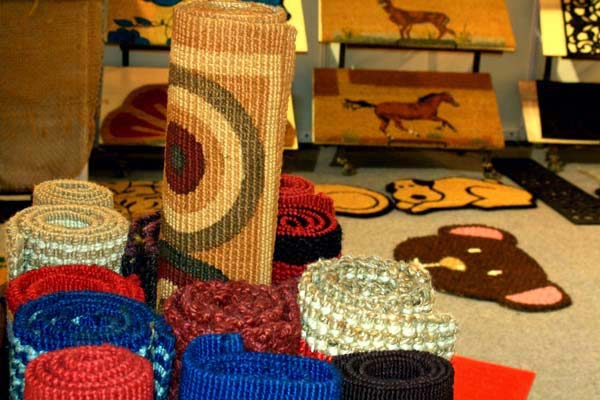
India’s coir industry has registered remarkable growth in international markets, with exports of coir and coir products increasing by 305.70% between 2014–15 and 2025–26. Export earnings rose from ₹1,630.33 crore to ₹6,614.40 crore during this period, reflecting the expanding global demand for India’s natural-fibre products and the growing contribution of traditional industries to the country’s export economy.
According to the Ministry of Micro, Small and Medium Enterprises (MSME), India remains the world’s largest producer and exporter of coir, accounting for approximately two-thirds of global production. The industry generates an estimated annual turnover of ₹16,000 crore and supports the livelihoods of more than seven lakh workers through direct and indirect employment. Women constitute approximately 80% of the workforce, making coir manufacturing an important source of rural employment and economic participation.
The Ministry highlighted these achievements on October 14, 2026, emphasising the industry’s contribution to sustainable manufacturing, entrepreneurship, technological innovation and export development. The expansion also holds particular significance for Kerala, where coir production has supported rural communities, traditional artisans and manufacturing enterprises for generations.
India’s Coir Exports Increase Fourfold in Twelve Years
India’s coir exports have expanded more than fourfold over twelve financial years, demonstrating the growing commercial value of coconut-based natural fibres in international markets. During 2014–15, the country exported coir and coir products worth ₹1,630.33 crore. By 2025–26, export earnings had increased to ₹6,614.40 crore, representing an absolute increase of ₹4,984.07 crore and cumulative growth of 305.70%.
The latest annual performance also indicates considerable momentum in overseas demand. According to the Ministry of MSME’s performance dashboard, coir exports stood at ₹4,343.45 crore in 2024–25 before increasing to ₹6,614.40 crore in 2025–26. This represents year-on-year growth of approximately 52.3%, highlighting the industry’s expanding international commercial opportunities.
The United States, China, the Netherlands, Spain and the United Kingdom are among the important overseas markets for Indian coir products. These markets import a range of materials, including coir fibre, yarn, pith, mats and other manufactured products used in agriculture, horticulture, household furnishings and industrial applications. Growing interest in renewable raw materials and environmentally responsible products has created additional opportunities for Indian manufacturers to diversify production and develop higher-value exports.
India’s established coconut-growing regions provide access to raw materials, while its traditional manufacturing expertise supports a broad network of processing units, entrepreneurs and export businesses. The combination of agricultural resources, skilled labour and improving manufacturing technology has enabled the industry to expand beyond conventional products and serve specialised international markets.
Kerala Remains a Major Centre of India’s Coir Industry
Kerala occupies a distinctive position in India’s coir industry because of its longstanding association with coconut cultivation, fibre extraction, spinning and traditional mat manufacturing. The industry has been an important part of the state’s rural economy for more than a century, particularly in coastal districts where coconut cultivation and coir processing developed alongside one another.
Alappuzha emerged as a major centre of organised coir manufacturing during the nineteenth century. According to the Ministry of MSME, India’s first organised coir factory began operations in Alappuzha in 1859. The industry’s subsequent expansion created employment opportunities for thousands of workers engaged in fibre extraction, yarn spinning, mat weaving and related activities. Over time, cooperative societies, household production units and private manufacturing enterprises contributed to the development of Kerala’s coir-based economy.
The state’s skilled workforce and manufacturing traditions continue to support the industry. According to the Coir Board’s MSME registration data, Kerala had 9,330 registered coir units under the Udyam and Udyam Assist platforms as of June 12, 2026. Tamil Nadu followed with 5,080 units, while Andhra Pradesh and Odisha also maintained considerable industry participation. These figures demonstrate the geographical expansion of coir manufacturing while highlighting Kerala’s established position in the sector.
Kerala’s coir industry has also diversified beyond ropes, yarn and conventional floor coverings. Manufacturers and research institutions have developed products for horticulture, agriculture, soil conservation, packaging and specialised industrial applications. This transformation is helping traditional enterprises enter new markets while creating opportunities for technological advancement and value addition.
Coir Industry Supports More Than Seven Lakh Livelihoods
The coir industry makes an important contribution to employment because its manufacturing activities extend across coconut-growing regions, rural households, small industrial establishments and export-oriented businesses. The Ministry of MSME estimates that more than seven lakh workers depend directly or indirectly on the sector, making it a significant source of income for communities engaged in natural-fibre processing and manufacturing.
Women account for approximately 80% of the industry’s workforce, reflecting the importance of coir processing in supporting women’s participation in rural economic activities. Traditional spinning, fibre preparation and product manufacturing have provided employment opportunities for women who work in household enterprises, cooperatives and organised production units. The sector’s expansion creates opportunities to strengthen these livelihoods through improved technology, skill development and access to larger markets.
Government initiatives have encouraged the formal registration of enterprises and workers, helping traditional businesses participate more effectively in the organised MSME ecosystem. Over the past twelve years, more than 21,000 coir units have registered through the Udyam Registration Portal, bringing approximately 2.3 lakh workers into the formal enterprise framework. Registration can improve access to government assistance, institutional financing, training programmes and business development services.
Skill development has also become an important component of the industry’s modernisation. The Ministry has supported training for more than 68,000 individuals through various programmes, with women representing over 80% of participants. These initiatives help workers acquire improved production skills, operate modern machinery, maintain product quality and explore entrepreneurial opportunities. By combining traditional knowledge with technical training, the industry is strengthening its capacity to generate sustainable employment and support rural economic development.
Coir Vikas Yojana Promotes Technology and Entrepreneurship
The Ministry of MSME implements the Coir Vikas Yojana to support the sustainable development, modernisation and competitiveness of India’s coir industry. The programme addresses important requirements across the production chain, including research, technological development, skill training, entrepreneurship, product diversification, marketing and export promotion.
Through the Coir Board, the government facilitates technical assistance and training programmes that help manufacturers improve production efficiency and develop commercially viable products. Traditional enterprises can benefit from improved processing techniques, modern spinning machinery and technologies designed to enhance product quality. These interventions support greater productivity while helping smaller manufacturers meet the requirements of domestic and international buyers.
Marketing and export promotion form another important component of the programme. Over the past twelve years, the government has facilitated the participation of more than 1,000 exporters in international exhibitions, providing Indian businesses with opportunities to establish commercial relationships and introduce new products to overseas markets. Financial assistance exceeding ₹20 crore has also been provided to more than 850 entrepreneurs through export market promotion initiatives.
The industry has participated in more than 950 exhibitions across India, while over 1,400 promotional programmes have been organised to strengthen awareness and expand market opportunities. Such initiatives are particularly valuable for micro and small enterprises that may otherwise face difficulties accessing international buyers, understanding product requirements or establishing distribution networks. By supporting market development alongside manufacturing capabilities, the government is encouraging wider participation in the industry’s export growth.
Research and Innovation Expand Coir’s Industrial Applications
Coir is a natural fibre obtained from the outer husk of coconuts. Its durability, resilience and biodegradable properties make it useful in numerous commercial applications. Traditionally, coir has been used to manufacture ropes, yarn, mats, mattresses, brushes and household furnishings. Technological advancements have expanded its applications into horticulture, agriculture, environmental protection, packaging and specialised industrial products.
Coir pith, which emerges as a by-product during fibre extraction, has become an important commercial material. Its moisture-retention properties make it suitable for horticultural growing media, nursery production and soil-conditioning applications. Coir-based substrates are widely used in plant cultivation because they help maintain moisture while providing a growing medium for root development. These properties have created export opportunities for Indian enterprises supplying horticultural materials to international agricultural markets.
Coir geotextiles represent another important area of product development. Manufacturers use woven and non-woven coir materials for erosion control, slope stabilisation, vegetation establishment and selected civil-engineering applications. Their biodegradable nature makes them useful where temporary soil protection is required before vegetation becomes established. Growing interest in environmentally responsible infrastructure materials has increased the commercial relevance of such products.
Research institutions have played an important role in developing new applications for coir and improving existing production technologies. The Ministry of MSME reported that more than 150 innovative machines, technologies and value-added coir products have been developed to strengthen the industry. These innovations support greater efficiency, product diversification and the commercial utilisation of materials that were previously treated as low-value agricultural by-products.
The Central Coir Research Institute has also developed environmentally friendly coir-based packaging cups for railway wheel axles as an alternative to conventional high-density polyethylene components. This development demonstrates the potential for natural fibres to serve specialised industrial requirements beyond their traditional applications. Continued research can help Indian manufacturers develop products with higher commercial value while strengthening the use of renewable materials in manufacturing.
Kozhikode Enterprise Converts Coir Pith into Agricultural Products
The growing commercial potential of coir-based products is illustrated by an entrepreneurial initiative in Kozhikode, Kerala, where a small enterprise has successfully converted coir pith into a marketable agricultural input. Sampoorna Plus Agro Fertilizer Enterprises, established by P. Surendran in November 2024, manufactures bio-fertiliser using coir pith and demonstrates how traditional industry by-products can support new rural businesses.
The entrepreneur received training and technical assistance from the Coir Board’s Sub-Regional Office in Kannur and the Central Coir Research Institute at Kalavoor. This institutional support helped develop the technical knowledge required to process coir pith and manufacture agricultural products suitable for commercial sale. The enterprise subsequently established a customer base of more than 500 buyers within its first year of operations.
According to the Ministry of MSME, the business sold more than 20 tonnes of coir pith bio-fertiliser and generated a turnover of ₹13 lakh during 2024–25. The enterprise reported a profit of ₹4 lakh and created employment opportunities for five workers, including two women. Its development highlights the economic potential of converting agricultural residues into useful products while supporting entrepreneurship and employment at the local level.
The initiative also demonstrates the importance of connecting scientific research with rural enterprises. Technical assistance, skill training and access to commercially useful technologies can help entrepreneurs establish businesses based on locally available raw materials. Such enterprises contribute to agricultural value addition and create opportunities for traditional industries to participate in emerging markets.
Alappuzha Coir Unit Demonstrates the Importance of Rural Entrepreneurship
Another example of enterprise development comes from Alappuzha, where entrepreneur G. Sabu established a coir spinning unit in 2024 with support under the Prime Minister’s Employment Generation Programme. The enterprise received assistance through the Coir Board’s regional office at Kalavoor and began manufacturing coir yarn and ropes for local markets.
Within two years, the unit developed regular production activities and established commercial relationships with cooperative societies and other manufacturers in Alappuzha. Its operations created direct employment for approximately eight to ten workers, predominantly women from surrounding villages. The Ministry reported that the enterprise achieved steady production and increasing monthly turnover, supporting regular income opportunities for its workforce.
The development reflects the continuing relevance of traditional coir manufacturing within Kerala’s rural economy. Small enterprises can contribute to local industrial activity by processing agricultural materials, supplying larger manufacturers and maintaining employment in established production centres. Institutional assistance and access to production technology can further strengthen their ability to compete in changing markets.
Entrepreneurial initiatives of this kind also demonstrate how government employment-generation programmes can complement traditional manufacturing capabilities. By helping individuals establish production units and connect with local buyers, such programmes support enterprise formation while preserving skills developed over generations.
Natural-Fibre Manufacturing Creates Opportunities for Sustainable Growth
The increasing commercial use of natural fibres provides India’s coir industry with opportunities to expand into markets seeking renewable and biodegradable materials. Coir production uses coconut husks generated during agricultural processing, converting these materials into commercially valuable fibres and manufactured products. This approach supports more efficient utilisation of agricultural resources while generating additional income across the coconut value chain.
Coir-based products have applications in household furnishings, horticulture, agriculture, soil conservation and selected packaging activities. Their renewable origin and natural properties make them suitable for applications where manufacturers seek alternatives to certain synthetic materials. Continued improvements in processing technology and product design can help Indian enterprises develop specialised products that meet international quality and performance requirements.
The industry’s expansion also supports India’s wider efforts to encourage sustainable manufacturing and greater domestic value addition. By developing products from locally available agricultural resources, manufacturers can strengthen rural supply chains and reduce dependence on imported raw materials for selected applications. Research-based product development further enables traditional enterprises to participate in technologically advanced manufacturing activities.
Kerala’s established research institutions, skilled workforce and manufacturing infrastructure provide important advantages in this transition. Cooperation among researchers, entrepreneurs, cooperative societies and export businesses can help the state develop new product categories while maintaining its traditional strengths in natural-fibre manufacturing.
Coir Export Growth Strengthens India’s Rural and Manufacturing Economy
India’s coir industry illustrates how a traditional rural manufacturing activity can develop into a substantial export-oriented sector through technological advancement, entrepreneurship and expanding international demand. The increase in export earnings from ₹1,630.33 crore in 2014–15 to ₹6,614.40 crore in 2025–26 demonstrates the industry’s growing commercial importance and its ability to reach new markets.
The sector connects coconut farmers, fibre-processing workers, women artisans, cooperative societies, research institutions, manufacturers and exporters within a broad economic network. Its contribution extends beyond export earnings to employment generation, agricultural value addition, rural entrepreneurship and sustainable product development. Government initiatives supporting training, technology, marketing and enterprise development have helped strengthen these connections while encouraging greater participation by small businesses.
For Kerala, the industry’s growth reinforces the importance of its traditional manufacturing heritage while creating opportunities for modernisation and diversification. New applications involving coir pith, geotextiles, horticultural substrates and specialised industrial products demonstrate how local resources and established skills can support emerging commercial activities.
With exports reaching ₹6,614.40 crore and international demand expanding across several product categories, India’s coir industry is strengthening its contribution to the national economy. Continued investment in research, advanced processing, product innovation and export market development will help the sector create employment, support rural communities and consolidate India’s position in the global natural-fibre industry.
References
1. Press Information Bureau, Ministry of Micro, Small and Medium Enterprises — October 14, 2026.
India’s Coir Sector: Creating Livelihoods, Promoting Entrepreneurship and Driving Sustainable Growth.
https://www.pib.gov.in/PressReleseDetailm.aspx?PRID=2323051
2. News On AIR — October 14, 2026.
India’s Coir Exports Surged 305% to ₹6,614 Crore in Last Financial Year.
https://newsonair.gov.in/indias-coir-exports-surged-305-to-%E2%82%B96614-crore-in-last-financial-year/
3. Ministry of Micro, Small and Medium Enterprises — Performance Smartboard, Coir Board.
Export of Coir and Coir Products.
https://www.dashboard.msme.gov.in/coir_product_wise.aspx
4. Press Information Bureau, Ministry of Micro, Small and Medium Enterprises — September 14, 2026.
From Coconut Husk to Enterprise: How Coir Is Transforming Rural Lives.
https://www.pib.gov.in/PressReleasePage.aspx?PRID=2310033
You may also like
-
PM Modi Inaugurates ₹3,350 Crore Development Projects in Ladakh
-
AXISCADES Expands Global Technology Footprint with US Acquisition Plan and Swiss Company Takeover
-
Skyroot Aerospace Secures Two Satellite Launch Contracts from US Space Company Reflect Orbital
-
India Dispatches First 18 Railway Coaches to Bangladesh Under 200-Coach Export Agreement
-
IIT Madras-Backed Startup Develops Hummingbird Electric Sea Glider, Plans Ocean Trials by December 2026
