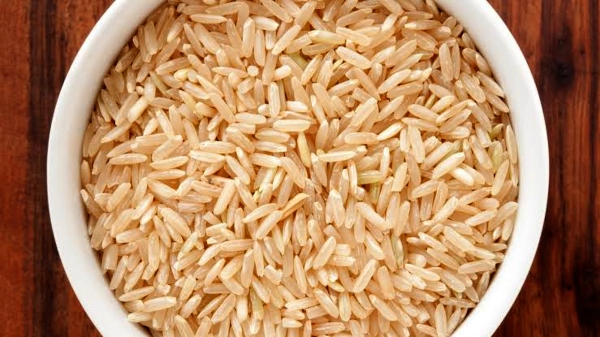
Across the fertile plains and Himalayan foothill landscape of Bihar’s West Champaran lies an indigenous rice whose appearance is as distinctive as its fragrance. The grains are short and bold, resembling tiny black peppercorns, while the cooked rice carries a characteristic aroma and gentle sweetness. Locally known by names such as Marcha, Mircha, Marchaiya and Maricha, this traditional variety has long been part of the agricultural heritage of Champaran.
Marcha Rice is particularly celebrated for something beyond ordinary cooked rice. When processed into chura, or flattened rice, it produces soft, aromatic flakes with a naturally pleasing flavour. This combination of unusual grain shape, fragrance and suitability for chura helped Marcha develop an identity strongly associated with the villages of West Champaran.
That regional identity received formal protection when Marcha Rice was registered as a Geographical Indication of Bihar in 2023.
A Rice That Looks Like Black Pepper
The origin of the name is closely connected with the grain itself.
Marcha Rice produces short, compact grains whose size and shape resemble black pepper. This resemblance gave rise to local names such as Mircha and Marcha, linking the rice’s identity directly to one of its most immediately recognisable physical characteristics.
The paddy is also distinguished by its comparatively dark husk, while the milled rice is white and short-grained.
Its appeal, however, extends well beyond appearance. Marcha possesses a natural fragrance noticeable not only in the cooked grain but also in the paddy and processed flakes. Official quality parameters describe genuine Marcha Rice as aromatic, with the natural fragrance characteristic of the variety.
When cooked, the rice is traditionally valued for its flavour and palatability. But it is perhaps its performance as flattened rice that gives Marcha an especially distinctive place among India’s aromatic rice varieties.
The Rice of West Champaran
Marcha Rice belongs principally to West Champaran district in northwestern Bihar, close to the foothills of the Himalayas and the Nepal border.
Its recognised cultivation belt includes pockets of Mainatand, Gaunaha, Narkatiaganj, Ramnagar, Chanpatiya and Lauriya blocks.
This is not merely a political boundary attached to the product. Marcha developed within the particular agricultural environment of Champaran, where soil, rainfall, temperature, traditional seed selection and generations of farmer knowledge combined to preserve its distinctive characteristics.
The wider Champaran region was historically known for several traditional aromatic rice cultivars. Marcha survived as one of the most recognisable among them, maintained largely through farmers repeatedly saving and selecting seed suited to local conditions.
Its continued existence therefore represents both agricultural biodiversity and the survival of a regional farming tradition.
A Product of the Champaran Terai
West Champaran occupies an unusual geographical zone. To its north lie the Himalayan foothills and Nepal, while much of the district forms part of the fertile alluvial plains associated with the Gandak river system.
Marcha is traditionally cultivated in loam to sandy-loam soils suited to paddy production.
Its geographical environment matters because aromatic rice varieties frequently express their desirable qualities most strongly under particular combinations of soil, climate, water availability and cultivation practice.
Moving a traditional variety away from the environment in which it evolved does not necessarily reproduce precisely the same grain characteristics, fragrance or culinary qualities.
This relationship between plant and place lies at the heart of the Geographical Indication system.
Traditional Kharif Cultivation
Marcha is essentially a kharif-season rice, following the agricultural rhythm established by the southwest monsoon.
Farmers generally prepare nurseries and fields during the early monsoon months, with sowing commonly taking place from around mid-June into early July. The crop then develops through the rainy season before reaching maturity toward the end of the year.
Marcha is a traditional cultivar rather than a modern high-yielding rice engineered primarily for maximum output.
That distinction is important.
Many indigenous aromatic rices survived precisely because farming communities valued qualities that cannot be measured simply in tonnes per hectare. Aroma, taste, texture, suitability for particular foods and cultural preference allowed varieties such as Marcha to persist even as higher-yielding alternatives became widely available.
Its cultivation therefore represents the continuation of a quality-oriented farming system alongside modern commercial agriculture.
Marcha Chura — Where the Rice Truly Stands Apart
One of the defining qualities of Marcha Rice is its suitability for making chura, known elsewhere in India as poha, aval or flattened rice.
Chura is produced by treating paddy and flattening the grains into flakes. Although many rice varieties can technically be processed this way, the texture, fragrance and flavour of the resulting product vary greatly according to the variety used.
Marcha produces particularly soft and aromatic flakes, making its chura one of the variety’s most highly valued traditional products.
The aroma remains evident after processing, while the flakes are appreciated for their characteristic sweetness and texture.
This makes Marcha unusual even among aromatic rice varieties. Its identity survives several culinary transformations — from paddy to milled rice and from rice to chura.
For local farming communities, therefore, Marcha is not simply a grain sold for boiling. It supports a traditional food chain encompassing farmers, millers, chura processors, traders and households.
Rice and Chura in Bihar’s Food Culture
Flattened rice occupies an important place in Bihar’s everyday food traditions.
Chura can be eaten with curd, milk, jaggery or sugar, while different seasonal and regional preparations combine it with locally available ingredients.
Among the best-known combinations is dahi-chura, in which flattened rice is served with curd and often jaggery. The preparation is particularly associated with winter and the festival period around Makar Sankranti in Bihar and neighbouring regions.
A fragrant rice capable of producing high-quality chura therefore carries value extending beyond the ordinary grain market.
Marcha’s qualities link agriculture with household cuisine, seasonal traditions and regional food identity. Generations of farmers preserved the variety not because it competed directly with every modern rice on yield, but because it performed exceptionally well in foods that mattered locally.
From Paddy Field to Aromatic Grain
Producing quality Marcha begins with preservation of the correct seed.
Traditional varieties can gradually lose their distinctive characteristics if seed becomes mixed with other cultivars. Maintaining varietal purity therefore depends heavily on farmer knowledge and careful seed selection.
Fields are prepared before transplantation or sowing during the monsoon season. The crop grows over several months before being harvested, generally during the November-December period.
After harvesting, the paddy is threshed and dried before storage or milling.
For rice intended to retain premium aromatic characteristics, post-harvest handling can be almost as important as cultivation itself. Excess moisture, poor storage or contamination can diminish the quality that gives a traditional aromatic rice its commercial value.
The GI framework therefore creates an incentive not merely to grow Marcha, but to preserve the characteristics by which genuine Marcha can be recognised.
The GI Journey
The effort to secure geographical protection for Marcha Rice was led by Marcha Dhan Utpadak Pragatisheel Samuh, representing growers associated with the traditional rice of West Champaran.
The application documented the variety’s long association with the region, its distinctive grain characteristics, aroma and its traditional cultivation within the recognised geographical area. The GI process eventually resulted in formal registration of Marcha Rice as an agricultural Geographical Indication of Bihar.
The current Intellectual Property India record gives the following details:
Geographical Indication: Marcha Rice
GI Application Number: 801
Category: Agricultural
Class: 30
State: Bihar
Applicant/Registered Proprietor: Marcha Dhan Utpadak Pragatisheel Samuh
Date of Filing: 29 November 2021
GI Journal: No. 172
Journal Availability Date: 30 March 2023
Certificate Number: 495
Certificate Date: 31 July 2023
Current Registration Valid Until: 28 November 2031
The registration formally linked the name Marcha Rice with its recognised geographical origin in Bihar and provided legal protection to a traditional rice variety preserved by farming communities of West Champaran. It also created a stronger foundation for branding the rice and its highly valued aromatic chura as distinctive regional products.
Why the GI Tag Matters
For traditional crops, a GI tag is much more than a label of prestige.
Once a regional agricultural product gains wider recognition, farmers face the danger that unrelated products from other places may be sold under the same name. If inferior rice is marketed as Marcha, consumers may eventually associate the name with inconsistent quality, undermining genuine producers.
Geographical Indication protection provides a mechanism for distinguishing authentic products linked to the recognised region.
For farmers, this can support better branding, specialised marketing and premium pricing, particularly when combined with proper producer organisation, traceability, packaging and quality control.
The opportunity becomes especially important for traditional rice varieties because they often cannot compete with modern high-yielding cultivars purely on production volume.
Their economic future instead depends upon capturing value from rarity, flavour, provenance and cultural identity.
GI recognition gives producers a mechanism for doing exactly that.
Marcha and Bihar’s Growing GI Rice Heritage
Marcha is not Bihar’s only geographically protected rice.
The state is also home to Katarni Rice, another celebrated aromatic variety associated particularly with Bhagalpur and surrounding areas.
Yet the two represent distinct rice traditions.
Katarni has its own characteristic grain, fragrance and geographical identity, while Marcha belongs to West Champaran and is recognised for its pepper-like short grain and exceptional suitability for aromatic chura.
Their coexistence illustrates the extraordinary diversity that once existed within India’s rice-growing landscapes.
Before standardised commercial varieties became widespread, farmers maintained countless locally adapted rices designed for different soils, seasons, foods and cultural purposes.
GI recognition is increasingly allowing some of these varieties to re-enter the marketplace not as obsolete grains, but as premium agricultural heritage products.
An Indigenous Grain in a Changing Agricultural Landscape
India’s agricultural transformation dramatically increased food production, but it also encouraged farmers in many regions to replace traditional landraces with a narrower range of high-yielding varieties.
The consequences have become increasingly apparent.
Every traditional cultivar that disappears represents the loss not only of a food but potentially of valuable genetic traits, cultivation knowledge and culinary traditions accumulated over generations.
Marcha represents the opposite outcome.
Farmers of West Champaran continued cultivating the grain because its aroma, taste and chura-making qualities retained economic and cultural value. Formal GI recognition has now given that inherited agricultural knowledge a legal and commercial identity.
This may ultimately prove important for the conservation of other indigenous varieties as well.
When heritage crops generate attractive prices, conservation becomes economically meaningful to the farmer rather than depending solely upon institutional seed banks.
From Champaran to a Wider Market
Marcha Rice today has the opportunity to move beyond its traditional regional market.
Its GI status gives the variety a clear provenance story: an indigenous aromatic rice grown in West Champaran, recognised for pepper-shaped grains and particularly suited to premium aromatic chura.
These characteristics lend themselves to specialised food markets where consumers increasingly seek traditional grains, geographically identified foods and products with traceable origins.
The challenge is to expand that market without diluting authenticity.
Scaling production will therefore require preservation of seed purity, farmer registration, quality standards, processing infrastructure, packaging and credible traceability.
For Marcha, commercial expansion and conservation must proceed together.
Preserving More Than a Rice Variety
Marcha Rice illustrates why Geographical Indications can matter profoundly to India’s agricultural heritage.
The GI does not simply protect the name of a commodity. It recognises a relationship between seed, soil, geography, generations of cultivators and regional cuisine.
The small pepper-like grains of Marcha survived because farmers in West Champaran continued to value qualities that industrial agriculture could easily overlook — fragrance, taste, texture and the ability to produce exceptionally good chura.
Those qualities have now become the foundation of its wider recognition.
From the monsoon-fed fields of Champaran to bowls of fragrant rice and plates of soft chura, Marcha carries with it the agricultural memory of northern Bihar.
Its GI recognition ensures that when the name Marcha Rice travels beyond West Champaran, the place and the farming tradition that created it travel with it.
You may also like
-
India Explores 3,000 km Power Corridor to Supply 2,000 MW of Clean Electricity to Singapore
-
Punjab’s Rail Coach Factory Advances Vande Bharat Manufacturing as 16-Coach Trainset Undergoes 180 kmph Trial
-
Himachal Startup Tecnod8.AI Develops Industrial AI Copilot for Advanced Manufacturing
-
Skyroot Aerospace Partners with Brazil’s Concert Technologies to Develop New Orbital Launch Vehicle
-
Subex Wins $700,000 African Telecom Contract for AI-Powered HyperSense Fraud Management Technology
