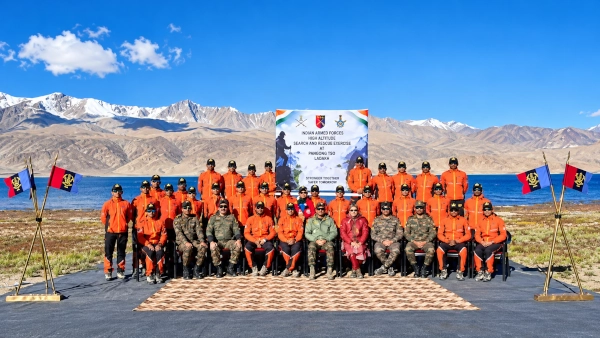
Twenty National Cadet Corps girl cadets have successfully completed the Aparajita–Parang La 2026 high-altitude expedition, trekking approximately 250 kilometres through some of the most demanding terrain in the Himalayas between Himachal Pradesh and Ladakh.
The 30-day expedition culminated at Karzok in Ladakh on September 16, where the team was received by NCC Director General Lieutenant General Virendra Vats and Ministry of Defence Additional Secretary Dipti Mohil Chawla. The cadets had travelled from Kibber in Himachal Pradesh’s Spiti Valley, crossed the 5,578-metre Parang La Pass and continued into the Changthang region of Ladakh.
Across One of India’s Toughest High-Altitude Routes
Parang La rises to approximately 5,578 metres, or 18,300 feet, and historically provides a high-altitude connection between the Spiti Valley and the Changthang plateau. The NCC expedition followed a route through remote Himalayan country containing high-altitude deserts, glaciers, snowfields and river valleys.
The original route announced by the Defence Ministry included Kibber, Dumla, Thaltak, Bongrojen, Parang La Pass, Dak Karzong, Norbu Sumdo, Kiangdom and Karzok. The terrain placed the cadets in an environment where altitude, rapidly changing weather, difficult ground conditions and physical exhaustion had to be managed over several weeks rather than during a short mountain exercise.
The expedition was not intended merely to cover distance. Living and moving through such terrain required the cadets to operate as a team, maintain discipline and adapt to conditions far removed from normal NCC camps and training establishments.
Expedition Flagged Off by Defence Minister
Defence Minister Rajnath Singh formally flagged off Aparajita–Parang La 2026 in New Delhi on August 18. At the start of the expedition, the Defence Ministry said 28 girl cadets from across India, with an average age of 19, had been selected for the trek. The youngest participant was 16-and-a-half years old.
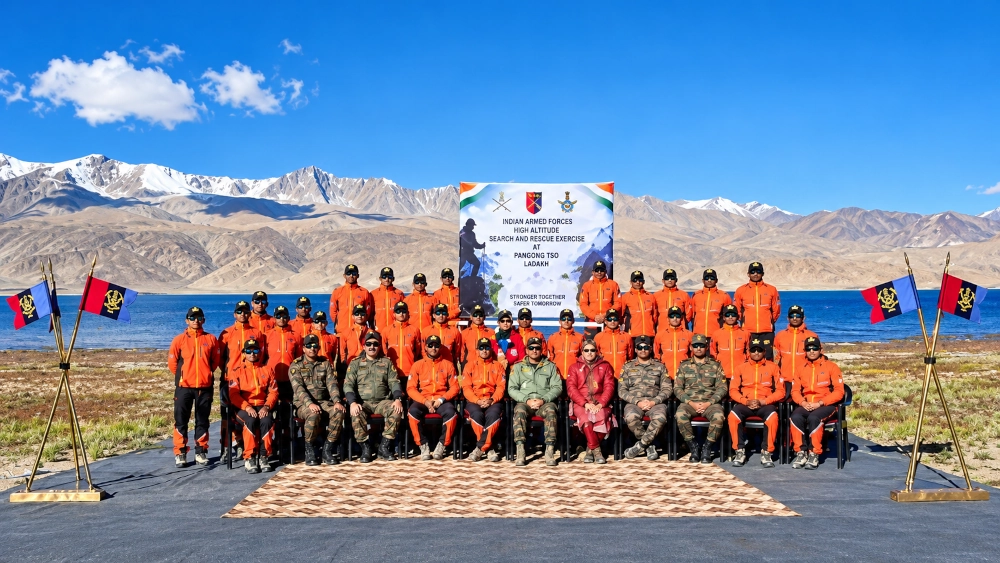
The expedition was supported by women officers from the Armed Forces along with NCC officers, instructors, medical personnel and other support staff. The Defence Ministry described it as one of the NCC’s flagship adventure activities and emphasised its role in building leadership, mental resilience, discipline and confidence among young cadets.
The September 16 completion announcement states that a team of 20 NCC girl cadets successfully completed the journey from Kibber to Karzok. The official completion statement does not provide a full breakdown explaining the difference between the number that began the programme and the number recorded at its completion.
IAF Carried Out High-Altitude Medical Evacuation
The difficulty of the expedition became particularly evident shortly before its conclusion. On September 14, Indian Air Force helicopters carried out an emergency medical evacuation of four NCC women cadets from an altitude of around 18,500 feet in Ladakh after an SOS was received from the trekking group.
The mission was undertaken at first light by the IAF’s Leh-based Siachen Pioneers helicopter unit. The crews had to operate in thin air and difficult mountain terrain without a prepared helipad, before evacuating the four cadets to Leh for medical attention. No detailed medical diagnoses were made public.
The evacuation highlighted the operational realities of moving through extreme Himalayan terrain. At such elevations, reduced oxygen affects people while low air density also reduces helicopter performance, making both sustained trekking and emergency aviation considerably more demanding.
Adventure Training With a Wider Purpose
High-altitude expeditions form an important part of the NCC’s broader approach to youth development. They place cadets in situations where success depends not simply on individual fitness but on teamwork, planning, discipline and the ability to continue functioning under physical and psychological pressure.
Lieutenant General Virendra Vats said following the completion of the trek that adventure activities of this kind contribute to the development of leadership, self-confidence, teamwork and endurance among young people. The expedition was also designed to encourage greater participation by young women in demanding adventure activities and expose them to challenging mountain conditions.
Bringing cadets selected from different parts of India together for a month-long expedition also gave the programme a national-integration dimension. The participants had to live, travel and overcome difficult terrain together while coming from different regions and backgrounds.
From Spiti to Changthang
The route itself gave the expedition a distinctive geographical character. Beginning at Kibber in the cold desert landscape of Spiti, the cadets moved through the high Himalayas before crossing Parang La and entering the Changthang region of Ladakh.
Unlike a conventional road journey between the two regions, the expedition required the team to move through largely remote country where glaciers, snowfields and river valleys formed part of the route. Completing approximately 250 kilometres over 30 days therefore demanded sustained endurance rather than a single difficult climb.
The successful conclusion of Aparajita–Parang La 2026 at Karzok marks one of the NCC’s major high-altitude adventure activities of the year. More importantly, it gave young women from across India direct experience of leadership, teamwork and endurance in an environment where preparation and cooperation were essential to completing the journey.
You may also like
-
Apollo Micro Systems Gets DRDO ToT for Semi-Active Laser Homing System; VIGHANA Naval Mine Moves Into Production
-
Ayodhya NSG Hub Moves Forward as Uttar Pradesh Transfers 65 Acres for Permanent Counter-Terror Base
-
COAS General Dhiraj Seth Begins Russia Visit to Deepen India-Russia Defence and Military Cooperation
-
DRDO Opens Testing, Funding and Software Source Codes to Indian Defence Startups and MSMEs
-
India, Myanmar Begin Fifth Edition of IMBAX Bilateral Army Exercise
