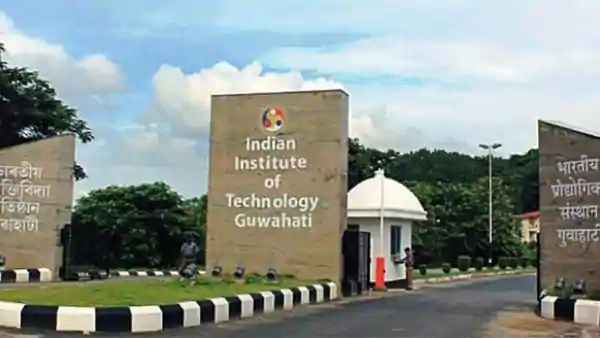
Researchers at the Indian Institute of Technology Guwahati (IIT Guwahati) have developed a low-cost water-treatment system capable of simultaneously removing two of the most troublesome contaminants found in groundwater — arsenic and fluoride.
The new rotating-anode electrocoagulation reactor achieved removal efficiencies of up to 98.2% for arsenate and 91.8% for fluoride within minutes, while preliminary estimates place its operating cost at approximately ₹18 to ₹58 for every 1,000 litres of water treated, depending on the level of contamination.
The research could eventually provide a practical decentralised treatment option for communities where groundwater contains both contaminants, particularly in rural and underserved areas where sophisticated purification infrastructure may not be economically viable.
Tackling Two Contaminants With a Single System
Removing arsenic and fluoride together presents a significant engineering challenge because the two contaminants behave differently during conventional water-treatment processes and can compete for the same removal sites.
This means a treatment method that performs well against arsenic may not necessarily remove fluoride with similar efficiency, potentially requiring several separate purification stages.
The IIT Guwahati team sought to overcome this limitation by redesigning the established process of electrocoagulation, enabling a single reactor to deal with both contaminants simultaneously.
The work was carried out by Prof. Mihir Kumar Purkait and research scholar Mukesh Bharti of IIT Guwahati’s Department of Chemical Engineering. Their findings have been published in the peer-reviewed Chemical Engineering Journal.
How the Rotating-Anode Reactor Works
Electrocoagulation uses an electrical current to generate coagulating material directly inside contaminated water.
In the IIT Guwahati system, the researchers employ a rotating aluminium anode rather than relying on a conventional stationary electrode. When electricity passes through the reactor, aluminium ions released from the electrode react with hydroxide ions in the water to produce microscopic aluminium hydroxide flocs.
These flocs act as contaminant collectors. Arsenic and fluoride become attached to or incorporated within them through processes including adsorption, coagulation and precipitation. The resulting contaminant-containing material can subsequently be separated from the treated water.
The rotation of the electrode is an important part of the innovation.
It continuously improves mixing and mass transfer inside the reactor and exposes a renewed electrode surface to the water. This helps generate the aluminium-based coagulants more efficiently while reducing electrode passivation, in which deposits accumulate on a stationary electrode and gradually reduce its effectiveness.
As a result, the system can achieve rapid contaminant removal without requiring large quantities of externally added treatment chemicals.
Up to 98.2% Arsenate and 91.8% Fluoride Removal
During testing, the reactor achieved up to 98.2% removal of arsenate and 91.8% removal of fluoride.
The team systematically examined several operating variables, including rotational speed, electrical current density, spacing between electrodes and treatment duration, to determine how each affected contaminant removal.
Importantly, the researchers did not test the technology only under highly simplified laboratory conditions. They also examined its performance in water containing naturally occurring ions such as calcium, magnesium, bicarbonate, sulphate and phosphate, which can influence treatment chemistry.
The technology was additionally evaluated using actual groundwater samples collected in Assam, an important step towards determining whether the laboratory process can remain effective under realistic conditions.
Treatment Could Cost ₹18–₹58 Per 1,000 Litres
Cost is one of the most important considerations for any technology intended to address rural drinking-water contamination.
According to IIT Guwahati’s initial demonstration, operating expenditure for the new system could range from approximately ₹18 to ₹58 per 1,000 litres of treated water, with the final cost depending partly on contaminant concentrations and operating conditions.
At the lower end of that range, the technology could make large quantities of treated water available at comparatively modest operating expense, although actual field costs will ultimately depend on factors such as electricity prices, equipment scale, electrode replacement, maintenance and treatment of the residual sludge.
The researchers see potential applications in community drinking-water plants, decentralised rural purification systems and treatment facilities serving regions affected by both arsenic and fluoride contamination.
The underlying process could also be incorporated alongside other technologies such as adsorption systems and membrane filtration where more extensive treatment is required.
Builds on IIT Guwahati’s Water-Treatment Research
The new reactor is part of a wider body of work at IIT Guwahati aimed at developing affordable technologies for groundwater purification.
Earlier in February 2026, researchers from the institute demonstrated another rotating-electrode electrocoagulation system capable of removing approximately 99% of arsenic from contaminated groundwater. That system used a rotating iron electrode and was estimated to treat 1,000 litres for roughly ₹8–₹9 under optimised laboratory conditions.
IIT Guwahati has also previously developed a community-scale system targeting fluoride and iron, capable of treating around 20,000 litres per day. That technology was demonstrated under real-world conditions and installed as a pilot project at Changsari in Assam.
The latest research goes a significant step further by attempting to solve the more difficult problem of removing arsenic and fluoride simultaneously within the same electrochemical reactor.
Why Arsenic and Fluoride Removal Is Important
Groundwater is a primary source of drinking water for millions of Indian households. In several regions, however, naturally occurring geological processes can introduce arsenic or excessive fluoride into underground aquifers.
Long-term consumption of arsenic-contaminated water can cause serious health consequences, while prolonged exposure to excessive fluoride can result in dental and skeletal fluorosis.
The challenge becomes particularly difficult when both contaminants occur together because treatment infrastructure must remain reliable, inexpensive and simple enough to operate outside major urban water-treatment plants.
A compact electrocoagulation system requiring relatively modest electrical input could therefore be especially useful for village-level or decentralised installations, provided its laboratory performance can be reproduced reliably at larger scales.
Pilot-Scale Continuous System Is the Next Step
The IIT Guwahati technology is not yet a finished commercial drinking-water plant. The present work establishes the effectiveness of the reactor and provides the engineering basis for scaling it further.
The researchers are now planning a pilot-scale continuous-flow reactor, which would allow contaminated groundwater to be treated continuously rather than in laboratory-scale batches. This phase will be crucial for evaluating throughput, long-term electrode performance, operating costs and maintenance requirements under field conditions.
Future versions are also expected to incorporate sensor-based automated controls capable of continuously monitoring parameters such as pH, conductivity, electrical current and electrode rotational speed.
Such automation could allow the reactor to adjust its operation according to changing groundwater conditions while reducing the need for constant technical supervision — an important consideration for deployment in remote areas.
Towards Decentralised Safe Drinking Water
The significance of the IIT Guwahati development lies not only in its high removal efficiency but in the attempt to combine rapid treatment, simultaneous contaminant removal and relatively low operating costs within one system.
For communities affected by groundwater contamination, technologies often need to satisfy a very different set of requirements from large municipal treatment plants. They must be affordable, relatively simple to maintain, capable of handling variations in water chemistry and suitable for decentralised operation.
The rotating-anode electrocoagulation reactor is now moving toward that next stage of development.
If pilot-scale trials confirm the laboratory results, the technology could eventually provide India with another indigenous option for addressing one of the country’s persistent drinking-water challenges — making groundwater containing both arsenic and fluoride safer through a single, scalable treatment process.
Research publication: Chemical Engineering Journal, DOI: 10.1016/j.cej.2026.178707.
You may also like
-
IISc Scientists Show How Strong Magnetic Fields Could Allow White Dwarfs to Exceed Chandrasekhar Limit
-
IIT Madras to Launch Global Mission to Map 100 Human Brains in 3D
-
3,898 Indian Scientists Feature in 2026 Global Top 2% Research Database; IISc Leads Indian Institutions
-
New Metal-free Porous Material can Help Produce Affordable Clean Energy
-
A Decade of Cosmic Flickering Reveals New Clues About A Rare Giant Binary Black Hole System
