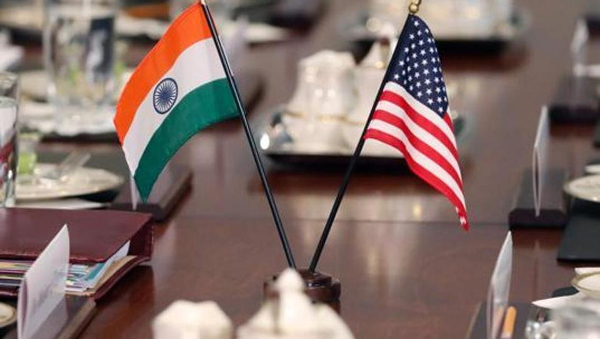
Around 350 soldiers from each country, or approximately 700 personnel in total, are expected to participate in the three-week exercise. Yudh Abhyas is the principal annual bilateral Army exercise between India and the United States and has been conducted since 2004. The US military has already established its official Yudh Abhyas 2026 information page, describing the exercise as a key platform for improving interoperability between the two armies.
The Uttarakhand component will take place around Auli, a high-altitude region situated at roughly 2,500 metres above sea level and about 95 km from the LAC. Indian and American troops are expected to practise mountain warfare, infantry manoeuvres, high-altitude logistics and air-mobile operations under conditions similar to those faced by forces deployed along India’s northern frontier.
The location gives the exercise particular strategic significance, but Yudh Abhyas should not be characterised as an exercise directed specifically against China. India and the United States have conducted the bilateral series for more than two decades, alternating training between the two countries and regularly using demanding mountain, desert and cold-weather environments.
Apache Helicopters to Expand the Exercise
One of the notable features reported for Yudh Abhyas 2026 is the planned participation of AH-64 Apache attack helicopters, which would significantly expand the air-ground component of the exercise. Reports indicate that this year’s drills will place greater emphasis on combined-arms operations, precision engagement and coordination between ground forces and aviation assets.
The Apache’s participation would allow troops to practise procedures associated with close air support, target designation and coordinated battlefield manoeuvre. India operates AH-64E Apaches in both the Indian Air Force and Indian Army, with the Army’s own six-helicopter fleet now based in Rajasthan.
The inclusion of aviation assets is particularly relevant because modern land warfare increasingly depends on the rapid exchange of targeting information between infantry, artillery, drones and attack helicopters.
Desert Warfare at Mahajan
The second major component of Yudh Abhyas 2026 will take place at the Mahajan Field Firing Range in Rajasthan, one of India’s largest military training areas.
Unlike the mountainous environment of Auli, Mahajan provides extensive open terrain for live-fire exercises and larger combined-arms manoeuvres. Participating forces are expected to practise artillery engagements, mechanised operations and coordination between ground and aviation elements.
Recent reporting also indicates that Indian systems such as the Pinaka multi-barrel rocket launcher and K9 Vajra self-propelled howitzer may participate in the desert phase, while the US side could bring the HIMARS rocket artillery system. These specific equipment deployments have been reported but have not yet been confirmed through a detailed Indian Ministry of Defence release for the 2026 exercise.
Training in both Rajasthan and Uttarakhand gives the two armies the opportunity to shift rapidly between desert and Himalayan warfare scenarios during the same exercise.
Building on Alaska 2025
The previous edition of Yudh Abhyas was conducted at Fort Wainwright in Alaska from September 1 to 14, 2025. Indian troops from the Madras Regiment trained alongside the US Army’s 1st Battalion, 5th Infantry Regiment of the 11th Airborne Division.
That exercise included heliborne operations, unmanned aerial systems, mountain warfare, casualty evacuation, artillery, aviation and electronic warfare. Specialist groups also worked on counter-UAS operations, communications, information warfare and logistics.
Returning the exercise to India in 2026 allows both armies to continue high-altitude training while adding the very different desert environment of Rajasthan.
Auli Has Hosted Yudh Abhyas Before
This will not be the first time India and the United States have trained at Auli near the LAC.
The two armies conducted Yudh Abhyas 2022 in the same Uttarakhand region, where troops trained in high-altitude warfare and humanitarian assistance operations. The location drew considerable international attention at the time because of its proximity to the India-China frontier.
The return to Auli in 2026 shows that high-altitude warfare remains an important component of India-US military cooperation.
Mountain combat places unusual demands on troops and equipment. Reduced oxygen affects personnel and engines, while steep terrain complicates logistics, casualty evacuation, communications and the movement of heavy weapons. Training alongside Indian forces gives US troops experience in an environment in which the Indian Army possesses decades of operational expertise.
Exercise Comes Amid Expanding India-US Defence Cooperation
Yudh Abhyas has grown substantially since its launch in 2004. Earlier editions concentrated heavily on counter-insurgency and peacekeeping operations, while recent exercises increasingly include drones, electronic warfare, long-range fires, aviation and conventional high-intensity combat scenarios.
The expansion reflects the broader defence relationship between New Delhi and Washington. India and the United States now cooperate across land, maritime, air, space and emerging-technology domains, while their armed forces conduct several bilateral and multilateral exercises every year.
Yudh Abhyas 2026 will therefore be closely watched not simply because part of the exercise takes place near the China border, but because of the increasingly sophisticated capabilities being integrated into the training.
With roughly 700 troops expected to operate across both high-altitude Himalayan terrain and the Rajasthan desert, the September exercise is set to become one of the most complex editions of Yudh Abhyas yet, testing how effectively Indian and American forces can coordinate infantry, artillery, aviation and precision-strike capabilities across dramatically different battlefields.
You may also like
-
Indian Army Special Forces Depart for Indonesia for Exercise Garuda Shakti 2026
-
India Strengthens Trade Ties with Netherlands as Piyush Goyal Visits Port of Rotterdam
-
India to Train 600 Nigerian Army Soldiers in Specialised Jungle and Mountain Warfare
-
India and Russia Strengthen Parliamentary Diplomacy as Om Birla Meets State Duma Chairman Vyacheslav Volodin
-
India Seeks South Korean Shipbuilding Partnerships as Sarbananda Sonowal Begins Four-Day Visit to Busan
