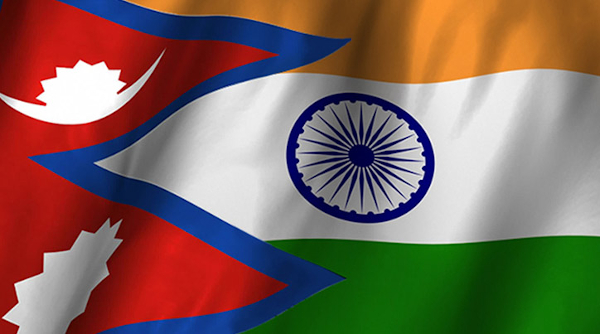
India and Nepal have opened a new round of high-level discussions on managing their uniquely open border, with the 14th meeting of the India-Nepal Joint Working Group on Border Management beginning in Dehradun, Uttarakhand, on August 20, 2026.
The two-day meeting is focusing on border security, infrastructure development and other issues of mutual interest, continuing an institutional dialogue that has become increasingly important as the two neighbours seek to keep their border open for legitimate movement while preventing its misuse for criminal activities.
The talks come at a time when India and Nepal are expanding physical connectivity through roads, railways and Integrated Check Posts while simultaneously strengthening cooperation between their security and law-enforcement institutions.
An Open Border That Requires Close Coordination
The India-Nepal border is unlike most international frontiers.
Citizens of India and Nepal enjoy extensive freedom of movement across the boundary under the longstanding framework of bilateral relations. The open border supports family ties, employment, pilgrimage, tourism and commerce and remains one of the defining features of relations between the two countries.
The same openness, however, requires close coordination between security agencies to prevent cross-border crime, narcotics trafficking, smuggling and other illegal activities.
India’s Ministry of Home Affairs has long used mechanisms such as the Joint Working Group on Border Management, Home Secretary-level talks and Border District Coordination Committees to address these challenges jointly with Nepal.
The Indian Embassy in Kathmandu says the two countries cooperate closely in countering narcotics trafficking, cross-border crime and money laundering, alongside training and capacity-building for security agencies.
14th Meeting Builds on Pokhara Discussions
The Dehradun meeting follows the 13th Joint Working Group meeting, held in Pokhara, Nepal, on March 27-28, 2025.
That meeting provides a useful indication of the issues covered by the bilateral border-management mechanism.
India and Nepal reviewed progress on the repair and maintenance of border pillars and discussed ways to tackle trans-border criminal activities.
The two sides also examined strengthening border infrastructure, particularly:
- Integrated Check Posts
- roads
- railway networks
- security-related institutions
- disaster-risk reduction and management
They also reviewed the functioning of the Border District Coordination Committees, which allow authorities on both sides of the frontier to address problems at the local level.
India had invited Nepal to hold the next meeting in India, an invitation now realised with the 14th round in Dehradun.
Border Infrastructure Is Becoming as Important as Border Security
One of the important changes in India-Nepal border management is the increasing emphasis on infrastructure.
Modern border management is not limited to deploying security personnel. It also requires efficient customs facilities, roads, railways and organised crossing points that allow legitimate trade and passenger traffic to move quickly.
Integrated Check Posts are particularly important because they bring immigration, customs, security and cargo-handling facilities together at major border crossings.
Better infrastructure can serve two purposes simultaneously. It can facilitate trade and travel while allowing authorities to monitor movement more effectively.
The previous JWG therefore specifically identified ICPs, roads and railway networks as priorities.
Cross-Border Rail Connectivity Is Expanding
The border-management discussions are taking place alongside a broader expansion of railway connectivity between India and Nepal.
In June 2026, the two countries reviewed the ongoing Jaynagar-Bijalpura-Bardibas and Jogbani-Biratnagar broad-gauge railway projects.
Officials also discussed the Standard Operating Procedures for passenger services on the Janakpur-Ayodhya section, the Final Location Survey for the proposed Raxaul-Kathmandu broad-gauge railway, and possibilities for additional rail links.
These projects demonstrate why security and infrastructure increasingly need to be considered together.
More cross-border roads and railway lines can significantly increase economic activity and people-to-people contact, but growing traffic also requires better coordination between customs, immigration, police and border-security agencies.
New Legal Framework Strengthens Fight Against Cross-Border Crime
A significant development has taken place since the previous JWG meeting.
During the March 2025 discussions, India and Nepal were still reviewing progress towards concluding a Mutual Legal Assistance agreement in criminal matters.
That process has since advanced substantially.
India and Nepal signed the Mutual Legal Assistance Agreement in Criminal Matters, and by June 2026 both sides had completed the internal procedures required for it to enter into force.
The agreement creates an institutional legal framework to strengthen cooperation in investigations, prosecutions and judicial proceedings involving cross-border crimes.
This gives law-enforcement agencies another mechanism beyond physical border surveillance.
A person, financial transaction, document or criminal network involved in activity spanning both countries can require evidence and legal cooperation from authorities on both sides. Formal mutual legal assistance can make those investigations more effective.
Local Coordination Remains Essential
National-level agreements alone cannot manage such an extensively interconnected border.
This is why the Border District Coordination Committee mechanism remains important.
District authorities on both sides can use these forums to address problems that require rapid local coordination rather than lengthy diplomatic processes.
Such issues may include illegal movement, smuggling, local security incidents, disaster response and problems affecting legitimate cross-border travel.
The JWG sits above this local structure and provides an opportunity for the two governments to review how effectively those mechanisms are working.
Disaster Management Is Also Part of Border Cooperation
The India-Nepal frontier is not merely a security space. It crosses a region exposed to floods, earthquakes, landslides and other natural disasters.
The 13th JWG therefore included disaster-risk reduction and management among its areas of discussion.
This is especially relevant because rivers flowing from Nepal into India can produce major downstream effects during the monsoon.
The two countries already maintain separate institutional mechanisms dealing with water resources and flood forecasting. Cooperation between security and local authorities can become critical when natural disasters disrupt border roads, bridges and communities.
Border management therefore involves both preventing illegal activity and ensuring that legitimate movement and emergency assistance can continue during crises.
Security Cooperation Forms Part of a Much Larger Relationship
The Dehradun meeting should also be viewed within the wider India-Nepal relationship.
The Indian Embassy in Kathmandu says the two countries maintain more than 40 bilateral institutional mechanisms, covering border management, security, trade, energy, railways, water resources and other areas.
External Affairs Minister S. Jaishankar described the relationship in June 2026 as one built on strong people-to-people connections, cross-border links and shared cultural traditions. He also specifically noted that India and Nepal cooperate closely to maintain security along their long and uniquely open border.
The economic relationship is simultaneously becoming more interconnected through electricity trade, railway links, digital payments and infrastructure development.
As these connections expand, efficient border management becomes even more important.
Balancing Openness with Security
The central challenge facing India and Nepal is unusual: how to improve security without undermining the openness that gives the bilateral relationship much of its character.
A highly restrictive border could damage trade, family connections and traditional mobility. An inadequately managed border, on the other hand, could be exploited by criminal networks.
The Joint Working Group provides a mechanism for finding that balance.
By combining security coordination with better roads, railways, Integrated Check Posts, legal cooperation and local-level institutional links, the two governments are gradually moving towards a more integrated approach to border management.
The 14th meeting in Dehradun therefore represents more than a routine security dialogue. It forms part of a broader effort to make the India-Nepal frontier safer, better connected and more efficient while preserving the extraordinary movement of people and commerce that has historically linked the two neighbours.
You may also like
-
India and Italy Hold First Maritime Security Dialogue in Rome, Strengthen Strategic Maritime Cooperation
-
India and Azerbaijan Agree to Strengthen Security, Trade, Energy and Economic Cooperation
-
Jaishankar Meets Azerbaijan President Ilham Aliyev in Baku, Discusses Trade, Technology and Strategic Cooperation
-
Piyush Goyal Holds High-Level Talks in Berlin to Strengthen India–Germany Trade, Investment and Industrial Cooperation
-
Indian Navy to Host Indo-Pacific Regional Dialogue 2026 with Experts from 18 Countries on Maritime Science and Technology
