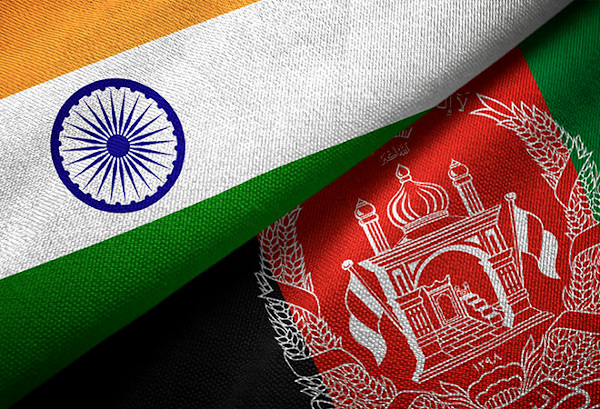
India has delivered another consignment of medicines and medical consumables to a government hospital in Kabul, continuing a sustained programme of humanitarian healthcare assistance to the people of Afghanistan.
The latest shipment reached Kabul on August 20, 2026, with Ministry of External Affairs spokesperson Randhir Jaiswal reaffirming India’s commitment to supporting the Afghan people and strengthening healthcare services in the country.
The quantity and value of the latest consignment have not been publicly disclosed. However, its significance lies in the continuity of India’s assistance. Over the past several years, New Delhi has repeatedly supplied Afghanistan with essential medicines, vaccines, cancer drugs, immunisation materials and other medical supplies while maintaining humanitarian and development engagement with the Afghan population.
Healthcare Remains a Major Pillar of India’s Afghanistan Assistance
Health has emerged as one of the most consistent areas of India’s engagement with Afghanistan.
The latest delivery follows several significant medical consignments sent during 2025 and 2026, including medicines for general healthcare, specialised cancer drugs and supplies supporting Afghanistan’s childhood immunisation programme.
In November 2025, India delivered 73 tonnes of life-saving medicines, vaccines and essential supplements to Kabul to address urgent medical requirements. The External Affairs Ministry said at the time that the assistance was intended to strengthen Afghanistan’s healthcare efforts.
That consignment was followed by additional specialised assistance.
In January 2026, India supplied 7.5 tonnes of life-saving cancer medicines to Kabul for patients requiring oncology treatment.
Such specialised assistance represents a step beyond basic humanitarian relief. Cancer medicines are expensive, treatment-dependent products that need reliable supply chains. Their inclusion demonstrates that India’s medical engagement has increasingly covered both emergency requirements and specific healthcare needs.
India Supports Afghanistan’s Child Immunisation Programme
Vaccination has become another important component of India’s health partnership with Afghanistan.
On May 22, 2026, India delivered 20 tonnes of critical dry materials for BCG and Tetanus-Diphtheria vaccines to Kabul to strengthen Afghanistan’s Child Immunisation Programme.
The assistance followed an earlier Indian delivery of 13 tonnes of BCG vaccines and associated materials in April 2026. The MEA said additional consignments were also being prepared.
BCG vaccination is particularly important for protecting children against severe forms of tuberculosis, while tetanus and diphtheria vaccines remain fundamental components of routine childhood immunisation.
Supporting these programmes therefore allows Indian assistance to reach beyond hospitals and contribute to preventive healthcare across the country.
India has also supplied Afghanistan with more than 63,700 doses of influenza and meningitis vaccines, further expanding the range of public-health assistance provided.
More Than 300 Tonnes of Medical Assistance Since 2021
India’s healthcare support to Afghanistan predates the latest series of consignments.
Official MEA figures show that, following the political changes in Afghanistan in August 2021, India continued sending humanitarian assistance directly for the benefit of the Afghan people.
By 2024, India had supplied approximately 300 tonnes of medicines and medical and surgical items, alongside 50,000 metric tonnes of wheat.
The subsequent deliveries of medicines, vaccines and specialised supplies mean that India’s total medical assistance has continued to rise since that figure was published.
India’s approach has consistently emphasised humanitarian needs, particularly food security, healthcare, disaster relief and assistance for vulnerable populations.
Humanitarian Assistance Continues During Disasters
Medical assistance has also formed part of India’s response to repeated natural disasters affecting Afghanistan.
After floods and earthquakes struck the country in early 2026, India dispatched Humanitarian Assistance and Disaster Relief supplies including hygiene kits, kitchen sets, sleeping bags, plastic sheets and tarpaulins.
The MEA said India remained committed to extending humanitarian support to the Afghan people during the crisis.
India has used both air and land-sea routes to deliver assistance.
Following an earlier earthquake, three container loads of Indian relief supplies reached Kabul through Chabahar Port, carrying food, water purification equipment, shelter materials, blankets, medicines and other medical supplies.
This use of Chabahar also demonstrates the port’s importance as a connectivity route for humanitarian supplies destined for landlocked Afghanistan.
Healthcare Included in Formal India-Afghanistan Dialogue
Humanitarian assistance is no longer being handled solely through individual emergency consignments.
At the fourth India-Afghanistan Joint Committee Meeting in New Delhi on July 9, 2026, officials from both sides reviewed cooperation across humanitarian assistance, healthcare, development partnership, food security, education, capacity building, trade, connectivity and sports.
India reiterated its commitment to supporting the welfare and development needs of the Afghan people, while the Afghan side expressed appreciation for India’s continued assistance.
The inclusion of healthcare in this structured bilateral dialogue suggests that medical cooperation will remain an important component of India’s Afghanistan policy.
Assistance Focused on the Afghan People
A notable feature of India’s approach since 2021 has been its repeated emphasis on assistance to the people of Afghanistan.
The MEA has maintained an Indian technical team in Kabul since 2022 to support humanitarian activities.
This arrangement has allowed India to continue delivering medicines, food and other supplies despite the dramatic political changes that took place in Afghanistan.
Healthcare is particularly suited to this people-centred approach because medicines, vaccines and hospital supplies can directly improve civilian welfare without requiring large-scale political or commercial programmes.
Support Extends to Vulnerable Communities
India’s healthcare-related assistance has also reached vulnerable groups beyond conventional hospital patients.
Through cooperation with the United Nations Office on Drugs and Crime, India supplied materials for Afghan drug-treatment programmes, particularly programmes supporting women.
The assistance included 11,000 units of female hygiene kits, along with baby food, general hygiene materials, blankets, clothing, footwear and medical supplies. These items were distributed through UNODC-supported treatment centres across Afghanistan.
This indicates that India’s humanitarian programme has increasingly been designed around specific public-health needs rather than relying solely on large undifferentiated relief shipments.
Medical Diplomacy Builds on a Long Relationship
India and Afghanistan share extensive historical, cultural and people-to-people connections. Healthcare cooperation has been a particularly durable part of that relationship.
Indian doctors and paramedics have worked in Afghanistan during earlier periods of reconstruction, Afghan medical professionals have received training in India, and Indian assistance has helped construct and equip healthcare facilities.
The humanitarian shipments sent since 2021 continue that legacy under very different political circumstances.
The latest August 20 consignment therefore should not be viewed as an isolated shipment of medicines.
It forms part of a sustained sequence that has included 73 tonnes of medicines and vaccines in November 2025, 7.5 tonnes of cancer drugs in January 2026, BCG and Tetanus-Diphtheria immunisation materials during 2026, disaster-relief supplies and now another delivery of medicines and medical consumables to Kabul.
For Afghanistan, where healthcare facilities continue to face shortages and pressure from humanitarian challenges, such supplies provide practical support to hospitals and public-health programmes.
For India, continued healthcare assistance represents one of the clearest ways to maintain its long-standing relationship with the Afghan people.
The August 20 delivery consequently reinforces a consistent theme in India’s Afghanistan engagement: even as the country’s political landscape has changed, medical assistance, humanitarian support and investment in the welfare of ordinary Afghans have remained continuing elements of India’s presence and partnership.
References
News on AIR – India Delivers 20 Tonnes of Vaccines and Dry Materials to Afghanistan for Child Immunisation Programme
https://newsonair.gov.in/india-delivers-20-tonnes-of-vaccines-and-dry-materials-to-afghanistan-for-child-immunisation-programme/
News on AIR – India Delivers 7.5 Tonnes of Life-Saving Cancer Medicines to Kabul
https://newsonair.gov.in/india-delivers-7-5-tons-of-life-saving-cancer-medicines-to-kabul/
News on AIR – India Sends 73 Tonnes of Medicines and Vaccines to Support Afghanistan’s Healthcare
News on AIR – India Reiterates Commitment to Support Afghanistan During Joint Committee Meeting
https://newsonair.gov.in/india-reiterates-its-commitment-to-support-afghanistan-during-joint-committee-meeting/
Ministry of External Affairs – Annual Report: India’s Humanitarian Assistance to Afghanistan
https://www.mea.gov.in/Images/CPV/140725MEAAnnualReport2024English.pdf
Ministry of External Affairs – India-Afghanistan Development Partnership and Indira Gandhi Institute of Child Health
https://www.mea.gov.in/Uploads/PublicationDocs/30860_India-Afghanistan_Map_Book.pdf
You may also like
-
India and Italy Hold First Maritime Security Dialogue in Rome, Strengthen Strategic Maritime Cooperation
-
India and Azerbaijan Agree to Strengthen Security, Trade, Energy and Economic Cooperation
-
Jaishankar Meets Azerbaijan President Ilham Aliyev in Baku, Discusses Trade, Technology and Strategic Cooperation
-
Piyush Goyal Holds High-Level Talks in Berlin to Strengthen India–Germany Trade, Investment and Industrial Cooperation
-
Indian Navy to Host Indo-Pacific Regional Dialogue 2026 with Experts from 18 Countries on Maritime Science and Technology
