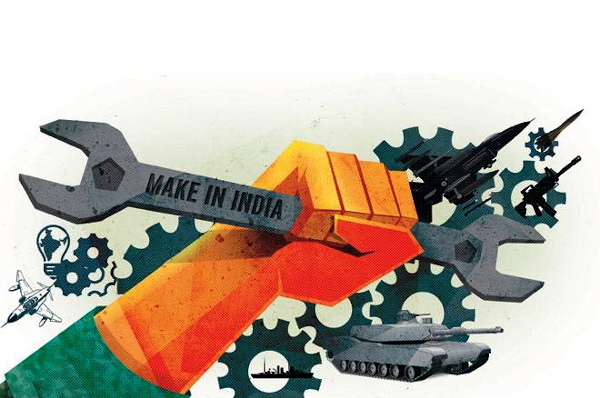
India is strengthening its defence innovation ecosystem through procurement reforms designed to provide emerging technology companies with greater certainty about future orders. The Ministry of Defence has proposed five years of assured procurement for eligible projects developed through the Make and Innovations for Defence Excellence (iDEX) frameworks, addressing one of the major challenges facing Indian defence startups: converting successful prototypes into commercially sustainable products.
Defence Secretary Rajesh Kumar Singh highlighted the government’s approach to supporting indigenous defence technology development during remarks reported on October 24, 2026. He emphasised the importance of helping startups and smaller manufacturers progress beyond research and prototype development towards sustained production and commercial growth.
The proposed provisions form part of the Defence Acquisition Procedure (DAP) 2026, whose draft was released by the Ministry of Defence on February 13, 2026. The reforms seek to simplify procurement, shorten acquisition timelines and increase opportunities for Indian companies developing advanced technologies for the Armed Forces.
Five-Year Procurement Assurance Aims to Support Defence Startups
The proposed five-year assured-order framework addresses a longstanding challenge within India’s defence innovation ecosystem. Developing military technologies often requires substantial investment in research, engineering, testing and certification, while the number of potential customers remains relatively limited.
Unlike businesses supplying conventional consumer products, defence startups frequently develop specialised equipment intended for a small number of institutional buyers. Even after successfully demonstrating a prototype, these companies may face uncertainty about whether their products will receive sufficient orders to support commercial production.
The proposed procurement arrangement seeks to address this gap by offering eligible innovators greater predictability during the initial years following successful development and acceptance of their technologies.
Under the draft DAP 2026 framework, Make and iDEX projects are proposed to incorporate spiral development and five years of assured orders. Spiral development allows technologies to undergo successive improvements based on operational requirements and feedback, rather than relying exclusively on a single development cycle.
The combination of procurement visibility and continued technological improvement is intended to encourage startups to invest in manufacturing capabilities, engineering personnel and product development.
The five-year provision remains part of the proposed acquisition framework and should not be interpreted as an unconditional purchase guarantee for every startup participating in iDEX.
Defence Secretary Highlights Need to Convert Innovation into Production
Defence Secretary Rajesh Kumar Singh has repeatedly emphasised the importance of creating stronger links between defence research, startup innovation and military procurement.
In earlier discussions concerning acquisition reforms, Singh explained that startups often receive support for developing prototypes but subsequently face the challenge of competing for procurement contracts.
He argued that technologies developed in cooperation with the Armed Forces should receive opportunities for repeat orders over a defined period, allowing innovators to recover investments and develop their businesses before wider competition becomes applicable.
This approach recognises that successful technological development does not automatically create a financially sustainable manufacturing enterprise.
A startup may demonstrate an advanced drone, electronic warfare system or autonomous platform but still require additional investment to establish production facilities, improve component sourcing and meet military quality standards.
Providing greater visibility into potential procurement requirements can help companies plan these investments with greater confidence.
Draft Defence Acquisition Procedure 2026 Introduces Major Reforms
The Ministry of Defence released the draft Defence Acquisition Procedure 2026 on February 13, outlining substantial changes to India’s military procurement framework.
The proposed procedure seeks to accelerate acquisitions, strengthen indigenous manufacturing and improve the participation of Indian defence companies.
One significant proposal involves reducing the number of principal procurement categories from five to four while strengthening the emphasis on indigenous design and development.
The draft also proposes increasing the minimum indigenous content requirement under the Buy (Indian–IDDM) category from 50% to 60%, with additional incentives intended to encourage domestic technological capabilities.
Another important change involves introducing procurement procedures for long-term bulk acquisition and relatively low-cost equipment incorporating rapidly evolving technologies.
The proposed framework also includes technology readiness level classifications, revised trial procedures and measures intended to compensate vendors that successfully complete prescribed evaluations.
For defence startups, the inclusion of five-year assured orders under eligible Make and iDEX projects is particularly relevant because it seeks to connect successful product development with longer-term procurement opportunities.
Defence Procurement Manual 2025 Provides a Related Support Mechanism
India’s broader procurement reform programme also includes provisions introduced through the Defence Procurement Manual 2025.
The manual addresses revenue procurement, which includes the acquisition of equipment, supplies and services required for the continuing operations of defence establishments.
During an official address in 2025, Defence Minister Rajnath Singh explained that the new manual provides for assured orders over five years, with the possibility of extending the arrangement for another five years under applicable conditions.
The objective is to provide innovators and manufacturers with greater stability while encouraging continued investment in indigenous defence technologies.
This mechanism is distinct from the proposed provisions under DAP 2026, which concern the capital acquisition framework and the procurement of military equipment.
Together, the two approaches reflect an effort to improve procurement predictability and create a more supportive environment for Indian defence manufacturers.
iDEX Connects Indian Startups with Armed Forces Requirements
The Innovations for Defence Excellence initiative was launched in April 2018 to encourage startups, MSMEs, individual innovators and research institutions to develop technologies addressing the requirements of India’s Armed Forces.
The programme operates through innovation challenges and other mechanisms that identify technological problems and invite Indian enterprises to propose suitable solutions.
Selected innovators receive development support and opportunities to work with defence organisations during prototype development and evaluation.
The initiative covers emerging technologies such as artificial intelligence, unmanned systems, autonomous platforms, cybersecurity, robotics, advanced sensors and communication technologies.
By March 2026, the iDEX ecosystem had engaged 676 startups, MSMEs and innovators, with 551 design and development contracts signed.
These figures demonstrate the expansion of India’s defence innovation network and the growing participation of smaller technology enterprises in programmes associated with military requirements.
The proposed procurement reforms seek to strengthen the next stage of this process by creating clearer pathways between successful technological development and production orders.
Defence Startup Procurement Approvals Exceed ₹2,400 Crore
The Ministry of Defence has reported substantial progress in creating procurement opportunities for startups and smaller manufacturing enterprises.
In an official statement issued in October 2026, Defence Minister Rajnath Singh said the Ministry had approved procurement of goods and services worth more than ₹2,400 crore from startups and MSMEs.
He also stated that projects exceeding ₹1,500 crore had been sanctioned for the development of new defence technologies.
These figures provide an indication of the government’s efforts to support indigenous innovation through development programmes and procurement decisions.
The distinction between development funding, procurement approvals and completed contracts is important. Financial assistance for prototype development supports research and engineering activities, while procurement approvals represent subsequent steps towards acquiring equipment or services.
The expansion of both forms of support is intended to help Indian companies progress from early-stage innovation towards the delivery of operational technologies.
Five-Year Orders Could Help Startups Build Manufacturing Capacity
One of the most significant challenges facing defence technology startups is the transition from developing a prototype to manufacturing equipment at scale.
Research and development activities may initially require relatively small teams of engineers and scientists. Commercial production, however, demands additional capabilities in manufacturing, procurement, quality assurance, testing and long-term product support.
Startups must also develop reliable supplier networks and ensure that components meet the technical specifications required for military applications.
Longer-term procurement visibility can improve their ability to undertake these investments.
Companies with a clearer understanding of expected demand may find it easier to plan production facilities, negotiate supply agreements and recruit specialised personnel.
The proposed framework could be especially relevant to enterprises developing drone systems, electronic warfare equipment, surveillance technologies, communication systems and autonomous platforms.
These fields frequently involve rapid technological change, making continued product development and regular improvements important for maintaining operational relevance.
Spiral Development Supports Continuous Technology Improvement
The introduction of spiral development within proposed Make and iDEX procurement arrangements represents another significant aspect of DAP 2026.
Traditional equipment development can involve extended periods of design, testing and evaluation before a product reaches the procurement stage.
Spiral development offers a more iterative approach in which an initial system can undergo successive improvements based on technological advances and operational feedback.
This model can be particularly suitable for software-intensive defence equipment and emerging technologies that evolve rapidly.
Artificial intelligence applications, autonomous navigation systems, drone platforms and electronic warfare equipment may benefit from continued refinements after their initial development.
By linking development processes with procurement planning, the government aims to encourage innovation while maintaining the testing and quality requirements necessary for military equipment.
Such an approach can also strengthen cooperation between defence personnel and Indian technology developers, allowing practical operational experience to inform subsequent product improvements.
DRDO Expands Opportunities for Industry and Academic Research
The Defence Research and Development Organisation is also strengthening cooperation with private industry, startups and academic institutions.
Defence Secretary Rajesh Kumar Singh has previously stated that DRDO earmarks 25% of its research and development budget for collaboration involving industry, startups and academia.
The organisation also works with academic centres of excellence specialising in technologies relevant to national defence requirements.
These initiatives aim to expand the range of institutions participating in indigenous defence research and reduce dependence on a limited number of traditional development organisations.
The Technology Development Fund provides another mechanism for supporting companies undertaking critical defence technology projects.
Government information released in 2026 highlighted the availability of substantial financial assistance for eligible technology development activities.
The combination of research support, industry collaboration and improved procurement pathways is intended to strengthen India’s ability to develop sophisticated defence systems domestically.
Indigenous Defence Startups Strengthen India’s Technology Ecosystem
India’s defence startup ecosystem has expanded substantially since the launch of iDEX in 2018.
According to the Ministry of Defence, the number of defence startups has grown from a few dozen enterprises in 2018 to more than 2,000 by October 2026.
Young companies are increasingly working in areas such as artificial intelligence, drones, robotics, cybersecurity, quantum technologies and autonomous systems.
These businesses contribute specialised expertise that complements the manufacturing capabilities of established defence public sector undertakings and large private companies.
Startups can often concentrate on narrowly defined technological problems, allowing them to develop innovative solutions in specialised areas.
However, translating such innovation into equipment suitable for military use requires extensive engineering, testing, quality assurance and industrial support.
The government’s procurement reforms seek to create conditions in which successful innovators can continue developing their products while establishing sustainable manufacturing operations.
Procurement Reforms Support Atmanirbhar Bharat in Defence
The proposed five-year assured-order provision forms part of India’s broader strategy to strengthen self-reliance in defence technology and manufacturing.
Atmanirbhar Bharat places emphasis on indigenous design, domestic production and the development of Indian intellectual property in critical sectors.
A stronger domestic defence industry can support national security requirements while creating opportunities for skilled employment, advanced manufacturing and technological innovation.
The involvement of startups is particularly important in emerging fields where software, artificial intelligence and specialised electronics play a growing role.
Procurement reforms that connect research and development with operational requirements can help Indian innovators move beyond experimental technologies and participate in the production of equipment required by the Armed Forces.
The growing participation of private manufacturers, MSMEs and technology startups also contributes to a more diversified defence industrial base.
India Strengthens the Path from Defence Innovation to Manufacturing
India’s proposed five-year assured-order framework represents an effort to address one of the most important challenges facing indigenous defence startups: securing sufficient procurement opportunities after successful technological development.
The provisions outlined in draft DAP 2026 aim to strengthen the connection between innovation, evaluation and commercial production. Together with the longer-term procurement mechanisms introduced through DPM 2025, they reflect a broader effort to improve predictability within India’s defence acquisition system.
The expansion of iDEX, increasing procurement approvals for startups and MSMEs, and greater industry participation in defence research provide an important foundation for these reforms.
As India’s defence technology ecosystem continues to expand, effective procurement mechanisms will play a central role in translating indigenous research into dependable military equipment.
The reforms strengthen India’s efforts to build a sustainable defence innovation ecosystem in which startups, established manufacturers, research institutions and the Armed Forces can collaborate on advanced technologies developed within the country.
References
1. Ministry of Defence, Government of India — February 13, 2026.
DAP 2026 Proposes Transformative Leap in India’s Defence Procurement Framework.
Press Information Bureau.
https://www.pib.gov.in/PressReleasePage.aspx?PRID=2227775
2. Ministry of Defence, Government of India — 2025.
Official statement on defence innovation and provisions under the Defence Procurement Manual 2025, including five-year assured orders.
https://www.pib.gov.in/PressReleasePage.aspx?PRID=2175724
3. Ministry of Defence, Government of India — October 2026.
Official statement on defence innovation, startup procurement approvals and the expansion of India’s indigenous defence technology ecosystem.
https://www.pib.gov.in/PressReleseDetailm.aspx?PRID=2323733
4. Ministry of Defence, Government of India — February 2026.
Defence Manufacturing and Innovation: Policy Reforms and Development Initiatives.
https://www.pib.gov.in/FactsheetDetails.aspx?Id=150909
5. Financial Express — October 24, 2026.
India Eyes Scale-Up in Missile Production, Defence Exports.
Reporting on Defence Secretary Rajesh Kumar Singh’s remarks concerning indigenous production and procurement reforms.
https://www.financialexpress.com/business/defence-india-eyes-scale-up-in-missile-production-defence-exports-4368489/
6. Ministry of Defence, Government of India — March 14, 2023.
Indian Army Takes Lead in Awarding First Contract for iDEX Project as per the Revised Procedure.
https://www.pib.gov.in/Pressreleaseshare.aspx?PRID=1906830
You may also like
-
ICAR Scientists Develop Indigenous Protective Gloves for Cotton Farmers, Sign Commercial Manufacturing Agreement
-
BHEL–Coal India Joint Venture Begins Construction of ₹25,016 Crore Indigenous Coal Gasification Project in Odisha
-
Zen Technologies Introduces Indigenous Hyper-Strike Falcon AI-Guided Counter-Drone Interceptor
-
L&T and Germany’s SCHOTTEL Expand Partnership for Controllable Pitch Propeller Systems in Indian Shipbuilding
-
India to Train 60,000 Civil Defence Volunteers Across 12 States and UTs with Indian Army Support
