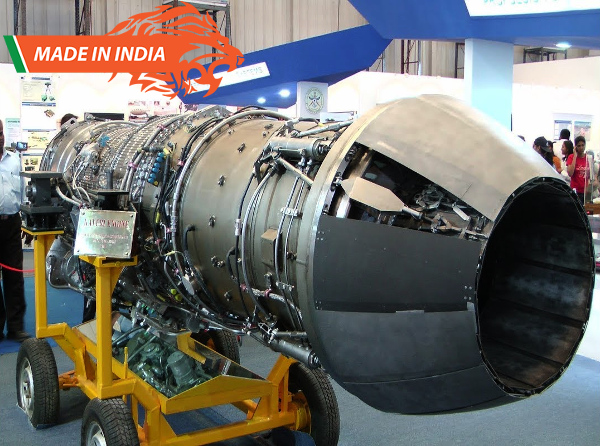
India’s decades-long effort to master one of the most difficult technologies in military aviation is gathering momentum again, with the Kaveri aero-engine programme moving towards a new generation of development popularly described as “Kaveri 2.0.” The emerging engine is intended to build upon technologies developed through DRDO’s original Kaveri programme and the more recent Kaveri Derivative Engine, while pursuing the substantially higher thrust required for a modern fighter aircraft.
However, an important distinction needs to be made at the outset. “Kaveri 2.0” is currently used widely in defence reporting to describe the proposed next-generation fighter-capable evolution of Kaveri; the Government and DRDO have not yet publicly released a final technical specification under that exact programme name. Recent reports indicate that GTRE is examining a new engine core in approximately the 90-kN afterburning thrust class.
What is beyond doubt is that the Kaveri programme itself has re-entered an important phase. On February 16, 2026, Defence Minister Rajnath Singh visited DRDO’s Gas Turbine Research Establishment in Bengaluru, reviewed India’s indigenous military gas-turbine programmes and personally witnessed a full-afterburner test of the Kaveri engine. The Ministry of Defence described indigenous aero-engine capability as a central requirement for India’s defence self-reliance.
From the Original Kaveri to Kaveri 2.0
The original Kaveri began with an extraordinarily ambitious objective. The Cabinet Committee on Security sanctioned the programme in 1989, with GTRE tasked with developing an indigenous afterburning turbofan capable of powering what would eventually become the Light Combat Aircraft Tejas.
Developing a fighter engine, however, proved considerably harder than designing many of the other systems that went into the Tejas.
Modern combat turbofans operate under extreme thermal and mechanical conditions. Compressor stages must move huge quantities of air while maintaining stability across a fighter’s flight envelope. Combustion has to remain stable during violent manoeuvres. Turbine blades must survive temperatures that can exceed the melting point of the materials from which they are manufactured, requiring advanced cooling techniques, coatings and sophisticated superalloys. The engine must achieve all this while remaining exceptionally light, compact and reliable.
India was trying to master several of these technologies simultaneously.
The Kaveri consequently failed to achieve the thrust-to-weight performance required by the increasingly capable Tejas configuration. The government subsequently acknowledged that the LCA required a higher-thrust engine than the existing Kaveri architecture could provide, and the fighter eventually entered service powered by imported GE engines.
But the Kaveri programme was never technologically meaningless.
By 2021, nine complete prototype engines and four core engines had been built, while the programme had accumulated 3,217 hours of engine testing. Kaveri underwent altitude tests and was also flown aboard an Il-76 Flying Test Bed, making it the first indigenously developed Indian military gas-turbine engine to undergo such flight testing.
The technology base created during this effort is now becoming the foundation for India’s next attempt.
The Dry Kaveri Comes First
Before a higher-powered fighter engine emerges, GTRE is concentrating on a more immediately achievable version of the technology — the Kaveri Derivative Engine, or KDE.
Unlike a fighter engine, the KDE is being developed without an afterburner. This so-called “dry” Kaveri is intended as the powerplant for India’s indigenous unmanned combat aircraft programme.
The Ministry of Defence confirmed in July 2025 that the Kaveri Derivative Engine is intended for a remotely piloted strike aircraft or indigenous UCAV. Two separate development projects have been sanctioned: a ₹472.42-crore Flightworthy Kaveri Dry Engine Development project and a ₹251.17-crore Technology Demonstration of Kaveri Derivative Dry Engine project.
DRDO’s current propulsion-technology roadmap similarly lists a flightworthy aero-engine for an Unmanned Combat Air Vehicle as an active GTRE development task.
This is significant because the dry engine gives India an opportunity to take the Kaveri family through the full cycle of development, certification, aircraft integration and operational use without immediately demanding the extreme thrust-to-weight ratio required by a frontline fighter.
Success here would provide much of the engineering confidence required for the next step.
Kaveri 2.0 Would Need a New Core
The proposed Kaveri 2.0 should consequently not be understood as simply attaching a more powerful afterburner to the existing engine.
Recent reporting indicates that GTRE’s concept involves a substantially redesigned or new-generation core, with the objective of moving into approximately the 90-kN afterburning thrust category. Reported targets generally place dry thrust in the region of 55–60 kN, although GTRE has not publicly frozen these figures in an official specification.
That distinction is critical.
An afterburner can substantially increase an engine’s thrust by injecting additional fuel into the exhaust stream, but it cannot compensate indefinitely for an underperforming core. For Kaveri 2.0 to become a credible fighter engine, India must increase the amount of useful work generated by the compressor, combustor and turbine while controlling engine weight, fuel consumption and turbine temperature.
The core is therefore the real battlefield.
A successful new Kaveri will require progress in high-pressure compressor efficiency, turbine inlet temperature, single-crystal turbine blades, advanced thermal-barrier coatings, high-temperature nickel-based superalloys, precision manufacturing, cooling technology and digital engine control.
India is steadily developing several of these capabilities.
India Is Beginning to Master the Hot Section
One of the most important signs of progress is emerging from India’s materials industry.
In 2025, the Ministry of Defence confirmed that PTC Industries had received a Letter of Technical Acceptance for indigenous titanium castings for the Kaveri Derivative Engine KDE-2, along with an order associated with the manufacture of single-crystal ready-to-fit turbine blades for the engine programme.
Single-crystal turbine blades are among the most demanding components in a modern jet engine.
Conventional metal contains numerous microscopic crystal boundaries. At the extremely high temperatures and centrifugal loads experienced inside a turbine, those boundaries can become points of weakness. Manufacturing a turbine blade as essentially a single crystal greatly improves its ability to withstand extreme temperature and stress.
Only possessing an engine design is therefore insufficient. India must also possess the metallurgical and manufacturing ecosystem capable of repeatedly producing such components to aerospace tolerances.
This is why the industrial developments surrounding Kaveri may ultimately be almost as important as the engine itself.
The Kabini Core Remains a Technology Test Bed
DRDO has also retained the Kabini core engine, comprising the Kaveri’s high-pressure compressor, combustor and high-pressure turbine, as a platform for studying high-pressure spool behaviour and demonstrating hot-section technologies.
This allows GTRE to test technologies independently of a complete flight engine.
The Kaveri programme has therefore evolved from a single attempt to produce a Tejas engine into a much broader technology-development ecosystem. Existing engines and cores can be used to validate new compressor designs, combustors, turbine materials, controls and manufacturing processes before those technologies migrate into future propulsion systems.
That is an important difference between the Kaveri programme of the 1990s and the emerging effort today.
Could Kaveri 2.0 Power the Tejas Mk1A?
This is perhaps the most interesting possibility.
The Tejas Mk1A is currently committed to the GE F404-IN20, and India has already contracted further engines for its expanded aircraft orders. In September 2025, the Ministry of Defence ordered another 97 Tejas Mk1As, while HAL subsequently signed an agreement with GE for 113 additional F404-IN20 engines, with deliveries scheduled between 2027 and 2032.
There is therefore no immediate plan to replace the F404 on production Tejas Mk1As with Kaveri 2.0.
Nevertheless, an indigenous engine in roughly the 90-kN category could potentially become relevant much later in the Tejas Mk1A’s service life.
If Kaveri 2.0 matures during the 2030s, it could theoretically be evaluated as an indigenous powerplant for future variants, technology demonstrators or a major mid-life re-engining programme. Recent reports indicate that this is one of the roles under consideration within GTRE’s longer-term thinking.
Such an integration would still require extensive testing. Matching thrust alone is not enough. The engine must also satisfy requirements involving dimensions, mass, airflow, mounting points, centre of gravity, accessory systems, electrical interfaces, fuel supply, cooling and flight-control integration.
Kaveri 2.0 should therefore be viewed as a potential future alternative, rather than as a replacement already selected for the Tejas Mk1A.
Kaveri 2.0 Is Not the AMCA 120-kN Engine
An equally important misconception concerns India’s Advanced Medium Combat Aircraft.
Kaveri 2.0 and the proposed high-thrust engine for later versions of AMCA are best understood as separate programmes in different thrust categories.
The Kaveri-derived fighter engine being reported is centred around the approximately 90-kN class. India’s longer-term AMCA requirement calls for a much more powerful next-generation engine, generally discussed in the roughly 110–130-kN class, requiring technologies and performance considerably beyond the original Kaveri architecture. Recent reporting specifically describes the two propulsion efforts as separate tracks.
The Government has previously stated that technologies developed through Kaveri would contribute to future indigenous engines for aircraft including LCA variants and AMCA, while India has simultaneously explored cooperation with international engine manufacturers.
Kaveri therefore remains extremely valuable to AMCA even if a Kaveri-derived engine never directly powers the aircraft.
The compressor aerodynamics, combustor technology, single-crystal blades, coatings, digital controls, testing infrastructure and engineering manpower created through Kaveri can migrate into the next engine.
February 2026 Was an Important Signal
The full-afterburner Kaveri test witnessed by Defence Minister Rajnath Singh in February 2026 deserves particular attention.
It does not mean that Kaveri has suddenly become a certified fighter engine. Nor does it mean that Tejas is about to abandon its GE powerplants.
What it demonstrates is that GTRE continues to exercise and develop the complete afterburning engine architecture, rather than limiting Kaveri permanently to a non-afterburning UCAV derivative.
That creates a technological bridge between the original Kaveri, the flightworthy dry Kaveri and whatever new fighter-class engine ultimately emerges.
The timing is also significant because India is simultaneously expanding domestic capability in several adjacent propulsion technologies.
In July 2026, GTRE successfully developed India’s first indigenous 350-kg-thrust-class expendable turbojet engine, manufactured with industry partner Azad Engineering. The Ministry of Defence specifically highlighted the precision engineering and manufacturing capability required to realise such an engine.
India is therefore no longer pursuing one isolated jet-engine programme. A broader propulsion ecosystem is beginning to take shape.
Why Fighter Engines Are India’s Final Major Aerospace Dependency
India can today design combat aircraft, build sophisticated AESA radars, produce long-range air-to-air missiles, manufacture electronic-warfare suites and develop precision-guided weapons.
The fighter engine remains the major exception.
Tejas Mk1 and Mk1A depend upon the American GE F404. Tejas Mk2 is planned around the more powerful GE F414, while the initial AMCA configuration is also expected to use a foreign-origin powerplant before a more powerful indigenous engine becomes available.
That dependence creates vulnerabilities extending well beyond the purchase price of the engine.
Without sovereign propulsion capability, aircraft production schedules remain exposed to overseas supply chains. Major engine modifications require cooperation from the original manufacturer, wartime replacement stocks must be maintained, and the country never possesses complete freedom to evolve its aircraft independently.
This explains why mastering fighter-engine technology carries strategic importance disproportionate to the engine itself.
The Original Kaveri Was Not Entirely a Failure
It is tempting to describe the original Kaveri programme simply as a failed attempt to power Tejas.
That interpretation overlooks what India was actually attempting.
When the programme began, India lacked much of the infrastructure, materials technology, testing facilities and industrial expertise required to create a modern fighter turbofan. Government reviews themselves identified shortages in critical materials, specialised manufacturing facilities, test infrastructure and experienced manpower among the principal reasons for delays.
Despite those limitations, Kaveri eventually produced multiple complete engines, accumulated thousands of test hours, completed altitude testing and flew aboard an airborne test bed. It also produced an indigenous Full Authority Digital Engine Control system, while numerous materials and technologies developed during the programme migrated into other projects.
The programme failed in its original immediate objective — powering the operational Tejas — but succeeded in creating a national aero-engine knowledge base that India previously did not possess.
Kaveri 2.0 is an opportunity to convert that accumulated knowledge into an operational fighter engine.
From Kaveri to a Family of Indian Engines
The most promising way to understand India’s propulsion strategy is therefore not as a single engine chasing a single aircraft.
A technological family is gradually emerging.
The Kaveri Derivative Engine can provide propulsion for a stealth unmanned combat aircraft. Kaveri technologies and a new core could form the basis of a 90-kN-class Kaveri 2.0. Technologies mastered through both programmes can subsequently feed India’s substantially more ambitious high-thrust engine for next-generation combat aircraft.
The common technologies — compressors, combustors, turbines, bearings, control systems, coatings, advanced materials and precision manufacturing — accumulate from one programme to the next.
This is how mature aero-engine industries are ultimately created.
Kaveri 2.0 Could Be More Important Than the Aircraft It Eventually Powers
Whether Kaveri 2.0 ultimately enters service aboard Tejas, powers another future aircraft or remains a technology bridge towards India’s next engine is still impossible to state with certainty.
Its larger importance lies elsewhere.
For India, the decisive breakthrough will come when an Indian fighter aircraft can be designed around an engine whose core technology, intellectual property, manufacturing supply chain, upgrades and lifecycle support are controlled within the country.
The February 2026 full-afterburner test, the government-funded flightworthy Kaveri Dry Engine programme, indigenous KDE-2 turbine components and India’s expanding propulsion-manufacturing ecosystem indicate that Kaveri is no longer merely an unfinished project from the Tejas programme.
It has become the technological foundation for India’s second attempt at achieving something considerably more difficult: complete sovereignty in military aero-engine technology.
If Kaveri 2.0 succeeds, its greatest achievement may therefore not be replacing a GE engine on one particular fighter. It would demonstrate that India has crossed the boundary from being a nation capable of designing combat aircraft around imported engines to one capable of designing, developing and sustaining the heart of the combat aircraft itself.
References
Ministry of Defence / PIB — February 16, 2026: Defence Minister’s visit to GTRE and full-afterburner test of the Kaveri engine.
Ministry of Defence / PIB — July 25, 2025: Flightworthy Kaveri Dry Engine and Kaveri Derivative Engine projects for India’s indigenous UCAV programme.
Ministry of Defence / PIB — November 29, 2021: Official status and technical achievements of the original Kaveri programme.
DRDO: Kaveri Kabini core-engine technology programme.
Ministry of Defence / PIB — 2025: Indigenous titanium components and single-crystal turbine-blade manufacturing for KDE-2.
You may also like
-
India and Russia Hold Seventh Strategic Security Dialogue on Pakistan and Afghanistan
-
Rolls-Royce and Reliance Advance Indigenous 120 kN AMCA Engine Plans with Focus on Indian Design and Manufacturing
-
Indian Coast Guard and Korea Coast Guard Strengthen Maritime Cooperation at 14th High-Level Meeting in Incheon
-
Ministry of Defence Signs ₹4,106 Crore Contracts for GSAT-7C Satellite and Varunastra Torpedoes
-
AVNL, Indian Army and Russian Delegation Explore Modernisation of Armoured Vehicles
