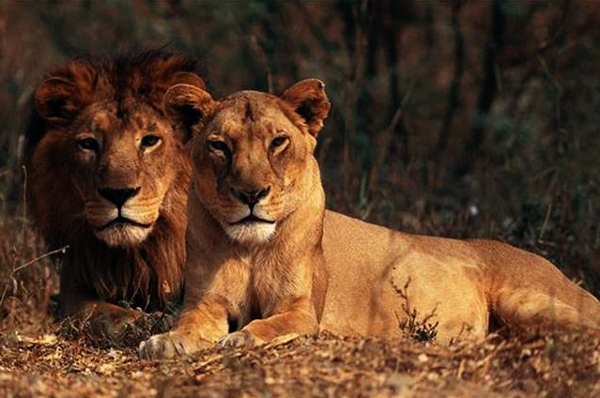
India’s Asiatic Lion population has increased from 523 in 2015 to 891 in 2025, marking a major conservation milestone for one of the country’s most iconic and endangered species.
Announcing the achievement on World Lion Day 2026, Union Minister for Environment, Forest and Climate Change Bhupender Yadav said the increase reflects sustained efforts by forest officials, conservationists, frontline workers and local communities involved in protecting the species and its habitat.
The latest numbers represent an increase of nearly 70% over a decade, demonstrating the long-term impact of habitat protection, scientific monitoring, veterinary care and community-based conservation initiatives.
Lion Range Expands Beyond Traditional Habitat
The recovery of the Asiatic Lion has also been accompanied by a significant expansion of its geographical range.
According to the Environment Ministry, the area inhabited by lions has increased from around 30,000 sq km in 2020 to nearly 35,000 sq km. While the Gir landscape remains the core stronghold of the species, lions have increasingly dispersed into surrounding forest divisions, coastal areas and human-dominated landscapes in Gujarat.
This expansion provides the population with greater space but also increases the importance of managing human-wildlife interaction, maintaining habitat connectivity and ensuring safe movement corridors.
Project Lion Strengthens Long-Term Conservation
Prime Minister Narendra Modi announced Project Lion on August 15, 2020, with the objective of securing the long-term future of the Asiatic Lion through a landscape-level conservation strategy.
The programme goes beyond simply increasing animal numbers. It focuses on habitat improvement, disease surveillance, veterinary infrastructure, scientific population monitoring, biodiversity conservation and the use of technology in wildlife management.
Disease management has become particularly important because a highly concentrated population can be vulnerable to epidemics. Strengthening veterinary facilities and monitoring lion health are therefore central components of the conservation programme.
Communities Remain Central to Lion Conservation
The government has also emphasised the role played by communities living within and around lion landscapes.
Union Minister of State for Environment, Forest and Climate Change Kirti Vardhan Singh said India’s experience demonstrates that conservation and development can progress together when local communities participate in protecting wildlife and critical habitats.
The presence of lions across inhabited landscapes makes cooperation with pastoral communities, farmers and local residents essential. Compensation mechanisms, rapid-response teams and awareness programmes help reduce conflict while allowing lions to move through areas beyond protected forests.
A Conservation Recovery With Global Significance
The Asiatic Lion once occupied a vast geographical range stretching across parts of West and South Asia, but hunting and habitat loss reduced the species to a small surviving population in Gujarat by the early twentieth century.
Its subsequent recovery has become one of India’s most significant wildlife-conservation successes.
The rise from 523 lions in 2015 to 891 in 2025, together with the expansion of their habitat range, indicates that conservation measures have succeeded in allowing the population to grow steadily.
The challenge ahead will be to ensure that rising numbers are matched by sufficient habitat, genetic diversity, disease protection and secure movement corridors. Sustaining cooperation between government agencies, scientists and local communities will therefore remain critical to ensuring that the Asiatic Lion continues to thrive in India for generations to come.
Source:
PIB : https://www.pib.gov.in/PressReleasePage.aspx?PRID=2296978®=48&lang=1
You may also like
-
Satpura Tiger Reserve’s Barasingha Population Crosses 300 as Madhya Pradesh Plans New Wildlife Corridors
-
Karnataka’s Tiger Population Could Cross 700 as New Census Builds on Official Count of 563
-
Project Cheetah Expands as Veerangana Durgavati Tiger Reserve Becomes Madhya Pradesh’s Third Cheetah Habitat
-
Kashmir Markhor Population Rises to 227 as Kazinag Conservation Efforts Show Results
-
ICAR-CIFRI Pushes Conservation of Indigenous Himalayan Fish for Biodiversity and Livelihood Security
