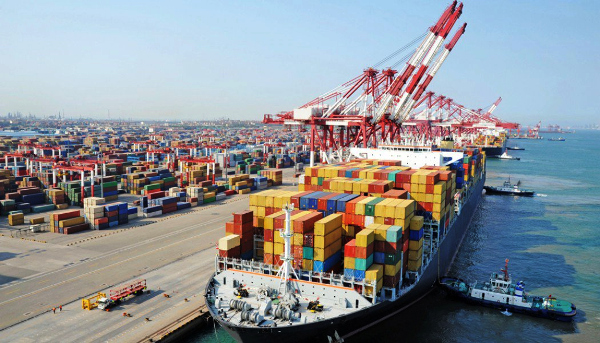
India’s combined merchandise and services exports reached an all-time high of $863.1 billion during the financial year 2025–26, demonstrating the country’s expanding presence in global trade despite geopolitical tensions, supply-chain disruptions and uncertain international demand.
The latest government figures place merchandise exports at approximately $442 billion, while services exports contributed around $421 billion. Services remained one of the principal engines of export growth, supported by information technology, business services, financial services, professional consulting, communications and other digitally delivered services.
India’s total exports have nearly doubled from about $468 billion in 2014–15. Over this period, overall exports recorded a compound annual growth rate of around 5.7 per cent, while services exports expanded at a considerably faster rate of approximately 9.3 per cent.
Engineering goods, electronic products, pharmaceuticals, chemicals, textiles, agricultural commodities, marine products and gems and jewellery emerged as major contributors. Electronics exports have grown particularly rapidly as India expands domestic manufacturing capacity and becomes increasingly integrated into global production networks.
The government has attributed the export performance to policy reforms, improved trade infrastructure, digital facilitation and greater market diversification. Platforms such as the Trade Connect Portal and Trade Intelligence and Analytics Portal have been introduced to provide exporters with market information, regulatory guidance and easier access to trade-related services.
India’s expanding network of trade agreements has also improved access to overseas markets. Agreements and economic partnerships with countries and regions including the United Arab Emirates, Australia, the United Kingdom, Oman, New Zealand and European economies are expected to create additional opportunities for Indian manufacturers, service providers, farmers and small businesses.
Commerce and Industry Minister Piyush Goyal has urged exporters and industry associations to make full use of these agreements, strengthen product quality, improve competitiveness and integrate Indian businesses more deeply into global value chains. The government has set a longer-term objective of raising India’s combined exports to $2 trillion by 2030.
The record export performance highlights the growing balance between India’s goods-producing industries and its internationally competitive services sector. Continued investments in logistics, manufacturing, technology, quality certification and trade finance will remain important for sustaining growth and increasing India’s share of global commerce.
You may also like
-
When Trade Routes Become Weapons: Why BRICS Needs a Resilient Supply-Chain Architecture
-
India’s Trade With BRICS More Than Doubles to $417 Billion as Export Opportunity Expands
-
India and Uruguay Agree Trade and Connectivity Roadmap as Montevideo Ratifies International Solar Alliance
-
The Return of Multipolarity: Why the World Is Moving Beyond a Single Centre of Power
-
The Financial Chokepoint: Why BRICS Can No Longer Depend on SWIFT and the Dollar Alone
