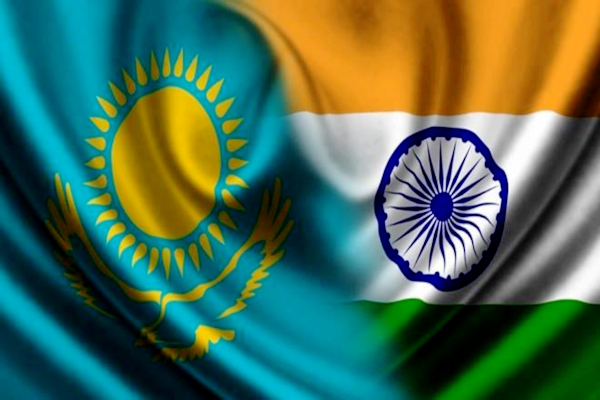
Prime Minister Narendra Modi met Kazakhstan President Kassym-Jomart Tokayev in New Delhi on September 13 on the sidelines of the 18th BRICS Summit, with the two leaders agreeing to further strengthen the India–Kazakhstan Strategic Partnership across defence, trade, energy, connectivity, critical minerals and emerging technologies.
The meeting provided both leaders an opportunity to review the progress made in bilateral relations and assess new areas where cooperation can be expanded. Prime Minister Modi also recalled the longstanding civilizational links between India and Kazakhstan and expressed satisfaction at the steady development of relations between the two countries in recent years.
Defence and Security Cooperation Reviewed
Defence and security formed an important part of the discussions, with both sides reviewing ongoing cooperation and reaffirming their interest in strengthening strategic engagement.
India and Kazakhstan share broader security interests in Central Asia, including regional stability, counter-terrorism and the security environment surrounding Afghanistan. Continued defence engagement therefore remains an important pillar of the bilateral relationship.
Trade and Connectivity Remain Key Priorities
The two leaders also reviewed trade and connectivity cooperation, areas that remain central to the long-term expansion of India–Kazakhstan economic ties.
Improved connectivity is particularly important because Kazakhstan is landlocked and India does not share a direct land border with Central Asia. Better transport and logistics links could help expand bilateral trade and give Indian businesses greater access to Central Asian markets.
Energy and Critical Minerals Gain Importance
Energy and critical minerals were among the major sectors discussed during the meeting. Kazakhstan is an important producer of uranium, hydrocarbons and a range of strategically significant minerals, making it a potentially important partner for India’s long-term energy and resource-security requirements.
The inclusion of critical minerals in the discussions reflects the growing strategic importance of securing reliable supplies of materials required for clean energy technologies, electronics, advanced manufacturing and other high-technology industries.
Emerging Technologies and Creative Economy Added to Agenda
Prime Minister Modi and President Tokayev also reviewed cooperation in emerging technologies and the creative economy, signalling an effort to broaden the relationship beyond its traditional focus on energy, defence and trade.
Closer engagement in technology-driven sectors could create opportunities for collaboration in digital platforms, innovation, startups, advanced manufacturing and knowledge-based industries.
Strategic Partnership to Be Further Strengthened
The two leaders exchanged views on regional and international developments and reaffirmed their commitment to strengthening the Strategic Partnership between India and Kazakhstan.
Both sides underlined that deeper bilateral cooperation would not only benefit their respective populations but also contribute to peace, stability, development and prosperity across the wider region.
The meeting reflects India’s continuing effort to deepen engagement with Central Asia through a combination of strategic, economic and technological partnerships, while Kazakhstan remains an important partner because of its geographic position, energy resources and growing role in Eurasian connectivity.
You may also like
-
India Strengthens Trade Ties with Netherlands as Piyush Goyal Visits Port of Rotterdam
-
India to Train 600 Nigerian Army Soldiers in Specialised Jungle and Mountain Warfare
-
India and Russia Strengthen Parliamentary Diplomacy as Om Birla Meets State Duma Chairman Vyacheslav Volodin
-
India Seeks South Korean Shipbuilding Partnerships as Sarbananda Sonowal Begins Four-Day Visit to Busan
-
India and Italy Hold First Maritime Security Dialogue in Rome, Strengthen Strategic Maritime Cooperation
