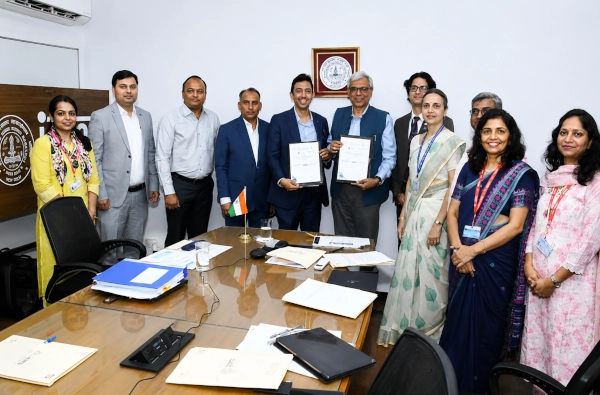
The Indian Council of Medical Research has licensed three indigenously developed biomedical technologies to Indian pharmaceutical and vaccine manufacturers, advancing their development, production and commercialisation.
The technologies include a targeted therapeutic candidate for treating cervical precancerous lesions and two next-generation vaccines designed to protect against major enteric bacterial infections.
The transfers were facilitated under ICMR’s Medical Innovations Patent Mitra initiative, which supports the translation of publicly funded scientific research into affordable healthcare products.
The SHetA2 anti-HPV therapeutic candidate has been licensed to Emcure Pharmaceuticals Limited for further development. The technology is intended for the treatment of Cervical Intraepithelial Neoplasia, a precancerous condition associated with persistent human papillomavirus infection.
SHetA2 was developed through a collaboration between Dr Showket Hussain of the ICMR–National Institute of Cancer Prevention and Research and Dr Doris M. Benbrook of the Stephenson Cancer Center at the University of Oklahoma in the United States.
The first-in-class targeted candidate is designed to selectively eliminate HPV-induced precancerous and cervical cancer cells while preserving healthy cells. Its developers believe the technology could support the creation of a safe, affordable and minimally invasive treatment for cervical precancer and cancer.
The other two technologies were developed by Dr Santasabuj Das and his research team at the ICMR–National Institute for Research in Bacterial Infections in Kolkata. They have been licensed to Biological E Limited for further development and manufacturing.
The first vaccine technology uses a fusion construct containing an outer membrane protein from Salmonella Typhi. It is being developed as a next-generation vaccine candidate against typhoid fever.
The second is a recombinant vaccine composition intended to provide broader protection against infections caused by Salmonella Typhi, Salmonella Paratyphi and Shigella. These pathogens are responsible for serious enteric illnesses transmitted primarily through contaminated food and water.
The vaccine candidates could strengthen India’s ability to prevent typhoid, paratyphoid and shigellosis while supporting the indigenous development of advanced vaccines against infectious diseases.
ICMR said the transfers represent an important step in moving government-funded research from laboratories towards clinical development and commercial production. Partnerships with established pharmaceutical companies can help researchers undertake further testing, regulatory processes, manufacturing scale-up and eventual market introduction.
Dr Rajiv Bahl, Secretary of the Department of Health Research and Director General of ICMR, said the organisation is working to ensure that publicly funded research results in products capable of improving health outcomes.
He highlighted the role of Medical Innovations Patent Mitra in connecting scientific researchers with industry partners and strengthening the pathway from discovery to commercialisation. The initiative provides structured assistance for intellectual-property protection, patent filing, technology licensing and transfer.
ICMR has also developed MedTech Mitra to provide indigenous medical-technology innovators with regulatory guidance, clinical-evaluation support and assistance in reaching the market.
Together, these initiatives form part of an integrated biomedical innovation ecosystem covering scientific discovery, patent protection, clinical validation, regulatory facilitation, technology transfer and commercial production.
The licensing of the SHetA2 candidate and the two enteric vaccine technologies reflects the increasing capacity of Indian research institutions and manufacturers to collaborate on affordable healthcare solutions.
The technologies could contribute to cervical cancer prevention and treatment, infectious-disease control and India’s broader objective of achieving greater self-reliance in biomedical research, vaccine production and healthcare innovation.
You may also like
-
New X-Ray Clues from Blazars could Provide Insights on Powering of Active Galaxies
-
How Much Exercise Is Enough According to Ayurveda?
-
A Powerful Punch by Black Hole Jets Shapes the Fate of Galaxies
-
AIIA and 132 ECO Task Force Launch 10,000-Plant Ashwagandha Research Initiative in Delhi’s Aravalli Landscape
-
Dr Reddy’s to Bring India’s First CDSCO-Approved Dengue Vaccine QDENGA to Private Market in 2027
