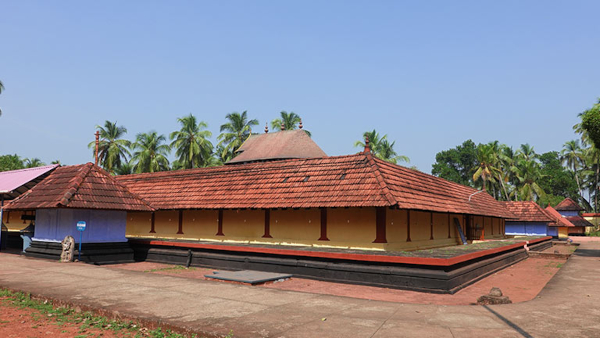
Triprangode Shiva Temple in Malappuram district is one of northern Kerala’s deeply revered Shaiva kshetras, known for its ancient presence, expansive temple grounds, traditional Kerala architecture and powerful association with Lord Shiva as the protector from death. Located at Triprangode near Tirur, the temple stands across nearly six acres and is dedicated to Lord Shiva, worshipped here as Triprangottappan. Kerala Tourism describes the shrine as an ancient temple with a serene pond, multiple sub-shrines and notable mural traditions.
The temple belongs to the sacred cultural landscape of Malappuram, a district rich with old temples, riverine settlements, trade memories and layered spiritual traditions. Situated within reach of Tirur and Thirunavaya, Triprangode carries the atmosphere of an old Kerala temple town, where sacred groves, ponds, tiled roofs, wooden structures and traditional rituals continue to hold the rhythm of worship. Kerala Tourism notes that the temple is around 8 km from Tirur Railway Station and about 5 km from Thirunavaya.
Historical Importance
Triprangode is remembered as one of the important Shiva temples of Malabar. Traditional accounts associate it with the 108 Shiva temples of Kerala linked to the Parasurama kshetra tradition. A temple history source records that inscriptions of Later Chera ruler Goda Ravi Varma from the 10th century CE are seen at Triprangode Shiva Temple, giving the shrine a strong historical depth beyond oral tradition. The same source also notes Triprangode’s connection with the Kingdom of Tanur, Vettathunad, the Zamorins of Calicut and references in the 15th-century Kokila Sandesa of Uddanda Sastrikal.
This makes Triprangode more than a local temple. It is part of the historical memory of Malabar, where temple institutions, regional kingdoms, literary culture and sacred geography came together. The temple’s long presence near Tirur and Thirunavaya also places it close to one of Kerala’s old cultural corridors, associated with learning, pilgrimage, river rituals and political history.
The Deity: Triprangottappan
The presiding deity is Lord Shiva, worshipped as Triprangottappan. The deity faces west and is installed in the form of a Shiva Lingam. Traditional temple accounts describe the Lord here as Swayambhu, meaning self-manifested, which gives the shrine a special sacred identity among devotees. The sanctum follows the Gajabrusta style, where the structure resembles the back of an elephant, a respected architectural form in Kerala temple design.
Triprangottappan is especially connected with the Kalasamhara Murti aspect of Shiva, the form in which the Lord defeats death itself. This gives the temple a powerful spiritual meaning. Devotees approach the shrine seeking protection, longevity, relief from fear, healing of inner burdens and blessings for family welfare.
The Markandeya Legend
The most famous legend of Triprangode is connected with Sage Markandeya. According to the temple tradition, Markandeya was destined to die at the age of sixteen. As Yama came to take his life, the young sage sought refuge in Lord Shiva. The legend says Markandeya embraced the Shiva Lingam, and when Yama cast his noose, it touched the Lingam as well. Shiva then appeared in a fierce form and struck down Yama, saving Markandeya and blessing him with eternal youth.
This story gives Triprangode its deep devotional force. The temple becomes a symbol of surrender, divine protection and the victory of bhakti over fear. For devotees, Triprangottappan is the Lord who stands between the devotee and death, the Lord who protects those who hold on to Dharma with faith.
Temple Architecture And Sacred Layout
Triprangode Shiva Temple spreads across a large area with multiple shrines, ponds, sacred trees and traditional Kerala-style structures. The temple is west-facing, and a large banyan tree stands in front of the shrine, adding to the ancient atmosphere of the complex. The sanctum is two-storeyed and follows the Gajabrusta architectural style.
The temple complex includes a shrine for Goddess Parvati on the left side of Lord Shiva. The Namaskara Mandapam stands before the Sree Kovil, with Nandi placed in the mandapam. There is also a Ganesha idol near the south-western door, along with other Shiva shrines inside the complex.
One of the important features of the temple is the presence of Karanayil Temple, considered the Moolasthanam or original seat of the Lord. Other Shiva shrines in the complex are traditionally associated with the steps taken by Lord Shiva in the act of defeating Yama. These layered shrines make the temple layout deeply symbolic, turning the temple ground into a sacred narrative of the Markandeya legend.
The complex also includes shrines for Lord Vishnu, Vettakkorumakan, Bhadrakali, Ayyappa, Krishna, Nagas and Brahmarakshas. This reflects the inclusive nature of Kerala temple worship, where the main deity is surrounded by guardian deities, family deities and protective spiritual forces.
Sacred Ponds And Temple Landscape
Triprangode Shiva Temple is known for its ponds and sacred natural setting. Temple accounts mention five ponds around the temple, with three located within the temple complex itself. A pond stands in front of Karanayil Temple, reinforcing its importance as the original seat of the deity. Santhikkulam is associated with ritual bathing by priests, while Vellottukulam is linked with the nearby Vellottu fields.
The pond at the south-western corner carries a special traditional association with the Markandeya legend, as it is believed to be the place where Lord Shiva washed his trident after defeating Yama. A larger pond outside the north-eastern side of the temple is also used by devotees before worship.
The presence of ponds, bilva trees, elanji trees and old temple pathways gives Triprangode the character of a complete Kerala kshetra. It is a place where worship, nature and architecture remain connected.
Rituals And Offerings
One of the most important offerings at Triprangode Shiva Temple is Sayanapradakshinam, where devotees circumambulate the temple by rolling on the ground. Kerala Tourism identifies this as the most important offering of the temple.
This offering carries the spirit of total surrender. It is a physical act of devotion, humility and prayer, where the devotee offers the body itself in worship. In the Shaiva tradition, such acts are seen as expressions of deep faith, especially when performed with a wish for protection, relief or gratitude.
Festivals
The annual Arattu festival of Triprangode Shiva Temple is celebrated on the Thiruvathira asterism in the Malayalam month of Dhanu, which falls around December–January. Kerala Tourism also records Shivaratri as another major festival, celebrated here for three days.
These festivals bring the temple alive with traditional rituals, lamps, processions, offerings and community participation. Thiruvathira is especially significant for Shiva temples, while Maha Shivaratri draws devotees into night-long prayer, fasting and remembrance of Lord Shiva.
Cultural Importance
Triprangode Shiva Temple represents the strength of Malabar’s Shaiva heritage. Its importance comes from several layers: the ancient Shiva worship, the Markandeya legend, the large temple landscape, the presence of multiple sub-shrines, the sacred ponds, the mural tradition and the temple’s historical associations with old Kerala polities and literature.
The temple also reflects the broader character of Kerala temple culture. It is not built only as a place of worship, but as a sacred ecosystem. The pond, tree, sanctum, mandapam, sub-shrine, mural, pathway and festival all form one living heritage space.
Triprangode Shiva Temple preserves an old and powerful idea at the heart of Hindu worship- divine grace protects the devotee who surrenders completely. The story of Markandeya is not merely a legend of immortality. It is a reminder that devotion gives courage before time, fear and uncertainty.
In the quiet temple grounds of Triprangode, Lord Shiva is worshipped as the fierce protector and compassionate guardian. The temple’s old stones, ponds, shrines and rituals continue to speak of Malabar’s deep spiritual memory. For devotees, Triprangottappan remains the Lord who grants strength, protection and peace.
References:
Kerala Tourism. “Triprangode Siva Temple | Temples in Malappuram | Kerala Temple Architecture.” Department of Tourism, Government of Kerala.
Kerala Tourism. “Temples in Malappuram, Kerala.” Department of Tourism, Government of Kerala.
Hindu Temples of India. “Triprangode Shiva Temple, Malappuram, Kerala.” Published January 5, 2021.
Hindu Temples of India. “Triprangode Shiva Temple, Malappuram – The Temple.” Published January 5, 2021.
Hindu Temples of India. “Triprangode Shiva Temple, Malappuram – Legends.” Published January 5, 2021.
You may also like
-
Sindhu: The Indus Kingdom of Jayadratha in the Mahabharata
-
Kuninda or Kulinda: The Himalayan Realm of the Mahabharata in Uttarakhand and Himachal Pradesh
-
Durga versus Mahishasura: Weapons, Battlefield Tactics and the Triumph of Shakti
-
Kuluta: The Kullu Valley Kingdom of the Mahabharata
-
Trigarta: The Kangra–Jalandhar Kingdom of the Mahabharata
