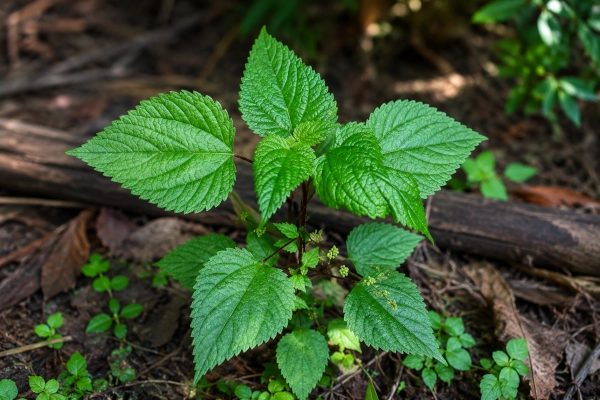
Botanical Name
Laportea interrupta (L.) Chew
Family
Urticaceae — the nettle family
Common Name
Hen’s Nettle
Important Synonyms
- Urtica interrupta L.
- Fleurya interrupta (L.) Gaudich.
- Boehmeria interrupta (L.) Willd.
Laportea interrupta is the currently accepted botanical name. It is an annual nettle distributed across tropical and subtropical parts of Africa, Asia, Australia and the Pacific. Within India, it has been recorded from Assam, the Andaman Islands and several regions of peninsular India.
Regional Names in India
The plant is known by several local names:
- Malayalam: Choriyanam, Choriyanum, Chenthotti, Anachorian
- Kannada: Pancharangi, Turike gida
- Hindi: Bichua, Bichata, Lal-bichua
- Odia: Godobichuati, Bichhuati
- Tamil: Perumkanchori
- Assamese: Dam-chorat, Chutra
- Marathi: Aagya
- Tulu: Aakire
- Kokborok: Phereijang
The regional names frequently refer to the itching or stinging sensation produced when the plant’s hairs touch bare skin.
A Note on Its Ayurvedic Status
Hen’s nettle should be described carefully in an Ayurvedic article.
It is an Indian food-medicine plant with documented regional and tribal uses, but it cannot presently be identified with confidence as a major classical drug described under a universally accepted Sanskrit name in the principal Ayurvedic Samhitas.
Its precise rasa, guna, virya, vipaka and dosha actions have not been securely standardised in authoritative Ayurvedic pharmacopoeial literature. It would therefore be misleading to assign it a complete classical Ayurvedic pharmacodynamic profile without textual or clinical evidence.
The plant is better understood as part of India’s wider lokachikitsa, tribal medicine and traditional wild-food heritage. Its use illustrates the broader Ayurvedic principle that properly identified food, seasonally gathered and correctly prepared, can contribute to nourishment and health.
Botanical Description
Hen’s nettle is generally an erect annual herb reaching approximately one metre in height, although its size varies according to soil, moisture and habitat.
The stem may become slightly woody near the base and bears scattered stinging hairs. The leaves are alternate, broadly ovate and sharply or finely serrated along the margins. They usually possess an acute or tapering apex and may bear stiff or stinging hairs on both surfaces, especially along the veins.
The flowers are small and greenish and are borne in elongated, interrupted-looking clusters. Male and female flowers occur on the same plant. The fruit is a small, dry, compressed achene.
The plant’s stinging hairs are its most immediately recognisable feature. Contact may produce temporary itching, burning, redness or local irritation.
Habitat and Distribution
Laportea interrupta grows in tropical and subtropical climates. It occurs in seasonally dry tropical vegetation, degraded deciduous forests, moist shaded places, roadsides, garden margins, plantations and disturbed ground.
In Karnataka, it is described as a common monsoon plant and may appear as a garden weed. Indian botanical records also document it in Kerala, Odisha, Andhra Pradesh, Maharashtra, Tamil Nadu and parts of northeastern India.
The plant often becomes more visible during the rainy season, when moisture encourages rapid production of tender shoots and leaves.
Parts Traditionally Used
The following parts have been reported in food or folk-medicinal traditions:
- Tender leaves
- Young shoots
- Roots
- Flowers
- Occasionally the whole plant
The leaves are the part most clearly documented as food. Roots and other parts belong mainly to ethnomedicinal practice and should not be used therapeutically without qualified supervision.
Hen’s Nettle as a Traditional Leafy Vegetable
Despite its intimidating hairs, Hen’s nettle is eaten as a leafy vegetable in several local traditions.
An ethnobotanical study from the Marat Longri Wildlife Sanctuary in Assam recorded the leaves of Laportea interrupta as a vegetable among local communities. The same study documented a food-medicine overlap, with the root or plant also being associated with traditional anthelmintic use.
Ethnobotanical work in Kerala has likewise included Choriyanam among wild edible plants used by local communities. In Kannur, traditional-food campaigners have demonstrated its preparation as thoran, a dry Kerala-style vegetable made with coconut.
These records show that the plant is not merely a medicinal curiosity. It belongs to a larger tradition in which monsoon herbs and uncultivated leafy vegetables contributed seasonal variety to household diets.
Nutritional Importance
A laboratory study published in Food Science and Biotechnology evaluated the nutritional and nutraceutical characteristics of Laportea interrupta.
The analysed leaf material contained:
- Carbohydrates
- Protein
- Starch
- Essential amino acids
- Mineral constituents
The researchers reported approximately 31.3 grams of protein, 19.8 grams of carbohydrates and 15.4 grams of starch per 100 grams of the analysed leaf material. These figures relate to the study sample and analytical method and should not automatically be interpreted as the composition of 100 grams of freshly harvested leaves.
The study nevertheless supports the traditional understanding of the plant as more than an emergency green. Its leaves may provide useful nutrients when correctly identified, safely collected and adequately cooked.
Ayurvedic Interpretation as a Food
Because a verified classical pharmacodynamic profile is unavailable, Hen’s nettle should not be assigned definitive Ayurvedic properties as though they were directly stated in the Samhitas.
Its culinary role can nevertheless be interpreted through general Ayurvedic dietary principles.
Seasonal Relevance
The plant frequently appears during the monsoon. Fresh seasonal greens can add dietary diversity at a time when digestion may become irregular because of humidity, reduced activity and disturbed appetite.
Importance of Cooking
Ayurveda rarely treats every plant as suitable for raw consumption. Processing can transform a difficult or irritating substance into a more digestible food.
Hen’s nettle demonstrates this principle clearly. Its fresh surface bears stinging hairs, while traditional culinary practice uses the leaves only after careful handling and thorough cooking.
Suitable Culinary Companions
Traditional preparations combine the leaves with ingredients such as:
- Coconut
- Cumin
- Mustard seed
- Shallot
- Turmeric
- Curry leaves
- A moderate quantity of cooking oil
These ingredients improve flavour and create a more balanced, familiar leafy-vegetable preparation.
No Standard Therapeutic Dose
There is no adequately established clinical or Ayurvedic therapeutic dosage for Laportea interrupta. It should be treated primarily as an occasional, correctly prepared regional food rather than a self-prescribed concentrated herbal medicine.
Traditional Medicinal Uses
Different communities have used Hen’s nettle in several ways. These are ethnomedicinal records and not equivalent to clinically proven treatments.
Traditional Use for Fever
The plant has been associated with folk treatment of fever. A laboratory study found that leaf and root extracts reduced experimentally induced fever in rats. This was an animal experiment using concentrated extracts and does not establish that household preparations can treat human fever.
Respiratory Uses
Traditional records from the Philippines describe a root decoction used for cough and asthma. Other Southeast Asian accounts refer to preparations of the plant as expectorant remedies. These uses remain traditional reports rather than established clinical treatments.
Diuretic Use
The root has been used traditionally as a diuretic in parts of Southeast Asia. The safety, dose and possible interaction with medicines have not been sufficiently established.
External Application
Leaves have reportedly been applied to carbuncles or rubbed on the head for headache in some traditional systems. Flowers have also been used externally on sores affecting the feet. Such applications may irritate sensitive or damaged skin and should not be attempted casually.
Digestive and Tribal Uses
A review of traditional practices in Tripura records Laportea interrupta as a therapeutic plant used by tribal communities for a range of complaints. However, the available information does not establish standardised preparation, dosage or clinical effectiveness.
Findings from Modern Research
Scientific research on Laportea interrupta remains preliminary.
Antioxidant Activity
Laboratory extracts of the roots and flowers have demonstrated phenolic and flavonoid content, while root extracts displayed antioxidant activity in chemical assays. Such tests identify biological potential but do not prove a therapeutic effect inside the human body.
Antipyretic Activity
Leaf and root extracts produced antipyretic effects in a rat model of experimentally induced fever. Human clinical trials are needed before the plant can be recommended as a treatment for fever.
Phytochemical Potential
Research on the wider Laportea genus has reported flavonoids, phenolics, terpenoids, sterols, alkaloids and saponins. A recent systematic review concluded that several Laportea species possess promising pharmacological potential but also emphasised the limited information on toxicity, mechanisms and human clinical efficacy.
The appropriate conclusion is therefore one of measured interest. Hen’s nettle is a nutritionally and pharmacologically interesting plant, but it is not yet a clinically validated medicine.
Culinary Uses of Hen’s Nettle
Choosing the Leaves
Use only plants that have been positively identified as Laportea interrupta by an experienced botanist, traditional food expert or qualified local authority.
Collect:
- Young, healthy leaves
- Tender upper shoots
- Plants growing away from roads, sewage, pesticide-treated fields and contaminated water
- Leaves free from fungal growth, insect damage and discoloration
Avoid old, fibrous plants and plants in flower or fruit when tender leaves are available.
Safe Handling
Fresh Hen’s nettle can sting exposed skin.
Wear thick gloves while:
- Harvesting
- Sorting
- Washing
- Removing coarse stems
- Placing the leaves in the cooking vessel
Do not rub the eyes, face or exposed skin while handling the plant.
The leaves should not be served raw. Traditional practice employs cooked preparations. Blanching and thorough cooking soften the leaves and greatly reduce the risk presented by their stinging hairs.
Anyone unfamiliar with wild nettles should learn the preparation directly from a person experienced in collecting and cooking the plant.
Hen’s Nettle Thoran
This Kerala-style preparation is inspired by the documented use of Choriyanam as a coconut-based thoran.
Ingredients
- Two cups of tender Hen’s nettle leaves
- One-half cup freshly grated coconut
- Two or three shallots
- One-half teaspoon cumin seeds
- One small green chilli, optional
- One-quarter teaspoon turmeric powder
- One-half teaspoon mustard seeds
- One sprig curry leaves
- One or two teaspoons coconut oil
- Salt as required
- Water for blanching
Preparation
Wear gloves while separating the tender leaves from the coarse stems.
Wash the leaves carefully without handling them with bare hands. Bring sufficient water to a boil and add the cleaned leaves using tongs or a long spoon.
Blanch until the leaves have fully wilted and softened. Drain them carefully. Once sufficiently cool and no longer capable of causing irritation, chop them finely.
Crush the grated coconut, shallots, cumin and green chilli into a coarse mixture.
Heat coconut oil in a pan. Add mustard seeds and allow them to splutter. Add curry leaves, followed by the chopped leaves, turmeric and salt.
Mix in the coconut preparation. Cover and cook over low heat until the leaves are tender and excess moisture has evaporated.
Serve in a small quantity with rice and a simple dal or curry.
Hen’s Nettle with Dal
Blanched and finely chopped leaves may be cooked with moong dal or another mild pulse.
Cumin, turmeric, garlic, black pepper or shallots may be used according to regional preference. The lentils soften the strong green character of the leaves and create a more substantial dish.
This is a contemporary culinary adaptation rather than a documented classical Ayurvedic formulation.
Leafy-Green Soup
Properly blanched leaves may be combined with:
- Moong dal
- Rice gruel
- Coconut milk
- Cumin
- Black pepper
- Garlic or shallot
The mixture can be simmered and blended into a thick soup. Only a modest quantity of Hen’s nettle should be used initially, particularly when a person has never eaten the plant before.
Mixed-Green Preparation
Hen’s nettle may also be cooked in small proportions with familiar edible greens. This reduces its dominance and helps preserve the traditional practice of eating a diverse mixture of seasonal leaves.
Only confirmed edible species should be included. Similar-looking wild plants must never be added solely on the basis of colour or leaf shape.
Why the Leaves Should Not Be Eaten Raw
The stinging hairs of Laportea interrupta may cause immediate skin irritation. Raw consumption also lacks the protective processing seen in documented culinary traditions.
Cooking is therefore not merely a matter of taste. It is an essential part of preparing the plant as food.
Blending raw leaves into juice, smoothies, uncooked chutney or salads is not advisable.
Precautions and Safety
Correct Identification Is Essential
The common names Bichua, nettle and Choriyanam may be applied to more than one stinging plant. Different nettles can vary in chemistry, intensity and documented food use.
Never gather the plant from a photograph alone.
Skin Contact
Fresh hairs may produce:
- Burning
- Itching
- Redness
- Local swelling
- Tingling or numbness
Wash the affected area without vigorous rubbing. Persistent swelling, breathing difficulty or a widespread reaction requires medical attention.
Pregnancy and Breastfeeding
There is insufficient safety evidence for concentrated preparations of the roots, flowers or whole plant during pregnancy and breastfeeding.
Occasional use of a traditionally cooked leafy dish is different from medicinal use, but professional advice is appropriate where there is uncertainty.
Kidney, Heart and Blood-Pressure Conditions
Because the root has been used traditionally as a diuretic, concentrated preparations may be unsuitable for people taking diuretics or medicines for kidney, heart or blood-pressure disorders.
Children
Do not allow children to harvest or handle the raw plant. Any culinary introduction should be small, thoroughly cooked and supervised.
Allergies and First-Time Use
People eating the plant for the first time should begin with a small serving. Discontinue it if there is oral irritation, abdominal discomfort, rash, vomiting or any unusual reaction.
Fever, Asthma and Serious Illness
Hen’s nettle must not replace medical evaluation for persistent fever, asthma, chest pain, infection, breathing difficulty or other serious symptoms.
Laboratory and animal studies do not establish the plant as a substitute for clinically proven treatment.
Cultivation and Household Value
Hen’s nettle often grows spontaneously in moist or partly shaded ground during the monsoon. Where local communities possess established knowledge of its use, the plant can be maintained in a designated corner rather than allowed to spread through frequently used pathways.
Because of its stinging hairs, it should be grown away from:
- Children’s play areas
- Doorways
- Narrow garden paths
- Areas used by domestic animals
- Places where people work barefoot
Maintaining the plant in a controlled space can help preserve traditional food knowledge while avoiding accidental contact.
A Neglected Food-Medicine Plant
Hen’s nettle represents an important but easily misunderstood part of India’s traditional plant heritage.
To an unfamiliar observer, it appears to be an irritating weed. To communities that know how to recognise and process it, it is a seasonal leafy vegetable capable of being transformed into thoran, dal and other cooked dishes.
Its leaves contain useful nutrients, while early research has identified antioxidant and antipyretic potential. At the same time, the scientific evidence remains too limited to support strong medical claims.
The plant’s greatest present value lies in the meeting point between traditional food knowledge, biodiversity and cautious scientific exploration.
Recovering such foods does not mean consuming every wild plant. It requires correct identification, respect for local knowledge, safe preparation and an understanding of the difference between food and medicine.
Prepared responsibly, Hen’s nettle can once again take its place among India’s diverse seasonal greens—a plant that reminds us that even a stinging herb may conceal nourishment when approached with knowledge and care.
Reference
Royal Botanic Gardens, Kew — Plants of the World Online. Laportea interrupta (L.) Chew. Accepted botanical name, synonyms, distribution and growth form.
Sankara Rao, K. and colleagues — India Flora Online, Centre for Ecological Sciences, Indian Institute of Science. Botanical records, vernacular names and Indian distribution of Laportea interrupta.
Krishna, C. S., Sajeesh, T. and Parimelazhagan, T. “Evaluation of Nutraceutical Properties of Laportea interrupta (L.) Chew.” Food Science and Biotechnology, Volume 23, Issue 2, 2014, pages 577–585. DOI: 10.1007/s10068-014-0079-3.
Phangchopi, R. and colleagues. “Diversity of Wild Edible Plants in Marat Longri Wildlife Sanctuary, Assam.” Indian Journal of Natural Products and Resources, 2015. Records the leaves as a traditional vegetable.
Bhattacharjee, S. “Applications of Laportea interrupta as a Traditional Therapeutic Agent by the Tribes of Tripura and Its Potentiality in Pharmaceuticals.” International Journal of Pharmaceutical Sciences and Research, Volume 14, Issue 8, 2023, pages 3728–3741. DOI: 10.13040/IJPSR.0975-8232.14(8).3728-41.
Plant Resources of South-East Asia — PROSEA. Ethnobotanical records concerning the traditional use of the leaves and roots.
Food Plants International. Plant fact sheet for Laportea interrupta, recording the leaves as edible.
Health Disclaimer
This article is intended for educational and cultural information. Hen’s nettle has stinging hairs and can be confused with other plants. Do not collect, cook or use it medicinally without reliable botanical identification and knowledge of safe local preparation. Traditional uses and preliminary laboratory findings are not substitutes for diagnosis or treatment by a qualified healthcare professional.
You may also like
-
Ayurveda on Cold Foods and Iced Drinks: Why Food Temperature Matters for Digestion
-
Serum Institute of India-Manufactured Ebola Vaccine Enters Clinical Trial in Uganda
-
Ayurveda and Hydration: How Much Water Should We Really Drink?
-
Warm Water in Ayurveda: When and Why It Is Recommended
-
Women Make Up 43% of India’s Ayush Workforce as Sector Supports 17.6 Lakh Livelihoods
