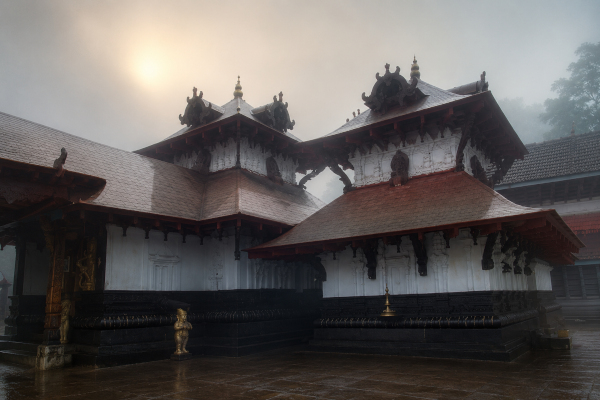
Thiruvilwamala Vilwadrinatha Temple, situated in the serene village of Thiruvilwamala in Thrissur district, stands as one of central Kerala’s most respected Vishnu temples. Located close to the Palakkad side of Kerala’s cultural belt, the temple rises on Vilwadri Hill, giving the shrine a quiet, elevated and deeply spiritual atmosphere. For devotees travelling through Thrissur, Shoranur, Ottapalam and the Bharathapuzha region, Thiruvilwamala remains a sacred destination where devotion, legend, architecture and landscape come together with rare grace.
The presiding divinities of the temple are Lord Rama and Lord Lakshmana, worshipped here with deep reverence as manifestations of Vishnu tattva. The temple’s identity is closely connected with the Ramayana tradition, Vaishnava devotion and the ancient sacred geography of Kerala. While many Vishnu temples in Kerala are associated with Krishna or Narayana forms, Thiruvilwamala holds a special place because of its strong association with Rama and Lakshmana, making it one of the important Rama-linked shrines of the state.
Sacred Location and Setting
Thiruvilwamala is a peaceful temple village surrounded by green landscapes, hillocks and the cultural memory of the Nila region. The temple is situated about 100 feet above sea level on Vilwadri Hill, creating a natural sense of ascent as devotees approach the shrine. The elevated location gives the temple a calm and dignified presence, while the nearby Bharathapuzha region adds to its sacred and cultural depth.
The name Thiruvilwamala itself carries a devotional resonance. “Vilwa” is sacred in Hindu worship, and “mala” refers to a hill. Together, the name evokes the image of a sacred hill associated with divine presence. The temple’s hilltop location, traditional Kerala architecture and mythological associations make it a powerful centre of pilgrimage in central Kerala.
Deity and Spiritual Importance
The main worship at Vilwadrinatha Temple is centred on Lord Rama and Lord Lakshmana. The presence of these two divine brothers gives the temple a unique spiritual personality. Rama represents dharma, restraint, kingship, compassion and righteous conduct. Lakshmana represents loyalty, service, courage and unwavering devotion. Together, they create a sacred atmosphere rooted in discipline, brotherhood, duty and divine protection.
The idol of Lord Rama is especially revered and is traditionally associated with Pathalanjana Sila, a rare sacred stone. This gives the deity an added layer of sanctity in the minds of devotees. The darshan at Thiruvilwamala is believed to bring peace, clarity, protection and spiritual strength.
For many devotees, this temple is a place to pray for family harmony, mental steadiness, righteous decision-making and relief from karmic burdens. The Rama-Lakshmana presence makes the shrine especially meaningful for those who value dharma, courage and disciplined living.
Temple Architecture
Thiruvilwamala Vilwadrinatha Temple is admired for its traditional Kerala temple architecture. The shrine has twin double-storeyed sreekovils, a rare and graceful feature that reflects the temple’s sacred duality. The square-shaped sanctums, sloping roofs, wooden elements, stone base and disciplined layout reflect the classical Kerala style of temple design.
The temple also has anakkottil structures, which are associated with traditional temple festivals and elephant rituals in Kerala. The overall design of the temple is dignified rather than ornamental, giving importance to spiritual focus, ritual movement and sacred geometry.
The architecture of Thiruvilwamala follows the Kerala principle that a temple must blend with the land around it. The hill, trees, pathways, gateways and sanctum space together create an atmosphere where nature becomes part of worship. The temple does not overwhelm the devotee; it slowly draws the mind inward.
Legends of Parasurama and Amalaka Maharishi
The temple’s sacred history is closely linked with the legends of Lord Parasurama, who is traditionally believed to have consecrated several temples across Kerala. According to temple tradition, Parasurama established sacred shrines for the spiritual welfare of the land and its people. Thiruvilwamala forms part of this larger sacred geography of Kerala, where divine worship was established as a path of purification and protection.
Another important legend connects the temple with Amalaka Maharishi, the son of Kashyapa Maharishi. The sage is believed to have performed deep penance in this region with intense devotion to Lord Mahavishnu. Pleased by his tapas, Lord Vishnu is said to have manifested here with Sridevi, Bhoodevi and Anantha. This legend gives the temple a strong Vaishnava foundation and presents Thiruvilwamala as a place where devotion brings divine presence into the world.
These legends give the temple a layered spiritual identity. It is a Rama temple, a Vishnu temple, a hill shrine, a Parasurama-linked kshetra and a place sanctified by rishi tapas.
Punarjani Cave and the Ritual of Spiritual Rebirth
One of the most distinctive sacred features associated with Thiruvilwamala is the Punarjani Cave, located near the temple at Bhoothanmala. The word “Punarjani” means rebirth. The cave is traditionally believed to symbolize the journey through karma, purification and spiritual renewal.
According to belief, passing through the Punarjani Cave on the sacred day connected with Guruvayur Ekadasi helps devotees seek release from accumulated sins and karmic burdens. Entry into the cave is permitted only on the prescribed day each year, and devotees are expected to observe strict discipline and vratham before undertaking the ritual.
The passage through the cave is narrow and demanding. Devotees move through it with humility, patience and surrender. The act becomes a symbolic journey through darkness into light, from burden to purification, from ego to surrender. This makes Punarjani Noozhal one of the most spiritually intense rituals associated with any temple in Kerala.
Bhoothanmala and Sacred Landscape
Bhoothanmala, the hill associated with the Punarjani Cave, forms an important part of the temple’s sacred geography. Temple tradition connects this landscape with divine intervention, spiritual purification and the presence of higher forces. The hill, cave, trees and water bodies around the area are all seen as part of a larger sacred field.
Kerala’s ancient temples often treat the surrounding land as an extension of the sanctum. Thiruvilwamala follows this tradition beautifully. The temple is not limited to the shrine alone; the hill, cave, pathways and natural surroundings all participate in the devotional experience.
Rituals and Worship
Daily worship at Thiruvilwamala follows the traditional Kerala temple pattern. The temple opens in the early morning, with offerings and nivedyam performed through the day. Deeparadhana in the evening is one of the most beautiful moments for devotees, as the sanctum glows in the light of lamps and the atmosphere becomes deeply meditative.
The main offerings are made to Lord Rama, Lord Lakshmana, Hanuman and Ayyappan, reflecting the wider sacred presence within the temple complex. Devotees visit the shrine for family welfare, mental strength, protection, relief from difficulties and spiritual progress.
The darshan of Lord Rama and Lord Lakshmana is especially meaningful for those seeking discipline, clarity and courage in life. Hanuman worship adds the strength of devotion and service, while the temple’s wider ritual structure reflects the inclusive devotional fabric of Kerala.
Festivals and Devotional Gatherings
The most important spiritual observance connected with Thiruvilwamala is the Punarjani Noozhal on Guruvayur Ekadasi. This ritual draws large numbers of devotees who come with faith, preparation and discipline. The event is linked with the idea of inner cleansing and spiritual rebirth.
Apart from this, regular temple festivals, special poojas and auspicious days associated with Vishnu worship bring devotees to the shrine throughout the year. The temple becomes especially vibrant during Ekadasi observances, Ramayana-related devotional periods and traditional Kerala festival days.
Festivals at Thiruvilwamala carry the quiet dignity of old Kerala temple culture. The focus remains on darshan, pooja, lamps, chanting, discipline and community devotion.
A Temple of Dharma, Devotion and Inner Strength
Thiruvilwamala Vilwadrinatha Temple is a shrine where the spiritual values of the Ramayana are preserved in living worship. Rama’s dharma, Lakshmana’s loyalty, Hanuman’s devotion and Vishnu’s grace together shape the temple’s sacred personality.
The temple teaches that devotion is not merely prayer; it is also discipline, self-control, courage and surrender. The Punarjani Cave adds another powerful message: spiritual growth requires humility and effort. The devotee must pass through narrowness, darkness and difficulty before reaching renewal.
This makes Thiruvilwamala more than a destination. It is a spiritual experience that speaks to the inner life of the devotee.
Visitor Note
Thiruvilwamala Vilwadrinatha Temple is located in Thrissur district, close to the Palakkad-Shoranur-Ottapalam cultural region. Devotees visiting the temple should check current timings before travel, dress traditionally and follow temple customs. Those wishing to participate in the Punarjani Cave ritual must observe the required discipline and confirm the prescribed date and procedure with the temple authorities.
Conclusion
Thiruvilwamala Vilwadrinatha Temple is one of Kerala’s most graceful Vishnu shrines, carrying the sacred presence of Lord Rama and Lord Lakshmana on the peaceful heights of Vilwadri Hill. Its legends connect it with Parasurama, Amalaka Maharishi, Mahavishnu and the ancient spiritual geography of Kerala. Its architecture reflects the beauty of Kerala temple tradition, while the Punarjani Cave gives the shrine a rare and powerful place in the devotional imagination of the state.
For devotees, Thiruvilwamala is a place of darshan, discipline and renewal. It is a temple where the Ramayana spirit lives through worship, where the hill itself feels sacred, and where every step towards the sanctum becomes a movement towards peace.
You may also like
-
Pundra — The Northern Bengal Kingdom of the Karatoya and the Ancient City of Pundranagara
-
Vanga — The River Kingdom of the Bengal Delta and the Eastern Sea
-
Kishkindha — The Boulder Kingdom of Pampa, Rishyamukha and the Tungabhadra
-
Setu — The Sacred Southern Crossing Between Rameswaram and Lanka
-
One Voice – One Resolve – One India: Namami Bharatam Marks 150 Years of Vande Mataram Across the Nation
