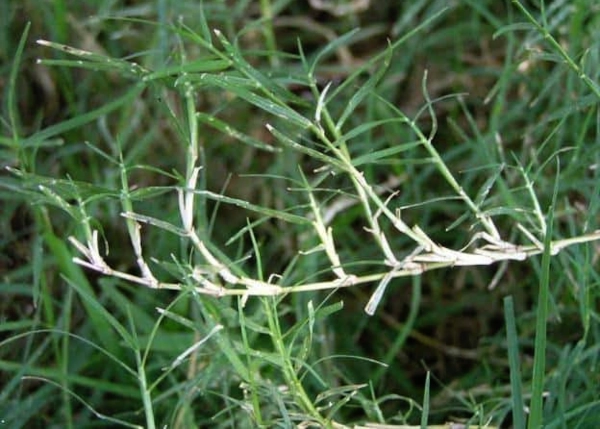
Botanical name: Andrographis paniculata (Burm.f.) Nees
Sanskrit name: Kalamegha / Kalmegha
Other traditional names: Bhunimba, Bhu-nimba, Yavatikta
Common English name: King of Bitters / Green Chiretta
Family: Acanthaceae
Part used: Whole plant, particularly the aerial portions
Ayurvedic category: Tikta Dravya — intensely bitter medicinal herb
Kalmegh is one of the most intensely bitter medicinal herbs used in the Indian traditional medicine system. The bitterness is so pronounced that Andrographis paniculata is widely known as the “King of Bitters.” In Ayurveda, Kalamegha is valued particularly in conditions associated with impaired digestion, fever, intestinal disturbances, certain skin disorders and disturbances traditionally associated with the liver and Pitta-Kapha metabolism. The National Medicinal Plants Board recognises Andrographis paniculata as Kalmegh, while the Ministry of AYUSH’s e-CHARAK medicinal-plant database lists the upper portion of the cultivated plant as the traded medicinal material.
The plant also occupies an interesting position between classical Ayurveda and India’s regional medicinal traditions. Names such as Bhunimba, literally suggesting a small or ground-growing neem-like herb, reflect its remarkable bitterness rather than any botanical relationship with the Neem tree.
Botanical Description
Kalmegh is a small, erect annual herb belonging to the Acanthaceae family. It develops slender, branching green stems with opposite leaves and small pale flowers. The plant commonly grows in warm tropical and subtropical environments and has long been used in different traditional medical systems across South and Southeast Asia.
Its medicinal reputation is closely connected with its extraordinarily bitter aerial parts. Among the compounds identified from the plant, the diterpene lactone andrographolide has attracted the greatest scientific attention and is considered one of its principal phytochemicals. Other diterpenoids, flavonoids and polyphenolic compounds have also been identified in the plant.
Ayurvedic Properties of Kalmegh
According to Ayurvedic pharmacological descriptions of Kalamegha, its dominant characteristic is its strong Tikta Rasa, or bitter taste.
| Ayurvedic Property | Kalmegh |
|---|---|
| Rasa — Taste | Tikta — Bitter |
| Guna — Qualities | Laghu — Light; Ruksha — Dry |
| Virya — Potency | Ushna — Hot |
| Vipaka — Post-digestive effect | Katu — Pungent |
| Dosha action | Primarily Kapha-Pitta Hara |
| Important Karma | Deepana, Jvaraghna, Krimighna, Yakrit-related support, Shothahara and Raktashodhaka in traditional terminology |
A review comparing Kalamegha with Kiratatikta and drawing upon the Ayurvedic Pharmacopoeia of India records Tikta Rasa, Laghu and Ruksha Guna, Katu Vipaka and Ushna Virya for Kalamegha. It also describes the herb traditionally as Kapha-Pitta-hara and associates it with actions such as Deepana, Jvaraghna and Krimighna.
Tikta Rasa — The Dominant Quality of Kalmegh
Few commonly used Ayurvedic plants demonstrate Tikta Rasa as dramatically as Kalmegh. Even a small amount produces a powerful and persistent bitterness.
Within Ayurvedic reasoning, Tikta Rasa is traditionally associated with Deepana and Pachana, particularly where sluggish digestion, Ama and Kapha-Pitta disturbances are considered important. The dryness and lightness accompanying its bitter nature also explain why Kalmegh is generally regarded as a medicinal herb rather than an everyday nutritional plant.
The very intensity that gives Kalmegh its therapeutic identity also means that it is normally used in measured quantities and often as part of a formulation rather than casually consumed.
Effect on Agni and Digestion
One of the important traditional applications of Kalmegh is in Agnimandya, the Ayurvedic description of diminished digestive capacity.
Tikta Rasa combined with Laghu and Ruksha qualities gives Kalmegh its traditional Deepana-Pachana reputation. Ayurvedic practitioners have consequently used preparations containing the herb where poor appetite, heaviness after meals and digestive sluggishness occur alongside signs interpreted as Kapha or Pitta disturbance.
Traditional Ayurvedic literature surveyed in modern reviews also lists Agnimandya, Vibandha and several gastrointestinal disorders among conditions for which Kalamegha has historically been employed.
Kalmegh should nevertheless not be regarded simply as a general digestive tonic. Its strong bitterness and drying qualities make it substantially different from nourishing digestive herbs and spices such as ginger, cumin or fennel.
Kalmegh and the Liver in Ayurveda
Kalmegh has developed one of its strongest traditional reputations in connection with the Yakrit, or liver.
Ayurvedic descriptions associate the plant with Yakrit Vikara, a broad traditional category concerning disturbances of liver function. Its bitter character, association with Pitta metabolism and Deepana-Pachana properties help explain why Kalmegh became incorporated into several traditional preparations aimed at digestion and hepatobiliary function.
Modern phytochemical and experimental research has consequently investigated Andrographis paniculata and andrographolide for possible hepatoprotective and anti-inflammatory actions. These laboratory findings are scientifically interesting, but they should not be interpreted as proof that Kalmegh can independently treat hepatitis, jaundice or other diagnosed liver diseases in humans.
Persistent jaundice, abnormal liver enzymes or suspected hepatitis require proper medical investigation rather than self-treatment with herbal preparations.
Kalmegh in Jvara — Fever
Jvaraghna, or use in Jvara, is another important traditional action attributed to Kalamegha.
Ayurvedic sources and traditional practice particularly associate intensely bitter herbs with certain febrile conditions accompanied by poor appetite, digestive disturbance and Pitta-Kapha involvement. Kalamegha has therefore been used traditionally in different fever preparations and is frequently compared with another famous bitter medicinal herb, Kiratatikta or Chirata (Swertia chirayita). Ayurvedic literature reviewed in contemporary research lists Jvara among the recognised traditional indications of Kalamegha.
This traditional usage should not be taken to mean that an unexplained or persistent fever should be managed with Kalmegh alone. Fever can arise from infections and other illnesses requiring diagnosis and specific treatment.
Krimighna — Traditional Use Against Intestinal Worms
Kalmegh is traditionally classified among herbs possessing Krimighna activity.
Krimi in Ayurveda is a broader concept than the modern definition of intestinal worms, although parasitic infestation forms part of it. The bitter and pungent metabolic characteristics of Kalmegh led to its traditional use in formulations for digestive disturbance associated with Krimi.
Reviews of the Ayurvedic literature specifically list Krimi Roga among Kalamegha’s traditional applications.
Clinically suspected parasitic infections, however, should be diagnosed appropriately because different organisms require different treatments.
Skin and Rakta-Related Uses
Kalmegh also appears in Ayurvedic discussions of Kushtha, Kandu, Shotha and Rakta Vikara, broad traditional categories encompassing certain skin, inflammatory and Rakta-associated conditions.
Its Tikta Rasa and Kapha-Pitta pacifying profile provide the Ayurvedic rationale for these applications. Traditional descriptions also employ the term Raktashodhaka, which literally means a substance used for the purification or correction of disturbed Rakta.
“Blood purification” is an Ayurvedic therapeutic concept and should not be confused with the literal removal of toxins from blood as understood in modern physiology.
Respiratory Uses and Modern Clinical Interest
Beyond its Indian Ayurvedic uses, Andrographis paniculata has been extensively employed in other Asian traditional medical systems for respiratory illnesses.
This particular traditional application has received more clinical investigation than many other claimed uses of the plant. A systematic review of trials involving acute respiratory tract infections found evidence suggesting improvement in symptoms such as cough and sore throat, although the authors emphasised that the underlying studies were heterogeneous and often of poor methodological quality.
An earlier systematic review similarly concluded that A. paniculata appeared promising for symptomatic relief of uncomplicated upper respiratory tract infections while stressing the need for further research.
Therefore, the evidence is better described as promising but not definitive, and Kalmegh should not be regarded as a substitute for medical assessment when respiratory symptoms are severe or persistent.
Important Phytochemical — Andrographolide
Modern interest in Kalmegh centres heavily on andrographolide, a diterpene lactone responsible for much of the plant’s intense bitterness.
Researchers have studied andrographolide and related compounds for possible:
- anti-inflammatory activity,
- immunomodulatory effects,
- antimicrobial and antiviral mechanisms,
- antioxidant activity,
- metabolic effects,
- and possible liver-protective mechanisms.
Most of these potential actions have been demonstrated primarily through laboratory or experimental studies. Their existence does not automatically establish clinical efficacy for specific human diseases.
This distinction is particularly important with medicinal plants such as Kalmegh, where extensive pharmacological research can sometimes be mistakenly presented as proof of clinical treatment.
Parts Used
The aerial portions and, in many traditional preparations, the whole plant are used medicinally.
The Ministry of AYUSH’s e-CHARAK database specifically identifies the upper part of cultivated Andrographis paniculata as the medicinal raw material traded as Kalmegh.
The herb is generally harvested, dried and subsequently converted into powder, decoction material or extracts for pharmaceutical preparations.
Traditional Forms of Use
Kalmegh Churna
The dried herb may be powdered and administered as Kalmegh Churna. Because the herb is extraordinarily bitter, it is normally taken in relatively small physician-directed quantities.
Kalmegh Kwatha
A decoction prepared from the herb is another traditional form. This preparation accentuates the plant’s characteristic bitterness and has historically been associated with digestive and febrile conditions.
Kalmegh Ghana
Concentrated extracts or Ghana preparations provide a more convenient way of administering the herb and are commonly encountered in modern Ayurvedic medicines.
Compound Ayurvedic Preparations
Kalmegh can also be combined with other herbs so that its strong Tikta and Deepana-Pachana character forms part of a broader formulation rather than acting alone.
The form and quantity used should ideally be determined according to constitution, digestive strength, age, accompanying medicines and the condition being treated.
Kalmegh and Immunity
Kalmegh is sometimes promoted commercially as an “immunity booster,” but this description oversimplifies both Ayurveda and modern immunology.
Research has demonstrated various immunomodulatory effects of Andrographis paniculata constituents in experimental systems, and the herb has been widely investigated in respiratory infections. Nevertheless, stimulating the immune system is not universally desirable, nor does the term “immune boosting” adequately describe the complex biological effects of medicinal plants.
The more appropriate Ayurvedic understanding of Kalmegh is that of a strongly bitter medicinal herb used for particular patterns of imbalance rather than a universal Rasayana suitable for continuous consumption by everyone.
Modern Research — What the Evidence Actually Shows
Kalmegh is among the more extensively studied Asian medicinal plants, yet there is a major difference between demonstrating an interesting biological activity in a laboratory and establishing a treatment through large, well-designed clinical trials.
Clinical research has produced some supportive evidence for symptomatic relief in uncomplicated acute respiratory infections, particularly cough and sore throat. However, reviews have also highlighted variable study quality, differences between preparations and inconsistent standardisation of extracts.
Studies of other proposed uses, including metabolic, hepatic, inflammatory and antimicrobial applications, remain a mixture of experimental research and relatively limited human evidence. Therefore, these areas should be regarded as subjects of continuing investigation rather than established indications.
Safety and Precautions
Kalmegh’s natural origin does not mean that unlimited consumption is appropriate.
A systematic review and meta-analysis evaluating the safety of oral Andrographis paniculata found that serious adverse events were very uncommon in the studies examined, while non-serious adverse effects occurred more frequently. Gastrointestinal complaints and skin-related reactions were among the most commonly reported problems.
Another systematic review examining Andrographis preparations likewise found that ordinary herbal preparations were generally associated with mild-to-moderate gastrointestinal or skin reactions, although injectable andrographolide derivatives used in some countries have been associated with much more serious allergic reactions. Those injectable derivatives are quite different from traditional oral Ayurvedic preparations.
Pregnant or breastfeeding women, children, people receiving long-term medication, and those with significant liver, kidney, autoimmune or other chronic illnesses should obtain professional advice before using concentrated Kalmegh preparations.
Because herbal extracts vary enormously in strength and andrographolide concentration, concentrated commercial extracts should not automatically be treated as equivalent to traditionally prepared Kalmegh Churna or Kwatha.
Cultivation and Availability in India
Kalmegh is well suited to India’s warm climate and can be cultivated as a medicinal crop. Government medicinal-plant records document its cultivation in several states, including Madhya Pradesh, Uttar Pradesh, Karnataka, Andhra Pradesh, Jharkhand, Mizoram and Kerala.
Its capacity to grow relatively easily in tropical conditions has helped make it an accessible source of bitter medicinal material, particularly when compared with certain Himalayan bitter herbs whose supply is more geographically restricted.
Kalmegh in the Ayurvedic Household Garden
Kalmegh deserves a place in an Ayurvedic medicinal garden, although it should be regarded primarily as a medicinal plant rather than a culinary green.
Its small size allows it to be cultivated in garden beds or suitable containers, while its intensely bitter leaves make identification by taste unmistakable. Once established under warm conditions, the herb can provide medicinal aerial material that may be harvested and dried.
The presence of Kalmegh in a household medicinal garden also represents an older Indian tradition in which powerful medicinal plants were maintained close to the home even though they were not necessarily consumed every day.
Ayurveda’s Lesson from Kalmegh
Kalmegh illustrates an important principle of Ayurveda: medicine need not be pleasant to be valuable.
Its extraordinary Tikta Rasa is not an incidental characteristic but the feature around which much of its traditional therapeutic identity developed. Ayurveda interpreted bitterness as possessing specific actions on Agni, Kapha, Pitta, Krimi and certain conditions involving Ama and disturbed metabolism. Consequently, Kalamegha came to occupy a specialised place in the Ayurvedic medicinal repertoire rather than becoming an ordinary food or daily tonic.
Modern science has now isolated andrographolide and numerous other constituents from this inconspicuous herb and has begun investigating mechanisms behind several of its traditional applications. Some areas, particularly respiratory symptom relief, have accumulated human clinical evidence, while many broader claims remain dependent on experimental studies.
Kalmegh therefore represents a useful meeting point between Dravyaguna knowledge and modern phytochemical investigation. Neither tradition nor laboratory research requires exaggeration to make the plant remarkable. A small annual herb, almost aggressively bitter to taste, has remained part of India’s medicinal heritage for generations and continues to generate scientific interest across the world.
References
National Medicinal Plants Board, Ministry of AYUSH, Government of India — Kalmegh (Andrographis paniculata) medicinal-plant records.
e-CHARAK, Ministry of AYUSH, Government of India — medicinal raw-material database identifying Andrographis paniculata and the upper plant portion used as Kalmegh.
Rastogi R. et al. — comparative review of Kalmegh and Kiratatikta incorporating Ayurvedic Pharmacopoeia descriptions of Kalamegha’s Rasa Panchaka and traditional applications. Journal of Natural & Ayurvedic Medicine, 2022.
Hu X.Y. et al. — systematic review and meta-analysis of Andrographis paniculata for symptomatic relief of acute respiratory tract infections.
Coon J.T. & Ernst E. — systematic review examining efficacy and safety of Andrographis paniculata in upper respiratory tract infections.
Worakunphanich W. et al. — systematic review and meta-analysis examining the safety and adverse effects of oral Andrographis paniculata.
Health Disclaimer
This article presents Ayurvedic, ethnobotanical and scientific information for educational purposes. Traditional Ayurvedic indications should not be interpreted as proven treatments for modern medical conditions. Correct botanical identification, appropriate preparation and individual assessment are important when medicinal plants are used internally. Anyone with persistent bleeding, severe illness, pregnancy-related concerns, infected wounds or other significant symptoms should obtain advice from a qualified healthcare professional.
You may also like
-
Agni and Lifestyle: Protecting the Digestive Fire Every Day Through Ayurveda
-
Ayurveda and Anxiety: Lifestyle Principles for a Calmer Mind
-
Ayurveda and Emotional Eating: Understanding How Stress, Emotions and Food Affect Digestion
-
India Records 21% Decline in Tuberculosis Incidence as National TB Elimination Efforts Progress
-
Bengaluru Startup ImmunitoAI Uses Artificial Intelligence to Develop Next-Generation Antibody Medicines
