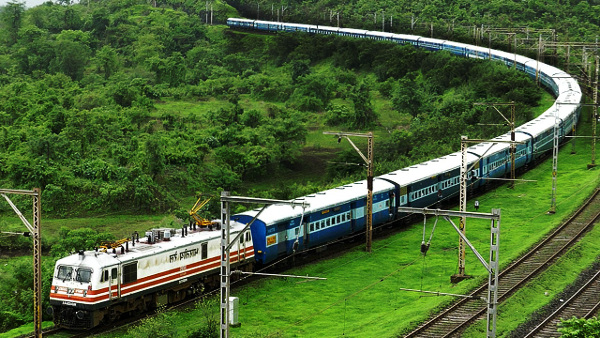
Indian Railways is undertaking an extensive programme to expand seven of the country’s busiest railway corridors to four parallel tracks, creating additional capacity for more than 1,000 regular passenger trains. The initiative is intended to reduce congestion, improve reservation availability and strengthen passenger and freight transportation across India’s major economic centres.
Union Railway Minister Ashwini Vaishnaw outlined the expansion programme on November 7, 2026, while reviewing railway operations and passenger arrangements during the Diwali and Chhath festive season. He stated that completing the four-track expansion of the seven high-density corridors would enable Indian Railways to introduce over 1,000 additional regular trains, providing a long-term solution to capacity constraints on heavily utilised routes.
The programme covers approximately 11,000 kilometres of high-density railway routes connecting Delhi, Mumbai, Kolkata, Chennai and Guwahati. These corridors form some of the most important arteries of India’s national transport system, carrying substantial volumes of passenger and freight traffic between major industrial, commercial and population centres.
Seven Major Railway Corridors Identified for Four-Track Expansion
The railway expansion programme focuses on seven high-density corridors that constitute an important part of India’s existing national railway network. These routes connect the four metropolitan centres of Delhi, Mumbai, Kolkata and Chennai, along with strategically important diagonal connections.
The four principal routes are Delhi–Howrah, Howrah–Chennai, Chennai–Mumbai and Mumbai–Delhi. Three additional corridors connect Delhi with Chennai, Mumbai with Howrah, and Delhi with Guwahati.
Together, these seven corridors extend across approximately 11,000 kilometres, accounting for a substantial proportion of India’s passenger and freight movements.
According to the Railway Minister, these high-density routes cover approximately 16 per cent of the railway network but handle around 41 per cent of its traffic. Their importance makes capacity expansion essential for accommodating growing transportation requirements.
The four-track programme involves adding railway lines along sections where existing infrastructure is insufficient to accommodate the required number of trains. By increasing the availability of tracks, Indian Railways aims to provide greater flexibility in scheduling passenger services while maintaining essential freight operations.
Over 1,000 Additional Regular Trains After Completion
One of the most significant benefits expected from the expansion programme is the ability to introduce more than 1,000 additional regular trains across the seven corridors.
Vaishnaw explained that the increased capacity would help address passenger waiting lists and improve reservation availability, particularly on routes connecting major metropolitan centres.
Long-distance railway services frequently experience substantial demand during holidays, festivals and periods of increased travel. On heavily congested routes, the availability of additional train services is often constrained by existing track capacity rather than the availability of rolling stock alone.
Expanding the railway infrastructure to four parallel tracks will allow more services to be accommodated within existing operating corridors. The additional capacity can also provide greater operational flexibility for express trains, slower passenger services and freight trains travelling along the same routes.
The Minister emphasised that the proposed 1,000 additional services would be regular trains, distinct from temporary special services introduced during festivals and other periods of exceptionally high demand.
The expansion is therefore aimed at creating permanent capacity within the railway network rather than relying exclusively on seasonal arrangements to accommodate growing passenger traffic.
Four-Track Development Already Underway
The government has been advancing the four-track expansion programme through successive railway infrastructure approvals and construction projects.
During an earlier announcement concerning railway multitracking projects, the Railway Minister stated that approximately 2,000 kilometres of the seven high-density corridors had already been developed with four tracks.
Another 5,000 kilometres were covered by sanctioned projects at different stages of implementation, while detailed project reports were being prepared for approximately 4,000 kilometres of remaining sections.
These figures illustrate the scale of the programme and the different stages of development across the national railway network.
The expansion involves extensive civil engineering and railway systems work, including track laying, bridges, signalling, electrification, station modifications and the integration of additional tracks with existing railway operations.
The programme is being implemented through individual projects and approvals rather than as a single simultaneously constructed railway line.
India’s Railway Network Expands by 36,000 Kilometres
Speaking about infrastructure development, Vaishnaw stated that Indian Railways had laid approximately 36,000 kilometres of additional tracks over the preceding decade.
The expansion has involved new railway lines, track doubling, multitracking and other capacity-enhancement projects intended to strengthen the national railway network.
The Minister highlighted the importance of building additional tracks as a permanent solution to congestion. Increasing the number of train services on already saturated routes can create operational difficulties unless sufficient infrastructure is available to accommodate the additional movements.
Track expansion provides an opportunity to improve the separation of different types of railway traffic, strengthen network flexibility and increase the number of trains that can operate along important corridors.
The programme also complements investments in railway electrification, signalling systems, station modernisation and the introduction of new passenger train technologies.
Reducing Congestion from Passenger and Freight Traffic
The Railway Minister identified increasing freight movements, particularly coal transportation, as an important factor contributing to congestion on the existing railway network.
India’s railways carry substantial quantities of coal, iron ore, cement, steel, foodgrains, containers and other industrial commodities. Freight transportation is essential for electricity generation, manufacturing, agriculture and economic activity across the country.
However, freight trains frequently share railway corridors with long-distance express trains and other passenger services. When traffic volumes approach the available capacity, this can affect train scheduling and create delays.
Increasing the number of tracks provides additional pathways for managing passenger and freight movements, reducing pressure on heavily utilised sections.
The four-track expansion programme is particularly important because the selected corridors connect major industrial regions, ports, consumption centres and logistics networks.
Improved railway capacity can support more efficient goods movement while allowing additional passenger trains to operate without placing the same level of pressure on existing infrastructure.
Railway Expansion Supports India’s Economic Corridors
The seven high-density corridors form an important component of India’s economic infrastructure.
The Delhi–Mumbai route connects the national capital region with one of the country’s largest industrial and financial centres. The Delhi–Howrah and Howrah–Chennai routes provide important connections between northern, eastern and southern India.
The Mumbai–Chennai corridor links major manufacturing, commercial and port-related centres, while the Delhi–Guwahati route is particularly important for strengthening rail connectivity between northern India and the northeastern region.
The diagonal corridors provide additional connectivity across major economic regions, facilitating the movement of passengers, agricultural produce, industrial materials and manufactured goods.
Improving capacity along these routes can contribute to more efficient logistics operations and support the movement of goods between production centres and domestic markets.
The expansion also offers opportunities to improve regional passenger connectivity by creating space for additional train services along sections where congestion has historically restricted further operations.
Festival Travel Highlights Need for Permanent Capacity Expansion
The Minister’s announcement came during a period of exceptionally heavy railway travel associated with Diwali and Chhath.
Indian Railways has arranged approximately 18,000 special train services during the festive season to accommodate additional passenger demand. These services supplement regular operations and provide temporary capacity on routes experiencing increased travel.
The Railways has also strengthened passenger-management arrangements at major stations, including dedicated holding areas, additional security personnel and artificial intelligence-enabled surveillance cameras.
Around 700 AI-enabled cameras have been deployed to support crowd monitoring, while designated passenger holding facilities have been established at approximately 20 railway stations.
The Minister reviewed these arrangements at Rail Bhawan in New Delhi, where railway authorities monitor passenger movements and coordinate responses during periods of heavy traffic.
While these measures address immediate passenger requirements, the expansion of railway tracks is intended to create the permanent infrastructure necessary for accommodating increased train services throughout the year.
Strengthening India’s Long-Term Railway Capacity
The expansion of seven high-density railway corridors represents an important component of India’s long-term railway modernisation strategy.
The programme focuses on increasing the capacity of existing routes that already carry a substantial share of national railway traffic. Developing these corridors into four-track railway systems will provide additional flexibility for passenger scheduling, freight movements and future service expansion.
The planned introduction of more than 1,000 additional regular trains would represent a substantial increase in passenger transportation capacity once the required infrastructure is completed.
By combining track expansion with signalling improvements, electrification and modern railway operations, Indian Railways is working towards a network capable of accommodating increasing passenger and freight requirements.
The programme also demonstrates the importance of expanding basic railway infrastructure alongside investments in modern trains and station facilities.
With work already completed on some sections and additional projects progressing through construction and planning stages, the seven-corridor expansion provides a foundation for increasing India’s railway capacity and improving connectivity between major economic and population centres.
You may also like
-
India’s $220 Billion Chemical Industry Targets $1 Trillion by 2040 as Manufacturing Capacity Expands
-
AstraZeneca to Introduce Advanced Breast Cancer Medicine Datverzo in India in November
-
India Confirms E20 Petrol Quality Compliance Across 27 States After Testing 893 Samples
-
IIT Kanpur-Incubated ScaNxt Secures Investment to Expand AI-Powered Soil Testing and Precision Agriculture
-
Indore Agritech Startup Pragyanik AI Develops Autonomous Agricultural Robot for Precision Weeding and Spraying
